Loading...
Babrak Karmal vs Grigory Zinoviev
Grigory Zinoviev leads by 8.3 pts · 2 figures compared
…
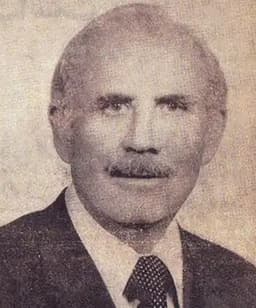
Babrak Karmal
Politician · Modern
43.0Total

Grigory Zinoviev
Politician · Modern
51.3Total
Basic Information
Born
1929
1883
Died
—
1936
Era
Modern
Modern
Nationality
Afghanistan
Russia
Occupation
Politician
Politician
Civilization
Middle Eastern
Western
Score Comparison
Military (10%)
33.2
31.9
Political (20%)
29.3
54.7
Influence (20%)
48.6
53.3
Legacy (20%)
38.3
43.3
Leadership (15%)
55.3
65.0
Strategy (15%)
52.8
60.0
TOTAL
43.0
51.3
Babrak Karmal — Complete Timeline
1979 AD
Presidency of Afghanistan (1979-1986)Political Action◆ Major
Babrak Karmal was installed as President of Afghanistan by the Soviet Union in December 1979, following the Soviet invasion. He led the Democratic Republic of Afghanistan during the early years of the Soviet-Afghan War, implementing unpopular reforms and relying on Soviet military support.
Soviet InvasionPuppet GovernmentCommunist
Impact: national
1986 AD
Replacement by Najibullah (1986)Political Action◆ Major
Karmal was replaced as General Secretary of the People's Democratic Party by Mohammad Najibullah in May 1986, under Soviet pressure. He was effectively sidelined, though he remained in Afghanistan until his death. This marked the end of his direct political influence.
Power StruggleNajibullahSoviet Policy
Impact: national
1996 AD
Death in Moscow (1996)Other
Babrak Karmal died in Moscow in 1996, reportedly from liver cancer. He had been living in exile in the Soviet Union since his removal from power. His death went largely unnoticed in Afghanistan, where the civil war was raging.
ExileDeathMoscow
Impact: national
Grigory Zinoviev — Complete Timeline
1919 AD
Chairman of the CominternPolitical Action◆ Major
Zinoviev became the first chairman of the Communist International (Comintern) in March 1919. He directed the organization's efforts to spread world revolution, coordinating communist parties globally and advocating for immediate uprisings in Europe.
CominternInternational CommunismLeadership
Impact: global
1925 AD
Opposition to Stalin's RisePolitical Action◆ Major
Zinoviev, along with Kamenev, formed the 'United Opposition' against Stalin's growing power within the Communist Party. They criticized Stalin's policy of 'Socialism in One Country' and advocated for rapid industrialization and world revolution, but were defeated at the 14th Party Congress.
Soviet PoliticsPower StruggleOpposition
Impact: national
1927 AD
Expulsion from the Communist PartyPolitical Action◆ Major
Following the defeat of the United Opposition, Zinoviev was expelled from the Communist Party in December 1927. He was later readmitted after recanting his views, but his political influence was permanently destroyed, marking a key step in Stalin's consolidation of power.
PurgeStalinExpulsion
Impact: nationaldestructive
1936 AD
Trial and Execution in the Great PurgePolitical Action◆ Major
Zinoviev was tried in the first Moscow Show Trial in August 1936, accused of plotting to assassinate Stalin and other leaders. He was found guilty and executed on August 25, 1936, becoming one of the first high-profile Old Bolsheviks purged by Stalin.
Great PurgeShow TrialExecution
Impact: nationaltragic
Expert Analysis
Origins
Babrak Karmal was born in 1929 in Kamari, Afghanistan, into a middle-class family. His father was a military officer. Karmal studied law at Kabul University and became involved in Marxist politics. He was a founding member of the People's Democratic Party of Afghanistan (PDPA) in 1965. Grigory Zinoviev was born in 1881 in Yelisavetgrad, Russian Empire, to a Jewish family. He became a revolutionary early, joining the Russian Social Democratic Labour Party in 1901. He was a close associate of Lenin and played a key role in the Bolshevik seizure of power in 1917.
Rise to Power
Karmal rose within the PDPA, becoming a leader of the Parcham faction. After the Saur Revolution in 1978, he served as deputy prime minister but was exiled due to internal party conflicts. He was installed as president by the Soviet Union in December 1979 following the Soviet invasion. Zinoviev rose as a Bolshevik leader, becoming chairman of the Communist International (Comintern) in 1919. He was a key figure in the early Soviet government and a member of the Politburo. He allied with Kamenev and Stalin against Trotsky but later opposed Stalin's consolidation of power.
Leadership & Governance
Karmal's leadership was heavily dependent on Soviet military support. He attempted to implement Marxist reforms in Afghanistan, including land redistribution and women's rights, but faced widespread resistance from mujahideen rebels. His government was marked by repression and human rights abuses. Zinoviev, as Comintern chief, directed international communist movements, advocating for world revolution. He was a skilled orator and organizer but lacked administrative acumen. His governance style was ideological and combative, contributing to factionalism within the party.
Triumph & Tragedy
Karmal's greatest success was maintaining power for six years despite a brutal insurgency. However, his failure to stabilize Afghanistan or win popular support led to his replacement by Najibullah in 1986. He died in obscurity in Moscow in 1996. Zinoviev's triumph was his role in the Bolshevik Revolution and early Soviet state-building. His tragedy was his opposition to Stalin, leading to his expulsion from the party, show trial, and execution in 1936. He scored 43.0 overall, while Zinoviev scored 51.3, with Zinoviev outperforming in political (54.7 vs 29.3) and leadership (65.0 vs 55.3) categories.
Character & Destiny
Karmal was seen as a loyal Soviet ally but lacked independent initiative. His character was cautious and bureaucratic, unable to adapt to the complex Afghan social fabric. Zinoviev was ambitious and ideological, but his indecisiveness and factionalism made him vulnerable to Stalin's machinations. Historians note his overconfidence and failure to recognize Stalin's ruthlessness.
Legacy
Karmal's legacy is largely negative, associated with Soviet occupation and civil war. He is remembered as a puppet leader. Zinoviev's legacy is more complex: he is recognized as a key Bolshevik but also as a victim of Stalin's purges. His role in the Comintern influenced global communism, but his political maneuvering tarnished his reputation.
Conclusion
Grigory Zinoviev had greater political impact, scoring 51.3 overall compared to Karmal's 43.0. Zinoviev's influence in shaping early Soviet policy and international communism was substantial, despite his tragic end. Karmal's impact was limited to a failed Soviet puppet regime. Zinoviev's higher scores in political (54.7), leadership (65.0), and strategy (60.0) underscore his greater historical significance.
Rankings
🥇
Grigory ZinovievLeader
Mil: 31.9Pol: 54.7Inf: 53.3
51.3
🥈
Babrak Karmal
Mil: 33.2Pol: 29.3Inf: 48.6
43.0
+8.3 behind
How This Comparison Works
Algorithm
Each figure is scored on 6 dimensions (0—100 scale) based on structured historical data: Military (10%), Political (20%), Influence (20%), Legacy (20%), Leadership (15%), Strategy (15%). The weighted total produces the final ranking.
Data Sources
Scores are computed from structured sub-indicators in the database. Scale factors adjust for era (Ancient ×0.85, Modern ×1.0) and civilization size (Eastern ×1.05, Other ×0.80) to account for differences in population and military scale.
Maximum 3 Figures
Comparisons are limited to 2—3 figures to ensure readability and statistical meaningfulness.
Error Margins
±5 points per dimension — Sub-scores are derived from historical records with inherent uncertainty. Two figures within 5 points on a dimension should be considered roughly equivalent in that area.
Total Score Accuracy
±3 points overall — The weighted combination of 6 dimensions produces a total score with approximately ±3 points of uncertainty. Differences of less than 3 points are not statistically significant— the figures are effectively tied.
Known Limitations
- Historical records are incomplete and uneven across civilizations
- Figures from oral-tradition societies may be underrepresented
- Occupation labels can misclassify multi-role figures
- Scores measure capability and impact, not moral character
- Quantitative scoring is a comparison tool, not absolute truth
Capability Radar
Military (10%) — Battles & Warfare
Battles
5
48
Win Rate
5
53
Expansion
5
52
Political (20%) — Governance & Reform
Reform
20
55
Diplomacy
20
40
Economy
15
30
Influence (20%) — Cultural & Global Reach
Cultural
15
30
Global
15
30
Legacy (20%) — Historical Impact
Historical
20
40
Longevity
10
20
Leadership (15%) — Power & Stability
Tenure
40
60
Stability
10
20
Strategy (15%) — Tactics & Innovation
Strategy
5
58
Tactics
5
59
Reform
5
62
Similar Comparisons
Comments & Discussion
No comments yet. Be the first to share your thoughts!