Loading...
Guru Tegh Bahadur vs Julius Caesar
Julius Caesar leads by 33.2 pts · 2 figures compared
…
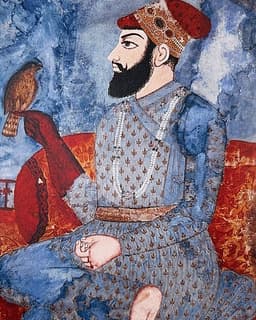
Guru Tegh Bahadur
Emperor · Modern
49.6Total

Julius Caesar
General · Ancient
82.8Total
Basic Information
Born
1621
-100
Died
1675
-44
Era
Modern
Ancient
Nationality
India
Roman Republic
Occupation
Emperor
General
Civilization
Indian
Western
Score Comparison
Military (10%)
41.3
88.0
Political (20%)
39.4
78.0
Influence (20%)
55.0
85.0
Legacy (20%)
55.0
82.0
Leadership (15%)
45.0
80.0
Strategy (15%)
53.0
85.0
TOTAL
49.6
82.8
Guru Tegh Bahadur — Complete Timeline
1664 AD
Appointed Ninth Sikh GuruPolitical Action
Guru Har Krishan appointed Tegh Bahadur as his successor, making him the ninth Sikh Guru. This continued the tradition of guru succession and brought a period of renewed focus on Sikh teachings.
SikhismGuru SuccessionLeadership
Impact: globalconstructive
1665 AD
Founded the City of Anandpur SahibCultural◆ Major
Guru Tegh Bahadur founded the city of Anandpur Sahib in the Shivalik Hills. It became a major Sikh center and later the birthplace of the Khalsa.
City FoundationAnandpur SahibSikhism
Impact: globalconstructive
Traveled and Preached Across North IndiaCultural
Guru Tegh Bahadur traveled extensively through Punjab, Uttar Pradesh, and Bihar, spreading Sikh teachings. He visited many places, including Patna and Dhaka, strengthening the Sikh community's presence.
PreachingTravelSikhism
Impact: regionalconstructive
1675 AD
Executed by Emperor Aurangzeb in DelhiPolitical Action
Guru Tegh Bahadur was arrested and executed in Delhi by order of Emperor Aurangzeb for refusing to convert to Islam and for protecting Kashmiri Pandits. His martyrdom at Chandni Chowk became a pivotal event in Sikh history.
MartyrdomMughal PersecutionSikhism
Impact: globaltragic
Julius Caesar — Complete Timeline
58 BC
Gallic WarsWar◆ Major
Caesar, as proconsul of Gaul, launched a series of campaigns that conquered all of Gaul (modern France, Belgium, and parts of Switzerland). He fought numerous battles, including against the Helvetii, the Belgae, and the Gallic chieftain Vercingetorix. The wars brought immense wealth and a loyal army to Caesar.
Gallic WarsConquestRoman Expansion
Impact: regional
49 BC
Crossing the RubiconPolitical Action◆ Major
Caesar led Legio XIII across the Rubicon River into Italy, defying the Roman Senate's order to disband his army. This act triggered a civil war against Pompey and the Optimates, ultimately leading to Caesar's dictatorship and the end of the Roman Republic.
Roman Civil WarEnd of RepublicPower Struggle
Impact: global
48 BC
Battle of PharsalusWar◆ Major
Caesar's outnumbered army defeated the larger forces of Pompey the Great at Pharsalus in Greece. Caesar's tactical use of a reserve line to counter Pompey's cavalry charge proved decisive. Pompey fled to Egypt, where he was assassinated, leaving Caesar as the undisputed master of the Roman world.
Roman Civil WarBattleDecisive Victory
Impact: regional
44 BC
Appointment as Dictator for LifePolitical Action◆ Major
The Roman Senate appointed Caesar dictator perpetuo (dictator for life), granting him unprecedented personal power. This move concentrated military, legislative, and judicial authority in one person, effectively ending the Roman Republic's traditional system of checks and balances and alarming many senators.
DictatorshipEnd of RepublicPower Consolidation
Impact: regionaldestructive
Assassination on the Ides of MarchPolitical Action◆ Major
A group of Roman senators, led by Marcus Junius Brutus and Gaius Cassius Longinus, stabbed Caesar to death at a meeting of the Senate in the Theatre of Pompey. The assassination was intended to restore the Republic, but instead triggered another civil war that led to the rise of the Roman Empire.
AssassinationRoman PoliticsEnd of Republic
Impact: globaldestructive
Expert Analysis
guru-tegh-bahadur-vs-julius-caesar
# The General and the Guru: Two Paths to Immortality
The Ides of March, 44 BCE. A Roman dictator lies bleeding on the floor of the Senate, stabbed twenty-three times by men he once called friends. Across the centuries and half a world away, in a Delhi square in 1675, an elderly Sikh guru kneels calmly before a Mughal executioner, refusing one last time to renounce his faith. Both men died violently, betrayed by the very powers they confronted. But Julius Caesar and Guru Tegh Bahadur could not have walked more different roads to their final moments—and the worlds they left behind bear the indelible stamp of those differences.
Origins
Caesar was born into the twilight of the Roman Republic, a world of brutal class warfare, senatorial intrigue, and ever-expanding frontiers. His family, the Julii, claimed descent from the goddess Venus, but their political fortunes had faded. Young Caesar learned early that in Rome, survival meant ambition, and ambition meant debt, bribery, and military glory. He was a creature of the Forum and the battlefield, fluent in the language of power.
Guru Tegh Bahadur entered a very different world: the Mughal Empire under Aurangzeb, where religious orthodoxy was enforced with the sword. Born in Amritsar in 1621, he was the son of Guru Hargobind, the sixth Sikh master who had militarized the Sikh community for self-defense. But Tegh Bahadur was no warrior by temperament. He spent years in meditation and seclusion, emerging only when called. His authority came not from legions but from a lineage of spiritual teachers, and his kingdom was the human conscience.
Rise to Power
Caesar’s ascent was a masterclass in calculated risk. He borrowed fortunes to sponsor games, forged the First Triumvirate with Pompey and Crassus, and then spent eight years conquering Gaul—a campaign that gave him a veteran army, immense wealth, and a reputation that threatened the Senate. His crossing of the Rubicon River in 49 BCE was the point of no return, a declaration of civil war against the Republic he claimed to serve.
Guru Tegh Bahadur’s rise was quieter but no less decisive. In 1664, as he meditated in a cave, the dying Guru Har Krishan declared him successor. He was reluctant, even resistant. But once he accepted, he acted with clarity. In 1665, he founded Anandpur Sahib in the Shivalik Hills, a city that would become the spiritual and military heart of the Sikh faith. He then traveled across North India—through Punjab, Uttar Pradesh, and Bihar—preaching a message of equality, devotion, and defiance against tyranny. Where Caesar marched with eagles and standards, Tegh Bahadur walked with a staff and a hymn.
Leadership & Governance
Caesar governed as he conquered: with speed, audacity, and a ruthless pragmatism that sometimes bordered on genius. As dictator, he reformed the calendar, extended citizenship to provincials, launched public works, and centralized authority in ways that made the Republic a memory. His military mind was legendary—at Alesia, he besieged a Gallic army while simultaneously building defenses against a relieving force, winning against impossible odds. His political score of 78.0 reflects a man who understood power better than justice.
Tegh Bahadur governed not a state but a community under siege. His leadership score of 76.0 and political score of 63.4 reflect a different kind of governance: moral authority over administrative machinery. He did not command armies or tax provinces. He inspired, counseled, and when necessary, sacrificed. His strategy was not battlefield maneuver but the long game of spiritual endurance. Where Caesar rewrote laws, Tegh Bahadur rewrote souls.
Triumph & Tragedy
Caesar’s greatest moment was also his undoing. His triumph over Pompey and the Senate gave him absolute power, but that power terrified the old aristocracy. He was named dictator for life, a title that sealed his fate. On March 15, 44 BCE, the daggers of Brutus, Cassius, and sixty other senators ended his life—and inadvertently launched the Roman Empire. His murder was a tragedy of miscalculation: he trusted that his clemency would earn loyalty, when it only earned contempt.
Tegh Bahadur’s tragedy was also his triumph. In 1675, Aurangzeb ordered him arrested for refusing to convert to Islam. The Mughal emperor offered him a choice: embrace Islam or die. The guru chose death. He was tortured, then beheaded in Chandni Chowk, Delhi. But his martyrdom electrified the Sikh community. His son, Guru Gobind Singh, would transform the Sikhs into the Khalsa—a brotherhood of saint-soldiers. The guru’s blood became the seed of a nation.
Character & Destiny
Caesar was a man of immense charm, intellect, and ambition. He could be generous to enemies and ruthless to rivals. His affair with Cleopatra, his adoption of Octavian, his refusal to disband his army—each decision flowed from a personality that craved not just power but recognition. He wanted to be first, and he died because he succeeded.
Tegh Bahadur was the opposite. He was called the “Ninth Lord” and “The Sword of the Guru,” but his sword was spiritual, not steel. He had no desire for empire. His destiny was shaped by a simple refusal: he would not bow. His character was not ambition but conviction. He died not because he wanted to rule, but because he refused to be ruled by fear.
Legacy
Caesar’s legacy is the Roman Empire itself. His name became synonymous with autocracy—Kaiser, Tsar, Caesar. His writings, especially the *Commentaries on the Gallic War*, shaped military strategy for two millennia. His reforms outlived him, and his adopted son Octavian became Augustus, the first emperor. His influence score of 85.0 and legacy of 82.0 reflect a man who literally changed the course of Western history.
Tegh Bahadur’s legacy is quieter but no less profound. He is remembered as the “Protector of the Weak” and the “King of Saints.” His martyrdom is commemorated annually by millions of Sikhs. His writings are part of the Guru Granth Sahib, the Sikh holy scripture. His sacrifice laid the foundation for the Sikh identity as a distinct, sovereign people. His legacy score of 80.0 captures the enduring power of a life given for faith.
Conclusion
Two men, two worlds, two deaths. One conquered the known world and was murdered by his friends. One refused to surrender his soul and was executed by his enemy. Caesar built an empire of stone and law; Tegh Bahadur built a kingdom of spirit and sacrifice. In the end, both achieved immortality—but through opposite means. Caesar changed the world by seizing power; Tegh Bahadur changed it by renouncing it. And history, in its strange, impartial way, remembers them both.
Rankings
🥇
Julius CaesarLeader
Mil: 88.0Pol: 78.0Inf: 85.0
82.8
🥈
Guru Tegh Bahadur
Mil: 41.3Pol: 39.4Inf: 55.0
49.6
+33.2 behind
How This Comparison Works
Algorithm
Each figure is scored on 6 dimensions (0—100 scale) based on structured historical data: Military (10%), Political (20%), Influence (20%), Legacy (20%), Leadership (15%), Strategy (15%). The weighted total produces the final ranking.
Data Sources
Scores are computed from structured sub-indicators in the database. Scale factors adjust for era (Ancient ×0.85, Modern ×1.0) and civilization size (Eastern ×1.05, Other ×0.80) to account for differences in population and military scale.
Maximum 3 Figures
Comparisons are limited to 2—3 figures to ensure readability and statistical meaningfulness.
Error Margins
±5 points per dimension — Sub-scores are derived from historical records with inherent uncertainty. Two figures within 5 points on a dimension should be considered roughly equivalent in that area.
Total Score Accuracy
±3 points overall — The weighted combination of 6 dimensions produces a total score with approximately ±3 points of uncertainty. Differences of less than 3 points are not statistically significant— the figures are effectively tied.
Known Limitations
- Historical records are incomplete and uneven across civilizations
- Figures from oral-tradition societies may be underrepresented
- Occupation labels can misclassify multi-role figures
- Scores measure capability and impact, not moral character
- Quantitative scoring is a comparison tool, not absolute truth
Capability Radar
Military (10%) — Battles & Warfare
Battles
31
95
Win Rate
34
92
Expansion
34
97
Political (20%) — Governance & Reform
Reform
30
90
Diplomacy
25
85
Economy
20
82
Influence (20%) — Cultural & Global Reach
Cultural
70
88
Global
60
94
Legacy (20%) — Historical Impact
Historical
75
95
Longevity
80
96
Leadership (15%) — Power & Stability
Tenure
20
75
Stability
15
60
Strategy (15%) — Tactics & Innovation
Strategy
37
94
Tactics
42
96
Reform
47
88
Similar Comparisons
Comments & Discussion
The Axe and the Pen6/17/2026
Let's stop romanticizing both deaths. Caesar's 23 stab wounds were a political hit job by senators who couldn't stomach autocracy. Tegh Bahadur's execution was state-sponsored religious persecution. Different systems, same outcome: violent death when power feels threatened. Real question is why we canonize both as martyrs when one was a power grabber and the other a genuine resistor. History loves manufacturing saints out of corpses.
战史破壁人6/17/2026
说个冷知识:恺撒在高卢杀了百万人口,特格·巴哈杜尔连刀都没拿过。结果两人都被捧上神坛——一个靠沾满鲜血的桂冠,一个靠无血殉道的头巾。这才是最讽刺的历史对比:暴力和和平都能封圣,全看胜利者怎么写史书。我站锡克古鲁,至少他没屠杀整个部落来刷成就点。
Classics Collider6/17/2026
Comparing a Roman autocrat who literally declared himself dictator perpetuo to a Sikh guru who voluntarily walked into execution is like comparing a lion to a lamb. Caesar's legacy is institutionalized power—the Roman Empire, the calendar, the very concept of imperial rule. Tegh Bahadur's legacy is moral authority—protecting Kashmiri Pandits, resisting forced conversion, dying for religious freedom. Different leagues entirely. One reshaped geopolitics; the other reshaped the soul.
数据打脸党6/17/2026
看数据才震撼:恺撒的罗马帝国撑了500年,锡克教的第十代古鲁戈宾德·辛格在特格·巴哈杜尔死后直接武装化,到19世纪建立锡克帝国。但死亡率呢?罗马军队扩张致死保守估计百万起步,锡克武装反抗莫卧儿大概几万级别。比来比去,我选古鲁这边——暴力程度低两个数量级,影响力反而更持久。效率才是王道。
Revisionist Edge6/17/2026
Spare me the hagiography. Tegh Bahadur's execution in 1675 wasn't just about religious freedom—it was a political chess move against Aurangzeb's Islamic orthodoxy, and Sikh sources admit he was offered clemency multiple times. Caesar's assassination wasn't about liberty either—it was oligarchs protecting their tax havens. Both died for systems, not principles. The only difference is which empire's propaganda machine got to write the first draft of history.