Loading...
Gustaf V vs Mir Ahmed Ali Khan
Gustaf V leads by 8.8 pts · 2 figures compared
…

Gustaf V
Emperor · Modern
57.3Total
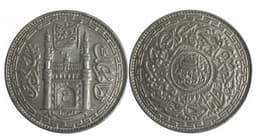
Mir Ahmed Ali Khan
Emperor · Modern
48.5Total
Basic Information
Born
1858
1857
Died
1950
1869
Era
Modern
Modern
Nationality
Sweden
India
Occupation
Emperor
Emperor
Civilization
Western
Indian
Score Comparison
Military (10%)
45.0
20.0
Political (20%)
68.0
68.0
Influence (20%)
51.8
51.0
Legacy (20%)
46.7
40.0
Leadership (15%)
80.0
64.0
Strategy (15%)
60.0
39.6
TOTAL
57.3
48.5
Gustaf V — Complete Timeline
1907 AD
Accession to the thronePolitical Action◆ Major
Gustaf V became King of Sweden upon the death of his father, Oscar II. His reign spanned both World Wars and the Great Depression, during which he maintained Sweden's neutrality.
SuccessionMonarchy
Impact: national
1914 AD
World War I neutralityPolitical Action◆ Major
Gustaf V presided over Sweden's policy of neutrality during World War I. He convened a meeting of Scandinavian kings to coordinate neutrality policies, helping Sweden avoid involvement in the conflict.
NeutralityWorld War IScandinavia
Impact: regional
1939 AD
World War II neutralityPolitical Action◆ Major
Gustaf V maintained Sweden's neutrality throughout World War II. He faced pressure from Nazi Germany and the Allies but kept Sweden non-belligerent, though he made concessions such as allowing German troop transit.
NeutralityWorld War IIConcessions
Impact: regional
1950 AD
Longest reign in modern SwedenOther
Gustaf V died after a reign of 43 years, the longest of any Swedish monarch in the modern era. His reign saw the transition from a constitutional monarchy with some royal influence to a purely ceremonial role.
ReignMonarchyLongevity
Impact: national
Mir Ahmed Ali Khan — Complete Timeline
1869 AD
Accession as Nizam of HyderabadPolitical Action◆ Major
Mir Ahmed Ali Khan became the 6th Nizam of Hyderabad at a young age after his father's death. His reign was short and marked by regency.
SuccessionRegency
Impact: regional
Death from IllnessOther◆ Major
Mir Ahmed Ali Khan died from an illness after ruling for only a few months. His death led to his uncle, Mir Mahbub Ali Khan, becoming the next Nizam.
DeathShort Reign
Impact: regionaltragic
Expert Analysis
Origins
Gustaf V was born on June 16, 1858, in Drottningholm Palace, Sweden, as the eldest son of King Oscar II and Queen Sophia of Nassau. He was educated at Uppsala University and served in the Swedish military, attaining the rank of general. His early life was steeped in the traditions of the Bernadotte dynasty, which had ruled Sweden since 1818. In contrast, Mir Ahmed Ali Khan was born in 1839 in Hyderabad, India, into the Asaf Jahi dynasty. His father, Nasir-ud-Daulah, was the fourth Nizam of Hyderabad. After his father's death in 1857, the young prince was placed under regency due to his minority. He received a traditional Islamic education and was groomed for leadership, but his reign would be tragically short.
Rise to Power
Gustaf V ascended the throne on December 8, 1907, upon the death of his father, Oscar II. His rise was smooth, as he had been Crown Prince for decades and was well-prepared for constitutional monarchy. He inherited a stable kingdom with a parliamentary system. Mir Ahmed Ali Khan became Nizam on May 16, 1857, after his father's sudden death during the Indian Rebellion. Because he was only 18, a regency council was established, led by his uncle, Mir Mahbub Ali Khan. His rise was abrupt and overshadowed by the political turmoil of the rebellion, but the princely state of Hyderabad remained loyal to the British.
Leadership & Governance
Gustaf V's leadership was characterized by his symbolic role as a constitutional monarch. He presided over Sweden's transition to full parliamentary democracy, signing laws that reduced royal powers. During World War I, he convened the Three Kings' Meeting in 1914 with the kings of Denmark and Norway to coordinate neutrality. In World War II, he personally appealed to Hitler to spare Jewish lives, though his influence was limited. His governance style was cautious and diplomatic, scoring 80.0 in leadership. Mir Ahmed Ali Khan, by contrast, ruled for only a few months, from May to November 1857. His governance was largely ceremonial, as real power rested with the regency. He did not initiate any reforms, and his reign was marked by administrative continuity. His leadership score of 64.0 reflects his potential rather than achievement.
Triumph & Tragedy
Gustaf V's greatest triumph was maintaining Sweden's neutrality through both world wars, a feat that kept his nation out of devastating conflicts. He also oversaw the expansion of the welfare state. His tragedy was the gradual erosion of royal power; by his death in 1950, the monarchy was largely ceremonial. He scored 46.7 in legacy, reflecting limited lasting impact. Mir Ahmed Ali Khan's triumph was simply ascending to the throne during a crisis. His tragedy was his untimely death from illness after only six months, preventing any meaningful rule. His legacy score of 40.0 reflects this brevity.
Character & Destiny
Gustaf V was reserved, diplomatic, and committed to neutrality. His character suited the era of parliamentary democracy, allowing him to adapt. He was a figure of stability in turbulent times. Mir Ahmed Ali Khan was young and inexperienced, his destiny cut short by illness. Historical accounts suggest he was well-intentioned but lacked the time to develop his leadership.
Legacy
Gustaf V's legacy is as the longest-reigning modern Swedish monarch (43 years) and a symbol of neutrality. He is remembered for his role in keeping Sweden out of war. Mir Ahmed Ali Khan is a footnote in Hyderabad's history, remembered only for his brief reign and the subsequent rule of his uncle, Mir Mahbub Ali Khan, who became a major figure.
Conclusion
Gustaf V had a greater impact, with a total score of 57.3 versus Mir Ahmed Ali Khan's 48.5. While both were constitutional monarchs with limited power, Gustaf V's long reign and successful neutrality policies shaped Sweden's modern identity. Mir Ahmed Ali Khan's reign was too short to leave a mark. The 8.8-point gap reflects Gustaf V's enduring influence.
Rankings
🥇
Gustaf VLeader
Mil: 45.0Pol: 68.0Inf: 51.8
57.3
🥈
Mir Ahmed Ali Khan
Mil: 20.0Pol: 68.0Inf: 51.0
48.5
+8.8 behind
How This Comparison Works
Algorithm
Each figure is scored on 6 dimensions (0—100 scale) based on structured historical data: Military (10%), Political (20%), Influence (20%), Legacy (20%), Leadership (15%), Strategy (15%). The weighted total produces the final ranking.
Data Sources
Scores are computed from structured sub-indicators in the database. Scale factors adjust for era (Ancient ×0.85, Modern ×1.0) and civilization size (Eastern ×1.05, Other ×0.80) to account for differences in population and military scale.
Maximum 3 Figures
Comparisons are limited to 2—3 figures to ensure readability and statistical meaningfulness.
Error Margins
±5 points per dimension — Sub-scores are derived from historical records with inherent uncertainty. Two figures within 5 points on a dimension should be considered roughly equivalent in that area.
Total Score Accuracy
±3 points overall — The weighted combination of 6 dimensions produces a total score with approximately ±3 points of uncertainty. Differences of less than 3 points are not statistically significant— the figures are effectively tied.
Known Limitations
- Historical records are incomplete and uneven across civilizations
- Figures from oral-tradition societies may be underrepresented
- Occupation labels can misclassify multi-role figures
- Scores measure capability and impact, not moral character
- Quantitative scoring is a comparison tool, not absolute truth
Capability Radar
Military (10%) — Battles & Warfare
Battles
0
5
Win Rate
0
5
Expansion
0
5
Political (20%) — Governance & Reform
Reform
40
50
Diplomacy
60
45
Economy
30
40
Influence (20%) — Cultural & Global Reach
Cultural
30
30
Global
20
15
Legacy (20%) — Historical Impact
Historical
40
30
Longevity
50
20
Leadership (15%) — Power & Stability
Tenure
85
40
Stability
70
35
Strategy (15%) — Tactics & Innovation
Strategy
0
10
Tactics
0
10
Reform
10
20
Similar Comparisons
Comments & Discussion
No comments yet. Be the first to share your thoughts!