Loading...
Gustaf VI Adolf vs Shah Jahan
Shah Jahan leads by 14.7 pts · 2 figures compared
…
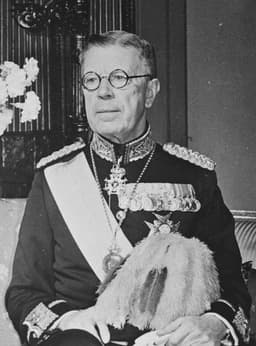
Gustaf VI Adolf
Emperor · Modern
53.1Total
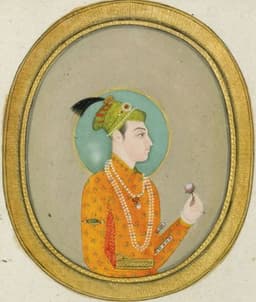
Shah Jahan
Emperor · Modern
67.8Total
Basic Information
Born
1882
1592
Died
1973
1666
Era
Modern
Modern
Nationality
Sweden
Mughal Empire
Occupation
Emperor
Emperor
Civilization
Western
Indian
Score Comparison
Military (10%)
48.7
75.0
Political (20%)
45.0
55.0
Influence (20%)
54.1
75.0
Legacy (20%)
42.5
68.0
Leadership (15%)
78.0
72.0
Strategy (15%)
56.4
55.0
TOTAL
53.1
67.8
Gustaf VI Adolf — Complete Timeline
1950 AD
Accession to the thronePolitical Action◆ Major
Gustaf VI Adolf became King of Sweden on October 29, 1950, following the death of his father, Gustaf V. His reign was marked by his scholarly interests and the continued evolution of Sweden's constitutional monarchy.
AccessionSuccession
Impact: national
1952 AD
Archaeological excavations in Italy and GreeceCultural
Gustaf VI Adolf participated in archaeological excavations in Italy (especially at San Giovenale) and Greece. He was a respected amateur archaeologist and contributed to Etruscan studies, publishing several papers.
ArchaeologyEtruscan StudiesScholarship
Impact: regionalconstructive
Presidency of the Swedish Archaeological SocietyCultural
Gustaf VI Adolf served as president of the Swedish Archaeological Society and was a member of the Royal Swedish Academy of Letters. His patronage elevated the status of archaeology in Sweden.
ArchaeologyPatronageAcademy
Impact: nationalconstructive
1954 AD
State visit to the United StatesPolitical Action
Gustaf VI Adolf made a state visit to the United States in 1954, strengthening Swedish-American relations during the Cold War. The visit included meetings with President Dwight D. Eisenhower.
State VisitDiplomacyCold War
Impact: globalconstructive
1974 AD
Support for the 1974 Instrument of GovernmentReform◆ Major
Gustaf VI Adolf accepted the 1974 Instrument of Government, which stripped the monarchy of all remaining political powers, making the king a purely ceremonial head of state. This was a major constitutional reform.
Constitutional ReformCeremonial Monarchy
Impact: national
Shah Jahan — Complete Timeline
1632 AD
Construction of the Taj MahalCultural
Shah Jahan ordered the construction of the Taj Mahal in Agra as a mausoleum for his wife Mumtaz Mahal, who died in childbirth. The building took about 20 years to complete, employing thousands of artisans. The Taj Mahal is a masterpiece of Mughal architecture and a UNESCO World Heritage site.
ArchitectureMausoleumMumtaz Mahal
Impact: globalconstructive
1639 AD
Construction of the Red FortCultural◆ Major
Shah Jahan began construction of the Red Fort in Delhi, which became the main imperial residence of the Mughal emperors. The fort complex included palaces, halls of public and private audience, and gardens. It served as the political and ceremonial center of the Mughal Empire until 1857.
ArchitectureDelhiImperial Residence
Impact: nationalconstructive
1650 AD
Construction of the Jama MasjidCultural
Shah Jahan commissioned the Jama Masjid in Delhi, one of the largest mosques in India. The mosque was built with red sandstone and white marble, featuring three domes and two minarets. It could accommodate up to 25,000 worshippers and remains a major Islamic site.
MosqueArchitectureDelhi
Impact: nationalconstructive
1658 AD
Imprisonment by AurangzebPolitical Action◆ Major
Shah Jahan fell ill, and his son Aurangzeb seized the throne. Aurangzeb defeated his brothers in the war of succession and placed Shah Jahan under house arrest in the Agra Fort. Shah Jahan spent his final years confined to a room with a view of the Taj Mahal, where he died in 1666.
ImprisonmentSuccessionAurangzeb
Impact: nationaltragic
Expert Analysis
Origins
Gustaf VI Adolf was born on November 11, 1882, in Stockholm, Sweden, as the eldest son of King Gustaf V and Queen Victoria. He was educated at Uppsala University, where he developed a deep interest in archaeology and art history. His upbringing in a constitutional monarchy shaped his view of kingship as a ceremonial role.
Shah Jahan was born on January 5, 1592, in Lahore, as Prince Khurram, the third son of Emperor Jahangir and a Rajput princess. He received a comprehensive education in military strategy, governance, and the arts. His early life was marked by court intrigue and rebellion against his father.
Rise to Power
Gustaf VI Adolf became crown prince at age 25 and served as regent during his father's absences. He ascended the throne on October 29, 1950, at age 67, after his father's death. His reign was characterized by a smooth transition of power, with no major political challenges.
Shah Jahan's rise was bloody. He rebelled against his father in 1622 but was forgiven. After Jahangir's death in 1627, Shah Jahan fought a war of succession against his brothers, executing them and their supporters. He was crowned emperor in 1628, consolidating power through military force.
Leadership & Governance
Gustaf VI Adolf led as a constitutional monarch, accepting the 1974 Instrument of Government that stripped the monarchy of all political powers. He focused on cultural patronage, supporting archaeology and science. His leadership style was scholarly and non-confrontational, scoring 78.0 in leadership but only 45.0 in political influence.
Shah Jahan governed as an absolute monarch, centralizing administration and expanding the empire. His reign (1628-1658) saw economic prosperity, architectural projects, and military campaigns. He scored 72.0 in leadership and 55.0 in political strategy. However, his heavy taxation and lavish spending strained the treasury.
Triumph & Tragedy
Gustaf VI Adolf's greatest success was his role in peacefully transitioning Sweden to a fully ceremonial monarchy, ensuring stability. His archaeological work, including excavations in Italy and Greece, earned him respect in academic circles. His tragedy was his limited impact; he scored 42.5 in legacy, as his reign lacked transformative events.
Shah Jahan's triumph is the Taj Mahal, a masterpiece of architecture and a global symbol of love. He also built the Red Fort and Jama Masjid, leaving an indelible mark on India's landscape. His tragedy was his imprisonment by his son Aurangzeb in 1658, dying under house arrest in 1666. His later years were marked by illness and loss of power.
Character & Destiny
Gustaf VI Adolf was modest, intellectual, and dedicated to duty. His character as a scholar-king shaped his destiny: he accepted the monarchy's diminishing role gracefully, earning respect but not power. Historians view him as a dignified figure who adapted to modern democracy.
Shah Jahan was ambitious, passionate, and ruthless. His love for Mumtaz Mahal inspired the Taj Mahal, but his obsession with construction and luxury contributed to the empire's decline. His character led to a tragic end, as his sons fought for succession, and he was overthrown.
Legacy
Gustaf VI Adolf's legacy is subtle: he embodied the modern constitutional monarch, scoring 54.1 in influence and 42.5 in legacy. His archaeological contributions are noted but not transformative. He is remembered as the "archaeologist king" who prioritized culture over politics.
Shah Jahan's legacy is monumental. The Taj Mahal attracts millions of visitors yearly and is a UNESCO World Heritage site. His architectural achievements define Mughal grandeur. He scored 68.0 in legacy and 75.0 in influence, far exceeding Gustaf VI Adolf.
Conclusion
Shah Jahan had a greater impact on history. His total score of 67.8 versus Gustaf VI Adolf's 53.1 reflects his enduring influence through architecture and empire. While Gustaf VI Adolf navigated a peaceful transition, his impact was limited to Sweden. Shah Jahan's creations continue to shape global culture and tourism. Therefore, Shah Jahan holds the higher position in historical significance.
Rankings
🥇
Shah JahanLeader
Mil: 75.0Pol: 55.0Inf: 75.0
67.8
🥈
Gustaf VI Adolf
Mil: 48.7Pol: 45.0Inf: 54.1
53.1
+14.7 behind
How This Comparison Works
Algorithm
Each figure is scored on 6 dimensions (0—100 scale) based on structured historical data: Military (10%), Political (20%), Influence (20%), Legacy (20%), Leadership (15%), Strategy (15%). The weighted total produces the final ranking.
Data Sources
Scores are computed from structured sub-indicators in the database. Scale factors adjust for era (Ancient ×0.85, Modern ×1.0) and civilization size (Eastern ×1.05, Other ×0.80) to account for differences in population and military scale.
Maximum 3 Figures
Comparisons are limited to 2—3 figures to ensure readability and statistical meaningfulness.
Error Margins
±5 points per dimension — Sub-scores are derived from historical records with inherent uncertainty. Two figures within 5 points on a dimension should be considered roughly equivalent in that area.
Total Score Accuracy
±3 points overall — The weighted combination of 6 dimensions produces a total score with approximately ±3 points of uncertainty. Differences of less than 3 points are not statistically significant— the figures are effectively tied.
Known Limitations
- Historical records are incomplete and uneven across civilizations
- Figures from oral-tradition societies may be underrepresented
- Occupation labels can misclassify multi-role figures
- Scores measure capability and impact, not moral character
- Quantitative scoring is a comparison tool, not absolute truth
Capability Radar
Military (10%) — Battles & Warfare
Battles
22
65
Win Rate
24
70
Expansion
32
60
Political (20%) — Governance & Reform
Reform
60
65
Diplomacy
65
60
Economy
55
75
Influence (20%) — Cultural & Global Reach
Cultural
40
90
Global
25
80
Legacy (20%) — Historical Impact
Historical
35
85
Longevity
30
85
Leadership (15%) — Power & Stability
Tenure
70
70
Stability
75
55
Strategy (15%) — Tactics & Innovation
Strategy
35
65
Tactics
34
60
Reform
40
40
Similar Comparisons
Comments & Discussion
No comments yet. Be the first to share your thoughts!