Loading...
John of Saxony vs Shah Jahan
Shah Jahan leads by 20.8 pts · 2 figures compared
…

John of Saxony
Emperor · Modern
47.0Total
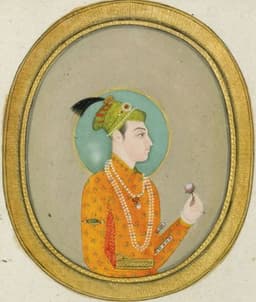
Shah Jahan
Emperor · Modern
67.8Total
Basic Information
Born
1801
1592
Died
1873
1666
Era
Modern
Modern
Nationality
Saxony
Mughal Empire
Occupation
Emperor
Emperor
Civilization
Western
Indian
Score Comparison
Military (10%)
43.2
75.0
Political (20%)
32.2
55.0
Influence (20%)
53.3
75.0
Legacy (20%)
40.0
68.0
Leadership (15%)
58.8
72.0
Strategy (15%)
57.3
55.0
TOTAL
47.0
67.8
John of Saxony — Complete Timeline
1854 AD
Accession as King of SaxonyPolitical Action◆ Major
John became King of Saxony on 9 August 1854, succeeding his brother Frederick Augustus II. His reign was marked by constitutional governance and cultural patronage, reflecting his scholarly interests.
SaxonySuccession
Impact: national
1865 AD
Translation of Dante's Divine ComedyCultural◆ Major
King John published his complete translation of Dante Alighieri's Divine Comedy into German, a work he had begun as crown prince. The translation was praised for its accuracy and literary quality, earning him the nickname 'the Dante King'.
LiteratureTranslationDante
Impact: regionalconstructive
1866 AD
Austro-Prussian War neutralityWar◆ Major
During the Austro-Prussian War, King John initially sided with Austria but after Saxony's defeat at the Battle of K
Austro-Prussian WarSaxonyPrussia
Impact: nationaldestructive
1871 AD
Support for German unificationPolitical Action◆ Major
King John supported the unification of Germany under Prussian leadership. He proclaimed the German Empire in Versailles on 18 January 1871, alongside other German monarchs, and Saxony became a state within the empire.
German unificationSaxonyEmpire
Impact: nationalconstructive
Shah Jahan — Complete Timeline
1632 AD
Construction of the Taj MahalCultural
Shah Jahan ordered the construction of the Taj Mahal in Agra as a mausoleum for his wife Mumtaz Mahal, who died in childbirth. The building took about 20 years to complete, employing thousands of artisans. The Taj Mahal is a masterpiece of Mughal architecture and a UNESCO World Heritage site.
ArchitectureMausoleumMumtaz Mahal
Impact: globalconstructive
1639 AD
Construction of the Red FortCultural◆ Major
Shah Jahan began construction of the Red Fort in Delhi, which became the main imperial residence of the Mughal emperors. The fort complex included palaces, halls of public and private audience, and gardens. It served as the political and ceremonial center of the Mughal Empire until 1857.
ArchitectureDelhiImperial Residence
Impact: nationalconstructive
1650 AD
Construction of the Jama MasjidCultural
Shah Jahan commissioned the Jama Masjid in Delhi, one of the largest mosques in India. The mosque was built with red sandstone and white marble, featuring three domes and two minarets. It could accommodate up to 25,000 worshippers and remains a major Islamic site.
MosqueArchitectureDelhi
Impact: nationalconstructive
1658 AD
Imprisonment by AurangzebPolitical Action◆ Major
Shah Jahan fell ill, and his son Aurangzeb seized the throne. Aurangzeb defeated his brothers in the war of succession and placed Shah Jahan under house arrest in the Agra Fort. Shah Jahan spent his final years confined to a room with a view of the Taj Mahal, where he died in 1666.
ImprisonmentSuccessionAurangzeb
Impact: nationaltragic
Expert Analysis
Origins
John of Saxony was born on 12 December 1801 in Dresden, the third son of Elector Frederick Augustus III. He received a thorough education, studying law, history, and languages, and developed a passion for Italian literature. His father's abdication in 1806 and the Napoleonic Wars shaped his early worldview. John became crown prince in 1830 after his brother Frederick Augustus II ascended the throne. He married Princess Amalie Auguste of Bavaria in 1822, strengthening ties with Bavaria.
Shah Jahan was born on 5 January 1592 in Lahore, the third son of Emperor Jahangir. His birth name was Khurram, meaning 'joyful'. He was educated in courtly arts, military tactics, and Persian literature. His grandfather Akbar the Great personally oversaw his early training. Shah Jahan married Arjumand Banu Begum (later Mumtaz Mahal) in 1612, who became his chief consort and the love of his life. She accompanied him on campaigns and bore fourteen children.
Rise to Power
John became King of Saxony on 9 August 1854 after his brother Frederick Augustus II died from a carriage accident. He was already 52 years old, having spent decades as crown prince engaged in scholarly pursuits. His accession was peaceful, and he continued Saxony's constitutional monarchy. He had to navigate the complex politics of the German Confederation, balancing between Austrian and Prussian influences.
Shah Jahan rose through rebellion. In 1622, he led a revolt against his father Jahangir, but was defeated and submitted. After Jahangir's death in 1627, a war of succession erupted among his sons. Shah Jahan, with the support of his father-in-law Asaf Khan, defeated his brothers and executed his rivals. He was crowned emperor on 14 February 1628 at Agra. His reign began with the execution of his brother Shahryar and nephews, consolidating his power.
Leadership & Governance
John was a constitutional monarch. He worked within the framework of Saxony's 1831 constitution, which established a bicameral parliament. He approved liberal reforms like freedom of the press and religious tolerance. However, he remained loyal to the German Confederation and initially sided with Austria in the Austro-Prussian War of 1866. After Saxony's defeat at Königgrätz, he accepted Prussian terms and joined the North German Confederation. He supported German unification under Prussian leadership, proclaiming William I as German Emperor in 1871. His political score of 32.2 reflects his limited real power.
Shah Jahan ruled as an absolute monarch. He centralized administration, expanded the empire, and promoted Persian culture. His governance was marked by grand architectural projects that drained the treasury. He reduced taxes during famines but spent extravagantly on buildings. His military campaigns in the Deccan and Central Asia extended Mughal control. However, his later years saw revolts and the rise of his son Aurangzeb. His political score of 55.0 indicates stronger control but also mismanagement.
Triumph & Tragedy
John's greatest triumph was his translation of Dante's Divine Comedy into German, completed in 1839. This scholarly work earned him the nickname 'the Dante king' and is still used today. He also successfully navigated Saxony through the turbulent unification of Germany, maintaining its sovereignty within the empire. His tragedy was the loss of Saxon independence after the Austro-Prussian War. He was forced to accept Prussian hegemony, which diminished Saxony's influence. His leadership score of 58.8 reflects his competent but constrained rule.
Shah Jahan's greatest triumph is the Taj Mahal, built between 1632 and 1653 as a mausoleum for Mumtaz Mahal. It is a UNESCO World Heritage site and one of the Seven Wonders of the World. He also built the Red Fort and Jama Masjid in Delhi, showcasing Mughal architectural genius. His tragedy was his imprisonment by his son Aurangzeb in 1658. He spent his final eight years under house arrest in Agra Fort, gazing at the Taj Mahal. His military score of 75.0 reflects his successful campaigns, but his strategy score of 55.0 shows flawed succession planning.
Character & Destiny
John was a scholarly, cautious, and dutiful ruler. He prioritized cultural achievements over political ambition. His love for Dante reflected his Renaissance humanist ideals. His character led him to accept Saxon subordination to Prussia, as he valued stability over confrontation. He died on 29 October 1873, respected as a learned monarch.
Shah Jahan was ambitious, passionate, and extravagant. His love for Mumtaz Mahal drove his greatest architectural feats. But his favoritism and neglect of his other sons sowed discord. His character—pride and obsession—led to his downfall. He died on 22 January 1666, a prisoner in his own palace.
Legacy
John's legacy is primarily literary. His Dante translation remains a standard German edition. He also supported the arts and sciences, founding the Saxon Academy of Sciences. Politically, he was a transitional figure who facilitated Saxony's integration into a unified Germany. His influence score of 53.3 reflects his niche but enduring impact.
Shah Jahan's legacy is monumental. The Taj Mahal is a global symbol of love and Mughal architecture. His building projects defined an era. However, his reign also marked the beginning of Mughal decline due to fiscal strain and succession wars. His legacy score of 68.0 is high, but his influence is cultural rather than political.
Conclusion
Shah Jahan had a greater impact overall, with a total score of 67.8 compared to John's 47.0. While John's scholarly contributions are notable, Shah Jahan's architectural legacy is universally recognized and draws millions of visitors annually. Shah Jahan's military and leadership scores are significantly higher (75.0 vs 43.2 military, 72.0 vs 58.8 leadership). His political influence was more direct, though his governance was flawed. John's reign was constrained by constitutional limits and Prussian dominance, limiting his impact. Therefore, Shah Jahan is the more significant historical figure, despite his personal tragedy.
Rankings
🥇
Shah JahanLeader
Mil: 75.0Pol: 55.0Inf: 75.0
67.8
🥈
John of Saxony
Mil: 43.2Pol: 32.2Inf: 53.3
47.0
+20.8 behind
How This Comparison Works
Algorithm
Each figure is scored on 6 dimensions (0—100 scale) based on structured historical data: Military (10%), Political (20%), Influence (20%), Legacy (20%), Leadership (15%), Strategy (15%). The weighted total produces the final ranking.
Data Sources
Scores are computed from structured sub-indicators in the database. Scale factors adjust for era (Ancient ×0.85, Modern ×1.0) and civilization size (Eastern ×1.05, Other ×0.80) to account for differences in population and military scale.
Maximum 3 Figures
Comparisons are limited to 2—3 figures to ensure readability and statistical meaningfulness.
Error Margins
±5 points per dimension — Sub-scores are derived from historical records with inherent uncertainty. Two figures within 5 points on a dimension should be considered roughly equivalent in that area.
Total Score Accuracy
±3 points overall — The weighted combination of 6 dimensions produces a total score with approximately ±3 points of uncertainty. Differences of less than 3 points are not statistically significant— the figures are effectively tied.
Known Limitations
- Historical records are incomplete and uneven across civilizations
- Figures from oral-tradition societies may be underrepresented
- Occupation labels can misclassify multi-role figures
- Scores measure capability and impact, not moral character
- Quantitative scoring is a comparison tool, not absolute truth
Capability Radar
Military (10%) — Battles & Warfare
Battles
26
65
Win Rate
29
70
Expansion
31
60
Political (20%) — Governance & Reform
Reform
20
65
Diplomacy
25
60
Economy
20
75
Influence (20%) — Cultural & Global Reach
Cultural
40
90
Global
20
80
Legacy (20%) — Historical Impact
Historical
30
85
Longevity
20
85
Leadership (15%) — Power & Stability
Tenure
30
70
Stability
25
55
Strategy (15%) — Tactics & Innovation
Strategy
33
65
Tactics
36
60
Reform
41
40
Similar Comparisons
Comments & Discussion
No comments yet. Be the first to share your thoughts!