Loading...
Gustavo Diaz Ordaz vs Julius Caesar
Julius Caesar leads by 34.0 pts · 2 figures compared
…
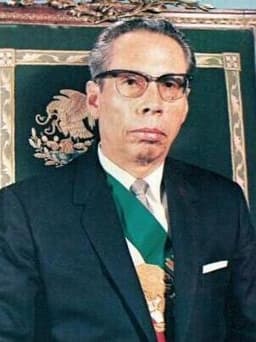
Gustavo Diaz Ordaz
Politician · Modern
48.8Total

Julius Caesar
General · Ancient
82.8Total
Basic Information
Born
1911
-100
Died
1979
-44
Era
Modern
Ancient
Nationality
Mexico
Roman Republic
Occupation
Politician
General
Civilization
Western
Western
Score Comparison
Military (10%)
49.2
88.0
Political (20%)
39.4
78.0
Influence (20%)
51.8
85.0
Legacy (20%)
43.3
82.0
Leadership (15%)
67.0
80.0
Strategy (15%)
41.8
85.0
TOTAL
48.8
82.8
Gustavo Diaz Ordaz — Complete Timeline
1968 AD
Tlatelolco MassacrePolitical Action
On October 2, 1968, Mexican security forces opened fire on student protesters in the Plaza de las Tres Culturas in Tlatelolco, Mexico City. Hundreds were killed. President Gustavo D
MassacreRepressionStudent Movement
Impact: nationaltragic
1970 AD
Enactment of the 1970 Federal Labor LawReform◆ Major
Díaz Ordaz signed a new Federal Labor Law that expanded workers' rights, including profit-sharing, overtime pay, and job security. This was a progressive reform that strengthened the labor code, though critics noted it also increased state control over unions.
Labor LawWorkers' RightsReform
Impact: nationalconstructive
1971 AD
Corpus Christi Massacre (El Halconazo)Political Action◆ Major
On June 10, 1971, a paramilitary group known as Los Halcones attacked student demonstrators in Mexico City, killing dozens. While D
MassacreParamilitaryRepression
Impact: nationaltragic
Julius Caesar — Complete Timeline
58 BC
Gallic WarsWar◆ Major
Caesar, as proconsul of Gaul, launched a series of campaigns that conquered all of Gaul (modern France, Belgium, and parts of Switzerland). He fought numerous battles, including against the Helvetii, the Belgae, and the Gallic chieftain Vercingetorix. The wars brought immense wealth and a loyal army to Caesar.
Gallic WarsConquestRoman Expansion
Impact: regional
49 BC
Crossing the RubiconPolitical Action◆ Major
Caesar led Legio XIII across the Rubicon River into Italy, defying the Roman Senate's order to disband his army. This act triggered a civil war against Pompey and the Optimates, ultimately leading to Caesar's dictatorship and the end of the Roman Republic.
Roman Civil WarEnd of RepublicPower Struggle
Impact: global
48 BC
Battle of PharsalusWar◆ Major
Caesar's outnumbered army defeated the larger forces of Pompey the Great at Pharsalus in Greece. Caesar's tactical use of a reserve line to counter Pompey's cavalry charge proved decisive. Pompey fled to Egypt, where he was assassinated, leaving Caesar as the undisputed master of the Roman world.
Roman Civil WarBattleDecisive Victory
Impact: regional
44 BC
Appointment as Dictator for LifePolitical Action◆ Major
The Roman Senate appointed Caesar dictator perpetuo (dictator for life), granting him unprecedented personal power. This move concentrated military, legislative, and judicial authority in one person, effectively ending the Roman Republic's traditional system of checks and balances and alarming many senators.
DictatorshipEnd of RepublicPower Consolidation
Impact: regionaldestructive
Assassination on the Ides of MarchPolitical Action◆ Major
A group of Roman senators, led by Marcus Junius Brutus and Gaius Cassius Longinus, stabbed Caesar to death at a meeting of the Senate in the Theatre of Pompey. The assassination was intended to restore the Republic, but instead triggered another civil war that led to the rise of the Roman Empire.
AssassinationRoman PoliticsEnd of Republic
Impact: globaldestructive
Expert Analysis
gustavo-diaz-ordaz-vs-julius-caesar
### The Man Who Crossed the Rubicon and the Man Who Ordered the Massacre
On a winter day in 44 BCE, Gaius Julius Caesar walked into the Senate chamber, unarmed and alone. Within minutes, he was bleeding on the marble floor, stabbed twenty-three times by men he had called friends. Across the chasm of two millennia, on the evening of October 2, 1968, Gustavo Díaz Ordaz sat in the presidential palace of Mexico City, watching as his security forces opened fire on unarmed students in the Plaza de las Tres Culturas. One man had conquered the known world and then lost it to a conspiracy of senators; the other had won a presidency and then lost his place in history to a single night of violence. What drives one leader to build an empire and another to preside over a massacre? The answer lies not in their eras but in the very different worlds they inhabited and the choices those worlds forced upon them.
### Origins
Julius Caesar was born into a patrician family that had fallen on hard times, its glory a fading memory of ancient ancestors. The Roman Republic of the first century BCE was a cauldron of ambition, where a man could rise by eloquence, military prowess, and sheer audacity. Young Caesar learned that the path to power lay not in inherited status but in the ability to command armies, win battles, and charm the masses. His uncle Marius had been a populist general; his aunt’s husband, Sulla, a dictator. From his earliest years, Caesar understood that Rome was a world where men killed or were killed, and where the only law that mattered was the one you could enforce.
Gustavo Díaz Ordaz was born in 1911 in Puebla, Mexico, into a middle-class family of lawyers and bureaucrats. The Mexican Revolution had just begun, and the old order of Porfirio Díaz was crumbling. But unlike Caesar, Díaz Ordaz came of age in a system that rewarded loyalty and patience, not brilliance and risk. He studied law, entered the civil service, and climbed the ladder of the Institutional Revolutionary Party (PRI), the single party that had ruled Mexico since the Revolution. In this world, the highest virtue was obedience to the party, the greatest sin was stepping out of line. While Caesar learned to gamble everything on a single throw of the dice, Díaz Ordaz learned to wait for his turn.
### Rise to Power
Caesar’s rise was a masterpiece of calculated risk. He borrowed vast sums to fund political campaigns, formed the First Triumvirate with Pompey and Crassus, and then spent eight years conquering Gaul—a campaign that made him fabulously rich and gave him a loyal army. When the Senate ordered him to disband his legions and return to Rome as a private citizen, he knew that would mean exile or death. So he crossed the Rubicon River in 49 BCE, leading his army into Italy, and launched a civil war that would end with him as dictator for life. The key turning point was not a single event but a series of gambles: each one risked everything, and each one paid off.
Díaz Ordaz’s rise was far more sedate. He served as a senator, a federal deputy, and then Secretary of the Interior under President Adolfo López Mateos. In 1964, the PRI selected him as its presidential candidate, and he won the election with 88% of the vote—a foregone conclusion in a one-party state. His path to power required no crossing of rivers, no civil wars, no acts of personal courage. It required only that he be acceptable to the party elders and that he not rock the boat. The contrast is stark: Caesar earned his power through conquest; Díaz Ordaz received his as a gift from the system.
### Leadership & Governance
As dictator, Caesar launched a series of reforms that transformed Rome. He reorganized the calendar, introduced the Julian calendar that would be used for 1,600 years. He granted citizenship to people in the provinces, began public works projects to employ the poor, and reformed debt laws to ease the burden on the lower classes. His military genius was beyond dispute: at the Battle of Alesia in 52 BCE, he defeated a Gallic army three times the size of his own through brilliant siegecraft and tactical patience. But his political wisdom was more ambiguous. He centralized power, packed the Senate with his supporters, and accepted the title of dictator for life—actions that convinced his enemies that he aimed to become king.
Díaz Ordaz governed a Mexico that was experiencing rapid economic growth—the “Mexican Miracle” of the 1960s. He signed the 1970 Federal Labor Law, which expanded workers’ rights to profit-sharing, overtime pay, and job security. On paper, it was a progressive reform. But his political approach was authoritarian and paternalistic. He saw dissent as a threat to order, and he responded to protests not with negotiation but with force. The 1968 student movement, which began as a demand for dialogue, was met with the Tlatelolco massacre, where hundreds—perhaps thousands—of unarmed civilians were killed. Then, in 1971, paramilitaries known as Los Halcones attacked student demonstrators again, in what became known as the Corpus Christi Massacre. Where Caesar’s genius lay in winning loyalty through victory, Díaz Ordaz’s tragedy was that he could only govern through fear.
### Triumph & Tragedy
Caesar’s greatest triumph was the conquest of Gaul, a feat that brought immense wealth and prestige to Rome and to himself. His greatest tragedy was his failure to secure his legacy. He pardoned his enemies, thinking they would be grateful; instead, they plotted his death. On the Ides of March, 44 BCE, they struck. His final moments—falling at the feet of a statue of his rival Pompey—were a bitter irony: the man who had conquered the world could not conquer the hatred he had sown.
Díaz Ordaz’s greatest triumph was, by any objective measure, the 1968 Summer Olympics in Mexico City, which he oversaw with great fanfare. But that triumph was forever stained by the Tlatelolco massacre, which occurred just ten days before the Games opened. His tragedy was that he could not see the students as anything but a threat. He had the power to negotiate, to listen, to show mercy. Instead, he chose violence. The massacre became the defining event of his presidency, overshadowing every reform he ever signed into law.
### Character & Destiny
Caesar was driven by an insatiable ambition that he never bothered to hide. He was generous to his soldiers, ruthless to his enemies, and supremely confident in his own abilities. His character—bold, calculating, and utterly fearless—shaped his destiny. He believed he could bend history to his will, and for a time, he did. But that same confidence made him careless, and it cost him his life.
Díaz Ordaz was a different kind of man: cautious, bureaucratic, and deeply insecure. He saw conspiracies everywhere, and he responded to opposition with rigidity rather than flexibility. His character—obedient to authority, fearful of disorder, and lacking in vision—shaped his destiny. He chose the path of repression because he could not imagine any other way. In doing so, he turned a moment of national crisis into a permanent scar on Mexican history.
### Legacy
Caesar’s legacy is immense. His conquests laid the foundation for the Roman Empire, which would endure for centuries. His name became synonymous with imperial power: “Kaiser” in German, “Tsar” in Russian. He is remembered as a military genius, a political reformer, and a tragic hero of Shakespearean proportions. His legacy is complex, debated, and ultimately, admired.
Díaz Ordaz’s legacy is a warning. He is remembered in Mexico as the president who ordered the Tlatelolco massacre, the man who killed his own people. His reforms are footnotes; his violence is the headline. In the popular memory, he is not a builder but a destroyer, not a leader but a tyrant. His name is invoked not with admiration but with sorrow.
### Conclusion
Two men, two worlds, two destinies. Caesar crossed the Rubicon and changed history; Díaz Ordaz crossed the line and was consumed by it. One built an empire; the other presided over a massacre. The difference was not in their times but in their character. Caesar gambled for glory and won, until he gambled once too often. Díaz Ordaz played it safe and lost everything. In the end, history judges not by intentions but by actions. Caesar’s actions reshaped the world; Díaz Ordaz’s actions broke it. And we still live with the consequences of both.
Rankings
🥇
Julius CaesarLeader
Mil: 88.0Pol: 78.0Inf: 85.0
82.8
🥈
Gustavo Diaz Ordaz
Mil: 49.2Pol: 39.4Inf: 51.8
48.8
+34.0 behind
How This Comparison Works
Algorithm
Each figure is scored on 6 dimensions (0—100 scale) based on structured historical data: Military (10%), Political (20%), Influence (20%), Legacy (20%), Leadership (15%), Strategy (15%). The weighted total produces the final ranking.
Data Sources
Scores are computed from structured sub-indicators in the database. Scale factors adjust for era (Ancient ×0.85, Modern ×1.0) and civilization size (Eastern ×1.05, Other ×0.80) to account for differences in population and military scale.
Maximum 3 Figures
Comparisons are limited to 2—3 figures to ensure readability and statistical meaningfulness.
Error Margins
±5 points per dimension — Sub-scores are derived from historical records with inherent uncertainty. Two figures within 5 points on a dimension should be considered roughly equivalent in that area.
Total Score Accuracy
±3 points overall — The weighted combination of 6 dimensions produces a total score with approximately ±3 points of uncertainty. Differences of less than 3 points are not statistically significant— the figures are effectively tied.
Known Limitations
- Historical records are incomplete and uneven across civilizations
- Figures from oral-tradition societies may be underrepresented
- Occupation labels can misclassify multi-role figures
- Scores measure capability and impact, not moral character
- Quantitative scoring is a comparison tool, not absolute truth
Capability Radar
Military (10%) — Battles & Warfare
Battles
31
95
Win Rate
30
92
Expansion
35
97
Political (20%) — Governance & Reform
Reform
20
90
Diplomacy
30
85
Economy
40
82
Influence (20%) — Cultural & Global Reach
Cultural
20
88
Global
30
94
Legacy (20%) — Historical Impact
Historical
40
95
Longevity
30
96
Leadership (15%) — Power & Stability
Tenure
60
75
Stability
10
60
Strategy (15%) — Tactics & Innovation
Strategy
39
94
Tactics
39
96
Reform
43
88
Similar Comparisons
Comments & Discussion
RubiconReckoner6/17/2026
Caesar crossed rivers, Díaz Ordaz crossed lines. One conquered Gaul, the other massacred students. The key difference? Caesar understood propaganda—his Commentaries are masterclass spin. Díaz Ordaz just ordered bullets and hoped everyone would forget. Spoiler: we didn't. Mexico ’68 wasn’t a political miscalculation; it was a moral failure dressed in presidential sash. Caesar at least left a legacy of genius; Ordaz left a legacy of blood and silence.
TogaTactician6/17/2026
凯撒是战略家,奥达斯是刽子手。前者在高卢打了八年仗,每次都亲自站前线;后者在特拉克洛科广场四小时就让军队干了脏活。凯撒的敌人是森特里乌斯、庞培、西塞罗——都是人。奥达斯的敌人是400个手无寸铁的小孩。别拿古代将军跟现代政客比:一个赌命,一个赌别人的命。
NumberCruncher_776/17/2026
Let’s be real: comparing body counts across millennia is intellectually lazy. Caesar’s Gallic Wars killed an estimated 1–2 million. Díaz Ordaz’s Tlatelolco massacre left 30–300 dead (depending on whose records you trust). But here’s the kicker: Caesar’s violence built an empire with documentation; Ordaz’s violence destroyed a presidency with cover-ups. One’s a war crime with a library; the other’s a massacre with a secret file. Different scales, same ugly truth: power corrupts, but accountabilit
拉丁律令6/17/2026
数据派别总爱拿数字比惨,但忽略历史语境才有问题。凯撒的屠杀是罗马扩张的一部分,法律框架内有军令系统;奥达斯的屠杀是总统直接下令镇压和平示威,违反宪法第29条。一个是国家间的战争,一个是国家对自己的战争。凯撒死了还有布鲁图斯刺杀他;奥达斯呢?他1970年下台后,活到1993年,从未被审判。这才是真正的比较:谁为血付出了代价。
AncientEchoes6/17/2026
What strikes me is the contrast in historical reckoning. Caesar became legend, then tyrant, then icon—his assassins became the villains. Díaz Ordaz? He’s a footnote in a cautionary tale, remembered only as the man who made Tlatelolco a synonym for state terror. Caesar’s ambition was monumental; Ordaz’s was petty. One wanted to rule the world; the other just wanted to stay in power for six years. That’s the difference between a tragic hero and a tragic footnote.
墨城往昔6/17/2026
我最在意他们面对历史的态度。凯撒写书辩护自己,奥达斯销毁文件。凯撒面对元老院,奥达斯面对