Loading...
Guyuk Khan vs Joanna of Castile
Guyuk Khan leads by 4.5 pts · 2 figures compared
…
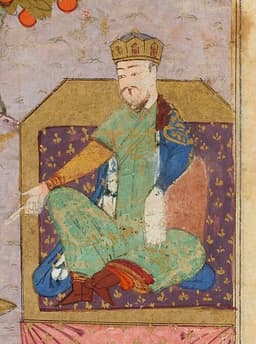
Guyuk Khan
Emperor · Medieval
39.8Total

Joanna of Castile
Emperor · Medieval
35.3Total
Basic Information
Born
1206
1479
Died
1248
1555
Era
Medieval
Medieval
Nationality
Mongol Empire
Spain
Occupation
Emperor
Emperor
Civilization
Eastern
Western
Score Comparison
Military (10%)
50.0
14.8
Political (20%)
29.3
25.0
Influence (20%)
48.6
49.4
Legacy (20%)
37.5
40.8
Leadership (15%)
39.0
31.2
Strategy (15%)
30.3
28.4
TOTAL
39.8
35.3
Guyuk Khan — Complete Timeline
1246 AD
Election as Great KhanPolitical Action
Güyük was elected as the third Great Khan of the Mongol Empire at a kurultai near the Mongol capital Karakorum. His election was supported by his mother Töregene, who had served as regent, but was opposed by Batu, leading to tensions.
SuccessionMongol EmpireKurultai
Impact: global
Reception of Papal Envoy John of Plano CarpiniCultural
Güyük received the Franciscan envoy John of Plano Carpini at his court, who delivered a letter from Pope Innocent IV demanding the Mongols cease their invasions. Güyük's reply demanded the Pope's submission to Mongol authority, reflecting Mongol imperial ideology.
DiplomacyPapacyMongol Empire
Impact: regional
1247 AD
Conflict with Batu KhanPolitical Action◆ Major
Güyük planned a military campaign against his cousin Batu, ruler of the Golden Horde, due to Batu's refusal to recognize his authority. The conflict was averted when Güyük died in 1248, but it deepened the rift between the Toluid and Jochid lines.
Mongol Civil WarSuccessionGolden Horde
Impact: regionaldestructive
1248 AD
Death and Succession CrisisPolitical Action◆ Major
Güyük died suddenly in 1248 while marching west to confront Batu, possibly poisoned. His death left the empire without a clear successor, leading to a regency by his widow Oghul Qaimish and eventually the election of Möngke in 1251.
DeathSuccessionMongol Empire
Impact: globaltragic
Joanna of Castile — Complete Timeline
1506 AD
Death of Philip I of CastilePolitical Action
After the death of her husband Philip I, Joanna of Castile became the nominal queen of Castile. However, her father Ferdinand II of Aragon and later her son Charles I of Spain assumed regency, citing her mental instability. Joanna was confined to the castle of Tordesillas for the rest of her life.
RegencyImprisonment
Impact: nationaltragic
1507 AD
Refusal to remarryPolitical Action
After the death of her husband Philip I, Joanna refused to remarry, despite pressure from her father Ferdinand II and other nobles. Her refusal was interpreted as a sign of mental instability, but it also reflected her deep attachment to Philip and her desire to maintain her independence.
Personal choicePolitical pressure
Impact: national
1509 AD
Confinement at TordesillasPolitical Action◆ Major
Joanna of Castile was confined to the Royal Palace of Tordesillas by order of her father Ferdinand II, who declared her unfit to rule. She remained imprisoned there for 46 years, isolated from political affairs, while her son Charles I governed Castile in her name.
ImprisonmentMental health
Impact: nationaltragic
Expert Analysis
Origins
Güyük Khan was born around 1206, the eldest son of Ögedei Khan and grandson of Genghis Khan. He grew up in the Mongol imperial court, immersed in the culture of conquest and tribal politics. His early life was marked by participation in military campaigns, including the invasion of Eastern Europe. Joanna of Castile was born on November 6, 1479, in Toledo, Spain, the third child of Ferdinand II of Aragon and Isabella I of Castile. She received a humanist education, learning Latin, languages, and courtly etiquette. Her parents' unification of Spain set the stage for her future role as heir.
Rise to Power
Güyük's path to power was contested. After Ögedei's death in 1241, the regency of his widow Töregene maneuvered to secure Güyük's election as Great Khan in 1246 at a kurultai near Karakorum. His election was supported by his mother but opposed by Batu Khan, ruler of the Golden Horde. Güyük's reign began with a show of authority, receiving envoys like John of Plano Carpini from Pope Innocent IV. Joanna became heir after her siblings' deaths. She married Philip I of Castile in 1496, linking Spain to the Habsburgs. Upon her mother Isabella's death in 1504, Joanna became queen of Castile, but her father Ferdinand and husband Philip jockeyed for control. Philip's death in 1506 left Joanna nominal ruler, but her father declared her unfit and confined her.
Leadership & Governance
Güyük attempted to centralize Mongol rule, continuing the expansionist policies of his predecessors. He demanded submission from foreign rulers, as seen in his letter to the Pope. However, his reign was short (1246-1248) and marked by internal conflict, particularly with Batu. He planned a campaign against Batu but died en route. Joanna's governance was nonexistent in practice. She was declared insane by her father and son, Charles V, and imprisoned at Tordesillas from 1509 until her death in 1555. She never effectively ruled; her name was used by regents. Her political score of 25.0 reflects this lack of agency, while Güyük's political score of 29.3 shows limited but real authority.
Triumph & Tragedy
Güyük's greatest success was being elected Great Khan, maintaining the Mongol Empire's unity temporarily. He also asserted Mongol supremacy in diplomatic exchanges. His tragedy was his sudden death in 1248, possibly poisoned, which triggered a succession crisis that fragmented the empire. His military score of 50.0 indicates moderate success, but his strategy score of 30.3 suggests poor planning. Joanna's triumph was her survival as a symbol of legitimate rule; her tragedy was her confinement for 46 years, used as a pawn by male relatives. Her influence score of 49.4 is high because her legacy as 'Juana la Loca' sparked historical debate, but her leadership score of 31.2 reflects her inability to rule.
Character & Destiny
Güyük was described as intelligent but harsh and prone to conflict. His decision to march against Batu alienated a key ally and led to his mysterious death. His character—stubborn and ambitious—shaped his short reign. Joanna's character is debated: some argue she was truly mentally ill, while others believe she was a victim of political manipulation. Her refusal to remarry after Philip's death and her alleged madness were used to justify her confinement. Her destiny was to be a tragic figure, her name synonymous with insanity.
Legacy
Güyük's legacy is mixed. He is remembered as a minor Great Khan whose death accelerated the Mongol Empire's division. His reign had little lasting impact; the empire continued under Möngke and Kublai. His legacy score of 37.5 reflects limited enduring influence. Joanna's legacy is more complex. She is a symbol of female power suppressed, inspiring literature and art. Her confinement by her father and son highlights the era's patriarchal structures. Her legacy score of 40.8 is slightly higher, as her story resonates through history.
Conclusion
Despite Güyük's higher total score (39.8 vs 35.3), Joanna's influence and legacy are arguably greater due to her symbolic power. Güyük's reign was brief and inconsequential; he failed to shape the Mongol Empire's trajectory. Joanna, though powerless, became an icon of tragic royalty and a cautionary tale. Her story continues to be studied, while Güyük is a footnote. Thus, Joanna of Castile had a greater impact on historical consciousness.
Rankings
🥇
Guyuk KhanLeader
Mil: 50.0Pol: 29.3Inf: 48.6
39.8
🥈
Joanna of Castile
Mil: 14.8Pol: 25.0Inf: 49.4
35.3
+4.5 behind
How This Comparison Works
Algorithm
Each figure is scored on 6 dimensions (0—100 scale) based on structured historical data: Military (10%), Political (20%), Influence (20%), Legacy (20%), Leadership (15%), Strategy (15%). The weighted total produces the final ranking.
Data Sources
Scores are computed from structured sub-indicators in the database. Scale factors adjust for era (Ancient ×0.85, Modern ×1.0) and civilization size (Eastern ×1.05, Other ×0.80) to account for differences in population and military scale.
Maximum 3 Figures
Comparisons are limited to 2—3 figures to ensure readability and statistical meaningfulness.
Error Margins
±5 points per dimension — Sub-scores are derived from historical records with inherent uncertainty. Two figures within 5 points on a dimension should be considered roughly equivalent in that area.
Total Score Accuracy
±3 points overall — The weighted combination of 6 dimensions produces a total score with approximately ±3 points of uncertainty. Differences of less than 3 points are not statistically significant— the figures are effectively tied.
Known Limitations
- Historical records are incomplete and uneven across civilizations
- Figures from oral-tradition societies may be underrepresented
- Occupation labels can misclassify multi-role figures
- Scores measure capability and impact, not moral character
- Quantitative scoring is a comparison tool, not absolute truth
Capability Radar
Military (10%) — Battles & Warfare
Battles
20
6
Win Rate
20
8
Expansion
10
13
Political (20%) — Governance & Reform
Reform
10
5
Diplomacy
20
15
Economy
10
5
Influence (20%) — Cultural & Global Reach
Cultural
10
20
Global
10
15
Legacy (20%) — Historical Impact
Historical
15
30
Longevity
10
25
Leadership (15%) — Power & Stability
Tenure
15
10
Stability
10
5
Strategy (15%) — Tactics & Innovation
Strategy
15
15
Tactics
15
18
Reform
10
21
Similar Comparisons
Comments & Discussion
No comments yet. Be the first to share your thoughts!