Loading...
Guyuk Khan vs Julius Caesar
Julius Caesar leads by 43.0 pts · 2 figures compared
…
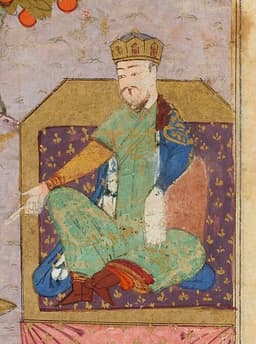
Guyuk Khan
Emperor · Medieval
39.8Total

Julius Caesar
General · Ancient
82.8Total
Basic Information
Born
1206
-100
Died
1248
-44
Era
Medieval
Ancient
Nationality
Mongol Empire
Roman Republic
Occupation
Emperor
General
Civilization
Eastern
Western
Score Comparison
Military (10%)
50.0
88.0
Political (20%)
29.3
78.0
Influence (20%)
48.6
85.0
Legacy (20%)
37.5
82.0
Leadership (15%)
39.0
80.0
Strategy (15%)
30.3
85.0
TOTAL
39.8
82.8
Guyuk Khan — Complete Timeline
1246 AD
Election as Great KhanPolitical Action
Güyük was elected as the third Great Khan of the Mongol Empire at a kurultai near the Mongol capital Karakorum. His election was supported by his mother Töregene, who had served as regent, but was opposed by Batu, leading to tensions.
SuccessionMongol EmpireKurultai
Impact: global
Reception of Papal Envoy John of Plano CarpiniCultural
Güyük received the Franciscan envoy John of Plano Carpini at his court, who delivered a letter from Pope Innocent IV demanding the Mongols cease their invasions. Güyük's reply demanded the Pope's submission to Mongol authority, reflecting Mongol imperial ideology.
DiplomacyPapacyMongol Empire
Impact: regional
1247 AD
Conflict with Batu KhanPolitical Action◆ Major
Güyük planned a military campaign against his cousin Batu, ruler of the Golden Horde, due to Batu's refusal to recognize his authority. The conflict was averted when Güyük died in 1248, but it deepened the rift between the Toluid and Jochid lines.
Mongol Civil WarSuccessionGolden Horde
Impact: regionaldestructive
1248 AD
Death and Succession CrisisPolitical Action◆ Major
Güyük died suddenly in 1248 while marching west to confront Batu, possibly poisoned. His death left the empire without a clear successor, leading to a regency by his widow Oghul Qaimish and eventually the election of Möngke in 1251.
DeathSuccessionMongol Empire
Impact: globaltragic
Julius Caesar — Complete Timeline
58 BC
Gallic WarsWar◆ Major
Caesar, as proconsul of Gaul, launched a series of campaigns that conquered all of Gaul (modern France, Belgium, and parts of Switzerland). He fought numerous battles, including against the Helvetii, the Belgae, and the Gallic chieftain Vercingetorix. The wars brought immense wealth and a loyal army to Caesar.
Gallic WarsConquestRoman Expansion
Impact: regional
49 BC
Crossing the RubiconPolitical Action◆ Major
Caesar led Legio XIII across the Rubicon River into Italy, defying the Roman Senate's order to disband his army. This act triggered a civil war against Pompey and the Optimates, ultimately leading to Caesar's dictatorship and the end of the Roman Republic.
Roman Civil WarEnd of RepublicPower Struggle
Impact: global
48 BC
Battle of PharsalusWar◆ Major
Caesar's outnumbered army defeated the larger forces of Pompey the Great at Pharsalus in Greece. Caesar's tactical use of a reserve line to counter Pompey's cavalry charge proved decisive. Pompey fled to Egypt, where he was assassinated, leaving Caesar as the undisputed master of the Roman world.
Roman Civil WarBattleDecisive Victory
Impact: regional
44 BC
Appointment as Dictator for LifePolitical Action◆ Major
The Roman Senate appointed Caesar dictator perpetuo (dictator for life), granting him unprecedented personal power. This move concentrated military, legislative, and judicial authority in one person, effectively ending the Roman Republic's traditional system of checks and balances and alarming many senators.
DictatorshipEnd of RepublicPower Consolidation
Impact: regionaldestructive
Assassination on the Ides of MarchPolitical Action◆ Major
A group of Roman senators, led by Marcus Junius Brutus and Gaius Cassius Longinus, stabbed Caesar to death at a meeting of the Senate in the Theatre of Pompey. The assassination was intended to restore the Republic, but instead triggered another civil war that led to the rise of the Roman Empire.
AssassinationRoman PoliticsEnd of Republic
Impact: globaldestructive
Expert Analysis
guyuk-khan-vs-julius-caesar
# The Crossing and the Kurultai
In January of 49 BCE, a fifty-year-old Roman general stood at the Rubicon River, a small stream separating his province from Italy proper. He knew that crossing meant civil war. He crossed anyway. In 1246, a Mongol prince named Güyük rode into a massive gathering of tents on the steppes near Karakorum, where the blood of Genghis Khan flowed through his veins and the fate of the largest contiguous land empire in history rested on his shoulders. One man was about to shatter a republic; the other was about to inherit a world. Both were grandsons of titans—Caesar of Gaius Marius, Güyük of Genghis Khan—but their paths and their ends could not have been more different. Why did one become the archetype of the ambitious conqueror and the other a footnote in the Mongol annals? The answer lies not in their stars, but in the very different heavens they were born under.
Origins
Julius Caesar was born into the chaos of a dying republic. Rome in 100 BCE was a city of marble and blood, where senatorial families like his own—the patrician Julii—wielded influence but not the iron grip of monarchy. His father died when he was sixteen, and Caesar grew up in an era of civil wars, proscriptions, and the rising power of military commanders who used armies as personal instruments. His world was one of competition: for office, for glory, for survival. From childhood, he learned that reputation was currency and that the Senate’s authority was hollow if a man had legions at his back.
Güyük Khan was born in 1206, the same year his grandfather Genghis Khan united the Mongol tribes and was proclaimed universal ruler. His world was not a republic but a sprawling, violent confederation built on loyalty to a single family. As the son of Ögedei Khan and grandson of Genghis, Güyük was born into absolute power, but also absolute expectation. The Mongols had no tradition of hereditary succession; each new khan had to be elected by a kurultai of the ruling princes. This meant that every Mongol prince lived in a state of perpetual negotiation, alliance-building, and suspicion. For Güyük, the prize was not a throne to seize but a crown to be granted—and the waiting was agonizing.
Rise to Power
Caesar’s rise was a masterpiece of calculated audacity. He climbed the Roman political ladder—quaestor, aedile, praetor, consul—by borrowing enormous sums, throwing spectacular games, and forging alliances with the wealthiest men in Rome, notably Crassus and Pompey. His military career began late; he was nearly forty when he took command in Gaul. But once there, he spent eight years conquering a territory larger than Italy, writing his own commentaries to shape his legend, and building an army that loved him. The key turning point was the year 49 BCE, when the Senate, fearing his power, ordered him to disband his army. Instead, he crossed the Rubicon. He did not wait for permission. He took.
Güyük’s rise was the opposite. He did not seize power; he waited while others died. His father Ögedei had been a capable khan, but after Ögedei’s death in 1241, the empire was ruled for five years by his widow Töregene, who maneuvered to secure Güyük’s election. When the kurultai finally met in 1246, Güyük was already forty, his health poor, his temper notorious. He was elected not because of his brilliance but because of his bloodline and the political machinations of his mother. The turning point was not a river crossed but a throne granted—and it came with strings attached.
Leadership & Governance
Caesar governed as a reformer and a dictator. After defeating his rivals in a series of civil wars—Pompey in Greece, the Pompeians in Africa and Spain—he returned to Rome as dictator for life. He reformed the calendar, granted citizenship to provinces, launched public works, and centralized authority in his own person. His military genius was matched by his political wisdom: he knew when to be merciful (pardoning many of his enemies) and when to be ruthless (crushing the remnants of opposition). His strategy was always to isolate his enemies and strike fast. He led from the front, shared hardships with his soldiers, and wrote his own story.
Güyük ruled for only two years, and his governance was marked by tension and indecision. He continued the Mongol campaigns in the Middle East and Europe, but his authority was constantly challenged. His most significant political act was receiving the Franciscan envoy John of Plano Carpini, who brought a letter from Pope Innocent IV demanding the Mongols convert to Christianity. Güyük’s response was blunt: he demanded the Pope’s submission. But this was a diplomatic gesture, not a strategic one. Güyük spent much of his reign planning a campaign against his own cousin, Batu Khan of the Golden Horde, who had refused to recognize his election. The Mongol Empire, which had conquered from China to Hungary, was fracturing from within.
Triumph & Tragedy
Caesar’s greatest triumph was the conquest of Gaul—a feat that brought him wealth, glory, and an army that would make him master of Rome. His greatest tragedy was the assassination on the Ides of March, 44 BCE, when sixty senators stabbed him to death in the Senate chamber. He died at fifty-five, at the height of his power, having laid the foundations for an empire he would never rule. His tragedy was that he solved the problem of the republic by destroying it, but could not build a stable monarchy in its place.
Güyük’s greatest triumph was simply becoming Great Khan, a position he had waited years to attain. His greatest tragedy was his death in 1248, at the age of forty-one, while marching west to confront Batu. He may have been poisoned. He left no clear successor, and the empire fell into a succession crisis that ultimately handed power to Möngke, a grandson of Genghis from a different line. Güyük’s tragedy was not that he was killed by his enemies, but that he was never fully in control of his own empire.
Character & Destiny
Caesar was restless, ambitious, and supremely confident. He gambled constantly—on his debts, on his military campaigns, on his political alliances—and he usually won. He was also calculating: he knew that clemency could win him more loyalty than cruelty. His personality drove him to seek the ultimate prize, and his destiny was to become a name that defined ambition itself. “Veni, vidi, vici”—I came, I saw, I conquered—was not just a report of a battle; it was his epitaph.
Güyük was different. He was reportedly harsh, suspicious, and sickly. He did not lead from the front; he planned campaigns from his tent. His personality was shaped by the politics of the Mongol court, where every prince was a potential rival. He never commanded the loyalty of the entire empire, and his short reign reflected the fragility of a system that depended on consensus. His destiny was to be a placeholder: a khan who ruled too briefly to leave a mark, remembered mainly for his conflict with Batu and his sudden death.
Legacy
Caesar’s legacy is monumental. His name became synonymous with imperial power—the German *Kaiser* and the Russian *Tsar* both derive from “Caesar.” His reforms shaped the Roman Empire, and his commentaries became a model for military writing. He is remembered as a genius, a tyrant, a martyr, and a warning. His assassination did not restore the republic; it unleashed another round of civil wars that ended with the rise of Augustus and the birth of the empire he had envisioned.
Güyük’s legacy is modest. He is a name in the Mongol succession lists, a footnote in the history of the largest empire ever built. His reign was too short and too troubled to shape the Mongol world. He is remembered, if at all, for the letter he sent to the Pope—a document that survives as a testament to Mongol arrogance and ambition. But the empire he inherited continued without him, and his death cleared the way for more capable leaders.
Conclusion
The difference between Caesar and Güyük is not simply one of talent or circumstance. It is the difference between a man who built his own world and a man who inherited one. Caesar rose through a system that rewarded individual ambition and then broke that system to remake it in his image. Güyük was born into a system that demanded collective loyalty and found himself trapped by its contradictions. One crossed a river and changed history; the other crossed a kurultai and was forgotten. In the end, the fate of both men reminds us that greatness is not just a matter of blood or opportunity—it is a matter of what a man does when the moment comes. Caesar seized his moment. Güyük’s moment seized him.
Rankings
🥇
Julius CaesarLeader
Mil: 88.0Pol: 78.0Inf: 85.0
82.8
🥈
Guyuk Khan
Mil: 50.0Pol: 29.3Inf: 48.6
39.8
+43.0 behind
How This Comparison Works
Algorithm
Each figure is scored on 6 dimensions (0—100 scale) based on structured historical data: Military (10%), Political (20%), Influence (20%), Legacy (20%), Leadership (15%), Strategy (15%). The weighted total produces the final ranking.
Data Sources
Scores are computed from structured sub-indicators in the database. Scale factors adjust for era (Ancient ×0.85, Modern ×1.0) and civilization size (Eastern ×1.05, Other ×0.80) to account for differences in population and military scale.
Maximum 3 Figures
Comparisons are limited to 2—3 figures to ensure readability and statistical meaningfulness.
Error Margins
±5 points per dimension — Sub-scores are derived from historical records with inherent uncertainty. Two figures within 5 points on a dimension should be considered roughly equivalent in that area.
Total Score Accuracy
±3 points overall — The weighted combination of 6 dimensions produces a total score with approximately ±3 points of uncertainty. Differences of less than 3 points are not statistically significant— the figures are effectively tied.
Known Limitations
- Historical records are incomplete and uneven across civilizations
- Figures from oral-tradition societies may be underrepresented
- Occupation labels can misclassify multi-role figures
- Scores measure capability and impact, not moral character
- Quantitative scoring is a comparison tool, not absolute truth
Capability Radar
Military (10%) — Battles & Warfare
Battles
20
95
Win Rate
20
92
Expansion
10
97
Political (20%) — Governance & Reform
Reform
10
90
Diplomacy
20
85
Economy
10
82
Influence (20%) — Cultural & Global Reach
Cultural
10
88
Global
10
94
Legacy (20%) — Historical Impact
Historical
15
95
Longevity
10
96
Leadership (15%) — Power & Stability
Tenure
15
75
Stability
10
60
Strategy (15%) — Tactics & Innovation
Strategy
15
94
Tactics
15
96
Reform
10
88
Similar Comparisons
Comments & Discussion
No comments yet. Be the first to share your thoughts!