Loading...
Gwanggaeto the Great vs Philip II of Macedon
Philip II of Macedon leads by 14.3 pts · 2 figures compared
…
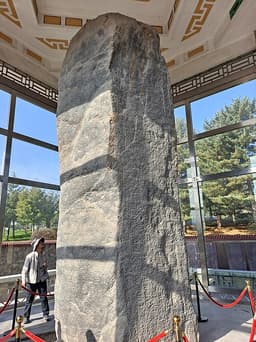
Gwanggaeto the Great
Emperor · Ancient
59.6Total
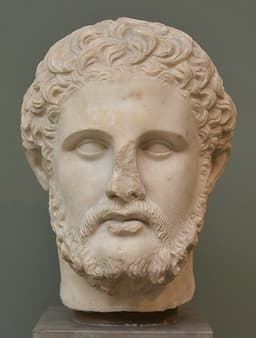
Philip II of Macedon
Emperor · Ancient
73.9Total
Basic Information
Born
374
-382
Died
413
-336
Era
Ancient
Ancient
Nationality
Korea
Macedon
Occupation
Emperor
Emperor
Civilization
Eastern
Western
Score Comparison
Military (10%)
75.0
65.0
Political (20%)
45.0
76.0
Influence (20%)
58.3
75.0
Legacy (20%)
52.0
70.0
Leadership (15%)
72.0
78.0
Strategy (15%)
70.0
80.3
TOTAL
59.6
73.9
Gwanggaeto the Great — Complete Timeline
313 AD
Conquest of the Lelang CommanderyWar◆ Major
Gwanggaeto the Great conquered the Lelang Commandery, a Chinese commandery located in the Korean peninsula. This victory eliminated Chinese influence in the region and brought the territory under Goguryeo control. It marked a significant expansion of Goguryeo's territory and power.
ConquestLelangGoguryeo Expansion
Impact: regional
395 AD
Campaigns against the Xianbei and KhitanWar◆ Major
Gwanggaeto the Great launched campaigns against the Xianbei and Khitan nomadic confederations in Manchuria. He defeated them, securing Goguryeo's northern borders and expanding its influence into Manchuria. These campaigns demonstrated Goguryeo's military strength and protected its territory from nomadic incursions.
CampaignNomadsManchuria
Impact: regional
396 AD
Subjugation of the Baekje KingdomWar◆ Major
Gwanggaeto the Great led a military campaign that subjugated the Baekje kingdom, forcing it to become a vassal state of Goguryeo. He captured the Baekje capital, Hansung, and took the Baekje king as a hostage. This victory made Goguryeo the dominant power on the Korean peninsula.
SubjugationBaekjeKorean Peninsula
Impact: regional
414 AD
Erection of the Gwanggaeto SteleCultural◆ Major
After Gwanggaeto's death, his son King Jangsu erected a large stele in his honor at the site of his tomb in Ji'an, China. The stele is inscribed with a detailed account of Gwanggaeto's conquests and achievements. It is a crucial historical source for understanding Goguryeo's history and territorial extent.
SteleInscriptionHistorical Record
Impact: regionalconstructive
Philip II of Macedon — Complete Timeline
359 BC
Reforms of the Macedonian ArmyReform◆ Major
Philip II reorganized the Macedonian army, introducing the sarissa (long pike) and the phalanx formation. He also improved cavalry tactics and logistics, creating a professional, disciplined force that was superior to Greek hoplite armies.
MacedonMilitary ReformPhalanx
Impact: regionalconstructive
338 BC
Battle of ChaeroneaWar
Philip II led the Macedonian army to a decisive victory over the combined forces of Athens and Thebes at Chaeronea. The battle ended Greek independence and established Macedonian hegemony over Greece. Philip's son Alexander commanded the cavalry on the left wing.
MacedonGreeceBattle
Impact: regionaldestructive
337 BC
Formation of the League of CorinthPolitical Action◆ Major
Philip II established the League of Corinth, a federation of Greek states under Macedonian leadership. The league declared war on Persia and appointed Philip as its commander-in-chief, laying the groundwork for Alexander's later invasion.
MacedonGreeceAlliance
Impact: regionalconstructive
336 BC
Assassination at AegaePolitical Action◆ Major
Philip II was assassinated by his bodyguard Pausanias at the wedding of his daughter Cleopatra in Aegae. The motive remains unclear, but his death led to the immediate succession of his son Alexander the Great, who continued his plans for the Persian invasion.
MacedonAssassinationSuccession
Impact: regionaltragic
Expert Analysis
Origins
Gwanggaeto the Great was born in 374 AD in Goguryeo, one of the Three Kingdoms of Korea. He was the son of King Gogukyang, and his early life was shaped by the constant warfare between Goguryeo, Baekje, and the Chinese commanderies. He ascended to the throne at age 17, inheriting a kingdom that controlled parts of modern-day Korea and Manchuria.
Philip II of Macedon was born in 382 BC in Pella, Macedon. He was the son of King Amyntas III and spent his youth as a hostage in Thebes, where he observed the military innovations of Epaminondas. This experience profoundly influenced his later reforms. He became king in 359 BC after his brother's death, inheriting a kingdom on the verge of collapse.
Rise to Power
Gwanggaeto's rise was swift. Upon becoming king in 391 AD, he immediately launched campaigns against Baekje and the Xianbei. In 392, he captured ten Baekje fortresses, and by 396, he had subjugated Baekje, forcing its king to become a vassal. He then turned north, defeating the Khitan and Xianbei confederations in 398-399. His greatest diplomatic coup was the conquest of the Lelang Commandery in 313 AD (actually earlier, but his reign saw its final absorption), eliminating Chinese influence in the Korean peninsula. By his death in 413, Goguryeo controlled most of Manchuria and northern Korea.
Philip II's rise was more gradual. He first secured Macedon's borders by defeating the Illyrians in 358 BC. He then reformed the army, introducing the sarissa phalanx and combined arms tactics. He expanded into Thrace and Thessaly, gaining resources and allies. His key turning point was the Third Sacred War (356-346 BC), which allowed him to intervene in central Greece. He decisively defeated the Greek coalition at the Battle of Chaeronea in 338 BC, ending Greek independence. He then formed the League of Corinth in 337 BC, positioning himself as hegemon of Greece. He was assassinated in 336 BC, just as he prepared to invade Persia.
Leadership & Governance
Gwanggaeto ruled as an absolute monarch, with power centralized in the king. He led armies personally, often at the front. His governance focused on military expansion and consolidation. He established garrisons in conquered territories and demanded tribute from vassals like Baekje and Silla. He also promoted Buddhism as a unifying force, building temples and supporting the clergy. However, his administrative reforms were limited; Goguryeo remained a feudal state with powerful clan leaders.
Philip II was a master politician. He used marriage alliances, diplomacy, and bribery to weaken enemies. He reformed Macedon's government, centralizing power and creating a professional bureaucracy. He founded new cities and mines to boost the economy. His military reforms were systematic: he created a standing army with standardized equipment, introduced the sarissa (a 6-meter pike) and the phalanx formation, and integrated cavalry and light infantry. He also established a corps of engineers for siege warfare. His leadership style was pragmatic, often pardoning defeated enemies to win loyalty.
Triumph & Tragedy
Gwanggaeto's greatest triumph was the expansion of Goguryeo to its largest extent, covering much of Manchuria and Korea. His stele boasts of conquering 64 fortresses and 1,400 villages. He forced Baekje and Silla to become vassals, creating a tributary system. His tragedy was that his conquests were not sustainable. After his death, Goguryeo gradually lost territory to the rising Sui and Tang dynasties. The Gwanggaeto Stele itself was only rediscovered in the 19th century, showing how his legacy faded.
Philip II's triumph was the unification of Greece under Macedonian hegemony. He transformed a peripheral kingdom into a major power, creating the army that Alexander would use to conquer Persia. His League of Corinth was a innovative diplomatic framework. His tragedy was his assassination at age 46, just as he was about to launch the Persian campaign. His death led to revolts in Greece and Thrace, which Alexander had to suppress. Moreover, his reputation is often overshadowed by his son's achievements. Philip's score in military is 65.0, while his political score is 76.0, reflecting his diplomatic skills. In contrast, Gwanggaeto's military score is 75.0 but political only 45.0, showing his focus on conquest over governance.
Character & Destiny
Gwanggaeto was a warrior king, aggressive and ambitious. He personally led campaigns and was known for his bravery. His character was shaped by the martial culture of Goguryeo, where the king was expected to be a military leader. His destiny was to expand the kingdom but not to secure its long-term stability. His son Jangsu maintained the empire, but internal divisions eventually weakened it.
Philip II was a shrewd strategist and diplomat. He was patient, calculating, and ruthless when necessary. He was also charismatic, able to inspire loyalty in his soldiers and allies. His character was shaped by his time in Thebes, where he learned Greek warfare and politics. His destiny was to build the foundation for Alexander's conquests, but his early death meant he never saw the full fruits of his labor. Historians often rate him lower than Alexander, but his leadership score of 78.0 and strategy of 80.3 indicate his exceptional abilities.
Legacy
Gwanggaeto's legacy is primarily nationalistic. In Korea, he is celebrated as a symbol of Korean resistance against Chinese domination. The Gwanggaeto Stele is a major historical source. However, his territorial gains were lost within two centuries. His military innovations were limited, relying on cavalry and infantry tactics common in East Asia. His influence score is 58.3 and legacy 52.0, reflecting his limited long-term impact.
Philip II's legacy is immense. He revolutionized warfare with the Macedonian phalanx, which dominated battlefields for centuries. His political unification of Greece set the stage for the Hellenistic period. The League of Corinth was a precursor to later alliances. His military reforms influenced later Roman legions. His legacy score is 70.0 and influence 75.0. Alexander's achievements are built on Philip's foundations; without Philip, Alexander would have been just another Greek general.
Conclusion
While Gwanggaeto the Great was a formidable conqueror who expanded Goguryeo to its peak, Philip II of Macedon had a greater and more lasting impact on history. Philip's military reforms changed warfare in the West, his political unification of Greece created a new political order, and his legacy directly enabled Alexander's conquests. Gwanggaeto's achievements were impressive but confined to East Asia and short-lived. In terms of numerical scores, Philip's total of 73.9 far exceeds Gwanggaeto's 59.6. Philip's balanced skills in military, political, and strategic domains made him a more effective ruler. Therefore, Philip II of Macedon is the greater historical figure.
Rankings
🥇
Philip II of MacedonLeader
Mil: 65.0Pol: 76.0Inf: 75.0
73.9
🥈
Gwanggaeto the Great
Mil: 75.0Pol: 45.0Inf: 58.3
59.6
+14.3 behind
How This Comparison Works
Algorithm
Each figure is scored on 6 dimensions (0—100 scale) based on structured historical data: Military (10%), Political (20%), Influence (20%), Legacy (20%), Leadership (15%), Strategy (15%). The weighted total produces the final ranking.
Data Sources
Scores are computed from structured sub-indicators in the database. Scale factors adjust for era (Ancient ×0.85, Modern ×1.0) and civilization size (Eastern ×1.05, Other ×0.80) to account for differences in population and military scale.
Maximum 3 Figures
Comparisons are limited to 2—3 figures to ensure readability and statistical meaningfulness.
Error Margins
±5 points per dimension — Sub-scores are derived from historical records with inherent uncertainty. Two figures within 5 points on a dimension should be considered roughly equivalent in that area.
Total Score Accuracy
±3 points overall — The weighted combination of 6 dimensions produces a total score with approximately ±3 points of uncertainty. Differences of less than 3 points are not statistically significant— the figures are effectively tied.
Known Limitations
- Historical records are incomplete and uneven across civilizations
- Figures from oral-tradition societies may be underrepresented
- Occupation labels can misclassify multi-role figures
- Scores measure capability and impact, not moral character
- Quantitative scoring is a comparison tool, not absolute truth
Capability Radar
Military (10%) — Battles & Warfare
Battles
85
85
Win Rate
90
90
Expansion
90
85
Political (20%) — Governance & Reform
Reform
65
90
Diplomacy
70
92
Economy
60
80
Influence (20%) — Cultural & Global Reach
Cultural
75
80
Global
65
80
Legacy (20%) — Historical Impact
Historical
80
85
Longevity
70
85
Leadership (15%) — Power & Stability
Tenure
75
75
Stability
70
70
Strategy (15%) — Tactics & Innovation
Strategy
85
92
Tactics
80
88
Reform
70
95
Similar Comparisons
Comments & Discussion
No comments yet. Be the first to share your thoughts!