Loading...
Muyeol of Silla vs Philip II of Macedon
Philip II of Macedon leads by 10.4 pts · 2 figures compared
…
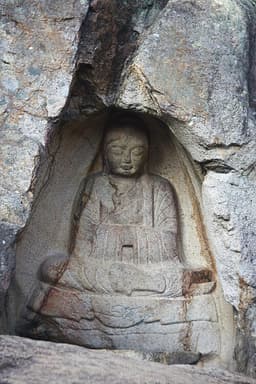
Muyeol of Silla
Emperor · Ancient
63.5Total
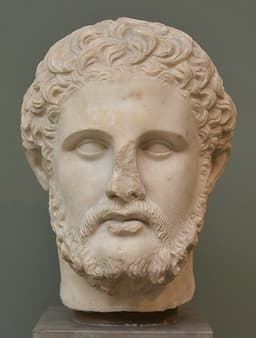
Philip II of Macedon
Emperor · Ancient
73.9Total
Basic Information
Born
-604
-382
Died
—
-336
Era
Ancient
Ancient
Nationality
Korea
Macedon
Occupation
Emperor
Emperor
Civilization
Eastern
Western
Score Comparison
Military (10%)
82.0
65.0
Political (20%)
60.0
76.0
Influence (20%)
62.0
75.0
Legacy (20%)
58.0
70.0
Leadership (15%)
72.0
78.0
Strategy (15%)
55.0
80.3
TOTAL
63.5
73.9
Muyeol of Silla — Complete Timeline
654 AD
Formation of the Silla-Tang alliancePolitical Action
King Muyeol, as crown prince, negotiated a military alliance with the Tang dynasty of China. This alliance provided Silla with Chinese military support against Baekje and Goguryeo, setting the stage for the unification of the Korean Peninsula.
AllianceTang ChinaSilla
Impact: regionalconstructive
655 AD
Appointment of Kim Yushin as commanderPolitical Action
Muyeol appointed General Kim Yushin as the supreme commander of Silla's military forces. Kim Yushin's leadership was instrumental in the campaigns against Baekje and Goguryeo, and his strategic genius became a cornerstone of Silla's unification efforts.
MilitaryLeadershipSilla
Impact: nationalconstructive
660 AD
Conquest of BaekjeWar◆ Major
Muyeol, as king, led Silla forces in a joint campaign with Tang China to conquer Baekje. The allied army captured the Baekje capital, Sabi, and the kingdom fell. This victory eliminated one of Silla's major rivals and was a crucial step toward unification.
ConquestBaekjeSilla
Impact: regionaldestructive
661 AD
Death during unification campaignOther◆ Major
Muyeol died while Silla was still at war with Goguryeo. His death occurred before the final unification was achieved, but his alliance with Tang and conquest of Baekje had already set the course for Silla's eventual victory under his successor, King Munmu.
DeathUnificationSilla
Impact: regionaltragic
Philip II of Macedon — Complete Timeline
359 BC
Reforms of the Macedonian ArmyReform◆ Major
Philip II reorganized the Macedonian army, introducing the sarissa (long pike) and the phalanx formation. He also improved cavalry tactics and logistics, creating a professional, disciplined force that was superior to Greek hoplite armies.
MacedonMilitary ReformPhalanx
Impact: regionalconstructive
338 BC
Battle of ChaeroneaWar
Philip II led the Macedonian army to a decisive victory over the combined forces of Athens and Thebes at Chaeronea. The battle ended Greek independence and established Macedonian hegemony over Greece. Philip's son Alexander commanded the cavalry on the left wing.
MacedonGreeceBattle
Impact: regionaldestructive
337 BC
Formation of the League of CorinthPolitical Action◆ Major
Philip II established the League of Corinth, a federation of Greek states under Macedonian leadership. The league declared war on Persia and appointed Philip as its commander-in-chief, laying the groundwork for Alexander's later invasion.
MacedonGreeceAlliance
Impact: regionalconstructive
336 BC
Assassination at AegaePolitical Action◆ Major
Philip II was assassinated by his bodyguard Pausanias at the wedding of his daughter Cleopatra in Aegae. The motive remains unclear, but his death led to the immediate succession of his son Alexander the Great, who continued his plans for the Persian invasion.
MacedonAssassinationSuccession
Impact: regionaltragic
Expert Analysis
Origins
**Muyeol of Silla** (born 604? as Kim Chunchu) was a prince of the Silla kingdom, one of the Three Kingdoms of Korea. His father was King Jinpyeong, but his mother was a concubine, which complicated his succession. He spent his early years observing the power struggles between Silla, Baekje, and Goguryeo. In 629, he was sent as a hostage to the Tang court, where he learned Chinese military and diplomatic strategies. This experience shaped his later alliance policy.
**Philip II of Macedon** (born 382 BCE) was the youngest son of King Amyntas III of Macedon. He spent his youth as a hostage in Thebes (367-364 BCE), where he studied under the tactician Epaminondas. This exposure to Greek military innovations and politics was formative. Upon his return, he found Macedon fragmented by internal strife and external threats from Illyrians and Paionians.
Rise to Power
**Muyeol** became crown prince after his father King Jinpyeong died in 632, but his uncle Queen Seondeok ruled first. He gained power gradually, serving as a diplomat. In 654, after Queen Jindeok died, Muyeol ascended the throne at age 49. His key turning point was the Silla-Tang alliance, which he negotiated in 643 as crown prince. This alliance provided Silla with Chinese military support against Baekje and Goguryeo.
**Philip II** became king of Macedon in 359 BCE at age 23 after his brother Perdiccas III was killed in battle. He immediately faced invasions from Illyrians, Paionians, and rival claimants. He defeated the Illyrians in 358 BCE, secured borders, and then turned to Greek city-states. By 357 BCE, he captured Amphipolis, a strategic Athenian colony. The Battle of Chaeronea in 338 BCE was his decisive victory, ending Greek independence and establishing Macedonian hegemony.
Leadership & Governance
**Muyeol** ruled Silla for only 7 years (654-661). He focused on military alliance and conquest. He appointed General Kim Yushin as supreme commander, delegating military operations. His governance was pragmatic: he used Tang military aid but maintained Silla's autonomy. He did not implement major domestic reforms, instead prioritizing unification. His political score of 60.0 reflects limited administrative changes.
**Philip II** reigned 23 years (359-336 BCE). He transformed Macedon from a backward kingdom into a major power. He reorganized the army, introducing the sarissa (18-foot pike) and the phalanx formation, and improved cavalry tactics. Politically, he established the League of Corinth in 337 BCE, a federation of Greek states under Macedonian leadership. He also reformed currency and promoted infrastructure. His political score of 76.0 reflects these achievements.
Triumph & Tragedy
**Muyeol's** triumph was the conquest of Baekje in 660 CE. The Silla-Tang army captured the capital Sabi and King Uija. However, his tragedy was dying in 661 before completing unification. He never saw the fall of Goguryeo in 668. Also, his reliance on Tang led to later conflicts when Tang attempted to dominate Silla.
**Philip II's** triumph was uniting Greece under Macedonian rule after Chaeronea. He also planned the invasion of Persia. His tragedy was his assassination in 336 BCE at the wedding of his daughter, likely due to personal grudges. His death left the Persian campaign to his son Alexander, who achieved greater fame but also faced rebellions.
Character & Destiny
**Muyeol** was a patient diplomat and strategic thinker. His time in Tang China taught him the value of alliances. He was decisive in war but died before seeing his ultimate goal. His character was cautious and calculating.
**Philip II** was ambitious, ruthless, and charismatic. He was a master of diplomacy and warfare, often using marriage alliances and bribery. His assassination shows the dangers of court intrigue. He was pragmatic, willing to compromise when needed.
Legacy
**Muyeol** is remembered as the king who set the stage for Silla's unification of Korea. His alliance with Tang was crucial. However, his legacy is overshadowed by his successors, especially King Munmu, who completed unification. His military score of 82.0 is high but his overall score of 63.5 reflects limited direct impact.
**Philip II** left a profound legacy. He created the military and political system that enabled Alexander's conquests. The League of Corinth influenced later Greek leagues. His army reforms set the standard for Hellenistic warfare. His score of 73.9 reflects higher overall impact.
Conclusion
While Muyeol was instrumental in Korean unification, his achievements were dependent on Tang support and completed by others. Philip II independently transformed Macedon and unified Greece, creating the foundation for the Hellenistic world. Philip II scored 73.9 against Muyeol's 63.5, and his influence was more enduring. Therefore, Philip II of Macedon had greater historical impact.
Rankings
🥇
Philip II of MacedonLeader
Mil: 65.0Pol: 76.0Inf: 75.0
73.9
🥈
Muyeol of Silla
Mil: 82.0Pol: 60.0Inf: 62.0
63.5
+10.4 behind
How This Comparison Works
Algorithm
Each figure is scored on 6 dimensions (0—100 scale) based on structured historical data: Military (10%), Political (20%), Influence (20%), Legacy (20%), Leadership (15%), Strategy (15%). The weighted total produces the final ranking.
Data Sources
Scores are computed from structured sub-indicators in the database. Scale factors adjust for era (Ancient ×0.85, Modern ×1.0) and civilization size (Eastern ×1.05, Other ×0.80) to account for differences in population and military scale.
Maximum 3 Figures
Comparisons are limited to 2—3 figures to ensure readability and statistical meaningfulness.
Error Margins
±5 points per dimension — Sub-scores are derived from historical records with inherent uncertainty. Two figures within 5 points on a dimension should be considered roughly equivalent in that area.
Total Score Accuracy
±3 points overall — The weighted combination of 6 dimensions produces a total score with approximately ±3 points of uncertainty. Differences of less than 3 points are not statistically significant— the figures are effectively tied.
Known Limitations
- Historical records are incomplete and uneven across civilizations
- Figures from oral-tradition societies may be underrepresented
- Occupation labels can misclassify multi-role figures
- Scores measure capability and impact, not moral character
- Quantitative scoring is a comparison tool, not absolute truth
Capability Radar
Military (10%) — Battles & Warfare
Battles
65
85
Win Rate
70
90
Expansion
80
85
Political (20%) — Governance & Reform
Reform
65
90
Diplomacy
85
92
Economy
60
80
Influence (20%) — Cultural & Global Reach
Cultural
55
80
Global
55
80
Legacy (20%) — Historical Impact
Historical
70
85
Longevity
65
85
Leadership (15%) — Power & Stability
Tenure
60
75
Stability
70
70
Strategy (15%) — Tactics & Innovation
Strategy
75
92
Tactics
60
88
Reform
55
95
Similar Comparisons
Comments & Discussion
No comments yet. Be the first to share your thoughts!