Loading...
Gyeongjong of Goryeo vs Pachacuti
Pachacuti leads by 22.3 pts · 2 figures compared
…
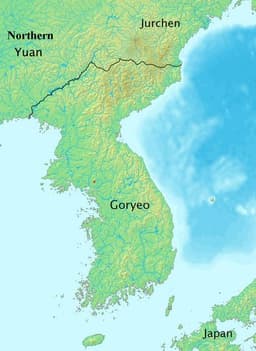
Gyeongjong of Goryeo
Emperor · Medieval
47.1Total
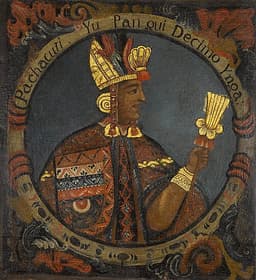
Pachacuti
Emperor · Medieval
69.4Total
Basic Information
Born
955
1418
Died
981
1472
Era
Medieval
Medieval
Nationality
Korea
Inca Empire
Occupation
Emperor
Emperor
Civilization
Eastern
Other
Score Comparison
Military (10%)
20.0
78.5
Political (20%)
53.8
58.1
Influence (20%)
53.3
65.0
Legacy (20%)
47.5
72.0
Leadership (15%)
48.8
78.0
Strategy (15%)
45.0
69.2
TOTAL
47.1
69.4
Gyeongjong of Goryeo — Complete Timeline
976 AD
Institution of the Jeonsigwa Land SystemReform◆ Major
King Gyeongjong established the jeonsigwa, a land distribution system that allocated state-owned farmland to government officials based on their rank. This reform aimed to secure royal revenue and control over land, while providing a stable income for the bureaucracy.
Impact: nationalconstructive
Pachacuti — Complete Timeline
1438 AD
Conquest of the Chanka KingdomWar
Pachacuti led the Inca army to defeat the Chanka, a powerful rival, in a decisive battle near Cusco. This victory secured his position as Sapa Inca and initiated a period of rapid expansion, transforming the Inca from a small kingdom into a vast empire.
ConquestInca ExpansionChanka
Impact: regional
1440 AD
Reconstruction of CuscoCultural◆ Major
Pachacuti rebuilt Cusco as the imperial capital, designing it in the shape of a puma and constructing massive stone structures like Sacsayhuam
Urban PlanningArchitectureInca Empire
Impact: regionalconstructive
1450 AD
Initiation of Machu Picchu's ConstructionCultural◆ Major
Pachacuti ordered the construction of Machu Picchu, a royal estate and ceremonial site high in the Andes. The complex featured sophisticated dry-stone masonry and terraced agriculture, serving as a symbol of Inca engineering and a retreat for the emperor.
ArchitectureRoyal EstateInca Engineering
Impact: regionalconstructive
Expert Analysis
Pachacuti vs Gyeongjong of Goryeo
# The Builder and the Bureaucrat
On a high ridge in the Andes, workers hoisted stones so precisely fitted that not even a knife blade could slip between them. Thousands of miles away, in the Korean peninsula, scribes unrolled scrolls to calculate how many acres of rice fields a minister of the fifth rank should receive. These two scenes, unfolding in the same medieval centuries, capture the vast difference between two rulers who never knew of each other’s existence: Pachacuti, the ninth Sapa Inca who carved an empire from mountain peaks, and Gyeongjong of Goryeo, a Korean king who reshaped his kingdom with ink and land grants. One built in stone, the other in law. One conquered nations, the other stabilized a dynasty. What drove them down such divergent paths?
Origins
Pachacuti was born in 1418 into a world of high-altitude warfare. The Inca were then a small kingdom in the Cusco valley, surrounded by hostile neighbors. His father, Viracocha Inca, ruled a realm that was powerful but not yet imperial. The young prince grew up amid constant threats from the Chanka, a rival people who outnumbered the Inca. His name at birth was Cusi Yupanqui, and he would earn the title “Pachacuti”—meaning “earth-shaker” or “cataclysm”—only after proving himself in battle.
Gyeongjong entered the world in 955, the son of King Gwangjong, one of Goryeo’s most ambitious rulers. His father had already centralized power, purged rivals, and established the gwageo civil service examinations. The young prince grew up in a court where governance meant writing laws, not leading armies. His kingdom, while occasionally threatened by Khitan raids from the north, was largely stable. The challenges he faced were administrative, not existential.
Rise to Power
In 1438, the Chanka launched a massive assault on Cusco. Viracocha Inca and his designated heir fled the capital, abandoning the city. But the young prince Cusi Yupanqui refused to retreat. Gathering a small force, he led a desperate counterattack that shattered the Chanka army in a battle near Cusco. The victory was so complete that the Chanka never recovered. The prince’s father abdicated in shame, and Cusi Yupanqui became Pachacuti, the earth-shaker. This single battle, fought at age twenty, defined his entire reign.
Gyeongjong’s rise was far quieter. He ascended the throne in 975 upon his father’s death, inheriting a functioning bureaucracy. There was no dramatic battlefield, no desperate last stand. His challenge lay in consolidating the reforms his father had begun—particularly the land system, which had become chaotic as powerful families hoarded estates.
Leadership & Governance
Pachacuti ruled through sheer force of personality and military genius. He reorganized the Inca army into disciplined units, built roads and storehouses to supply his campaigns, and dispatched spies to gather intelligence on neighboring kingdoms. His strategy was relentless: conquer a region, resettle loyal populations there, and impose the Inca religion and language. He personally designed Cusco as a stone puma, with the great fortress of Sacsayhuamán as its head. Around 1450, he ordered the construction of Machu Picchu, a royal estate that would serve as both a retreat and a symbol of Inca power. His leadership score of 84.5 reflects a ruler who commanded absolute loyalty through both fear and inspiration.
Gyeongjong governed through codification. In 976, he instituted the *jeonsigwa* land system, a radical reform that allocated state-owned farmland according to official rank. A minister of the first rank received more land than a sixth-rank official; a peasant received nothing directly, but worked the land and paid taxes. This system stabilized state finances, reduced corruption, and ensured the central government controlled the kingdom’s economic base. His political score of 60.5 and strategy score of 30.0 suggest he was a consolidator, not a conqueror—a king who knew that the pen could be mightier than the sword.
Triumph & Tragedy
Pachacuti’s greatest triumph was transforming a small kingdom into an empire that stretched from modern Ecuador to Chile. His military score of 66.8 and strategy score of 76.7 indicate a commander who understood logistics, psychology, and timing. Yet his tragedy lay in succession: he chose his son Topa Inca as heir, but the transition was fraught with intrigue. The empire he built would fall within a century of his death in 1472, unable to survive the Spanish arrival.
Gyeongjong’s triumph was the *jeonsigwa* system, which would influence Korean land policy for centuries. His legacy score of 64.4 reflects an administrator who left a lasting institutional footprint. Yet his tragedy was obscurity: he reigned only six years, from 975 to 981, and died young at age twenty-six. He had no dramatic battles, no famous monuments. His name survives only in dry historical records and the land registers he created.
Character & Destiny
Pachacuti was a visionary who saw the world in terms of stone, blood, and glory. He believed the Inca were destined to rule, and he shaped reality to match that belief. Every mountain fortress, every road, every conquered tribe was an extension of his will. His total score of 73.7 reflects a man who left an indelible mark on the physical landscape.
Gyeongjong was a pragmatist who saw the world in terms of rank, revenue, and stability. He understood that an empire could be built not only with armies but with land grants and tax codes. His total score of 60.6 is lower, but it measures a different kind of achievement—not the noise of conquest, but the quiet work of institution-building.
Legacy
Today, Machu Picchu draws millions of tourists, and Pachacuti’s name is whispered in guidebooks and documentaries. He is remembered as the Alexander of the Andes, a builder of empires. Gyeongjong, by contrast, is known only to historians and Korean schoolchildren. Yet his *jeonsigwa* system shaped Korean governance for generations, creating a stable foundation that allowed Goryeo to flourish.
Conclusion
One ruler carved his name into mountains; the other inscribed his into ledgers. Pachacuti’s legacy is visible from space; Gyeongjong’s is invisible but pervasive. Both succeeded in what they set out to do—one built an empire of stone, the other an empire of law. And perhaps that is the deepest lesson: that history remembers the conquerors, but civilization depends on the bureaucrats. The earth-shaker and the scribe: each, in his own way, reshaped the world.
Rankings
🥇
PachacutiLeader
Mil: 78.5Pol: 58.1Inf: 65.0
69.4
🥈
Gyeongjong of Goryeo
Mil: 20.0Pol: 53.8Inf: 53.3
47.1
+22.3 behind
How This Comparison Works
Algorithm
Each figure is scored on 6 dimensions (0—100 scale) based on structured historical data: Military (10%), Political (20%), Influence (20%), Legacy (20%), Leadership (15%), Strategy (15%). The weighted total produces the final ranking.
Data Sources
Scores are computed from structured sub-indicators in the database. Scale factors adjust for era (Ancient ×0.85, Modern ×1.0) and civilization size (Eastern ×1.05, Other ×0.80) to account for differences in population and military scale.
Maximum 3 Figures
Comparisons are limited to 2—3 figures to ensure readability and statistical meaningfulness.
Error Margins
±5 points per dimension — Sub-scores are derived from historical records with inherent uncertainty. Two figures within 5 points on a dimension should be considered roughly equivalent in that area.
Total Score Accuracy
±3 points overall — The weighted combination of 6 dimensions produces a total score with approximately ±3 points of uncertainty. Differences of less than 3 points are not statistically significant— the figures are effectively tied.
Known Limitations
- Historical records are incomplete and uneven across civilizations
- Figures from oral-tradition societies may be underrepresented
- Occupation labels can misclassify multi-role figures
- Scores measure capability and impact, not moral character
- Quantitative scoring is a comparison tool, not absolute truth
Capability Radar
Military (10%) — Battles & Warfare
Battles
5
85
Win Rate
5
90
Expansion
5
90
Political (20%) — Governance & Reform
Reform
70
92
Diplomacy
40
75
Economy
65
80
Influence (20%) — Cultural & Global Reach
Cultural
30
85
Global
20
65
Legacy (20%) — Historical Impact
Historical
45
80
Longevity
40
70
Leadership (15%) — Power & Stability
Tenure
55
85
Stability
50
82
Strategy (15%) — Tactics & Innovation
Strategy
5
88
Tactics
5
80
Reform
5
85
Similar Comparisons
Comments & Discussion
KyotoSkeptic6/16/2026
"Let’s talk numbers. Gyeongjong’s 976 land reform redistributed fields to officials—a neat trick to buy loyalty. Pachacuti’s empire grew from a 400-square-kilometer valley to controlling millions. Two million people vs. a few thousand bureaucrats. The Inca’s logistics, terracing, and road network dwarf any ledger-keeping. Give me the builder, not the bookkeeper."
IncaStone6/16/2026
"Pachacuti’s Machu Picchu alone outshines Gyeongjong’s entire reign. No written records? No problem. The Inca used quipus to manage a continental empire—efficient, adaptable, alive. Gyeongjong’s reforms stabilized a dynasty, sure, but for Chinese-style governance? It’s like comparing a condor to a garden sparrow. The earth-shaker wins."
SongDynastyEcho6/16/2026
"高丽景宗的田柴科制度确实巩固了王朝,但修修补补而已。帕查库蒂的帝国是造山运动——修路、筑城、征服,从库斯科到基多。景宗用诏书平定贵族,帕查库蒂用巨石和鲜血。一个官僚,一个帝王,高下立判。"
大唐遗风6/16/2026
"两者根本没法比。帕查库蒂是龙,景宗是虫。印加王把安第斯山变成自己的脊椎骨,修梯田修得鬼斧神工;景宗呢?发发土地证,治治小贵族,连高丽都统一不了朝鲜半岛。论格局,一个是天,一个是地。别拿印加太阳神比高丽抄书匠。"
AcropolisArchivist6/16/2026
"Pachacuti built with blood and granite, Gyeongjong ruled with rice and ink. One carved an empire of stone from the Andes, the other drafted land reforms from a palace. The Inca shook the earth itself; Korea’s king balanced a bureaucracy. No contest: one created a legacy that still astounds engineers, the other just wrote tax codes."