Loading...
This comparison has not been analyzed yet.
One-time AI generation (~1 minute). Scores and timeline are already available below.
Gyeongjong of Joseon vs Joseph I
Joseph I leads by 12.8 pts · 2 figures compared
…

Gyeongjong of Joseon
Emperor · Modern
40.5Total
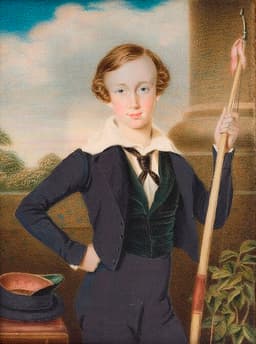
Joseph I
Emperor · Modern
53.3Total
Basic Information
Born
1688
1678
Died
1724
1711
Era
Modern
Modern
Nationality
Korea
Holy Roman Empire
Occupation
Emperor
Emperor
Civilization
Eastern
Western
Score Comparison
Military (10%)
52.5
50.0
Political (20%)
26.4
72.0
Influence (20%)
46.3
51.8
Legacy (20%)
35.0
41.7
Leadership (15%)
31.2
67.0
Strategy (15%)
62.7
41.0
TOTAL
40.5
53.3
Gyeongjong of Joseon — Complete Timeline
1721 AD
Sinhwa Hwanguk (1721)Political Action◆ Major
King Gyeongjong, under the influence of the Soron faction, purged the Noron faction. The Noron were accused of plotting to kill the king and install his half-brother Yeoning (later Yeongjo). Many Noron officials were executed or exiled.
PurgeFactional StrifeSuccession
Impact: nationaldestructive
1722 AD
Imjin Hwanguk (1722)Political Action◆ Major
A second purge under Gyeongjong targeted remaining Noron supporters. The Soron faction consolidated power, executing key Noron leaders. This further weakened the court and deepened factional divisions, setting the stage for Yeongjo's later reforms.
PurgeFactional StrifePower Consolidation
Impact: nationaldestructive
1724 AD
Illness and Death of GyeongjongOther◆ Major
King Gyeongjong, who suffered from chronic illness, died suddenly at age 36. Rumors of poisoning circulated, but no evidence was found. His death ended the Soron-dominated reign and allowed Yeongjo to ascend the throne.
DeathSuccessionRumors
Impact: nationaltragic
Joseph I — Complete Timeline
1701 AD
War of the Spanish SuccessionWar◆ Major
Joseph I, as King of the Romans and later Emperor, supported the Habsburg claim to the Spanish throne against the Bourbon candidate. The war, fought across Europe, ended with the Treaty of Utrecht in 1713, which recognized Philip V as king of Spain but ceded Spanish territories to Austria.
War of the Spanish SuccessionTreaty of UtrechtHabsburg
Impact: global
1705 AD
Reforms in HungaryReform
Joseph I, as Emperor, pursued a policy of reconciliation with the Hungarian nobility, ending the R
HungaryReformRákóczi
Impact: regionalconstructive
1711 AD
Died of smallpoxOther◆ Major
Joseph I died suddenly of smallpox at age 32, leaving no male heir. His death triggered the succession crisis that led to the Pragmatic Sanction and the eventual War of the Austrian Succession, as his brother Charles VI inherited the Habsburg domains.
DeathSuccession CrisisSmallpox
Impact: regionaltragic
This comparison has not been analyzed yet.
One-time AI generation (~1 minute). Scores and timeline are already available below.
Rankings
🥇
Joseph ILeader
Mil: 50.0Pol: 72.0Inf: 51.8
53.3
🥈
Gyeongjong of Joseon
Mil: 52.5Pol: 26.4Inf: 46.3
40.5
+12.8 behind
How This Comparison Works
Algorithm
Each figure is scored on 6 dimensions (0—100 scale) based on structured historical data: Military (10%), Political (20%), Influence (20%), Legacy (20%), Leadership (15%), Strategy (15%). The weighted total produces the final ranking.
Data Sources
Scores are computed from structured sub-indicators in the database. Scale factors adjust for era (Ancient ×0.85, Modern ×1.0) and civilization size (Eastern ×1.05, Other ×0.80) to account for differences in population and military scale.
Maximum 3 Figures
Comparisons are limited to 2—3 figures to ensure readability and statistical meaningfulness.
Error Margins
±5 points per dimension — Sub-scores are derived from historical records with inherent uncertainty. Two figures within 5 points on a dimension should be considered roughly equivalent in that area.
Total Score Accuracy
±3 points overall — The weighted combination of 6 dimensions produces a total score with approximately ±3 points of uncertainty. Differences of less than 3 points are not statistically significant— the figures are effectively tied.
Known Limitations
- Historical records are incomplete and uneven across civilizations
- Figures from oral-tradition societies may be underrepresented
- Occupation labels can misclassify multi-role figures
- Scores measure capability and impact, not moral character
- Quantitative scoring is a comparison tool, not absolute truth
Capability Radar
Military (10%) — Battles & Warfare
Battles
53
20
Win Rate
57
25
Expansion
55
10
Political (20%) — Governance & Reform
Reform
5
70
Diplomacy
10
50
Economy
5
55
Influence (20%) — Cultural & Global Reach
Cultural
10
30
Global
5
20
Legacy (20%) — Historical Impact
Historical
10
40
Longevity
10
20
Leadership (15%) — Power & Stability
Tenure
10
30
Stability
5
40
Strategy (15%) — Tactics & Innovation
Strategy
63
20
Tactics
65
15
Reform
65
30
Similar Comparisons
Comments & Discussion
No comments yet. Be the first to share your thoughts!