Loading...
Habibullah Kalakani vs Peter II of Russia
Peter II of Russia leads by 1.8 pts · 2 figures compared
…
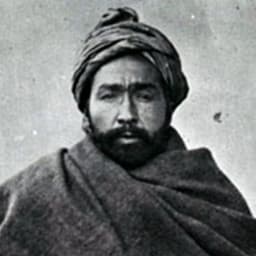
Habibullah Kalakani
Emperor · Modern
38.6Total

Peter II of Russia
Emperor · Modern
40.4Total
Basic Information
Born
1890
1715
Died
1929
1730
Era
Modern
Modern
Nationality
Afghanistan
Russia
Occupation
Emperor
Emperor
Civilization
Middle Eastern
Western
Score Comparison
Military (10%)
50.0
48.6
Political (20%)
32.1
32.1
Influence (20%)
45.5
45.5
Legacy (20%)
35.0
34.2
Leadership (15%)
31.2
34.6
Strategy (15%)
39.6
56.1
TOTAL
38.6
40.4
Habibullah Kalakani — Complete Timeline
1929 AD
Capture of KabulWar◆ Major
Habibullah Kalakani, a Tajik bandit, led a force of rebels to capture Kabul from the forces of King Amanullah Khan. The city fell after a brief siege, forcing Amanullah to abdicate and flee. Kalakani declared himself Emir of Afghanistan, beginning his nine-month rule.
AfghanistanCoupCivil War
Impact: nationaldestructive
Defeat and execution by Nadir ShahWar◆ Major
Mohammad Nadir Shah's forces defeated Habibullah Kalakani's army near Kabul. Kalakani fled but was captured and executed by firing squad on November 1, 1929. His brief rule ended, and the Musahiban dynasty was restored to power.
AfghanistanExecutionCivil War
Impact: nationaltragic
Reign as Emir of AfghanistanPolitical Action◆ Major
Habibullah Kalakani ruled Afghanistan from January to October 1929. His reign was marked by attempts to reverse Amanullah's reforms, including restoring conservative Islamic practices and abolishing modern education. He failed to gain broad support and faced multiple rebellions.
AfghanistanRuleReactionary
Impact: nationaldestructive
Peter II of Russia — Complete Timeline
1727 AD
Accession as Emperor of RussiaPolitical Action◆ Major
Peter II ascended the throne at age 11 after the death of Catherine I, under the regency of the Supreme Privy Council. His accession was orchestrated by the Dolgorukov family, who sought to control the young tsar. He was the last male Romanov to rule.
SuccessionRegencyRomanov
Impact: national
Exile of Alexander MenshikovPolitical Action◆ Major
Peter II, influenced by the Dolgorukovs, ordered the arrest and exile of Alexander Menshikov, the powerful former regent. Menshikov was stripped of his titles and sent to Siberia, ending his dominance. This event marked the rise of the Dolgorukov family at court.
ExilePower StruggleDolgorukov
Impact: nationaldestructive
1728 AD
Move of the Court to MoscowPolitical Action◆ Major
Peter II moved the imperial court from Saint Petersburg back to Moscow, reversing Peter the Great's Westernizing policy. This relocation reflected the influence of conservative nobles and weakened the new capital's status. The court remained in Moscow until his death.
Court RelocationMoscowConservatism
Impact: national
1730 AD
Death from SmallpoxOther◆ Major
Peter II died of smallpox at age 14 on the day of his planned wedding to Ekaterina Dolgorukova. His death ended the male line of the Romanov dynasty and triggered a succession crisis, leading to the accession of Anna of Russia. The event was sudden and unexpected.
DeathSmallpoxSuccession Crisis
Impact: nationaltragic
Expert Analysis
Origins
Habibullah Kalakani, born around 1890 in the village of Kalakan north of Kabul, was a Tajik from a modest family. His father was a water carrier. Lacking formal education, he worked as a soldier and later turned to banditry, leading a gang in the mountains. Peter II of Russia was born on October 23, 1715, in Saint Petersburg, the grandson of Peter the Great. He was the son of Tsarevich Alexei Petrovich and Princess Charlotte of Brunswick-Wolfenbüttel. Orphaned early, he was raised by tutors and officials, isolated from his grandfather's court.
Rise to Power
Kalakani's rise began in November 1928 when he and his followers attacked a government outpost. Capitalizing on widespread discontent with King Amanullah Khan's rapid reforms, Kalakani gathered support from conservative tribes. On January 17, 1929, his forces captured Kabul after a brief siege, forcing Amanullah to abdicate. Kalakani proclaimed himself Emir of Afghanistan. Peter II ascended the throne on May 18, 1727, at age 11, following the death of Empress Catherine I. His accession was orchestrated by Alexander Menshikov, who had been the de facto ruler. The Supreme Privy Council confirmed him as emperor, with Menshikov as regent.
Leadership & Governance
Kalakani's rule was characterized by reversing Amanullah's reforms: he abolished education for girls, reinstated traditional dress, and closed foreign schools. He relied on tribal leaders and offered little administrative structure. His government lasted only 9 months. Peter II's reign was dominated by factional struggles. Initially controlled by Menshikov, he soon fell under the influence of the Dolgorukovs, who engineered Menshikov's exile in September 1727. Peter moved the court from Saint Petersburg to Moscow in 1728, reversing his grandfather's Westernization. He showed little interest in governance, preferring hunting and leisure.
Triumph & Tragedy
Kalakani's greatest success was capturing Kabul and ruling for 9 months against odds. However, his failure to consolidate power and his inability to defeat Mohammad Nadir Shah's forces led to his downfall. He was captured and executed on November 1, 1929. Peter II's triumph was asserting independence from Menshikov, but his tragedy was his early death at 14 from smallpox on January 30, 1730, on the day of his planned wedding. His death ended the male line of the Romanov dynasty, leading to the ascension of Anna Ioannovna.
Character & Destiny
Kalakani was daring and opportunistic but lacked political vision. His bandit background made him distrustful of established elites, and his rule was marked by short-term decisions. Peter II was a teenager dominated by advisors; his character was shaped by his hatred of Menshikov and his preference for aristocratic traditions. Historians describe him as indifferent to state affairs. Both leaders' destinies were cut short: Kalakani by execution, Peter by disease.
Legacy
Kalakani's legacy is that of a brief, reactionary ruler; he is often called the "Bandit King" in Afghan history. His rule is remembered as a failed counter-reform episode. Peter II's reign was too short to leave lasting policies, but his move of the court to Moscow symbolized a temporary retreat from Westernization. His death paved the way for Anna's reign and the eventual return of the court to Saint Petersburg.
Conclusion
Despite both having short, ineffective rules, Peter II of Russia scores higher overall (40.4 vs 38.6) due to slightly better strategic scores (56.1 vs 39.6). However, in terms of impact, Kalakani's brief rule had more immediate consequences for Afghanistan, while Peter II's reign was merely a transitional phase. Taking a stance, Peter II had slightly greater historical significance due to the dynastic crisis his death caused, but neither leader had lasting influence. Ultimately, Peter II's higher score reflects marginally better strategic positioning, but both are among the least impactful rulers of their era.
Rankings
🥇
Peter II of RussiaLeader
Mil: 48.6Pol: 32.1Inf: 45.5
40.4
🥈
Habibullah Kalakani
Mil: 50.0Pol: 32.1Inf: 45.5
38.6
+1.8 behind
How This Comparison Works
Algorithm
Each figure is scored on 6 dimensions (0—100 scale) based on structured historical data: Military (10%), Political (20%), Influence (20%), Legacy (20%), Leadership (15%), Strategy (15%). The weighted total produces the final ranking.
Data Sources
Scores are computed from structured sub-indicators in the database. Scale factors adjust for era (Ancient ×0.85, Modern ×1.0) and civilization size (Eastern ×1.05, Other ×0.80) to account for differences in population and military scale.
Maximum 3 Figures
Comparisons are limited to 2—3 figures to ensure readability and statistical meaningfulness.
Error Margins
±5 points per dimension — Sub-scores are derived from historical records with inherent uncertainty. Two figures within 5 points on a dimension should be considered roughly equivalent in that area.
Total Score Accuracy
±3 points overall — The weighted combination of 6 dimensions produces a total score with approximately ±3 points of uncertainty. Differences of less than 3 points are not statistically significant— the figures are effectively tied.
Known Limitations
- Historical records are incomplete and uneven across civilizations
- Figures from oral-tradition societies may be underrepresented
- Occupation labels can misclassify multi-role figures
- Scores measure capability and impact, not moral character
- Quantitative scoring is a comparison tool, not absolute truth
Capability Radar
Military (10%) — Battles & Warfare
Battles
25
21
Win Rate
30
28
Expansion
10
29
Political (20%) — Governance & Reform
Reform
5
5
Diplomacy
5
5
Economy
5
5
Influence (20%) — Cultural & Global Reach
Cultural
5
5
Global
5
5
Legacy (20%) — Historical Impact
Historical
15
10
Longevity
5
5
Leadership (15%) — Power & Stability
Tenure
10
10
Stability
5
10
Strategy (15%) — Tactics & Innovation
Strategy
15
33
Tactics
20
35
Reform
5
40
Similar Comparisons
Comments & Discussion
No comments yet. Be the first to share your thoughts!