Loading...
Habibullah Kalakani vs Napoleon Bonaparte
Napoleon Bonaparte leads by 32.3 pts · 2 figures compared
…
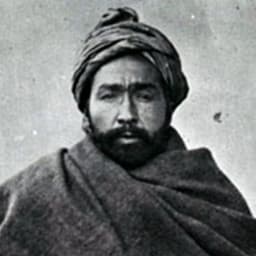
Habibullah Kalakani
Emperor · Modern
38.6Total

Napoleon Bonaparte
General · Modern
70.9Total
Basic Information
Born
1890
1769
Died
1929
1821
Era
Modern
Modern
Nationality
Afghanistan
France
Occupation
Emperor
General
Civilization
Middle Eastern
Western
Score Comparison
Military (10%)
50.0
94.0
Political (20%)
32.1
72.0
Influence (20%)
45.5
40.0
Legacy (20%)
35.0
80.0
Leadership (15%)
31.2
78.0
Strategy (15%)
39.6
90.0
TOTAL
38.6
70.9
Habibullah Kalakani — Complete Timeline
1929 AD
Capture of KabulWar◆ Major
Habibullah Kalakani, a Tajik bandit, led a force of rebels to capture Kabul from the forces of King Amanullah Khan. The city fell after a brief siege, forcing Amanullah to abdicate and flee. Kalakani declared himself Emir of Afghanistan, beginning his nine-month rule.
AfghanistanCoupCivil War
Impact: nationaldestructive
Defeat and execution by Nadir ShahWar◆ Major
Mohammad Nadir Shah's forces defeated Habibullah Kalakani's army near Kabul. Kalakani fled but was captured and executed by firing squad on November 1, 1929. His brief rule ended, and the Musahiban dynasty was restored to power.
AfghanistanExecutionCivil War
Impact: nationaltragic
Reign as Emir of AfghanistanPolitical Action◆ Major
Habibullah Kalakani ruled Afghanistan from January to October 1929. His reign was marked by attempts to reverse Amanullah's reforms, including restoring conservative Islamic practices and abolishing modern education. He failed to gain broad support and faced multiple rebellions.
AfghanistanRuleReactionary
Impact: nationaldestructive
Napoleon Bonaparte — Complete Timeline
1799 AD
Coup of 18 BrumaireOther◆ Major
Napoleon Bonaparte, with support from his brother Lucien and key political figures, overthrew the Directory in a bloodless coup. He established the Consulate with himself as First Consul, effectively becoming the ruler of France. This event ended the French Revolution's most unstable period.
French RevolutionCoupRise to Power
Impact: regional
1804 AD
Promulgation of the Napoleonic CodeOther◆ Major
Napoleon enacted the Civil Code of the French, known as the Napoleonic Code, a comprehensive set of laws that replaced the fragmented feudal legal systems. The code established legal equality, protected property rights, and secularized law. It became the basis for legal systems in many European and world countries.
Legal ReformNapoleonic CodeCivil Law
Impact: globalconstructive
1805 AD
Battle of AusterlitzWar◆ Major
Napoleon's Grande Arm
Napoleonic WarsBattleDecisive Victory
Impact: global
1812 AD
Invasion of RussiaWar◆ Major
Napoleon led the Grande Arm
Napoleonic WarsInvasionDisaster
Impact: globaldestructive
1815 AD
Battle of WaterlooWar◆ Major
Napoleon's French army was defeated by the combined forces of the Duke of Wellington's Anglo-Allied army and Gebhard Leberecht von Bl
Napoleonic WarsBattleFinal Defeat
Impact: globaldestructive
Expert Analysis
habibullah-kalakani-vs-napoleon-bonaparte
# The Emperor and the Bandit: Two Paths to Power in a Revolutionary Age
In the winter of 1929, as snow fell on the mountains surrounding Kabul, a former water carrier named Habibullah Kalakani sat on the Peacock Throne, the ancient symbol of Afghan sovereignty. Just over a century earlier, in the glittering halls of the Tuileries Palace, a Corsican artillery officer named Napoleon Bonaparte had placed a crown upon his own head. Both men came from nothing. Both seized power in times of chaos. One reshaped the legal and political foundations of Europe; the other vanished so completely that his name survives mainly as a cautionary tale. What separates a world-historical figure from a footnote? The answer lies not merely in talent, but in the deep currents of history that lift some men to greatness while drowning others in obscurity.
Origins
Napoleon was born in 1769 on the island of Corsica, a Mediterranean backwater recently annexed by France. His family was minor nobility—impoverished, resentful of French rule, and fiercely ambitious. He attended French military academies, where his provincial accent and small stature marked him as an outsider. Yet the French Revolution, which began when he was twenty, shattered the old order and created opportunities unimaginable under the Bourbon monarchy. A world where a commoner could become emperor was being born.
Habibullah Kalakani was born around 1890 in the village of Kalakan, north of Kabul. He was a Tajik, an ethnic minority in a country dominated by Pashtuns. His father was a water carrier, and Habibullah followed the same trade before turning to banditry. He had no formal education, no military training, no exposure to the ideas of the Enlightenment or the currents of modern statecraft. He lived in a world where power was personal, tribal, and brutally direct. The difference in their starting points was not merely one of class but of civilizational context: Napoleon inherited the accumulated intellectual and institutional resources of eighteenth-century Europe; Kalakani inherited only the raw struggle for survival in a fractured corner of Asia.
Rise to Power
Napoleon’s ascent was a masterpiece of opportunism and calculation. He first gained notice in 1793 at the Siege of Toulon, where his artillery tactics drove out British forces. By 1795, he had saved the revolutionary government from a royalist uprising—a feat that earned him command of the Army of Italy. In a series of lightning campaigns across northern Italy in 1796-1797, he defeated larger Austrian armies through speed, deception, and the ruthless concentration of force. He returned to France a hero, then engineered a coup in 1799 that made him First Consul. By 1804, he was Emperor of the French. Each step built upon the last, propelled by victories that seemed to confirm his own legend.
Kalakani’s rise was shorter, cruder, and entirely dependent on the collapse of a single regime. In 1929, King Amanullah Khan’s ambitious modernization program—which included women’s education, Western dress, and land reform—had sparked a rebellion among conservative tribes and religious leaders. Kalakani, a bandit with a small following, saw his chance. He gathered a force of disaffected Tajiks and marched on Kabul. The king’s army, demoralized and divided, melted away. In January 1929, Kalakani entered the capital and declared himself Emir. He had no grand strategy, no ideology, no plan for governing—only the momentum of a moment that would never come again.
Leadership & Governance
Napoleon governed with the same energy and precision he brought to war. He centralized the French state, reorganized the tax system, established the Bank of France, and created a network of elite lycées to train future administrators. His greatest achievement was the Napoleonic Code of 1804, a comprehensive legal framework that enshrined equality before the law, protected property rights, and secularized civil institutions. Where he conquered, he imposed these reforms, dismantling feudalism and spreading the principles of the Revolution—even as he crowned himself emperor and suppressed dissent at home. He was a dictator, but a reforming one, whose institutions outlasted his empire.
Kalakani’s nine-month reign was a study in failure. He had no administrative experience, no loyal cadre of officials, no vision beyond reversing Amanullah’s reforms. He repealed the new laws, closed schools, and restored traditional religious authority. But he could not pay his soldiers, could not secure the countryside, and could not win the allegiance of the Pashtun tribes who saw him as a Tajik usurper. His rule was marked by looting, extortion, and the steady erosion of whatever fragile legitimacy he had possessed. Where Napoleon built, Kalakani merely occupied.
Triumph & Tragedy
Napoleon’s greatest moment came in December 1805 at Austerlitz, where he crushed the combined armies of Russia and Austria in a battle of stunning tactical brilliance. He called it his masterpiece, and it sealed his domination of Europe. But his tragedy was equally epic: the invasion of Russia in 1812, where he lost half a million men to winter, disease, and guerrilla attacks. He never recovered. Exiled to Elba, he returned for a final gamble at Waterloo in 1815, only to be defeated by Wellington and Blücher. He died in 1821 on the remote island of Saint Helena, a prisoner of the British.
Kalakani’s triumph was his capture of Kabul—a moment of glory that lasted only as long as his reign. His tragedy was the same as his triumph: he had no capacity to hold what he had taken. In October 1929, forces loyal to Mohammad Nadir Shah, a Pashtun military commander, marched on Kabul. Kalakani’s army dissolved. He fled, was captured, and was executed by firing squad. His reign lasted nine months. He was forty years old.
Character & Destiny
Napoleon was driven by an insatiable hunger for glory and order. He believed in fate but also in his own will to shape it. “Impossible is a word to be found only in the dictionary of fools,” he once said. His ambition was boundless, but so was his capacity for work, for detail, for inspiring loyalty and fear in equal measure. Yet his fatal flaw was the same as his strength: he could not stop. Victory demanded more victory; conquest demanded more conquest. He was destroyed by his own success.
Kalakani was driven by simpler motives: survival, revenge, a taste of power. He had none of Napoleon’s intellectual depth, none of his strategic vision, none of his institutional imagination. He was a creature of his time and place—a time when Afghanistan was a cauldron of tribal rivalries, foreign interference, and failed modernization. He was not a fool, but he was a man without the tools to build anything lasting. His destiny was to be a warning, not an inspiration.
Legacy
Napoleon’s legacy is written into the laws, institutions, and borders of modern Europe. The Napoleonic Code influenced legal systems from France to Egypt to Louisiana. His military campaigns are still studied in war colleges. He reshaped the map of Europe, ended the Holy Roman Empire, and spread nationalism as a force that would eventually consume his own conquests. He is remembered as a genius, a tyrant, a liberator, a destroyer—a figure who cannot be reduced to a single judgment.
Kalakani’s legacy is almost invisible. In Afghanistan, he is remembered as a bandit-king, a Tajik rebel, a symbol of the chaos that follows failed reform. His name appears in history books as a footnote, a cautionary tale about the dangers of abrupt change and the fragility of power. He left no laws, no institutions, no enduring ideas. His total score of 41.9 out of 100, compared to Napoleon’s 82.4, reflects not just different abilities but different historical contexts: Napoleon built on centuries of European statecraft; Kalakani inherited nothing and left nothing.
Conclusion
History is not a meritocracy. It does not reward effort or ambition in proportion to their intensity. It rewards the intersection of individual talent with the currents of an age. Napoleon rode the wave of the French Revolution, a tidal force that lifted him from obscurity to empire. Kalakani rode only the brief turbulence of a failed king, a wave that broke almost as soon as it rose. Both men seized their moment. One built an empire that changed the world. The other built nothing at all. The difference is not simply in their abilities, but in the worlds that shaped them—and the worlds they were allowed to shape in return. In the end, the bandit and the emperor are separated by more than a century. They are separated by the whole weight of history itself.
Rankings
🥇
Napoleon BonaparteLeader
Mil: 94.0Pol: 72.0Inf: 40.0
70.9
🥈
Habibullah Kalakani
Mil: 50.0Pol: 32.1Inf: 45.5
38.6
+32.3 behind
How This Comparison Works
Algorithm
Each figure is scored on 6 dimensions (0—100 scale) based on structured historical data: Military (10%), Political (20%), Influence (20%), Legacy (20%), Leadership (15%), Strategy (15%). The weighted total produces the final ranking.
Data Sources
Scores are computed from structured sub-indicators in the database. Scale factors adjust for era (Ancient ×0.85, Modern ×1.0) and civilization size (Eastern ×1.05, Other ×0.80) to account for differences in population and military scale.
Maximum 3 Figures
Comparisons are limited to 2—3 figures to ensure readability and statistical meaningfulness.
Error Margins
±5 points per dimension — Sub-scores are derived from historical records with inherent uncertainty. Two figures within 5 points on a dimension should be considered roughly equivalent in that area.
Total Score Accuracy
±3 points overall — The weighted combination of 6 dimensions produces a total score with approximately ±3 points of uncertainty. Differences of less than 3 points are not statistically significant— the figures are effectively tied.
Known Limitations
- Historical records are incomplete and uneven across civilizations
- Figures from oral-tradition societies may be underrepresented
- Occupation labels can misclassify multi-role figures
- Scores measure capability and impact, not moral character
- Quantitative scoring is a comparison tool, not absolute truth
Capability Radar
Military (10%) — Battles & Warfare
Battles
25
95
Win Rate
30
90
Expansion
10
95
Political (20%) — Governance & Reform
Reform
5
95
Diplomacy
5
80
Economy
5
85
Influence (20%) — Cultural & Global Reach
Cultural
5
85
Global
5
90
Legacy (20%) — Historical Impact
Historical
15
95
Longevity
5
90
Leadership (15%) — Power & Stability
Tenure
10
85
Stability
5
70
Strategy (15%) — Tactics & Innovation
Strategy
15
95
Tactics
20
98
Reform
5
92
Similar Comparisons
Comments & Discussion
KALAKANI'S GHOST6/17/2026
Let's be real: calling Kalakani "Napoleon's equal" is an insult to history. Napoleon rewrote Europe's legal DNA with the Napoleonic Code, influenced half the world's civil law systems. Kalakani? He looted Kabul for nine months before getting executed. One man built institutions that outlasted his empire by 200 years; the other couldn't even hold the Peacock Throne through a single winter. Scale matters. Napoleon's battles involved 500,000 men; Kalakani's "army" was basically angry villagers with
塔吉克之怒6/17/2026
拿坡仑的滑铁卢好歹是列强围殴,卡尔卡尼的溃败纯粹是自掘坟墓。他连喀布尔的银行家都不敢得罪,只知对普什图村民收重税,结果南北军阀一联手,九个月的“王朝”就灰飞烟灭。拿破仑的兵败——那是六次反法同盟后的力竭,是莫斯科的雪和莱比锡的炮。而这位“水夫王”?他连自己的首都都管不好。历史不是随机筛选的抽奖,卡尔卡尼的失败从一开始就写在墙上:民以水夫为君,国必以水夫而亡。
THE REDACTOR6/17/2026
The comparison is flawed by design. Kalakani isn't Napoleon's shadow—he's Amanullah Khan's mirror. Both tried radical modernization against religious/tribal forces. Napoleon succeeded because he had the French Revolution's momentum behind him—secularism already won in Paris. Kalakani failed because Afghanistan's 1929 didn't have its 1789. The real hero is the dead king, not the bandit who killed him. If we're comparing "revolutionary age" figures, put Amanullah against Bonaparte—both tried to dr
沙漠拿破仑6/17/2026
拿坡仑在意大利点燃了民族主义的火种,卡尔卡尼在阿富汗点燃了宗派报复的火堆。差别在哪?前者用法律造出了新社会,后者用抢掠造出了新仇敌。他没收喀布尔银行的金币,却不懂如何铸造货币;他坐在孔雀宝座上,却连统一的行政机构都建不起来。拿破仑哪怕在厄尔巴岛流放,还能策划百日王朝的复辟。卡尔卡尼呢?他被俘后据说要求抽根水烟,然后脑袋就挂在城门上。没有战略眼光的冒险家,终究只是历史的烟灰。
EUROPHILE OBSERVER6/17/2026
This isn't "two paths;" it's a highway and a dirt track. Napoleon's Corsican family, his military education, his mastery of artillery—