Loading...
This comparison has not been analyzed yet.
One-time AI generation (~1 minute). Scores and timeline are already available below.
Habibullah Khan vs Mustafa II
Habibullah Khan leads by 6.8 pts · 2 figures compared
…

Habibullah Khan
Emperor · Modern
54.1Total
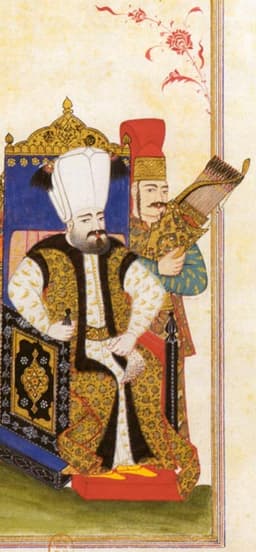
Mustafa II
Emperor · Modern
47.3Total
Basic Information
Born
1872
1664
Died
1919
1703
Era
Modern
Modern
Nationality
Afghanistan
Ottoman Empire
Occupation
Emperor
Emperor
Civilization
Middle Eastern
Middle Eastern
Score Comparison
Military (10%)
50.0
38.3
Political (20%)
68.0
32.2
Influence (20%)
52.5
52.5
Legacy (20%)
40.8
42.5
Leadership (15%)
74.0
65.7
Strategy (15%)
45.0
50.0
TOTAL
54.1
47.3
Habibullah Khan — Complete Timeline
1901 AD
Introduction of Modern ReformsReform
Habibullah Khan introduced limited modern reforms, including the establishment of a military academy, a postal service, and a hydroelectric plant in Jalalabad. He also encouraged education and built roads, but faced resistance from conservative clergy.
ModernizationReformsInfrastructure
Impact: nationalconstructive
1905 AD
Anglo-Afghan Treaty of 1905Political Action
Habibullah Khan signed a treaty with the British reaffirming the agreements of the previous reign, including British control over Afghan foreign policy. In return, Britain provided a subsidy and guaranteed non-interference in internal affairs.
TreatyBritish RelationsSubsidy
Impact: national
1914 AD
Maintaining Afghan Neutrality in WWIPolitical Action◆ Major
During World War I, Habibullah Khan maintained Afghanistan's neutrality despite pressure from the Ottoman Empire and Germany to join the Central Powers. He resisted calls for jihad against the British, preserving stability but angering nationalists.
World War INeutralityDiplomacy
Impact: regional
1919 AD
Assassination by Unknown AssailantsOther◆ Major
Habibullah Khan was assassinated while on a hunting trip in Laghman Province. The perpetrators were never definitively identified, but suspicions fell on anti-British factions or family rivals. His death triggered a succession crisis.
AssassinationSuccession CrisisMystery
Impact: nationaltragic
Mustafa II — Complete Timeline
1695 AD
Last Campaigning Ottoman SultanWar◆ Major
Mustafa II personally led the Ottoman army in campaigns against the Habsburgs, recapturing the island of Chios in 1695. He was the last Ottoman sultan to lead a military campaign in person, a tradition that ended after his reign.
Military CampaignChiosSultan
Impact: national
1697 AD
Battle of ZentaWar◆ Major
Mustafa II's army was decisively defeated by the Habsburg forces under Prince Eugene of Savoy at Zenta. The Ottoman army was caught crossing the Tisza River and suffered heavy losses. This defeat led to the Treaty of Karlowitz.
Great Turkish WarHabsburgsPrince Eugene
Impact: regionaltragic
1699 AD
Treaty of KarlowitzPolitical Action
Mustafa II signed the Treaty of Karlowitz with the Holy League, ending the Great Turkish War. The treaty ceded Hungary, Transylvania, and Podolia to the Habsburgs, Poland, and Venice. This marked the first major territorial loss for the Ottoman Empire.
Peace TreatyTerritorial LossHoly League
Impact: regionaltragic
1703 AD
Deposed by the Edirne EventPolitical Action◆ Major
Mustafa II was deposed by a Janissary revolt known as the Edirne Event. The rebels, angry over his reliance on the grand vizier and his stay in Edirne, marched on Istanbul. He was forced to abdicate in favor of his brother Ahmed III.
DepositionEdirne EventJanissaries
Impact: nationaltragic
This comparison has not been analyzed yet.
One-time AI generation (~1 minute). Scores and timeline are already available below.
Rankings
🥇
Habibullah KhanLeader
Mil: 50.0Pol: 68.0Inf: 52.5
54.1
🥈
Mustafa II
Mil: 38.3Pol: 32.2Inf: 52.5
47.3
+6.8 behind
How This Comparison Works
Algorithm
Each figure is scored on 6 dimensions (0—100 scale) based on structured historical data: Military (10%), Political (20%), Influence (20%), Legacy (20%), Leadership (15%), Strategy (15%). The weighted total produces the final ranking.
Data Sources
Scores are computed from structured sub-indicators in the database. Scale factors adjust for era (Ancient ×0.85, Modern ×1.0) and civilization size (Eastern ×1.05, Other ×0.80) to account for differences in population and military scale.
Maximum 3 Figures
Comparisons are limited to 2—3 figures to ensure readability and statistical meaningfulness.
Error Margins
±5 points per dimension — Sub-scores are derived from historical records with inherent uncertainty. Two figures within 5 points on a dimension should be considered roughly equivalent in that area.
Total Score Accuracy
±3 points overall — The weighted combination of 6 dimensions produces a total score with approximately ±3 points of uncertainty. Differences of less than 3 points are not statistically significant— the figures are effectively tied.
Known Limitations
- Historical records are incomplete and uneven across civilizations
- Figures from oral-tradition societies may be underrepresented
- Occupation labels can misclassify multi-role figures
- Scores measure capability and impact, not moral character
- Quantitative scoring is a comparison tool, not absolute truth
Capability Radar
Military (10%) — Battles & Warfare
Battles
20
45
Win Rate
25
40
Expansion
15
25
Political (20%) — Governance & Reform
Reform
50
15
Diplomacy
60
30
Economy
45
20
Influence (20%) — Cultural & Global Reach
Cultural
30
30
Global
25
25
Legacy (20%) — Historical Impact
Historical
35
35
Longevity
20
20
Leadership (15%) — Power & Stability
Tenure
55
40
Stability
30
25
Strategy (15%) — Tactics & Innovation
Strategy
35
30
Tactics
30
35
Reform
40
20
Similar Comparisons
Comments & Discussion
No comments yet. Be the first to share your thoughts!