Loading...
Analysis will be generated on first visit.
Scores and timeline are available below. The page will refresh automatically when ready.
Hage Geingob vs Julius Caesar
Julius Caesar leads by 19.2 pts · 2 figures compared
…

Hage Geingob
Politician · Modern
64.1Total
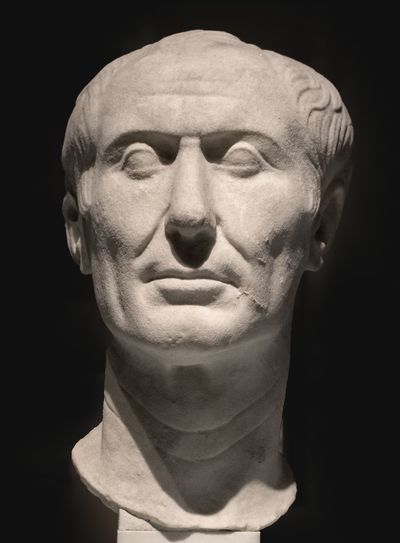
Julius Caesar
General · Ancient
83.3Total
Basic Information
Born
1941
-100
Died
—
-44
Era
Modern
Ancient
Nationality
Namibia
Roman Republic
Occupation
Politician
General
Civilization
Other
Western
Score Comparison
Military (10%)
30.2
88.0
Political (20%)
72.0
78.0
Influence (20%)
71.3
85.0
Legacy (20%)
59.0
82.0
Leadership (15%)
80.9
82.0
Strategy (15%)
56.4
88.0
TOTAL
64.1
83.3
Rankings
🥇
Julius CaesarLeader
Mil: 88.0Pol: 78.0Inf: 85.0
83.3
🥈
Hage Geingob
Mil: 30.2Pol: 72.0Inf: 71.3
64.1
+19.2 behind
How This Comparison Works
Algorithm
Each figure is scored on 6 dimensions (0—100 scale) based on structured historical data: Military (10%), Political (20%), Influence (20%), Legacy (20%), Leadership (15%), Strategy (15%). The weighted total produces the final ranking.
Data Sources
Scores are computed from structured sub-indicators in the database. Scale factors adjust for era (Ancient ×0.85, Modern ×1.0) and civilization size (Eastern ×1.05, Other ×0.80) to account for differences in population and military scale.
Maximum 3 Figures
Comparisons are limited to 2—3 figures to ensure readability and statistical meaningfulness.
Error Margins
±5 points per dimension — Sub-scores are derived from historical records with inherent uncertainty. Two figures within 5 points on a dimension should be considered roughly equivalent in that area.
Total Score Accuracy
±3 points overall — The weighted combination of 6 dimensions produces a total score with approximately ±3 points of uncertainty. Differences of less than 3 points are not statistically significant— the figures are effectively tied.
Known Limitations
- Historical records are incomplete and uneven across civilizations
- Figures from oral-tradition societies may be underrepresented
- Occupation labels can misclassify multi-role figures
- Scores measure capability and impact, not moral character
- Quantitative scoring is a comparison tool, not absolute truth
Capability Radar
Military (10%) — Battles & Warfare
Battles
22
95
Win Rate
26
92
Expansion
30
97
Political (20%) — Governance & Reform
Reform
60
90
Diplomacy
70
85
Economy
55
82
Influence (20%) — Cultural & Global Reach
Cultural
30
88
Global
35
94
Legacy (20%) — Historical Impact
Historical
40
95
Longevity
30
96
Leadership (15%) — Power & Stability
Tenure
65
75
Stability
60
60
Strategy (15%) — Tactics & Innovation
Strategy
29
94
Tactics
32
96
Reform
38
88
Analysis will be generated on first visit.
Scores and timeline are available below. The page will refresh automatically when ready.
Hage Geingob — Complete Timeline
1990 AD
Became Prime Minister of NamibiaPolitical Action◆ Major
Hage Geingob was appointed the first Prime Minister of independent Namibia by President Sam Nujoma. He served in this role for 12 years, overseeing the implementation of government policies and the establishment of administrative structures.
Prime MinisterGovernmentIndependence
Impact: nationalconstructive
2008 AD
Served as Minister of Trade and IndustryPolitical Action
After a period out of government, Geingob returned as Minister of Trade and Industry under President Hifikepunye Pohamba. He focused on economic diversification, foreign investment, and industrial policy, including the development of the Walvis Bay port.
TradeIndustryEconomic Policy
Impact: nationalconstructive
2015 AD
Became President of NamibiaPolitical Action◆ Major
Geingob was elected President of Namibia with a large majority, succeeding Pohamba. He promised to continue SWAPO's policies of stability and development, but his tenure was marked by economic challenges, including a recession and rising unemployment.
PresidencyElectionSWAPO
Impact: national
2016 AD
Launched Harambee Prosperity PlanReform◆ Major
Geingob launched the Harambee Prosperity Plan, a five-year development blueprint aimed at accelerating economic growth, reducing poverty, and improving infrastructure. The plan focused on four pillars: effective governance, economic advancement, social progression, and infrastructure development.
Development PlanHarambeeEconomic Policy
Impact: nationalconstructive
2019 AD
Faced 'Fishrot' Corruption ScandalPolitical Action◆ Major
Geingob's government was rocked by the 'Fishrot' scandal, in which senior officials were accused of taking bribes from an Icelandic fishing company in exchange for fishing quotas. The scandal led to the resignation of two ministers and damaged public trust in his administration.
CorruptionFishrotScandal
Impact: nationaldestructive
Similar Comparisons
Comments & Discussion
No comments yet. Be the first to share your thoughts!