Loading...
Haile Selassie Gugsa vs Julius Caesar
Julius Caesar leads by 46.6 pts · 2 figures compared
…
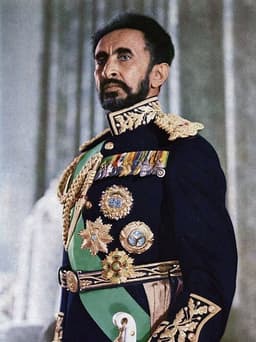
Haile Selassie Gugsa
General · Modern
36.2Total

Julius Caesar
General · Ancient
82.8Total
Basic Information
Born
1880
-100
Died
1947
-44
Era
Modern
Ancient
Nationality
Ethiopia
Roman Republic
Occupation
General
General
Civilization
Other
Western
Score Comparison
Military (10%)
10.2
88.0
Political (20%)
26.4
78.0
Influence (20%)
50.2
85.0
Legacy (20%)
37.5
82.0
Leadership (15%)
35.4
80.0
Strategy (15%)
39.6
85.0
TOTAL
36.2
82.8
Haile Selassie Gugsa — Complete Timeline
1936 AD
Defected to Italian Forces during Second Italo-Ethiopian WarWar◆ Major
Haile Selassie Gugsa, a son-in-law of Emperor Haile Selassie, defected to the Italian invaders. He provided intelligence and support, which contributed to the Italian victory at the Battle of Maychew.
DefectionSecond Italo-Ethiopian WarBetrayal
Impact: regionaldestructive
Appointed Governor of Tigray by ItaliansPolitical Action◆ Major
After his defection, the Italian colonial administration appointed Gugsa as Governor of Tigray. He administered the region under Italian rule until the end of the occupation.
Italian OccupationGovernorCollaboration
Impact: regionaldestructive
Julius Caesar — Complete Timeline
58 BC
Gallic WarsWar◆ Major
Caesar, as proconsul of Gaul, launched a series of campaigns that conquered all of Gaul (modern France, Belgium, and parts of Switzerland). He fought numerous battles, including against the Helvetii, the Belgae, and the Gallic chieftain Vercingetorix. The wars brought immense wealth and a loyal army to Caesar.
Gallic WarsConquestRoman Expansion
Impact: regional
49 BC
Crossing the RubiconPolitical Action◆ Major
Caesar led Legio XIII across the Rubicon River into Italy, defying the Roman Senate's order to disband his army. This act triggered a civil war against Pompey and the Optimates, ultimately leading to Caesar's dictatorship and the end of the Roman Republic.
Roman Civil WarEnd of RepublicPower Struggle
Impact: global
48 BC
Battle of PharsalusWar◆ Major
Caesar's outnumbered army defeated the larger forces of Pompey the Great at Pharsalus in Greece. Caesar's tactical use of a reserve line to counter Pompey's cavalry charge proved decisive. Pompey fled to Egypt, where he was assassinated, leaving Caesar as the undisputed master of the Roman world.
Roman Civil WarBattleDecisive Victory
Impact: regional
44 BC
Appointment as Dictator for LifePolitical Action◆ Major
The Roman Senate appointed Caesar dictator perpetuo (dictator for life), granting him unprecedented personal power. This move concentrated military, legislative, and judicial authority in one person, effectively ending the Roman Republic's traditional system of checks and balances and alarming many senators.
DictatorshipEnd of RepublicPower Consolidation
Impact: regionaldestructive
Assassination on the Ides of MarchPolitical Action◆ Major
A group of Roman senators, led by Marcus Junius Brutus and Gaius Cassius Longinus, stabbed Caesar to death at a meeting of the Senate in the Theatre of Pompey. The assassination was intended to restore the Republic, but instead triggered another civil war that led to the rise of the Roman Empire.
AssassinationRoman PoliticsEnd of Republic
Impact: globaldestructive
Expert Analysis
haile-selassie-gugsa-vs-julius-caesar
# The General Who Crossed His Rubicon, and the One Who Crossed His Emperor
On a January morning in 49 BCE, Julius Caesar stood at the banks of a small river in northern Italy, the Rubicon. He knew that crossing it with his army meant civil war, the end of the Roman Republic as it had been, and quite possibly his own destruction. He crossed anyway, reportedly muttering, "The die is cast." Two thousand years later, in the highlands of Ethiopia, another general faced a different kind of Rubicon. Haile Selassie Gugsa, son-in-law of the emperor whose name he shared, stood at the precipice of a war against Italian fascism. He chose to cross to the other side—not into rebellion, but into collaboration. One man changed the course of Western history. The other became a footnote in a colonial tragedy. What drove these two generals to such different fates?
Origins
Caesar was born into the chaos of the late Roman Republic, a world of crumbling aristocratic norms and rising military strongmen. His family, the Julii, claimed descent from the goddess Venus, but they were politically marginal. His father died when Caesar was sixteen, leaving him to navigate a treacherous world of debt, patronage, and ambition. He was a man of the city, of the Forum, of the Senate—but also of the battlefield. The Republic was dying, and Caesar grew up breathing its last gasps.
Haile Selassie Gugsa, by contrast, was born in 1880 into the feudal hierarchy of Ethiopia, a Christian empire that had successfully resisted European colonization. He was a prince of the blood, connected by marriage to the most powerful family in the land. His world was not the Senate but the court, not the legion but the feudal levy. The Italy that would invade his country in 1935 was the same Italy that had been humiliated at the Battle of Adwa in 1896, when Ethiopian forces crushed a European army. Gugsa grew up in the shadow of that victory, but also in the shadow of a modernizing emperor who was centralizing power and diminishing the authority of regional nobles like himself.
Rise to Power
Caesar’s rise was a masterclass in political audacity. He climbed the Roman ladder of offices—quaestor, aedile, praetor, consul—but he did so with borrowed money, populist theatrics, and a willingness to break the rules. He formed the First Triumvirate with Pompey and Crassus, an illegal but effective power-sharing arrangement. Then he secured a five-year command in Gaul, where he conquered a vast territory, built a loyal army, and amassed enough wealth to make himself the most powerful man in the Republic. The Gallic Wars were not just military campaigns; they were a political machine.
Gugsa’s rise was quieter. He was a general in the Ethiopian army, but his real power came from his marriage to a daughter of Emperor Haile Selassie. In a system where loyalty to the emperor was paramount, Gugsa was both privileged and constrained. He was appointed governor of Tigray, a strategically vital northern province bordering Italian-held Eritrea. When Mussolini’s forces invaded in 1935, Gugsa was expected to defend the empire. But he had grievances: the emperor had sidelined him, and the central government had not provided the resources he demanded. His rise had been dependent on the emperor; his fall would be too.
Leadership & Governance
Caesar governed as he fought: with speed, decisiveness, and a calculated blend of mercy and ruthlessness. After crossing the Rubicon, he pursued Pompey to Greece, defeated him at Pharsalus, and then pardoned many of his enemies—a policy of clemency that disarmed his opponents and consolidated his power. As dictator, he reformed the calendar, granted citizenship to provincials, and launched public works projects. He centralized authority but also expanded the Senate, bringing in men from Italy and Gaul. His military genius was inseparable from his political vision: victory in Gaul funded reform in Rome.
Gugsa’s leadership, by contrast, collapsed under pressure. In 1936, as the Italian army advanced into Tigray, he defected. He provided intelligence to the invaders and was rewarded with the governorship of his own province under Italian colonial rule. This was not a strategic calculation for a greater good; it was a personal betrayal. Where Caesar broke the law to save what he saw as the Republic, Gugsa broke his oath to save his own position. The Italian occupation of Ethiopia was brutal—poison gas, mass executions, forced labor—and Gugsa became an instrument of that brutality. His governance was the governance of a collaborator, dependent on foreign bayonets.
Triumph & Tragedy
Caesar’s greatest triumph was his conquest of Gaul, a campaign that added a vast, wealthy province to the Roman world and made him a legend. His greatest tragedy was his assassination on the Ides of March, 44 BCE, when a conspiracy of senators stabbed him to death in the Senate chamber. He had centralized too much power, too quickly, and the old aristocracy struck back. But his death did not restore the Republic; it triggered another civil war that ended with the rise of his adopted heir, Octavian, as the first Roman emperor. Caesar’s tragedy was that he could not finish what he started.
Gugsa’s “triumph” was his defection, which gave him a few years of power under Italian rule. His tragedy was the aftermath. When the British and Ethiopian forces defeated the Italians in 1941, Gugsa was captured. He was tried for treason, but Emperor Haile Selassie—his father-in-law—spared his life. He lived out his days in obscurity, dying in 1947. His name became synonymous with betrayal in Ethiopian memory. The man who had once been a prince ended as a ghost, erased from the official history of his country.
Character & Destiny
Caesar was driven by an insatiable ambition, but also by a clear-eyed understanding of power. He knew that the Republic was broken and that only a strong hand could save it. His flaw was his arrogance—he ignored the warnings of his assassination, believing his clemency had bought loyalty. He was a gambler who won again and again, until he lost everything.
Gugsa was driven by resentment and self-preservation. He saw the emperor as ungrateful, the war as unwinnable, and his own interests as paramount. He lacked the vision to see that his defection would damn him in the eyes of history. Where Caesar risked everything for a grand ambition, Gugsa risked everything for a small one. Their characters shaped their outcomes: Caesar’s audacity made him immortal; Gugsa’s cowardice made him invisible.
Legacy
Caesar’s legacy is the Roman Empire itself. His name became a title—Kaiser, Tsar—and his reforms laid the foundation for centuries of imperial rule. He is remembered as a military genius, a political revolutionary, and a warning about the dangers of unchecked power. His writings, especially the *Commentaries on the Gallic War*, remain classics of military literature.
Gugsa’s legacy is a cautionary tale about collaboration. In Ethiopia, he is remembered as a traitor, a man who sold his country for a governorship. His name appears in history books as a footnote to the Italian invasion, a reminder that not all resistance is heroic and not all defectors are noble. The scores assigned to these two men—Caesar’s total of 83.3, Gugsa’s of 55.0—reflect not just their achievements but their moral weight in history.
Conclusion
One general crossed a river and changed the world. Another crossed a line and was forgotten. The difference was not just in their abilities—Caesar was a genius, Gugsa was not—but in their vision. Caesar saw an empire worth building and a Republic worth breaking. Gugsa saw only himself. In the end, history remembers those who act for something larger than their own survival. The Rubicon is a river of no return, but it is also a river of meaning. Those who cross it for a cause become legends. Those who cross it for a crumb become dust.
Rankings
🥇
Julius CaesarLeader
Mil: 88.0Pol: 78.0Inf: 85.0
82.8
🥈
Haile Selassie Gugsa
Mil: 10.2Pol: 26.4Inf: 50.2
36.2
+46.6 behind
How This Comparison Works
Algorithm
Each figure is scored on 6 dimensions (0—100 scale) based on structured historical data: Military (10%), Political (20%), Influence (20%), Legacy (20%), Leadership (15%), Strategy (15%). The weighted total produces the final ranking.
Data Sources
Scores are computed from structured sub-indicators in the database. Scale factors adjust for era (Ancient ×0.85, Modern ×1.0) and civilization size (Eastern ×1.05, Other ×0.80) to account for differences in population and military scale.
Maximum 3 Figures
Comparisons are limited to 2—3 figures to ensure readability and statistical meaningfulness.
Error Margins
±5 points per dimension — Sub-scores are derived from historical records with inherent uncertainty. Two figures within 5 points on a dimension should be considered roughly equivalent in that area.
Total Score Accuracy
±3 points overall — The weighted combination of 6 dimensions produces a total score with approximately ±3 points of uncertainty. Differences of less than 3 points are not statistically significant— the figures are effectively tied.
Known Limitations
- Historical records are incomplete and uneven across civilizations
- Figures from oral-tradition societies may be underrepresented
- Occupation labels can misclassify multi-role figures
- Scores measure capability and impact, not moral character
- Quantitative scoring is a comparison tool, not absolute truth
Capability Radar
Military (10%) — Battles & Warfare
Battles
5
95
Win Rate
5
92
Expansion
5
97
Political (20%) — Governance & Reform
Reform
5
90
Diplomacy
10
85
Economy
5
82
Influence (20%) — Cultural & Global Reach
Cultural
5
88
Global
5
94
Legacy (20%) — Historical Impact
Historical
10
95
Longevity
5
96
Leadership (15%) — Power & Stability
Tenure
10
75
Stability
5
60
Strategy (15%) — Tactics & Innovation
Strategy
10
94
Tactics
10
96
Reform
5
88
Similar Comparisons
Comments & Discussion
CaesarVanquisher6/17/2026
Caesar’s gambler’s soul contrasts with Gugsa’s calculating fear. The Rubicon crossing was a high-stakes bid for absolute power—Caesar risked everything on his legions’ loyalty, which he earned through personal charisma and shared plunder in Gaul. Gugsa faced no such bond with his emperor; he was a disgruntled son-in-law with a silver spoon, not a battle-tested leader. His defection to Mussolini wasn’t a tragic Rubicon—it was a pathetic whimper from a man who never commanded real loyalty.
军纪判官6/17/2026
拿凯撒和古格萨比?简直侮辱了“将军”这个词。凯撒在卢比孔河畔的选择,背后是高卢八年血战锤炼出的铁血军团——他的心腹老兵宁可弑元老院也要保他。古格萨呢?1935年意大利入侵时,他手里两万埃塞俄比亚军队装备还不及一战水平,自己却先叛变投敌。这不是战略抉择,这是懦夫为苟活出卖民族。别拿林肯和班农相提并论。
殖民创伤研究者6/17/2026
西方史观总爱把古格萨钉在“叛徒”柱上,却选择性遗忘殖民语境下的道德灰区。他选择投靠意大利,是在看到海尔·塞拉西皇帝对现代装备的全然无视——埃塞俄比亚军队连防毒面具都没配齐,却要用长矛对抗飞机坦克。这哪是“渡河”?这是船长弃船时,乘客被迫自己选择救生筏。凯撒有元老院可对抗,古格萨面对的是一整个殖民帝国。
Chronicler37196/17/2026
Both men crossed lines, but Caesar’s was a bright, flaming sword of ambition; Gugsa’s was a shadowy stumble into obscurity. Caesar’s act burned Rome to ash to forge an empire—he chose destruction with a vision. Gugsa merely slithered from one sinking ship to another, his collaboration securing him a few years of cushy exile in Rome before dying forgotten in 1950. One die cast echoes eternity; the other clatters silently in the dirt.
Chronicler67846/17/2026
The comparison collapses on quantifiable metrics. Caesar’s crossing triggered a civil war that killed 400,000+ Romans and reshaped governance for 400 years. Gugsa’s defection altered nothing: Italy conquered Ethiopia regardless, and his name is erased from most histories. One man’s decision had a measurable, cascading impact; the other’s was a statistically insignificant betrayal in a losing war. We’re comparing a hurricane to a hiccup.