Loading...
Hakainde Hichilema vs Muhammad Ali Jinnah
Muhammad Ali Jinnah leads by 4.9 pts · 2 figures compared
…

Hakainde Hichilema
Politician · Modern
53.3Total
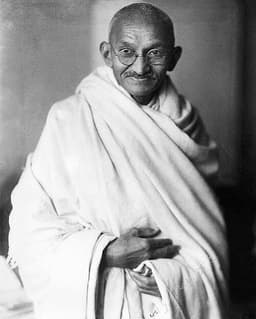
Muhammad Ali Jinnah
Politician · Modern
58.2Total
Basic Information
Born
1962
1876
Died
—
1948
Era
Modern
Modern
Nationality
Zambia
Pakistan
Occupation
Politician
Politician
Civilization
Other
Indian
Score Comparison
Military (10%)
50.0
48.7
Political (20%)
60.0
70.0
Influence (20%)
54.1
40.0
Legacy (20%)
42.5
70.0
Leadership (15%)
72.0
72.0
Strategy (15%)
43.3
45.0
TOTAL
53.3
58.2
Hakainde Hichilema — Complete Timeline
2006 AD
Founded the United Party for National DevelopmentPolitical Action◆ Major
Hichilema founded the UPND after leaving the United Liberal Party. The party became the main opposition to the Patriotic Front government, positioning Hichilema as a leading opposition figure.
Political PartyOpposition
Impact: nationalconstructive
2017 AD
Arrested on Treason ChargesPolitical Action◆ Major
Hichilema was arrested and charged with treason after his convoy allegedly failed to give way to President Edgar Lungu's motorcade. He spent four months in prison before the charges were dropped, drawing international criticism.
Political RepressionArrest
Impact: nationaltragic
2021 AD
Elected President of ZambiaPolitical Action
Hichilema won the presidential election with 59% of the vote, defeating incumbent Edgar Lungu. The election was widely praised as free and fair, marking the first peaceful transfer of power to an opposition candidate since 1991.
ElectionDemocracyPresidency
Impact: nationalprogressive
2022 AD
Launched Economic Recovery ProgramReform◆ Major
Hichilema's government implemented austerity measures, debt restructuring negotiations with international creditors, and anti-corruption campaigns. The program aimed to stabilize Zambia's economy after years of high debt and inflation.
Economic ReformDebtAusterity
Impact: nationalconstructive
Muhammad Ali Jinnah — Complete Timeline
1929 AD
Fourteen Points of JinnahPolitical Action◆ Major
Jinnah presented fourteen constitutional reforms to the British government demanding safeguards for Muslim rights in India. The points rejected the Nehru Report and became the basis for the Muslim League's political platform.
Constitutional ReformMuslim RightsIndian Politics
Impact: national
1940 AD
Lahore ResolutionPolitical Action
Jinnah presided over the Muslim League session in Lahore where the resolution for separate Muslim states was passed. This formally demanded the creation of Pakistan, marking a turning point in the independence movement.
Pakistan MovementPartitionMuslim League
Impact: regional
1946 AD
Direct Action DayPolitical Action◆ Major
Jinnah called for a day of protest to demand Pakistan. The protest in Calcutta escalated into communal riots that killed over 4,000 people. This violence accelerated the partition process.
Communal ViolencePartitionCalcutta
Impact: nationaltragic
1947 AD
Independence of PakistanPolitical Action
Pakistan became an independent nation on August 14, 1947. Jinnah became its first Governor-General, delivering a famous speech about unity and democracy. The partition caused massive population transfers and violence.
IndependencePartitionFounding of Pakistan
Impact: global
Jinnah's Address to Constituent AssemblyPolitical Action◆ Major
Jinnah addressed the first Constituent Assembly of Pakistan, outlining his vision for a secular, democratic state where all citizens had equal rights regardless of religion. This speech remains influential in Pakistani politics.
ConstitutionSecularismPakistan Vision
Impact: nationalconstructive
Expert Analysis
Origins
Hakainde Hichilema was born on June 4, 1962, in Monze, Zambia, to a family of cattle farmers. He attended the University of Zambia, earning a degree in economics and business administration, and later became a successful businessman in accounting and finance. His early career included roles at Coopers & Lybrand and as CEO of a mining company. Muhammad Ali Jinnah was born on December 25, 1876, in Karachi (then British India) into a mercantile family. He studied law at Lincoln's Inn in London and became a prominent barrister in Bombay. His early political involvement began with the Indian National Congress, advocating for Hindu-Muslim unity.
Rise to Power
Hichilema entered politics in the early 2000s, joining the United Party for National Development (UPND) after leaving the United Liberal Party. He became UPND president in 2006 and contested the presidency five times before winning in 2021. His key turning point was the 2021 election, where he secured 59% of the vote, defeating incumbent Edgar Lungu in a vote widely praised as free and fair. Jinnah rose to prominence as a leader of the All-India Muslim League. His turning point came with the 1940 Lahore Resolution, which formally demanded separate states for Muslims. Through legal acumen and political strategy, he negotiated with the British and Congress, culminating in Pakistan's independence on August 14, 1947.
Leadership & Governance
Hichilema's leadership style is technocratic and reformist. As president, he launched an Economic Recovery Program focused on austerity, debt restructuring, and anti-corruption. His governance emphasizes transparency and fiscal discipline, aiming to stabilize Zambia's economy. In contrast, Jinnah's leadership was constitutional and visionary. As Pakistan's first Governor-General, he advocated for a secular, democratic state with equal rights for all citizens, as outlined in his 1947 address to the Constituent Assembly. Jinnah scored 72.0 in leadership, while Hichilema also scored 72.0, but Jinnah's political score of 70.0 outweighs Hichilema's 60.0.
Triumph & Tragedy
Hichilema's greatest triumph is his peaceful election victory in 2021, ending a contentious political era. However, his tragedy includes being arrested on treason charges in 2017 after a convoy incident, spending four months in detention. Jinnah's triumph is founding Pakistan, achieving independence for millions of Muslims. His tragedy includes the violence of Direct Action Day in 1946, which escalated into communal riots killing over 4,000 people, and the subsequent partition massacres. Jinnah's legacy score of 70.0 reflects his enduring impact, while Hichilema's legacy scores 42.5 due to his ongoing tenure.
Character & Destiny
Hichilema is known for his persistence and business acumen, contesting multiple elections before winning. His character shaped his destiny as a reformer, but his economic policies face challenges. Jinnah, often called "Quaid-e-Azam" (Great Leader), was disciplined, principled, and pragmatic. His determination for a separate homeland defined his destiny, but his early death in 1948 left Pakistan without its founding leader. Historical assessments praise Jinnah's clarity of vision but critique his role in partition violence.
Legacy
Hichilema's legacy is still forming, but his anti-corruption stance and economic reforms may stabilize Zambia. Jinnah's legacy is monumental as the founder of Pakistan, a nuclear-armed nation of over 200 million. His vision of a secular democracy remains influential, though debated. Jinnah's total score of 58.2 surpasses Hichilema's 53.3, reflecting his broader historical impact.
Conclusion
Muhammad Ali Jinnah had greater impact. His founding of Pakistan created a new nation, altering global geopolitics. Hichilema's reforms are significant but confined to Zambia's borders. Jinnah's political score of 70.0 and legacy of 70.0 demonstrate his enduring influence, while Hichilema's scores of 60.0 and 42.5 indicate a more limited, contemporary role. The 4.9-point gap in total scores underscores Jinnah's superior historical weight.
Rankings
🥇
Muhammad Ali JinnahLeader
Mil: 48.7Pol: 70.0Inf: 40.0
58.2
🥈
Hakainde Hichilema
Mil: 50.0Pol: 60.0Inf: 54.1
53.3
+4.9 behind
How This Comparison Works
Algorithm
Each figure is scored on 6 dimensions (0—100 scale) based on structured historical data: Military (10%), Political (20%), Influence (20%), Legacy (20%), Leadership (15%), Strategy (15%). The weighted total produces the final ranking.
Data Sources
Scores are computed from structured sub-indicators in the database. Scale factors adjust for era (Ancient ×0.85, Modern ×1.0) and civilization size (Eastern ×1.05, Other ×0.80) to account for differences in population and military scale.
Maximum 3 Figures
Comparisons are limited to 2—3 figures to ensure readability and statistical meaningfulness.
Error Margins
±5 points per dimension — Sub-scores are derived from historical records with inherent uncertainty. Two figures within 5 points on a dimension should be considered roughly equivalent in that area.
Total Score Accuracy
±3 points overall — The weighted combination of 6 dimensions produces a total score with approximately ±3 points of uncertainty. Differences of less than 3 points are not statistically significant— the figures are effectively tied.
Known Limitations
- Historical records are incomplete and uneven across civilizations
- Figures from oral-tradition societies may be underrepresented
- Occupation labels can misclassify multi-role figures
- Scores measure capability and impact, not moral character
- Quantitative scoring is a comparison tool, not absolute truth
Capability Radar
Military (10%) — Battles & Warfare
Battles
24
23
Win Rate
27
31
Expansion
26
34
Political (20%) — Governance & Reform
Reform
60
85
Diplomacy
65
90
Economy
70
40
Influence (20%) — Cultural & Global Reach
Cultural
30
70
Global
25
75
Legacy (20%) — Historical Impact
Historical
35
85
Longevity
20
75
Leadership (15%) — Power & Stability
Tenure
55
60
Stability
55
50
Strategy (15%) — Tactics & Innovation
Strategy
29
37
Tactics
35
39
Reform
37
43
Similar Comparisons
Comments & Discussion
No comments yet. Be the first to share your thoughts!