Loading...
Muhammad Ali Jinnah vs Nkosazana Dlamini-Zuma
Muhammad Ali Jinnah leads by 6.0 pts · 2 figures compared
…
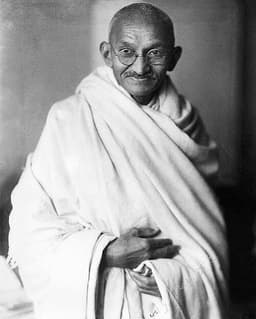
Muhammad Ali Jinnah
Politician · Modern
58.2Total

Nkosazana Dlamini-Zuma
Politician · Modern
52.2Total
Basic Information
Born
1876
1949
Died
1948
—
Era
Modern
Modern
Nationality
Pakistan
South Africa
Occupation
Politician
Politician
Civilization
Indian
Other
Score Comparison
Military (10%)
48.7
31.7
Political (20%)
70.0
45.0
Influence (20%)
40.0
61.0
Legacy (20%)
70.0
47.5
Leadership (15%)
72.0
72.0
Strategy (15%)
45.0
43.1
TOTAL
58.2
52.2
Muhammad Ali Jinnah — Complete Timeline
1929 AD
Fourteen Points of JinnahPolitical Action◆ Major
Jinnah presented fourteen constitutional reforms to the British government demanding safeguards for Muslim rights in India. The points rejected the Nehru Report and became the basis for the Muslim League's political platform.
Constitutional ReformMuslim RightsIndian Politics
Impact: national
1940 AD
Lahore ResolutionPolitical Action
Jinnah presided over the Muslim League session in Lahore where the resolution for separate Muslim states was passed. This formally demanded the creation of Pakistan, marking a turning point in the independence movement.
Pakistan MovementPartitionMuslim League
Impact: regional
1946 AD
Direct Action DayPolitical Action◆ Major
Jinnah called for a day of protest to demand Pakistan. The protest in Calcutta escalated into communal riots that killed over 4,000 people. This violence accelerated the partition process.
Communal ViolencePartitionCalcutta
Impact: nationaltragic
1947 AD
Independence of PakistanPolitical Action
Pakistan became an independent nation on August 14, 1947. Jinnah became its first Governor-General, delivering a famous speech about unity and democracy. The partition caused massive population transfers and violence.
IndependencePartitionFounding of Pakistan
Impact: global
Jinnah's Address to Constituent AssemblyPolitical Action◆ Major
Jinnah addressed the first Constituent Assembly of Pakistan, outlining his vision for a secular, democratic state where all citizens had equal rights regardless of religion. This speech remains influential in Pakistani politics.
ConstitutionSecularismPakistan Vision
Impact: nationalconstructive
Nkosazana Dlamini-Zuma — Complete Timeline
1994 AD
Appointed Minister of HealthPolitical Action◆ Major
Dlamini-Zuma was appointed South Africa's Minister of Health under President Nelson Mandela. She oversaw the introduction of free healthcare for pregnant women and children under six, and initiated the country's first antiretroviral treatment program for HIV/AIDS.
South African GovernmentHealthcare ReformHIV/AIDS
Impact: nationalconstructive
1999 AD
Appointed Minister of Foreign AffairsPolitical Action◆ Major
Dlamini-Zuma became South Africa's Minister of Foreign Affairs under President Thabo Mbeki. She played a key role in shaping South Africa's foreign policy, including mediating conflicts in Africa and promoting the African Union's formation.
South African GovernmentForeign PolicyAfrican Union
Impact: regionalconstructive
2012 AD
Elected Chairperson of the African Union CommissionPolitical Action◆ Major
Dlamini-Zuma was elected as the first female Chairperson of the African Union Commission. She led the AU's executive body, focusing on peace and security, economic integration, and institutional reform across the continent.
African UnionLeadershipWomen in Politics
Impact: regionalconstructive
2018 AD
Appointed Minister in the Presidency for Planning, Monitoring and EvaluationPolitical Action
Dlamini-Zuma was appointed to this role by President Cyril Ramaphosa. She was tasked with overseeing government planning and performance monitoring, a position she held until 2019.
South African GovernmentPlanningMonitoring
Impact: national
Expert Analysis
Origins
Muhammad Ali Jinnah was born on December 25, 1876, in Karachi, then part of British India. He was the eldest of seven children in a mercantile Ismaili Muslim family. His father, Jinnahbhai Poonja, was a prosperous merchant. Jinnah attended the Sindh Madrasa and later the Christian Missionary Society High School. In 1892, he traveled to London to apprentice at Graham's Shipping and Trading Company but instead enrolled at Lincoln's Inn to study law, becoming the youngest Indian to qualify as a barrister at age 19.
Nkosazana Dlamini-Zuma was born on January 27, 1949, in Natal, South Africa. She grew up in a rural area, the daughter of a domestic worker and a teacher. She attended the University of Zululand and later the University of Natal, where she studied zoology and botany. She became active in the anti-apartheid struggle, joining the African National Congress (ANC) and the South African Students' Organization. She went into exile in 1976, studying medicine at the University of Bristol and later at the University of Liverpool, where she earned a degree in tropical child health.
Rise to Power
Jinnah's political career began with the Indian National Congress in 1906, but he left in 1920 due to disagreements with Gandhi's non-cooperation movement. He joined the All-India Muslim League and became its president in 1916. His turning point came with the Lahore Resolution in 1940, where the Muslim League formally demanded separate states for Muslims. Jinnah's leadership during the negotiations with the British and Congress culminated in the independence of Pakistan on August 14, 1947, making him its first Governor-General.
Dlamini-Zuma's rise came after the end of apartheid. She was appointed Minister of Health in 1994 under President Nelson Mandela, where she implemented free healthcare for pregnant women and children. In 1999, she became Minister of Foreign Affairs under Thabo Mbeki, shaping South Africa's foreign policy. Her election as Chairperson of the African Union Commission in 2012 marked a peak, making her the first woman to lead the AU. She later served as Minister in the Presidency for Planning, Monitoring and Evaluation from 2018.
Leadership & Governance
Jinnah's leadership was characterized by constitutionalism and legal precision. As Governor-General, he emphasized unity, democracy, and secularism in his famous August 11, 1947 speech. However, his governance was short-lived due to his declining health. He scored 72.0 in leadership, reflecting his ability to mobilize a political movement. His political score of 70.0 underscores his role in negotiating Pakistan's creation.
Dlamini-Zuma's leadership style is more bureaucratic and institutional. At the AU, she focused on peace and security, gender equality, and Agenda 2063. She scored 72.0 in leadership as well, tied with Jinnah, but her political score of 45.0 is lower due to limited electoral success. Her influence score of 61.0 reflects her role in continental diplomacy.
Triumph & Tragedy
Jinnah's greatest triumph was the creation of Pakistan, achieving a separate homeland for Indian Muslims. His legacy score of 70.0 reflects this enduring achievement. However, his call for Direct Action Day in 1946 led to communal riots killing over 4,000 people, a tragic failure that contributed to the partition violence. His health deteriorated rapidly after independence, and he died in 1948.
Dlamini-Zuma's triumph was her election as AU Chairperson, where she advanced women's rights and continental integration. Her influence score of 61.0 indicates moderate impact. A tragedy was her association with the controversial AIDS denialism under Mbeki, though she implemented some prevention programs. Her legacy score of 47.5 is lower, as her long-term impact is still unfolding.
Character & Destiny
Jinnah was known as a disciplined, determined, and aloof figure. His character shaped his destiny: his insistence on constitutional methods and Muslim unity made him the "father of Pakistan." However, his authoritarian streak and inability to delegate contributed to his early death from overwork.
Dlamini-Zuma is pragmatic and resilient, surviving exile and rising through ANC ranks. Her destiny was shaped by the anti-apartheid struggle and post-liberation politics. She remains a loyal party member, which has limited her independence but sustained her career.
Legacy
Jinnah's legacy is foundational: he is revered as the Quaid-e-Azam (Great Leader) in Pakistan. His vision of a secular, democratic Pakistan is debated but remains influential. His total score of 58.2 reflects a concentrated impact on a single nation.
Dlamini-Zuma's legacy is more diffuse. She broke gender barriers at the AU and contributed to South Africa's foreign policy. Her total score of 52.2 is lower, reflecting less transformative change. She is remembered as a capable administrator but not a visionary founder.
Conclusion
Muhammad Ali Jinnah had a greater historical impact than Nkosazana Dlamini-Zuma. His creation of Pakistan fundamentally altered the political map of South Asia, affecting over 200 million people. Dlamini-Zuma's work, while significant, occurred within existing structures. Jinnah's total score of 58.2 vs. 52.2 reflects this difference. Jinnah's leadership and political skills (72.0 and 70.0) built a new nation, whereas Dlamini-Zuma's influence (61.0) was exercised in a pre-existing state. Thus, Jinnah's legacy as a founding father outweighs Dlamini-Zuma's as a continental bureaucrat.
Rankings
🥇
Muhammad Ali JinnahLeader
Mil: 48.7Pol: 70.0Inf: 40.0
58.2
🥈
Nkosazana Dlamini-Zuma
Mil: 31.7Pol: 45.0Inf: 61.0
52.2
+6.0 behind
How This Comparison Works
Algorithm
Each figure is scored on 6 dimensions (0—100 scale) based on structured historical data: Military (10%), Political (20%), Influence (20%), Legacy (20%), Leadership (15%), Strategy (15%). The weighted total produces the final ranking.
Data Sources
Scores are computed from structured sub-indicators in the database. Scale factors adjust for era (Ancient ×0.85, Modern ×1.0) and civilization size (Eastern ×1.05, Other ×0.80) to account for differences in population and military scale.
Maximum 3 Figures
Comparisons are limited to 2—3 figures to ensure readability and statistical meaningfulness.
Error Margins
±5 points per dimension — Sub-scores are derived from historical records with inherent uncertainty. Two figures within 5 points on a dimension should be considered roughly equivalent in that area.
Total Score Accuracy
±3 points overall — The weighted combination of 6 dimensions produces a total score with approximately ±3 points of uncertainty. Differences of less than 3 points are not statistically significant— the figures are effectively tied.
Known Limitations
- Historical records are incomplete and uneven across civilizations
- Figures from oral-tradition societies may be underrepresented
- Occupation labels can misclassify multi-role figures
- Scores measure capability and impact, not moral character
- Quantitative scoring is a comparison tool, not absolute truth
Capability Radar
Military (10%) — Battles & Warfare
Battles
23
22
Win Rate
31
22
Expansion
34
27
Political (20%) — Governance & Reform
Reform
85
60
Diplomacy
90
65
Economy
40
55
Influence (20%) — Cultural & Global Reach
Cultural
70
40
Global
75
55
Legacy (20%) — Historical Impact
Historical
85
45
Longevity
75
30
Leadership (15%) — Power & Stability
Tenure
60
70
Stability
50
50
Strategy (15%) — Tactics & Innovation
Strategy
37
34
Tactics
39
32
Reform
43
35
Similar Comparisons
Comments & Discussion
No comments yet. Be the first to share your thoughts!