Loading...
Halil Hamid Pasha vs Julius Caesar
Julius Caesar leads by 32.8 pts · 2 figures compared
…
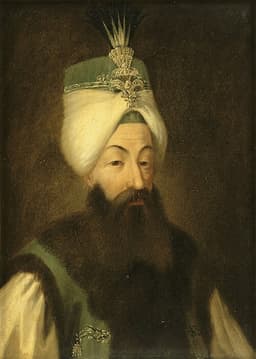
Halil Hamid Pasha
Politician · Modern
50.0Total

Julius Caesar
General · Ancient
82.8Total
Basic Information
Born
1736
-100
Died
1785
-44
Era
Modern
Ancient
Nationality
Ottoman Empire
Roman Republic
Occupation
Politician
General
Civilization
Middle Eastern
Western
Score Comparison
Military (10%)
40.8
88.0
Political (20%)
62.7
78.0
Influence (20%)
48.6
85.0
Legacy (20%)
43.3
82.0
Leadership (15%)
64.5
80.0
Strategy (15%)
38.6
85.0
TOTAL
50.0
82.8
Halil Hamid Pasha — Complete Timeline
1782 AD
Military ReformsReform◆ Major
As grand vizier, Halil Hamid Pasha initiated reforms to modernize the Ottoman military, including the establishment of a new artillery corps and the recruitment of European advisors. These reforms were precursors to later Tanzimat changes.
ReformMilitaryModernization
Impact: nationalconstructive
Grand Vizier AppointmentPolitical Action
Halil Hamid Pasha was appointed grand vizier by Sultan Abdul Hamid I. His appointment was part of a wave of reformist officials, but his tenure was cut short by conservative opposition and his eventual execution.
AppointmentReformAdministration
Impact: nationalconstructive
1785 AD
Execution on SuspicionOther◆ Major
Halil Hamid Pasha was executed by order of Sultan Abdul Hamid I on suspicion of plotting against the throne. His death ended his reformist tenure, which had included military and administrative changes, and highlighted the dangers of court politics.
ExecutionOttoman PoliticsReform
Impact: nationaltragic
Julius Caesar — Complete Timeline
58 BC
Gallic WarsWar◆ Major
Caesar, as proconsul of Gaul, launched a series of campaigns that conquered all of Gaul (modern France, Belgium, and parts of Switzerland). He fought numerous battles, including against the Helvetii, the Belgae, and the Gallic chieftain Vercingetorix. The wars brought immense wealth and a loyal army to Caesar.
Gallic WarsConquestRoman Expansion
Impact: regional
49 BC
Crossing the RubiconPolitical Action◆ Major
Caesar led Legio XIII across the Rubicon River into Italy, defying the Roman Senate's order to disband his army. This act triggered a civil war against Pompey and the Optimates, ultimately leading to Caesar's dictatorship and the end of the Roman Republic.
Roman Civil WarEnd of RepublicPower Struggle
Impact: global
48 BC
Battle of PharsalusWar◆ Major
Caesar's outnumbered army defeated the larger forces of Pompey the Great at Pharsalus in Greece. Caesar's tactical use of a reserve line to counter Pompey's cavalry charge proved decisive. Pompey fled to Egypt, where he was assassinated, leaving Caesar as the undisputed master of the Roman world.
Roman Civil WarBattleDecisive Victory
Impact: regional
44 BC
Appointment as Dictator for LifePolitical Action◆ Major
The Roman Senate appointed Caesar dictator perpetuo (dictator for life), granting him unprecedented personal power. This move concentrated military, legislative, and judicial authority in one person, effectively ending the Roman Republic's traditional system of checks and balances and alarming many senators.
DictatorshipEnd of RepublicPower Consolidation
Impact: regionaldestructive
Assassination on the Ides of MarchPolitical Action◆ Major
A group of Roman senators, led by Marcus Junius Brutus and Gaius Cassius Longinus, stabbed Caesar to death at a meeting of the Senate in the Theatre of Pompey. The assassination was intended to restore the Republic, but instead triggered another civil war that led to the rise of the Roman Empire.
AssassinationRoman PoliticsEnd of Republic
Impact: globaldestructive
Expert Analysis
halil-hamid-pasha-vs-julius-caesar
# The Crossroads of Power: Caesar and Halil Hamid Pasha
On a spring morning in 44 BCE, Julius Caesar walked into the Senate chamber in Rome, unarmed and confident, only to be surrounded by men he had trusted. Sixty daggers ended his life. Across the centuries and continents, in the autumn of 1785, another reformer—Halil Hamid Pasha—was summoned from his chambers in Constantinople, accused of plotting against the sultan who had elevated him. A silken cord ended his life. Both men died at the hands of their own political systems, yet one would be remembered as the architect of an empire, the other as a footnote in a long decline. Why did their paths diverge so dramatically?
Origins
Julius Caesar was born into the patrician Julian clan, but his family was not wealthy. Rome in the first century BCE was a republic tearing itself apart—a world of civil wars, slave revolts, and the relentless ambition of military commanders who saw the state as a ladder. Caesar’s uncle by marriage, Gaius Marius, had been a populist general; his rival, Sulla, a conservative dictator. From childhood, Caesar understood that in Rome, power flowed from the army and the mob, not from law alone.
Halil Hamid Pasha, born in 1736, entered an Ottoman Empire that had stopped conquering and begun to shrink. By the late eighteenth century, the empire had lost Hungary, faced Russian expansion, and seen its once-feared Janissary corps become a reactionary force that blocked change. Halil Hamid rose through the bureaucracy, not the battlefield. His world was one of court intrigue, religious conservatism, and the constant fear that reform would be seen as heresy. Where Caesar inherited a republic in chaos, Halil Hamid inherited an empire in stasis.
Rise to Power
Caesar’s rise was a masterclass in calculated risk. After Sulla’s proscriptions forced him into hiding, he returned to Rome and climbed the political ladder step by step: military tribune, quaestor, aedile, pontifex maximus. But his true breakthrough came when he secured the governorship of Gaul. Over eight years, from 58 to 50 BCE, he conquered a territory larger than Italy, built a loyal army, and amassed immense wealth. When the Senate ordered him to disband his legions and return as a private citizen, he crossed the Rubicon River in 49 BCE—an act of war. His rise was not a gift; it was a conquest.
Halil Hamid Pasha’s ascent was quieter. He was appointed grand vizier in 1782 by Sultan Abdul Hamid I, who recognized the need for reform after disastrous wars with Russia. His rise depended not on military glory but on the sultan’s favor—a fragile foundation. Where Caesar could rally legions, Halil Hamid could only issue decrees. His power was borrowed, not earned.
Leadership & Governance
As dictator of Rome, Caesar enacted sweeping reforms: he reorganized the calendar, granted citizenship to provincials, initiated public works, and curbed the power of corrupt senators. His military genius was legendary—at the Battle of Alesia in 52 BCE, he besieged a Gallic army of 80,000 while simultaneously defending against a relief force of 250,000, winning by sheer tactical brilliance. His political wisdom, however, was flawed. He pardoned his enemies, believing generosity would win loyalty. Instead, it gave them time to plot.
Halil Hamid Pasha’s reforms were more modest but no less significant for the Ottoman Empire. In 1782, he initiated military reforms, including the establishment of a modern artillery corps and a naval engineering school. He tried to break the Janissaries’ stranglehold on the military—a move that required immense political courage. But his governance was constrained by the sultan’s suspicion and the ulema’s opposition. While Caesar could rewrite Roman law with a stroke of his pen, Halil Hamid had to navigate a court where whispers could kill.
Triumph & Tragedy
Caesar’s greatest triumph was the conquest of Gaul, which brought him glory, wealth, and an army that would make him master of Rome. His greatest tragedy was his failure to understand that the Republic’s elite would never accept a king—even one who claimed to restore the Republic. On the Ides of March, 44 BCE, his former allies stabbed him to death, hoping to save the Republic. Instead, they triggered another civil war that ended it forever.
Halil Hamid Pasha’s triumph was brief: the military reforms he began in 1782 laid groundwork for later modernization, but they were too slow and too shallow to reverse Ottoman decline. His tragedy came in 1785, when Sultan Abdul Hamid I, swayed by conservative courtiers, ordered his execution on suspicion of plotting against the throne. The charges were almost certainly false; the real crime was that Halil Hamid had tried to change a system that did not want to change.
Character & Destiny
Caesar was audacious, charismatic, and ruthless when necessary. He once said, “It is better to create than to learn; creating is the essence of life.” He believed he could reshape the world through sheer will—and he almost did. But his arrogance blinded him to the hatred he inspired. He dismissed the conspirators as “those pale-faced men,” never suspecting they would act.
Halil Hamid Pasha was cautious, patient, and ultimately trapped. He tried to reform from within, using the sultan’s authority against the sultan’s own court. His strategy was not to conquer but to preserve. In an empire where loyalty was measured by obedience, his initiative became his death warrant.
Legacy
Caesar’s legacy is colossal. His name became a title—Kaiser, Tsar. His reforms outlived him, and the empire he built endured for five centuries in the West and a millennium in the East. He is remembered as a military genius, a political visionary, and a cautionary tale about ambition.
Halil Hamid Pasha’s legacy is quieter but no less real. His military reforms were continued by later sultans, and his execution became a symbol of the Ottoman Empire’s inability to reform itself until it was too late. He is remembered by historians as a pioneer of modernization, a man who saw the abyss and tried to turn back before the fall.
Conclusion
Caesar died because he was too powerful; Halil Hamid Pasha died because he was not powerful enough. One was killed by enemies who feared his strength, the other by a master who feared his ambition. In both cases, the system struck back—but in Rome, the system broke; in Constantinople, it held. The difference was not in the men, but in the worlds they inhabited. Caesar lived in an age when one man could remake history; Halil Hamid lived in an age when history was remaking itself, and no single man could stop it. Their deaths echo across the centuries, reminding us that power is never given—it is either taken or borrowed, and the price of miscalculation is always the same.
Rankings
🥇
Julius CaesarLeader
Mil: 88.0Pol: 78.0Inf: 85.0
82.8
🥈
Halil Hamid Pasha
Mil: 40.8Pol: 62.7Inf: 48.6
50.0
+32.8 behind
How This Comparison Works
Algorithm
Each figure is scored on 6 dimensions (0—100 scale) based on structured historical data: Military (10%), Political (20%), Influence (20%), Legacy (20%), Leadership (15%), Strategy (15%). The weighted total produces the final ranking.
Data Sources
Scores are computed from structured sub-indicators in the database. Scale factors adjust for era (Ancient ×0.85, Modern ×1.0) and civilization size (Eastern ×1.05, Other ×0.80) to account for differences in population and military scale.
Maximum 3 Figures
Comparisons are limited to 2—3 figures to ensure readability and statistical meaningfulness.
Error Margins
±5 points per dimension — Sub-scores are derived from historical records with inherent uncertainty. Two figures within 5 points on a dimension should be considered roughly equivalent in that area.
Total Score Accuracy
±3 points overall — The weighted combination of 6 dimensions produces a total score with approximately ±3 points of uncertainty. Differences of less than 3 points are not statistically significant— the figures are effectively tied.
Known Limitations
- Historical records are incomplete and uneven across civilizations
- Figures from oral-tradition societies may be underrepresented
- Occupation labels can misclassify multi-role figures
- Scores measure capability and impact, not moral character
- Quantitative scoring is a comparison tool, not absolute truth
Capability Radar
Military (10%) — Battles & Warfare
Battles
22
95
Win Rate
25
92
Expansion
26
97
Political (20%) — Governance & Reform
Reform
70
90
Diplomacy
40
85
Economy
30
82
Influence (20%) — Cultural & Global Reach
Cultural
20
88
Global
10
94
Legacy (20%) — Historical Impact
Historical
40
95
Longevity
20
96
Leadership (15%) — Power & Stability
Tenure
30
75
Stability
20
60
Strategy (15%) — Tactics & Innovation
Strategy
31
94
Tactics
36
96
Reform
38
88
Similar Comparisons
Comments & Discussion
落日余晖6/17/2026
两人都是改革者,但凯撒改革是为了从共和走向帝制,他是在往上走;哈米德改革是为了阻止帝国往下滑,他是在补墙。凯撒失败还能被神化,哈米德失败只会被遗忘。历史从来只给赢家立传,所谓的“未来之梦”在1785年秋天就已经断了。
Legionary's Ghost6/17/2026
Caesar died because he thought he could charm his way out of any conspiracy. He dismissed the omens, ignored Cicero's warnings, and walked into that chamber like he owned it. Sixty senators. No bodyguard. That's not fate—that's arrogance. Halil Hamid at least saw the noose coming and still couldn't escape a system where viziers were disposable assets.
波斯弯刀客6/17/2026
凯撒没死在战场上,却死在朋友手里,这就是共和制最讽刺的地方。而哈米德帕夏被苏丹一句话就处死,说明奥斯曼帝国根本不是法治,是苏丹的喜怒无常。凯撒至少留下了《高卢战记》让人记住他;哈米德呢?连本像样的改革方案都没传下来。
Chariot Reformer6/17/2026
Halil Hamid Pasha actually attempted something Caesar never faced: reforming a military caste that outnumbered his own supporters. The Janissaries weren't just Praetorians who could be bought off. They were a political block with veto power. Caesar outmaneuvered the Senate. Halil Hamid tried to outmaneuver an army that had its own treasury—and lost.
Silk and Steel6/17/2026
The comparison ignores one brutal difference: Caesar was killed by equals who feared his ambition. Halil Hamid was killed by a sultan who feared his competence. In Rome, assassination meant you mattered. In Constantinople, strangulation meant you were inconvenient. One death became a legend; the other became a statistic. Power structures define legacy more than merit does.