Loading...
This comparison has not been analyzed yet.
One-time AI generation (~1 minute). Scores and timeline are already available below.
Hamaguchi Osachi vs Martin Torrijos
Martin Torrijos leads by 5.8 pts · 2 figures compared
…

Hamaguchi Osachi
Politician · Modern
45.3Total
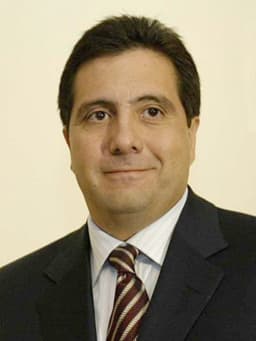
Martin Torrijos
Politician · Modern
51.1Total
Basic Information
Born
1870
1963
Died
1931
—
Era
Modern
Modern
Nationality
Japan
Panama
Occupation
Politician
Politician
Civilization
Eastern
Western
Score Comparison
Military (10%)
12.9
49.7
Political (20%)
68.0
68.0
Influence (20%)
50.2
49.4
Legacy (20%)
41.7
39.2
Leadership (15%)
53.2
65.0
Strategy (15%)
28.3
40.3
TOTAL
45.3
51.1
Hamaguchi Osachi — Complete Timeline
1930 AD
Return to Gold StandardReform◆ Major
Hamaguchi's government lifted the gold embargo and returned Japan to the gold standard in January 1930. This policy was intended to stabilize the yen and promote trade but exacerbated the effects of the Great Depression, causing severe deflation and economic hardship.
Economic PolicyGreat DepressionGold Standard
Impact: nationaldestructive
Assassination Attempt by Right-Wing ExtremistPolitical Action◆ Major
On November 14, 1930, Prime Minister Hamaguchi Osachi was shot at Tokyo Station by right-wing extremist Sagoya Tomeo. The attack was motivated by opposition to Hamaguchi's support for the London Naval Treaty, which limited Japanese naval power.
Assassination AttemptPolitical ViolenceNaval Treaty
Impact: nationaltragic
Ratification of the London Naval TreatyPolitical Action◆ Major
Hamaguchi's government ratified the London Naval Treaty, which extended the Washington Naval Treaty's limitations on capital ships to cruisers, destroyers, and submarines. The treaty was opposed by the Japanese Navy and ultranationalists, who saw it as a capitulation to Western powers.
Naval DisarmamentForeign PolicyTreaty
Impact: globalconstructive
1931 AD
Death from Assassination WoundsOther◆ Major
Hamaguchi Osachi died on August 26, 1931, from complications of the gunshot wound he sustained in the 1930 assassination attempt. His death removed a moderate voice from Japanese politics and contributed to the rise of militarism.
DeathPolitical Violence
Impact: nationaltragic
Martin Torrijos — Complete Timeline
2004 AD
Elected President of PanamaPolitical Action◆ Major
Martin Torrijos, son of former military leader Omar Torrijos, won the 2004 presidential election as the candidate of the Democratic Revolutionary Party (PRD). His victory marked the return of the PRD to power after a decade out of office.
ElectionPRDDynasty
Impact: national
Presidency (2004-2009)Political Action◆ Major
Torrijos's presidency was marked by economic growth, social reforms, and the initiation of the canal expansion. He also pursued anti-corruption measures and improved relations with the United States. He left office with relatively high approval ratings.
PresidencyReformGrowth
Impact: nationalconstructive
2006 AD
Panama Canal Expansion ProjectPolitical Action
Torrijos proposed and secured approval for a major expansion of the Panama Canal through a national referendum in 2006. The project aimed to build a third set of locks to accommodate larger ships, significantly increasing the canal's capacity and economic impact.
CanalInfrastructureReferendum
Impact: globalconstructive
This comparison has not been analyzed yet.
One-time AI generation (~1 minute). Scores and timeline are already available below.
Rankings
🥇
Martin TorrijosLeader
Mil: 49.7Pol: 68.0Inf: 49.4
51.1
🥈
Hamaguchi Osachi
Mil: 12.9Pol: 68.0Inf: 50.2
45.3
+5.8 behind
How This Comparison Works
Algorithm
Each figure is scored on 6 dimensions (0—100 scale) based on structured historical data: Military (10%), Political (20%), Influence (20%), Legacy (20%), Leadership (15%), Strategy (15%). The weighted total produces the final ranking.
Data Sources
Scores are computed from structured sub-indicators in the database. Scale factors adjust for era (Ancient ×0.85, Modern ×1.0) and civilization size (Eastern ×1.05, Other ×0.80) to account for differences in population and military scale.
Maximum 3 Figures
Comparisons are limited to 2—3 figures to ensure readability and statistical meaningfulness.
Error Margins
±5 points per dimension — Sub-scores are derived from historical records with inherent uncertainty. Two figures within 5 points on a dimension should be considered roughly equivalent in that area.
Total Score Accuracy
±3 points overall — The weighted combination of 6 dimensions produces a total score with approximately ±3 points of uncertainty. Differences of less than 3 points are not statistically significant— the figures are effectively tied.
Known Limitations
- Historical records are incomplete and uneven across civilizations
- Figures from oral-tradition societies may be underrepresented
- Occupation labels can misclassify multi-role figures
- Scores measure capability and impact, not moral character
- Quantitative scoring is a comparison tool, not absolute truth
Capability Radar
Military (10%) — Battles & Warfare
Battles
13
30
Win Rate
18
32
Expansion
21
33
Political (20%) — Governance & Reform
Reform
55
40
Diplomacy
50
45
Economy
55
50
Influence (20%) — Cultural & Global Reach
Cultural
20
15
Global
20
20
Legacy (20%) — Historical Impact
Historical
30
20
Longevity
20
15
Leadership (15%) — Power & Stability
Tenure
60
35
Stability
40
45
Strategy (15%) — Tactics & Innovation
Strategy
25
35
Tactics
26
39
Reform
32
41
Similar Comparisons
Comments & Discussion
No comments yet. Be the first to share your thoughts!