Loading...
Hammer DeRoburt vs Julius Caesar
Julius Caesar leads by 31.5 pts · 2 figures compared
…
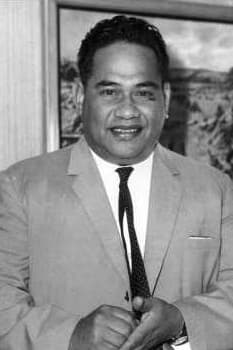
Hammer DeRoburt
Politician · Modern
51.3Total

Julius Caesar
General · Ancient
82.8Total
Basic Information
Born
1922
-100
Died
—
-44
Era
Modern
Ancient
Nationality
Nauru
Roman Republic
Occupation
Politician
General
Civilization
Other
Western
Score Comparison
Military (10%)
17.2
88.0
Political (20%)
68.0
78.0
Influence (20%)
51.8
85.0
Legacy (20%)
45.0
82.0
Leadership (15%)
74.0
80.0
Strategy (15%)
41.0
85.0
TOTAL
51.3
82.8
Hammer DeRoburt — Complete Timeline
1967 AD
Negotiated phosphate royalty agreement with AustraliaPolitical Action◆ Major
Hammer DeRoburt led negotiations with the Australian government, the British Phosphate Commissioners, and New Zealand for control of Nauru's phosphate industry. The resulting agreement granted Nauru ownership of the phosphate operations and a significant increase in royalties, providing the nation with substantial revenue.
PhosphateNegotiationEconomic Independence
Impact: nationalconstructive
1968 AD
Established the Nauru Phosphate Royalties TrustReform◆ Major
President DeRoburt established the Nauru Phosphate Royalties Trust to manage the country's phosphate income for long-term investment and future sustainability. The trust invested in overseas real estate and other assets, aiming to secure Nauru's economy after phosphate depletion.
Economic PolicyTrust FundSustainability
Impact: nationalconstructive
Became first President of NauruPolitical Action◆ Major
Hammer DeRoburt became the first President of Nauru upon its independence from Australia. He led the country through its early years as a sovereign nation, overseeing the management of its phosphate wealth, which was the island's primary economic resource.
IndependenceNauruFirst President
Impact: nationalconstructive
1976 AD
Re-elected President multiple timesPolitical Action
Hammer DeRoburt was re-elected President of Nauru several times, dominating the country's politics for much of its early independence. His long tenure was marked by both stability and criticism over his centralized control of the phosphate wealth and political opposition.
Nauru PoliticsRe-electionLong Tenure
Impact: national
1989 AD
Ousted as President in vote of no confidencePolitical Action◆ Major
Hammer DeRoburt was removed from the presidency by a vote of no confidence in the Parliament of Nauru. This followed years of economic mismanagement and declining phosphate revenues, leading to political instability and the rise of new leaders like Bernard Dowiyogo.
Nauru PoliticsVote of No ConfidencePolitical Change
Impact: national
Julius Caesar — Complete Timeline
58 BC
Gallic WarsWar◆ Major
Caesar, as proconsul of Gaul, launched a series of campaigns that conquered all of Gaul (modern France, Belgium, and parts of Switzerland). He fought numerous battles, including against the Helvetii, the Belgae, and the Gallic chieftain Vercingetorix. The wars brought immense wealth and a loyal army to Caesar.
Gallic WarsConquestRoman Expansion
Impact: regional
49 BC
Crossing the RubiconPolitical Action◆ Major
Caesar led Legio XIII across the Rubicon River into Italy, defying the Roman Senate's order to disband his army. This act triggered a civil war against Pompey and the Optimates, ultimately leading to Caesar's dictatorship and the end of the Roman Republic.
Roman Civil WarEnd of RepublicPower Struggle
Impact: global
48 BC
Battle of PharsalusWar◆ Major
Caesar's outnumbered army defeated the larger forces of Pompey the Great at Pharsalus in Greece. Caesar's tactical use of a reserve line to counter Pompey's cavalry charge proved decisive. Pompey fled to Egypt, where he was assassinated, leaving Caesar as the undisputed master of the Roman world.
Roman Civil WarBattleDecisive Victory
Impact: regional
44 BC
Appointment as Dictator for LifePolitical Action◆ Major
The Roman Senate appointed Caesar dictator perpetuo (dictator for life), granting him unprecedented personal power. This move concentrated military, legislative, and judicial authority in one person, effectively ending the Roman Republic's traditional system of checks and balances and alarming many senators.
DictatorshipEnd of RepublicPower Consolidation
Impact: regionaldestructive
Assassination on the Ides of MarchPolitical Action◆ Major
A group of Roman senators, led by Marcus Junius Brutus and Gaius Cassius Longinus, stabbed Caesar to death at a meeting of the Senate in the Theatre of Pompey. The assassination was intended to restore the Republic, but instead triggered another civil war that led to the rise of the Roman Empire.
AssassinationRoman PoliticsEnd of Republic
Impact: globaldestructive
Expert Analysis
hammer-deroburt-vs-julius-caesar
# The Dictator and the Island King
On the Ides of March, 44 BCE, a man who had conquered the known world fell to twenty-three dagger wounds on the floor of the Roman Senate. Two thousand years later, on a Pacific island barely visible on most maps, another leader was quietly voted out of office in a parliamentary no-confidence motion. One changed the course of Western civilization; the other managed the depletion of his nation's only resource. Yet Julius Caesar and Hammer DeRoburt both faced the same fundamental question: what does a leader owe his people when the future runs out?
Origins
Caesar was born into the patrician Julian clan, a family claiming descent from the goddess Venus, but one that had fallen from political prominence. Rome in 100 BCE was a republic tearing itself apart—a city of marble temples and blood-soaked streets, where ambitious men used armies as political weapons. Caesar grew up watching his uncle Gaius Marius and his rival Sulla butcher their enemies in proscriptions. He learned early that in Rome, power came from the sword, and the law was merely a suggestion.
Hammer DeRoburt was born in 1922 on Nauru, an eight-square-mile island in the central Pacific that had been chewed hollow by phosphate mining. His people, the Nauruans, had been colonized by Germans, then Australians, then Japanese during World War II. By the time DeRoburt reached adulthood, his homeland was a skeletal landscape of coral pinnacles, with a foreign-owned mining company extracting the island's wealth and leaving nothing behind. Where Caesar inherited a world of glory and violence, DeRoburt inherited a world of dependency and slow-motion catastrophe.
Rise to Power
Caesar’s path was forged in blood. He served as a military tribune, then quaestor in Spain, where he reportedly wept before a statue of Alexander the Great—frustrated that at thirty-three, he had done nothing while Alexander had conquered an empire. His true ascent began when he formed the First Triumvirate with Pompey and Crassus in 60 BCE, a backroom deal that gave him command of Gaul. Over the next eight years, he conquered 800 cities, fought 3 million men, and killed or enslaved a million more. When the Senate ordered him to disband his army, he crossed the Rubicon River in 49 BCE—an act of war against his own republic. “The die is cast,” he reportedly said.
DeRoburt’s rise was quieter but no less strategic. He became head chief of the Nauru Local Government Council in 1955, then led negotiations with Australia, Britain, and New Zealand over phosphate royalties. In 1967, he secured the Nauru Phosphate Agreement, which gave his tiny nation control over its mining industry and a massive financial settlement. When Nauru became independent in 1968, DeRoburt was its natural first president. He had won his people’s freedom not by crossing a river with legions, but by crossing a conference table with lawyers.
Leadership & Governance
Caesar governed as a revolutionary reformer. As dictator, he overhauled the Roman calendar, granted citizenship to provincials, initiated massive public works, and reformed debt laws. He centralized power ruthlessly, packing the Senate with his supporters and accepting the title “dictator for life.” His military genius was undeniable—his *Commentaries on the Gallic Wars* remain a textbook on strategy—but his political wisdom was brittle. He believed his personal authority could substitute for institutions, and he treated the Senate’s opposition as treason rather than legitimate dissent.
DeRoburt governed as a manager of a single resource. He established the Nauru Phosphate Royalties Trust in 1968, aiming to invest the island’s mining revenue for future generations. He was re-elected repeatedly, dominating Nauruan politics for two decades. But his governance had a fatal flaw: he treated phosphate income as permanent wealth, not a finite inheritance. The trust fund was mismanaged, invested in flashy projects like a Nauruan airline and a London hotel that hemorrhaged money. Where Caesar built an empire, DeRoburt built a state that consumed its own capital.
Triumph & Tragedy
Caesar’s greatest moment was his triumph in Rome after defeating Pompey’s sons at Munda in 45 BCE. He had crushed all opposition, unified the Roman world under his sole rule, and seemed poised to remake civilization. His tragedy came on March 15, 44 BCE, when sixty senators—many of them men he had pardoned and promoted—stabbed him to death. His last words to Brutus, if history is to be believed, were “You too, my child?” He died not knowing that his assassination would trigger another civil war, nor that his adopted heir Octavian would turn his name into the title of emperors for centuries.
DeRoburt’s triumph was Nauru’s independence itself—a tiny nation of 6,000 people standing alone on the world stage. His tragedy unfolded slowly. By the 1980s, the phosphate was running out. The royalties trust was nearly bankrupt. The island’s interior was a wasteland of coral pinnacles, impossible to farm or inhabit. In 1989, parliament removed him in a vote of no confidence. He died three years later, leaving behind a country that had gone from the highest GDP per capita in the developing world to a bankrupt nation dependent on Australian aid and a detention center for refugees.
Character & Destiny
Caesar was audacious, charismatic, and utterly convinced of his own destiny. He pardoned his enemies because he believed they would recognize his greatness; he refused a bodyguard because he thought his life was charmed. That arrogance killed him. But it also drove him to attempt what no Roman had done before: to make the Republic into an empire under one man.
DeRoburt was cautious, persistent, and deeply pragmatic. He secured his nation’s independence through negotiation, not war. But his pragmatism had a blind spot: he could not imagine a future without phosphate. He governed as if the mining would last forever, and when it didn’t, he had no Plan B. Where Caesar’s flaw was pride, DeRoburt’s was complacency.
Legacy
Caesar’s legacy is the Roman Empire, and through it, the Western world. His name became synonymous with autocracy—kaiser, czar, Caesar. He is remembered in every dictator who crosses a river, in every reformer who changes a calendar, in every leader who dies betrayed by friends. His story is a warning and a template.
DeRoburt’s legacy is Nauru itself—a cautionary tale of resource dependency and poor planning. He is remembered by his people as a founding father, but also as the man who spent their inheritance. His name appears in studies of the “resource curse,” the paradox that countries rich in natural resources often end up poorer and more corrupt than those without. He is a footnote in the history of failed states.
Conclusion
Standing on the Senate floor, Caesar bled out believing he had failed. He had wanted to restore the Republic, but he had destroyed it instead. On the remote shores of Nauru, DeRoburt watched his nation’s wealth disappear into the Pacific, believing he had built a future that never came. Both men were prisoners of their time—Caesar of a world that demanded conquest, DeRoburt of a world that offered only a single commodity. The difference between them is not just scale, but vision. Caesar saw an empire and reached for it; DeRoburt saw a trust fund and spent it. One left behind a civilization; the other left behind a lesson. History remembers both, but for very different reasons.
Rankings
🥇
Julius CaesarLeader
Mil: 88.0Pol: 78.0Inf: 85.0
82.8
🥈
Hammer DeRoburt
Mil: 17.2Pol: 68.0Inf: 51.8
51.3
+31.5 behind
How This Comparison Works
Algorithm
Each figure is scored on 6 dimensions (0—100 scale) based on structured historical data: Military (10%), Political (20%), Influence (20%), Legacy (20%), Leadership (15%), Strategy (15%). The weighted total produces the final ranking.
Data Sources
Scores are computed from structured sub-indicators in the database. Scale factors adjust for era (Ancient ×0.85, Modern ×1.0) and civilization size (Eastern ×1.05, Other ×0.80) to account for differences in population and military scale.
Maximum 3 Figures
Comparisons are limited to 2—3 figures to ensure readability and statistical meaningfulness.
Error Margins
±5 points per dimension — Sub-scores are derived from historical records with inherent uncertainty. Two figures within 5 points on a dimension should be considered roughly equivalent in that area.
Total Score Accuracy
±3 points overall — The weighted combination of 6 dimensions produces a total score with approximately ±3 points of uncertainty. Differences of less than 3 points are not statistically significant— the figures are effectively tied.
Known Limitations
- Historical records are incomplete and uneven across civilizations
- Figures from oral-tradition societies may be underrepresented
- Occupation labels can misclassify multi-role figures
- Scores measure capability and impact, not moral character
- Quantitative scoring is a comparison tool, not absolute truth
Capability Radar
Military (10%) — Battles & Warfare
Battles
21
95
Win Rate
22
92
Expansion
25
97
Political (20%) — Governance & Reform
Reform
40
90
Diplomacy
45
85
Economy
55
82
Influence (20%) — Cultural & Global Reach
Cultural
20
88
Global
30
94
Legacy (20%) — Historical Impact
Historical
40
95
Longevity
30
96
Leadership (15%) — Power & Stability
Tenure
60
75
Stability
30
60
Strategy (15%) — Tactics & Innovation
Strategy
33
94
Tactics
35
96
Reform
36
88
Similar Comparisons
Comments & Discussion
No comments yet. Be the first to share your thoughts!