Loading...
This comparison has not been analyzed yet.
One-time AI generation (~1 minute). Scores and timeline are already available below.
Hans-Adam II vs Taimur bin Feisal
Hans-Adam II leads by 11.6 pts · 2 figures compared
…

Hans-Adam II
Emperor · Modern
49.8Total
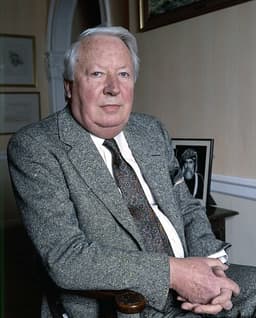
Taimur bin Feisal
Emperor · Modern
38.2Total
Basic Information
Born
1945
1886
Died
—
1965
Era
Modern
Modern
Nationality
Liechtenstein
Oman
Occupation
Emperor
Emperor
Civilization
Western
Middle Eastern
Score Comparison
Military (10%)
48.7
19.5
Political (20%)
46.6
33.6
Influence (20%)
47.9
46.3
Legacy (20%)
37.5
35.0
Leadership (15%)
74.0
51.9
Strategy (15%)
54.6
31.1
TOTAL
49.8
38.2
Hans-Adam II — Complete Timeline
1989 AD
Accession as Prince of LiechtensteinPolitical Action◆ Major
Hans-Adam II became Prince of Liechtenstein upon the death of his father, Franz Joseph II. He inherited a constitutional monarchy with significant powers, which he would later seek to expand through constitutional reforms.
SuccessionMonarchy
Impact: national
1990 AD
Liechtenstein Joins the United NationsPolitical Action◆ Major
Under Hans-Adam II's reign, Liechtenstein became a member of the United Nations, ending its long-standing policy of neutrality in international organizations. This move increased the principality's global diplomatic engagement.
DiplomacyUN MembershipNeutrality
Impact: globalconstructive
1992 AD
Threat to Move to ViennaPolitical Action
Hans-Adam II threatened to relocate the princely family to Vienna if the government did not grant him more powers. This ultimatum led to negotiations that eventually resulted in the 2003 constitutional reforms, highlighting tensions between the prince and the elected government.
Political CrisisMonarchy vs Government
Impact: national
1995 AD
Liechtenstein Joins the European Economic AreaPolitical Action◆ Major
Hans-Adam II oversaw Liechtenstein's accession to the European Economic Area, integrating the principality into the EU's single market while maintaining its customs union with Switzerland. This decision boosted the economy but required compromises on sovereignty.
European IntegrationEconomic Policy
Impact: regionalconstructive
2003 AD
Constitutional Reform of 2003Reform◆ Major
Hans-Adam II pushed through a constitutional referendum that granted the prince sweeping powers, including the ability to veto legislation, dismiss the government, and appoint judges. The reform passed with 64% voter approval, centralizing authority in the monarchy.
Constitutional ChangeMonarchyReferendum
Impact: nationalconstructive
Taimur bin Feisal — Complete Timeline
1913 AD
Became Sultan of Muscat and OmanPolitical Action◆ Major
Taimur bin Feisal succeeded his father, Sultan Faisal bin Turki, as ruler of Muscat and Oman. His reign was marked by internal tribal conflicts and financial difficulties, as the sultanate struggled with debt and declining revenues.
SuccessionOman
Impact: national
1920 AD
Signed the Treaty of SibPolitical Action◆ Major
Taimur bin Feisal signed the Treaty of Sib with the Imam of Oman, effectively recognizing the autonomy of the interior region under the Imamate. This agreement divided Oman into coastal and interior zones, reducing the sultan's authority.
TreatyOman DivisionImamate
Impact: national
1932 AD
Abdicated due to financial difficultiesPolitical Action◆ Major
Facing mounting debts and unable to control the interior, Taimur bin Feisal abdicated in favor of his son, Said bin Taimur. He cited financial strain and the inability to modernize the state as reasons for stepping down.
AbdicationFinancial CrisisOman
Impact: nationaltragic
This comparison has not been analyzed yet.
One-time AI generation (~1 minute). Scores and timeline are already available below.
Rankings
🥇
Hans-Adam IILeader
Mil: 48.7Pol: 46.6Inf: 47.9
49.8
🥈
Taimur bin Feisal
Mil: 19.5Pol: 33.6Inf: 46.3
38.2
+11.6 behind
How This Comparison Works
Algorithm
Each figure is scored on 6 dimensions (0—100 scale) based on structured historical data: Military (10%), Political (20%), Influence (20%), Legacy (20%), Leadership (15%), Strategy (15%). The weighted total produces the final ranking.
Data Sources
Scores are computed from structured sub-indicators in the database. Scale factors adjust for era (Ancient ×0.85, Modern ×1.0) and civilization size (Eastern ×1.05, Other ×0.80) to account for differences in population and military scale.
Maximum 3 Figures
Comparisons are limited to 2—3 figures to ensure readability and statistical meaningfulness.
Error Margins
±5 points per dimension — Sub-scores are derived from historical records with inherent uncertainty. Two figures within 5 points on a dimension should be considered roughly equivalent in that area.
Total Score Accuracy
±3 points overall — The weighted combination of 6 dimensions produces a total score with approximately ±3 points of uncertainty. Differences of less than 3 points are not statistically significant— the figures are effectively tied.
Known Limitations
- Historical records are incomplete and uneven across civilizations
- Figures from oral-tradition societies may be underrepresented
- Occupation labels can misclassify multi-role figures
- Scores measure capability and impact, not moral character
- Quantitative scoring is a comparison tool, not absolute truth
Capability Radar
Military (10%) — Battles & Warfare
Battles
23
5
Win Rate
27
11
Expansion
27
13
Political (20%) — Governance & Reform
Reform
30
20
Diplomacy
40
25
Economy
45
10
Influence (20%) — Cultural & Global Reach
Cultural
15
10
Global
10
5
Legacy (20%) — Historical Impact
Historical
15
10
Longevity
20
10
Leadership (15%) — Power & Stability
Tenure
35
30
Stability
50
15
Strategy (15%) — Tactics & Innovation
Strategy
35
17
Tactics
34
15
Reform
39
23
Similar Comparisons
Comments & Discussion
No comments yet. Be the first to share your thoughts!