Loading...
Hans-Adam II vs Victor Emmanuel II
Victor Emmanuel II leads by 11.5 pts · 2 figures compared
…

Hans-Adam II
Emperor · Modern
49.8Total
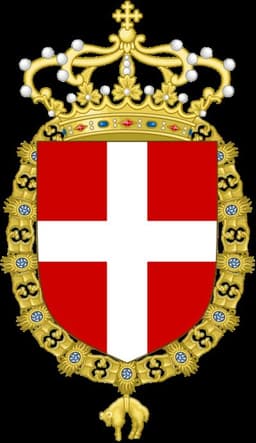
Victor Emmanuel II
Emperor · Modern
61.3Total
Basic Information
Born
1945
1820
Died
—
1878
Era
Modern
Modern
Nationality
Liechtenstein
Italy
Occupation
Emperor
Emperor
Civilization
Western
Western
Score Comparison
Military (10%)
48.7
47.5
Political (20%)
46.6
78.0
Influence (20%)
47.9
56.7
Legacy (20%)
37.5
52.0
Leadership (15%)
74.0
78.0
Strategy (15%)
54.6
60.0
TOTAL
49.8
61.3
Hans-Adam II — Complete Timeline
1989 AD
Accession as Prince of LiechtensteinPolitical Action◆ Major
Hans-Adam II became Prince of Liechtenstein upon the death of his father, Franz Joseph II. He inherited a constitutional monarchy with significant powers, which he would later seek to expand through constitutional reforms.
SuccessionMonarchy
Impact: national
1990 AD
Liechtenstein Joins the United NationsPolitical Action◆ Major
Under Hans-Adam II's reign, Liechtenstein became a member of the United Nations, ending its long-standing policy of neutrality in international organizations. This move increased the principality's global diplomatic engagement.
DiplomacyUN MembershipNeutrality
Impact: globalconstructive
1992 AD
Threat to Move to ViennaPolitical Action
Hans-Adam II threatened to relocate the princely family to Vienna if the government did not grant him more powers. This ultimatum led to negotiations that eventually resulted in the 2003 constitutional reforms, highlighting tensions between the prince and the elected government.
Political CrisisMonarchy vs Government
Impact: national
1995 AD
Liechtenstein Joins the European Economic AreaPolitical Action◆ Major
Hans-Adam II oversaw Liechtenstein's accession to the European Economic Area, integrating the principality into the EU's single market while maintaining its customs union with Switzerland. This decision boosted the economy but required compromises on sovereignty.
European IntegrationEconomic Policy
Impact: regionalconstructive
2003 AD
Constitutional Reform of 2003Reform◆ Major
Hans-Adam II pushed through a constitutional referendum that granted the prince sweeping powers, including the ability to veto legislation, dismiss the government, and appoint judges. The reform passed with 64% voter approval, centralizing authority in the monarchy.
Constitutional ChangeMonarchyReferendum
Impact: nationalconstructive
Victor Emmanuel II — Complete Timeline
1848 AD
Promulgation of the Statuto AlbertinoReform◆ Major
As King of Sardinia, Victor Emmanuel II retained the Statuto Albertino, a constitution granted by his father. This constitution became the legal foundation of the Kingdom of Italy, establishing a constitutional monarchy with a parliamentary system.
ConstitutionMonarchyReform
Impact: nationalconstructive
1855 AD
Alliance with France in the Crimean WarWar◆ Major
Victor Emmanuel II sent Sardinian troops to fight alongside France and Britain in the Crimean War. This participation elevated Sardinia's diplomatic standing, leading to French support for Italian unification in the subsequent Plombi
Crimean WarDiplomacyItalian Unification
Impact: regionalconstructive
1861 AD
Proclaimed King of ItalyPolitical Action
Victor Emmanuel II was proclaimed King of Italy by the first Italian Parliament in Turin. This event formally unified most of the Italian peninsula under the House of Savoy, with the exception of Venetia and Rome, marking the birth of the Kingdom of Italy.
Italian UnificationRisorgimentoKingship
Impact: nationalconstructive
1866 AD
Annexation of VenetiaWar◆ Major
Following the Austro-Prussian War, Italy, allied with Prussia, annexed Venetia from Austria. Victor Emmanuel II's forces suffered defeats on land but gained the territory through the Treaty of Vienna, completing a key step in unification.
Italian UnificationVenetiaAnnexation
Impact: nationalconstructive
1870 AD
Capture of RomeWar
Italian troops under Victor Emmanuel II breached the Porta Pia in Rome, completing the unification of Italy. The Papal States were annexed, and Rome became the capital of the Kingdom of Italy, ending the temporal power of the Pope.
Italian UnificationRomePapal States
Impact: nationalconstructive
1878 AD
Death and LegacyOther◆ Major
Victor Emmanuel II died in Rome, having unified Italy under his rule. His death marked the end of the founding era of the Kingdom of Italy, and he was buried in the Pantheon, becoming a symbol of Italian unification.
DeathLegacyItalian Unification
Impact: national
Expert Analysis
Origins
Hans-Adam II, born on 14 February 1945 in Zurich, Switzerland, is the current Prince of Liechtenstein. He is the son of Franz Joseph II and Princess Gina. He studied at the University of St. Gallen and the University of Vienna, earning a degree in economics. His upbringing in a small principality shaped his focus on preserving monarchical authority.
Victor Emmanuel II, born on 14 March 1820 in Turin, Kingdom of Sardinia, was the son of Charles Albert of Sardinia and Maria Theresa of Tuscany. He received a military education and ascended the throne after his father's abdication in 1849. His early experiences in the Italian unification movement (Risorgimento) defined his reign.
Rise to Power
Hans-Adam II became Prince of Liechtenstein on 13 November 1989 upon his father's death. He inherited a stable constitutional monarchy but sought to expand his powers. In 2003, he pushed a constitutional reform that granted him veto power over legislation, the ability to dismiss the government, and direct control over judicial appointments. The reform passed with 64% popular support, consolidating his authority.
Victor Emmanuel II became King of Sardinia in 1849 after his father's defeat by Austria. He retained the Statuto Albertino constitution, which became the legal basis for Italian unification. By allying with France in the Crimean War (1855) and supporting nationalist movements, he positioned Sardinia as the unifier of Italy. In 1861, he was proclaimed King of Italy, and by 1870, Rome was annexed, completing unification.
Leadership & Governance
Hans-Adam II's leadership is characterized by his pursuit of absolute monarchical power within a democratic framework. He scored 74.0 in leadership, reflecting his effective use of referendums and threats (e.g., moving to Vienna) to achieve constitutional changes. His governance focuses on financial services and low taxes, making Liechtenstein a wealthy microstate. However, his political score of 46.6 indicates limited international influence.
Victor Emmanuel II scored 78.0 in political acumen. He skillfully navigated alliances with France and Prussia, and his appointment of Count Cavour as prime minister enabled strategic diplomacy. He retained the Statuto Albertino, ensuring constitutional continuity. His governance prioritized unification over liberal reforms, leading to a centralized state.
Triumph & Tragedy
Hans-Adam II's triumph is the 2003 constitutional reform, which gave him near-absolute powers. He also led Liechtenstein into the UN (1990) and the European Economic Area (1995), integrating the country internationally. His tragedy is his limited global influence; his legacy score of 37.5 reflects the small scale of his achievements.
Victor Emmanuel II's triumph is the unification of Italy, a monumental achievement. He scored 52.0 in legacy, as his reign created a modern nation-state. His tragedy includes the failure to incorporate more democratic reforms and the ongoing tensions with the Catholic Church after seizing papal territories. His military score of 47.5 reflects mixed success in wars.
Character & Destiny
Hans-Adam II is known for his determination and willingness to use ultimatums. His character shaped his destiny as a powerful monarch in a democratic age. He scored 54.6 in strategy, showing careful planning in constitutional changes.
Victor Emmanuel II was pragmatic and ambitious, but often indecisive. His character allowed him to delegate to Cavour while maintaining authority. His destiny was to be the father of Italian unity, but his reluctance to embrace full democracy limited his reforms.
Legacy
Hans-Adam II's legacy is the preservation and expansion of princely power in Liechtenstein. He set a precedent for monarchs in small states to assert authority. His influence score of 47.9 reflects his niche but significant impact.
Victor Emmanuel II's legacy is the creation of Italy. He is remembered as the "Padre della Patria" (Father of the Fatherland). His political and leadership scores (78.0 and 78.0) underscore his role in nation-building. The Statuto Albertino influenced Italy's constitutional development until 1948.
Conclusion
Victor Emmanuel II had greater impact, with a total score of 61.3 vs. Hans-Adam II's 49.8. Unifying Italy transformed European geopolitics, while Hans-Adam II's reforms, though significant, affected only a small principality. The score gap of 11.5 points reflects the scale and historical importance of their achievements.
Rankings
🥇
Victor Emmanuel IILeader
Mil: 47.5Pol: 78.0Inf: 56.7
61.3
🥈
Hans-Adam II
Mil: 48.7Pol: 46.6Inf: 47.9
49.8
+11.5 behind
How This Comparison Works
Algorithm
Each figure is scored on 6 dimensions (0—100 scale) based on structured historical data: Military (10%), Political (20%), Influence (20%), Legacy (20%), Leadership (15%), Strategy (15%). The weighted total produces the final ranking.
Data Sources
Scores are computed from structured sub-indicators in the database. Scale factors adjust for era (Ancient ×0.85, Modern ×1.0) and civilization size (Eastern ×1.05, Other ×0.80) to account for differences in population and military scale.
Maximum 3 Figures
Comparisons are limited to 2—3 figures to ensure readability and statistical meaningfulness.
Error Margins
±5 points per dimension — Sub-scores are derived from historical records with inherent uncertainty. Two figures within 5 points on a dimension should be considered roughly equivalent in that area.
Total Score Accuracy
±3 points overall — The weighted combination of 6 dimensions produces a total score with approximately ±3 points of uncertainty. Differences of less than 3 points are not statistically significant— the figures are effectively tied.
Known Limitations
- Historical records are incomplete and uneven across civilizations
- Figures from oral-tradition societies may be underrepresented
- Occupation labels can misclassify multi-role figures
- Scores measure capability and impact, not moral character
- Quantitative scoring is a comparison tool, not absolute truth
Capability Radar
Military (10%) — Battles & Warfare
Battles
23
45
Win Rate
27
55
Expansion
27
65
Political (20%) — Governance & Reform
Reform
30
75
Diplomacy
40
80
Economy
45
60
Influence (20%) — Cultural & Global Reach
Cultural
15
65
Global
10
60
Legacy (20%) — Historical Impact
Historical
15
70
Longevity
20
65
Leadership (15%) — Power & Stability
Tenure
35
70
Stability
50
55
Strategy (15%) — Tactics & Innovation
Strategy
35
60
Tactics
34
40
Reform
39
50
Similar Comparisons
Comments & Discussion
No comments yet. Be the first to share your thoughts!