Loading...
This comparison has not been analyzed yet.
One-time AI generation (~1 minute). Scores and timeline are already available below.
Harishena vs Odysseus of Ithaca
Odysseus of Ithaca leads by 2.2 pts · 2 figures compared
…

Harishena
Emperor · Ancient
57.7Total
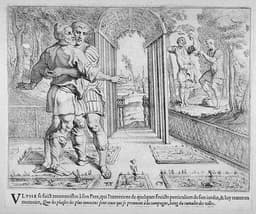
Odysseus of Ithaca
Emperor · Ancient
59.9Total
Basic Information
Born
475
-1210
Died
510
-1160
Era
Ancient
Ancient
Nationality
India
Ithaca
Occupation
Emperor
Emperor
Civilization
Indian
Western
Score Comparison
Military (10%)
40.0
40.0
Political (20%)
68.0
48.0
Influence (20%)
62.0
65.0
Legacy (20%)
56.0
68.0
Leadership (15%)
53.2
58.8
Strategy (15%)
60.0
66.3
TOTAL
57.7
59.9
Harishena — Complete Timeline
480 AD
Patronage of the Ajanta CavesCultural◆ Major
Harishena sponsored the excavation and decoration of several caves at Ajanta, including Cave 1 and Cave 26. These caves contain exquisite Buddhist murals and sculptures, representing the pinnacle of Gupta-era art.
Ajanta CavesBuddhist ArtPatronage
Impact: globalconstructive
500 AD
Last great Vakataka kingPolitical Action◆ Major
Harishena was the last major ruler of the Vakataka dynasty. After his death, the kingdom fragmented and declined, ending the Vakataka period in Deccan history.
End of DynastyDeclineVakataka
Impact: regionaltragic
Odysseus of Ithaca — Complete Timeline
1180 BC
Devised the Trojan Horse StratagemWar
Odysseus conceived the plan to build a giant wooden horse, hide Greek soldiers inside, and trick the Trojans into bringing it within their walls. This stratagem led to the fall of Troy.
Trojan WarStrategyTrojan Horse
Impact: global
1175 BC
Encountered the Cyclops PolyphemusOther◆ Major
During his journey home, Odysseus and his men were trapped in the cave of the Cyclops Polyphemus. Odysseus blinded the giant and escaped by clinging to the underside of sheep.
OdysseyAdventureCyclops
Impact: regional
1170 BC
Resisted the Sirens' SongOther
Odysseus had his crew plug their ears with wax and tied himself to the mast to hear the Sirens' deadly song without succumbing. This allowed his ship to pass safely.
OdysseySirensSurvival
Impact: regional
1160 BC
Killed the Suitors and Reclaimed IthacaPolitical Action◆ Major
After returning to Ithaca disguised as a beggar, Odysseus, with his son Telemachus, killed the suitors who had been courting his wife Penelope. He then reclaimed his throne and reunited his family.
OdysseyRevengeReturn
Impact: regionaldestructive
This comparison has not been analyzed yet.
One-time AI generation (~1 minute). Scores and timeline are already available below.
Rankings
🥇
Odysseus of IthacaLeader
Mil: 40.0Pol: 48.0Inf: 65.0
59.9
🥈
Harishena
Mil: 40.0Pol: 68.0Inf: 62.0
57.7
+2.2 behind
How This Comparison Works
Algorithm
Each figure is scored on 6 dimensions (0—100 scale) based on structured historical data: Military (10%), Political (20%), Influence (20%), Legacy (20%), Leadership (15%), Strategy (15%). The weighted total produces the final ranking.
Data Sources
Scores are computed from structured sub-indicators in the database. Scale factors adjust for era (Ancient ×0.85, Modern ×1.0) and civilization size (Eastern ×1.05, Other ×0.80) to account for differences in population and military scale.
Maximum 3 Figures
Comparisons are limited to 2—3 figures to ensure readability and statistical meaningfulness.
Error Margins
±5 points per dimension — Sub-scores are derived from historical records with inherent uncertainty. Two figures within 5 points on a dimension should be considered roughly equivalent in that area.
Total Score Accuracy
±3 points overall — The weighted combination of 6 dimensions produces a total score with approximately ±3 points of uncertainty. Differences of less than 3 points are not statistically significant— the figures are effectively tied.
Known Limitations
- Historical records are incomplete and uneven across civilizations
- Figures from oral-tradition societies may be underrepresented
- Occupation labels can misclassify multi-role figures
- Scores measure capability and impact, not moral character
- Quantitative scoring is a comparison tool, not absolute truth
Capability Radar
Military (10%) — Battles & Warfare
Battles
40
45
Win Rate
45
50
Expansion
40
30
Political (20%) — Governance & Reform
Reform
55
25
Diplomacy
60
80
Economy
65
30
Influence (20%) — Cultural & Global Reach
Cultural
75
90
Global
55
80
Legacy (20%) — Historical Impact
Historical
70
85
Longevity
70
95
Leadership (15%) — Power & Stability
Tenure
60
40
Stability
60
35
Strategy (15%) — Tactics & Innovation
Strategy
50
70
Tactics
50
85
Reform
30
20
Similar Comparisons
Comments & Discussion
No comments yet. Be the first to share your thoughts!