Loading...
Hatshepsut vs Shapur II
Shapur II leads by 10.1 pts · 2 figures compared
…
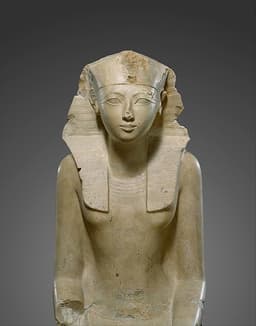
Hatshepsut
Emperor · Ancient
54.9Total

Shapur II
Emperor · Ancient
65.0Total
Basic Information
Born
-1507
309
Died
-1458
379
Era
Ancient
Ancient
Nationality
Egypt
Sassanid Empire
Occupation
Emperor
Emperor
Civilization
Middle Eastern
Middle Eastern
Score Comparison
Military (10%)
50.0
78.0
Political (20%)
59.3
55.0
Influence (20%)
61.0
61.0
Legacy (20%)
50.0
58.0
Leadership (15%)
72.0
80.0
Strategy (15%)
25.0
72.0
TOTAL
54.9
65.0
Hatshepsut — Complete Timeline
1479 BC
Coronation as PharaohPolitical Action
Hatshepsut assumed the throne as pharaoh after the death of her husband Thutmose II, initially as regent for her stepson Thutmose III. She later declared herself king, adopting full royal titulary and male iconography to legitimize her rule.
SuccessionFemale PharaohLegitimacy
Impact: national
1470 BC
Expedition to the Land of PuntCultural◆ Major
Hatshepsut dispatched a trading expedition to the Land of Punt, likely located in the Horn of Africa. The mission returned with myrrh trees, gold, ivory, and exotic animals, which were depicted in reliefs at her mortuary temple at Deir el-Bahri.
TradePuntDeir el-Bahri
Impact: regionalconstructive
1460 BC
Construction of Mortuary Temple at Deir el-BahriCultural◆ Major
Hatshepsut commissioned a terraced mortuary temple at Deir el-Bahri, designed by her architect Senenmut. The temple featured colonnades, reliefs of her divine birth and the Punt expedition, and became a masterpiece of Egyptian architecture.
ArchitectureSenenmutMortuary Temple
Impact: nationalconstructive
1458 BC
Damnation of Hatshepsut's MemoryPolitical Action◆ Major
After Hatshepsut's death, Thutmose III ordered the systematic erasure of her name and images from monuments and temples. Her cartouches were chiseled out, and her statues were smashed, likely to consolidate his own legitimacy and remove her from official records.
Damnatio MemoriaeThutmose IIIIconoclasm
Impact: nationaldestructive
1457 BC
Obelisk Erection at KarnakCultural
Hatshepsut erected two massive obelisks at the Karnak temple, one of which still stands. The obelisks were carved from single blocks of granite and inscribed with texts proclaiming her devotion to the god Amun and her right to rule.
MonumentObeliskAmun
Impact: nationalconstructive
Shapur II — Complete Timeline
337 AD
First Roman-Sassanid WarWar◆ Major
Shapur II launched a major war against the Roman Empire, invading Mesopotamia and Armenia. The war lasted for decades, with Shapur achieving several victories, including the capture of the fortress of Singara. The conflict was marked by sieges, raids, and shifting alliances.
Sassanid EmpireRoman EmpireWar
Impact: regional
340 AD
Persecution of ChristiansPolitical Action◆ Major
Shapur II initiated a systematic persecution of Christians in the Sassanid Empire, accusing them of sympathizing with the Christian Roman Empire. Churches were destroyed, clergy were executed, and Christians were forced to convert to Zoroastrianism. The persecution lasted for decades.
Sassanid EmpirePersecutionChristianity
Impact: regionaldestructive
359 AD
Siege of AmidaWar◆ Major
Shapur II besieged and captured the Roman fortress city of Amida (modern Diyarbakir) after a 73-day siege. The Sassanid forces used siege towers, battering rams, and tunnels to breach the walls. The city was sacked, and its inhabitants were massacred or enslaved.
Sassanid EmpireRoman EmpireSiege
Impact: regionaldestructive
363 AD
Battle of CtesiphonWar◆ Major
Shapur II faced the Roman emperor Julian the Apostate, who invaded Sassanid territory and advanced to the capital Ctesiphon. The Romans won a tactical victory outside the city but failed to capture it. Julian was killed in a skirmish, and his successor Jovian made a humiliating peace.
Sassanid EmpireRoman EmpireBattle
Impact: regional
Treaty of 363Political Action◆ Major
After Julian's death, Shapur II negotiated a peace treaty with the new Roman emperor Jovian. The treaty ceded the Roman provinces of Mesopotamia and Armenia to the Sassanids, including the cities of Nisibis and Singara. This was a major diplomatic victory for Shapur II.
Sassanid EmpireRoman EmpireTreaty
Impact: regionalconstructive
Expert Analysis
Origins
Hatshepsut was born around 1507 BCE into Egypt's 18th Dynasty, daughter of Thutmose I and his great royal wife Ahmose. She received a privileged education, learning to read and write, and was trained in religious and administrative duties. Her marriage to her half-brother Thutmose II solidified her position as queen. After Thutmose II's death, she became regent for her stepson Thutmose III, but soon assumed full pharaonic powers.
Shapur II was born in 309 CE into the Sassanid dynasty, posthumously to Hormizd II. His reign began in utero: nobles crowned him king while still in the womb. Raised in the court, he received military and administrative training. His early years were marked by regency, but he took control at age 16, ready to assert Sassanid power against external threats.
Rise to Power
Hatshepsut's rise was unconventional. As regent for Thutmose III, she gradually consolidated power, portraying herself as the rightful heir with divine birth stories carved at Deir el-Bahri. By year 7 of her regency, she had herself crowned pharaoh, adopting full royal titulary and male iconography. She justified her rule through propaganda, claiming Amun-Ra had chosen her. Her political acumen scored 59.3, reflecting her ability to legitimize her reign.
Shapur II's rise was more direct. At 16, he led a campaign against Arab tribes that had raided Sassanid territory, securing the empire's southern borders. This early victory established his military reputation. He then turned to the east, dealing with nomadic incursions, before confronting Rome. His military score of 78.0 and strategy score of 72.0 highlight his martial focus.
Leadership & Governance
Hatshepsut governed through peace and trade. Her expedition to Punt (c. 1470 BCE) brought back myrrh trees, gold, and ivory, boosting Egypt's economy and international standing. She commissioned extensive building projects, including her mortuary temple at Deir el-Bahri, which showcased her reign's prosperity. She appointed loyal officials like Senenmut to oversee projects. Her leadership score of 72.0 reflects her effective governance, though her political score of 59.3 indicates she relied on propaganda to maintain power.
Shapur II led through constant warfare. He fought a decades-long war with Rome, capturing fortresses like Amida (359 CE) after a 73-day siege. His leadership score of 80.0 is the highest, reflecting his ability to command armies and negotiate favorable treaties. The Treaty of 363 CE, after Emperor Julian's death, gave Shapur control over Mesopotamia and Armenia. He also persecuted Christians, accusing them of disloyalty, which weakened internal cohesion but reinforced Zoroastrian orthodoxy.
Triumph & Tragedy
Hatshepsut's greatest triumph was her successful reign as a female pharaoh in a patriarchal society, maintaining stability and prosperity. Her trading expedition to Punt and building projects left a lasting cultural legacy. However, her tragedy came posthumously: Thutmose III ordered her images and names erased from monuments, a damnatio memoriae that attempted to remove her from history. Her legacy score of 50.0 reflects this erasure.
Shapur II's triumph was his victory over Rome, forcing a humiliating treaty that ceded Roman territories. He also secured the eastern borders. His tragedy was the failure to fully capitalize on his successes: the war with Rome exhausted resources, and his persecution of Christians created internal dissent. His legacy score of 58.0 acknowledges his impact on Sassanid-Roman relations.
Character & Destiny
Hatshepsut was pragmatic and ambitious, using propaganda and diplomacy to rule. Her decision to portray herself as male pharaoh shows her understanding of power dynamics. Her character shaped her destiny: she thrived as pharaoh but was erased by a resentful stepson. Historical assessments note her effective administration but also her need to legitimize her rule.
Shapur II was determined and militaristic, with a relentless drive to expand Sassanid power. His character led him to fight Rome for decades, achieving tactical victories but strategic exhaustion. He was also ruthless, as seen in his persecution of Christians. Historians see him as a capable warrior-king who strengthened the Sassanid Empire but sowed seeds of future religious conflict.
Legacy
Hatshepsut's legacy is complex: her monuments were defaced, but her mortuary temple and obelisks survive. She demonstrated that a woman could rule Egypt effectively, influencing later female pharaohs like Cleopatra. However, her damnatio memoriae limited her immediate impact. Her influence score of 61.0 reflects her long-term symbolic importance.
Shapur II's legacy is more tangible: the Treaty of 363 reshaped the Roman-Sassanid border for centuries. He also stabilized the empire's eastern frontiers. His military campaigns set the stage for future conflicts. His influence score of 61.0 matches Hatshepsut's, but his military and strategic scores are higher.
Conclusion
Shapur II had greater impact than Hatshepsut. His total score of 65.0 versus her 54.9 reflects his concrete achievements in warfare and diplomacy that reshaped the ancient Near East. While Hatshepsut's reign demonstrated female leadership, her legacy was partially erased. Shapur II's victories directly influenced the balance of power between Rome and Persia, with effects lasting centuries. His military score of 78.0 and strategy score of 72.0 far exceed her 50.0 and 25.0. Therefore, Shapur II emerges as the more impactful historical figure.
Rankings
🥇
Shapur IILeader
Mil: 78.0Pol: 55.0Inf: 61.0
65.0
🥈
Hatshepsut
Mil: 50.0Pol: 59.3Inf: 61.0
54.9
+10.1 behind
How This Comparison Works
Algorithm
Each figure is scored on 6 dimensions (0—100 scale) based on structured historical data: Military (10%), Political (20%), Influence (20%), Legacy (20%), Leadership (15%), Strategy (15%). The weighted total produces the final ranking.
Data Sources
Scores are computed from structured sub-indicators in the database. Scale factors adjust for era (Ancient ×0.85, Modern ×1.0) and civilization size (Eastern ×1.05, Other ×0.80) to account for differences in population and military scale.
Maximum 3 Figures
Comparisons are limited to 2—3 figures to ensure readability and statistical meaningfulness.
Error Margins
±5 points per dimension — Sub-scores are derived from historical records with inherent uncertainty. Two figures within 5 points on a dimension should be considered roughly equivalent in that area.
Total Score Accuracy
±3 points overall — The weighted combination of 6 dimensions produces a total score with approximately ±3 points of uncertainty. Differences of less than 3 points are not statistically significant— the figures are effectively tied.
Known Limitations
- Historical records are incomplete and uneven across civilizations
- Figures from oral-tradition societies may be underrepresented
- Occupation labels can misclassify multi-role figures
- Scores measure capability and impact, not moral character
- Quantitative scoring is a comparison tool, not absolute truth
Capability Radar
Military (10%) — Battles & Warfare
Battles
10
85
Win Rate
10
80
Expansion
20
85
Political (20%) — Governance & Reform
Reform
75
70
Diplomacy
70
75
Economy
80
70
Influence (20%) — Cultural & Global Reach
Cultural
70
60
Global
55
65
Legacy (20%) — Historical Impact
Historical
65
75
Longevity
60
70
Leadership (15%) — Power & Stability
Tenure
70
95
Stability
75
80
Strategy (15%) — Tactics & Innovation
Strategy
15
90
Tactics
10
85
Reform
10
75
Similar Comparisons
Comments & Discussion
No comments yet. Be the first to share your thoughts!