Loading...
This comparison has not been analyzed yet.
One-time AI generation (~1 minute). Scores and timeline are already available below.
Hekimoglu Ali Pasha vs Mobutu Sese Seko
Hekimoglu Ali Pasha leads by 6.6 pts · 2 figures compared
…

Hekimoglu Ali Pasha
General · Modern
53.2Total
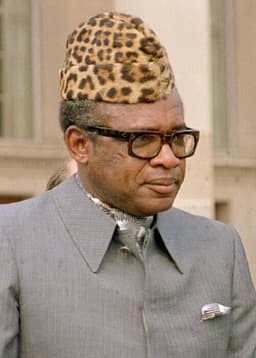
Mobutu Sese Seko
General · Modern
46.6Total
Basic Information
Born
1689
1930
Died
1758
—
Era
Modern
Modern
Nationality
Ottoman Empire
Congo
Occupation
General
General
Civilization
Middle Eastern
Other
Score Comparison
Military (10%)
50.0
10.2
Political (20%)
68.0
37.9
Influence (20%)
54.1
56.4
Legacy (20%)
45.8
45.0
Leadership (15%)
48.8
80.0
Strategy (15%)
57.5
25.0
TOTAL
53.2
46.6
Hekimoglu Ali Pasha — Complete Timeline
1731 AD
Battle of Nahavand (1731)War◆ Major
Hekimoglu Ali Pasha commanded Ottoman forces against the Persian army of Nader Shah at Nahavand. The battle ended in an Ottoman defeat, leading to the loss of territories in western Persia and a setback in the Ottoman-Persian Wars.
BattleOttoman-Persian WarsDefeat
Impact: regionaldestructive
1732 AD
First Grand VizieratePolitical Action
Hekimoglu Ali Pasha was appointed grand vizier for the first time by Sultan Mahmud I. His tenure focused on military reforms and stabilizing the empire after defeats by Persia, but he was dismissed due to court intrigues.
AppointmentReformMilitary
Impact: nationalconstructive
1755 AD
Third Grand VizieratePolitical Action
Hekimoglu Ali Pasha was appointed grand vizier for the third and final time. His later tenure was less eventful, as he focused on administrative matters and died in office in 1758, one of the few grand viziers to die naturally.
AppointmentAdministrationLongevity
Impact: national
Mobutu Sese Seko — Complete Timeline
1965 AD
Seized power in coup d'étatPolitical Action
Mobutu, as army chief of staff, led a bloodless coup against President Joseph Kasa-Vubu on November 24, 1965. He suspended the constitution, assumed full executive powers, and began a 32-year dictatorship, initially as president of the Democratic Republic of the Congo.
Coup d'étatDictatorshipCentralization
Impact: nationaldestructive
1971 AD
Renamed country to Zaire and implemented AuthenticityCultural◆ Major
Mobutu renamed the Democratic Republic of the Congo to Zaire and launched the Authenticity campaign. He forced citizens to adopt African names, banned Western clothing, and promoted traditional culture. The country's name, flag, and currency were changed to reflect African identity.
Cultural PolicyNationalismAfricanization
Impact: national
1973 AD
Nationalized foreign-owned businessesPolitical Action◆ Major
Mobutu's Zairianization policy seized foreign-owned plantations, mines, and businesses, transferring them to political allies and family members. The policy led to economic collapse, corruption, and a sharp decline in production, forcing partial reversal by 1977.
NationalizationEconomic DeclineCorruption
Impact: nationaldestructive
1997 AD
Overthrown in the First Congo WarWar
A coalition of Rwandan, Ugandan, and Congolese rebel forces led by Laurent Kabila advanced across Zaire. Mobutu, suffering from cancer, fled the capital Kinshasa on May 16, 1997. He died in exile in Morocco four months later, ending his 32-year rule.
OverthrowCivil WarExile
Impact: regionaltragic
This comparison has not been analyzed yet.
One-time AI generation (~1 minute). Scores and timeline are already available below.
Rankings
🥇
Hekimoglu Ali PashaLeader
Mil: 50.0Pol: 68.0Inf: 54.1
53.2
🥈
Mobutu Sese Seko
Mil: 10.2Pol: 37.9Inf: 56.4
46.6
+6.6 behind
How This Comparison Works
Algorithm
Each figure is scored on 6 dimensions (0—100 scale) based on structured historical data: Military (10%), Political (20%), Influence (20%), Legacy (20%), Leadership (15%), Strategy (15%). The weighted total produces the final ranking.
Data Sources
Scores are computed from structured sub-indicators in the database. Scale factors adjust for era (Ancient ×0.85, Modern ×1.0) and civilization size (Eastern ×1.05, Other ×0.80) to account for differences in population and military scale.
Maximum 3 Figures
Comparisons are limited to 2—3 figures to ensure readability and statistical meaningfulness.
Error Margins
±5 points per dimension — Sub-scores are derived from historical records with inherent uncertainty. Two figures within 5 points on a dimension should be considered roughly equivalent in that area.
Total Score Accuracy
±3 points overall — The weighted combination of 6 dimensions produces a total score with approximately ±3 points of uncertainty. Differences of less than 3 points are not statistically significant— the figures are effectively tied.
Known Limitations
- Historical records are incomplete and uneven across civilizations
- Figures from oral-tradition societies may be underrepresented
- Occupation labels can misclassify multi-role figures
- Scores measure capability and impact, not moral character
- Quantitative scoring is a comparison tool, not absolute truth
Capability Radar
Military (10%) — Battles & Warfare
Battles
55
5
Win Rate
50
5
Expansion
45
5
Political (20%) — Governance & Reform
Reform
45
20
Diplomacy
55
40
Economy
50
10
Influence (20%) — Cultural & Global Reach
Cultural
30
30
Global
25
40
Legacy (20%) — Historical Impact
Historical
35
40
Longevity
30
30
Leadership (15%) — Power & Stability
Tenure
60
85
Stability
45
10
Strategy (15%) — Tactics & Innovation
Strategy
55
10
Tactics
50
10
Reform
40
15
Similar Comparisons
Comments & Discussion
No comments yet. Be the first to share your thoughts!