Loading...
Helmuth von Moltke the Younger vs Rafael Trujillo
Rafael Trujillo leads by 10.3 pts · 2 figures compared
…

Helmuth von Moltke the Younger
General · Modern
45.2Total
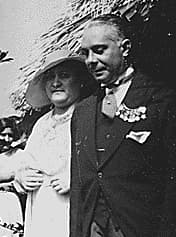
Rafael Trujillo
General · Modern
55.5Total
Basic Information
Born
1848
1891
Died
1916
1961
Era
Modern
Modern
Nationality
Germany
Dominican Republic
Occupation
General
General
Civilization
Western
Western
Score Comparison
Military (10%)
47.5
50.0
Political (20%)
29.3
45.0
Influence (20%)
51.8
57.2
Legacy (20%)
42.5
45.8
Leadership (15%)
54.2
80.0
Strategy (15%)
43.3
60.0
TOTAL
45.2
55.5
Helmuth von Moltke the Younger — Complete Timeline
1914 AD
First Battle of the MarneWar
Moltke, as Chief of the German General Staff, commanded the German armies during the First Battle of the Marne. His modification of the Schlieffen Plan and loss of communication with his armies contributed to the German defeat. The battle ended German hopes for a quick victory in the west.
World War IWestern FrontSchlieffen Plan
Impact: globaltragic
Battle of the FrontiersWar◆ Major
Moltke oversaw the German invasion of Belgium and France in August 1914. The German armies achieved initial victories at the Battles of the Frontiers, but the advance was slowed by logistical problems and Belgian resistance. This set the stage for the failure at the Marne.
World War IWestern FrontInvasion
Impact: regional
Dismissal as Chief of StaffPolitical Action◆ Major
After the German defeat at the First Battle of the Marne, Moltke was dismissed as Chief of the German General Staff on 14 September 1914. He was replaced by Erich von Falkenhayn. Moltke's health deteriorated and he died in 1916, blamed by many for Germany's failure to win a quick victory.
World War ICommandDismissal
Impact: nationaltragic
Rafael Trujillo — Complete Timeline
1930 AD
1930 Dominican Republic coup d'étatPolitical Action
Trujillo, as commander of the National Army, staged a coup against President Horacio V
CoupDictatorshipPower Seizure
Impact: nationaldestructive
1937 AD
Parsley MassacreWar◆ Major
Trujillo ordered the massacre of Haitians living in the Dominican border region. Soldiers killed an estimated 20,000 to 30,000 people using machetes. The event was named for the shibboleth used to distinguish Haitians from Dominicans.
MassacreGenocideEthnic Cleansing
Impact: regionaldestructive
1952 AD
Nationalization of the Dominican sugar industryReform
Trujillo used state power to acquire control over the sugar industry, the country's main economic sector. He and his family became the largest landowners and sugar producers, enriching themselves while the state managed the industry.
Economic ControlCorruptionSugar Industry
Impact: nationaldestructive
1961 AD
Assassination of Rafael TrujilloPolitical Action
Trujillo was ambushed and killed by a group of Dominican dissidents on a highway near Ciudad Trujillo. The assassination was aided by the U.S. Central Intelligence Agency, which provided weapons. His death ended the dictatorship.
AssassinationRegime ChangeCIA Involvement
Impact: national
Expert Analysis
Origins
Helmuth von Moltke the Younger was born in 1848 in Gersdorff, Prussia, into a prominent military family. His uncle, Helmuth von Moltke the Elder, was a celebrated Prussian field marshal. Moltke the Younger studied at the Prussian Military Academy and served in the Franco-Prussian War, but he lacked the strategic brilliance of his uncle. His upbringing and early career were shaped by the Prussian military tradition, but he was often seen as a caretaker rather than an innovator.
Rafael Trujillo was born in 1891 in San Cristóbal, Dominican Republic, to a poor family. He worked various jobs before joining the National Guard during the U.S. occupation (1916-1924). The U.S. military trained him, and he rose through the ranks by demonstrating discipline and ruthlessness. His early experiences under occupation taught him the value of centralized power and American support.
Rise to Power
Moltke the Younger became Chief of the German General Staff in 1906, succeeding Alfred von Schlieffen. He inherited the Schlieffen Plan, a strategy for a two-front war against France and Russia. His rise was due to his family name and loyalty to Kaiser Wilhelm II, not proven leadership. In 1914, he executed the plan, but his modifications weakened it, leading to the failure at the First Battle of the Marne in September 1914.
Trujillo rose to power in 1930 by staging a coup against President Horacio Vásquez. As commander of the National Army, he used his position to eliminate rivals. He formally became president in 1930 after a rigged election. His rise was marked by violence and manipulation, with key support from the U.S., which recognized his regime for stability.
Leadership & Governance
Moltke the Younger's leadership during the Battle of the Frontiers (August 1914) saw German armies achieve initial victories, but he lost control of operations. His command style was indecisive; he relied on telegraphs and failed to coordinate his armies. He suffered a nervous breakdown after the Marne, leading to his dismissal on 14 September 1914. His political score of 29.3 reflects his inability to manage the strategic and political dimensions of war.
Trujillo's leadership was authoritarian and centralized. He controlled every aspect of Dominican life through a cult of personality, secret police, and violence. He modernized infrastructure but enriched himself and his family, becoming the largest landowner. He ordered the Parsley Massacre in 1937, killing an estimated 20,000 to 30,000 Haitians. His political score of 45.0 and leadership score of 80.0 show his effective, if brutal, control.
Triumph & Tragedy
Moltke's greatest success was overseeing the initial German victories in 1914, such as the capture of Liège and the advance through Belgium. However, his greatest failure was the modification of the Schlieffen Plan, which contributed to the stalemate of trench warfare. He died broken in 1916, blamed for Germany's failure to win a quick war. His military score of 47.5 and strategy score of 43.3 reflect his mediocrity.
Trujillo's triumphs include stabilizing the Dominican economy and building infrastructure, such as roads and schools. He also survived multiple assassination attempts. His tragedies include the Parsley Massacre and the brutal suppression of dissent. He was assassinated in 1961, leading to chaos. His legacy score of 45.8 is mixed, with some remembering his order and others his tyranny.
Character & Destiny
Moltke was cautious and insecure, often deferring to others. His character led him to alter the Schlieffen Plan out of fear of exposing his flanks, which doomed the offensive. He lacked the decisiveness required for total war. His total score of 45.2 places him among the less effective military leaders.
Trujillo was ambitious, paranoid, and ruthless. He micromanaged his regime and eliminated rivals. His character shaped a dictatorship that lasted 31 years. He was assassinated due to his growing instability and loss of U.S. support. His total score of 55.5 reflects a more impactful, though negative, legacy.
Legacy
Moltke's legacy is tied to the failure of the Schlieffen Plan and the outbreak of World War I. He is remembered as a commander who couldn't handle the scale of modern war. His influence score of 51.8 is modest, as his decisions shaped early 20th-century warfare but are studied mainly as a cautionary tale.
Trujillo's legacy endures in the Dominican Republic's political culture, including authoritarianism and the cult of personality. His family's wealth and the infrastructure he built remain. His influence score of 57.2 and leadership score of 80.0 show his dominance. He is a symbol of dictatorship in Latin America.
Conclusion
Rafael Trujillo had greater impact than Helmuth von Moltke the Younger. Trujillo scored 55.5 total, 10.3 points higher than Moltke's 45.2. While Moltke's failure contributed to a world war, Trujillo's direct control over a nation for three decades and his systematic violence left a deeper mark on his country. Trujillo's military and political scores (50.0 and 45.0) surpass Moltke's (47.5 and 29.3). His leadership score of 80.0 dwarfs Moltke's 54.2. In terms of tangible, long-term impact on a nation, Trujillo's score is higher.
Rankings
🥇
Rafael TrujilloLeader
Mil: 50.0Pol: 45.0Inf: 57.2
55.5
🥈
Helmuth von Moltke the Younger
Mil: 47.5Pol: 29.3Inf: 51.8
45.2
+10.3 behind
How This Comparison Works
Algorithm
Each figure is scored on 6 dimensions (0—100 scale) based on structured historical data: Military (10%), Political (20%), Influence (20%), Legacy (20%), Leadership (15%), Strategy (15%). The weighted total produces the final ranking.
Data Sources
Scores are computed from structured sub-indicators in the database. Scale factors adjust for era (Ancient ×0.85, Modern ×1.0) and civilization size (Eastern ×1.05, Other ×0.80) to account for differences in population and military scale.
Maximum 3 Figures
Comparisons are limited to 2—3 figures to ensure readability and statistical meaningfulness.
Error Margins
±5 points per dimension — Sub-scores are derived from historical records with inherent uncertainty. Two figures within 5 points on a dimension should be considered roughly equivalent in that area.
Total Score Accuracy
±3 points overall — The weighted combination of 6 dimensions produces a total score with approximately ±3 points of uncertainty. Differences of less than 3 points are not statistically significant— the figures are effectively tied.
Known Limitations
- Historical records are incomplete and uneven across civilizations
- Figures from oral-tradition societies may be underrepresented
- Occupation labels can misclassify multi-role figures
- Scores measure capability and impact, not moral character
- Quantitative scoring is a comparison tool, not absolute truth
Capability Radar
Military (10%) — Battles & Warfare
Battles
30
15
Win Rate
20
20
Expansion
10
10
Political (20%) — Governance & Reform
Reform
10
60
Diplomacy
20
50
Economy
10
55
Influence (20%) — Cultural & Global Reach
Cultural
20
40
Global
20
35
Legacy (20%) — Historical Impact
Historical
30
45
Longevity
15
30
Leadership (15%) — Power & Stability
Tenure
40
85
Stability
15
70
Strategy (15%) — Tactics & Innovation
Strategy
25
30
Tactics
40
25
Reform
15
40
Similar Comparisons
Comments & Discussion
No comments yet. Be the first to share your thoughts!