Loading...
Paul Kagame vs Rafael Trujillo
Paul Kagame leads by 13.6 pts · 2 figures compared
…

Paul Kagame
General · Modern
69.1Total
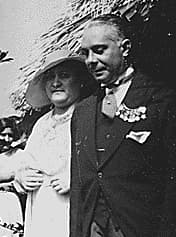
Rafael Trujillo
General · Modern
55.5Total
Basic Information
Born
1957
1891
Died
—
1961
Era
Modern
Modern
Nationality
Rwanda
Dominican Republic
Occupation
General
General
Civilization
Other
Western
Score Comparison
Military (10%)
70.0
50.0
Political (20%)
82.0
45.0
Influence (20%)
72.0
57.2
Legacy (20%)
52.0
45.8
Leadership (15%)
80.0
80.0
Strategy (15%)
68.0
60.0
TOTAL
69.1
55.5
Paul Kagame — Complete Timeline
1990 AD
Leadership of Rwandan Patriotic FrontWar◆ Major
Kagame led the Rwandan Patriotic Front (RPF) in a civil war against the Hutu-led government. The war ended with the Arusha Accords in 1993, but the peace was short-lived.
Civil WarRPFArusha Accords
Impact: national
1994 AD
End of Rwandan GenocideWar
Kagame's RPF captured Kigali and ended the 100-day genocide that killed an estimated 800,000 Tutsis and moderate Hutus. The RPF victory stopped the massacres but also led to reprisal killings.
GenocideRPF VictoryHumanitarian Crisis
Impact: global
1996 AD
Controversial Role in Congo WarsWar◆ Major
Kagame's Rwanda invaded Zaire (DRC) twice, supporting rebel groups and exploiting Congolese resources. The wars caused millions of deaths and destabilized the Great Lakes region.
Congo WarsRegional ConflictResource Exploitation
Impact: regionaldestructive
2000 AD
Economic Reconstruction and DevelopmentReform◆ Major
Kagame implemented economic reforms that led to rapid growth, with Rwanda becoming one of Africa's fastest-growing economies. He focused on technology, infrastructure, and attracting foreign investment.
Economic GrowthDevelopmentTechnology
Impact: nationalconstructive
Presidency and National Unity GovernmentPolitical Action◆ Major
Kagame became President of Rwanda, succeeding Pasteur Bizimungu. He formed a government of national unity, including Hutus in key positions, to promote reconciliation after the genocide.
PresidencyReconciliationUnity Government
Impact: nationalconstructive
2015 AD
Constitutional Amendment for Third TermPolitical Action◆ Major
Kagame oversaw a constitutional referendum that removed term limits, allowing him to run for a third term in 2017. Critics accused him of entrenching authoritarian rule.
Constitutional ReformTerm LimitsAuthoritarianism
Impact: national
Rafael Trujillo — Complete Timeline
1930 AD
1930 Dominican Republic coup d'étatPolitical Action
Trujillo, as commander of the National Army, staged a coup against President Horacio V
CoupDictatorshipPower Seizure
Impact: nationaldestructive
1937 AD
Parsley MassacreWar◆ Major
Trujillo ordered the massacre of Haitians living in the Dominican border region. Soldiers killed an estimated 20,000 to 30,000 people using machetes. The event was named for the shibboleth used to distinguish Haitians from Dominicans.
MassacreGenocideEthnic Cleansing
Impact: regionaldestructive
1952 AD
Nationalization of the Dominican sugar industryReform
Trujillo used state power to acquire control over the sugar industry, the country's main economic sector. He and his family became the largest landowners and sugar producers, enriching themselves while the state managed the industry.
Economic ControlCorruptionSugar Industry
Impact: nationaldestructive
1961 AD
Assassination of Rafael TrujilloPolitical Action
Trujillo was ambushed and killed by a group of Dominican dissidents on a highway near Ciudad Trujillo. The assassination was aided by the U.S. Central Intelligence Agency, which provided weapons. His death ended the dictatorship.
AssassinationRegime ChangeCIA Involvement
Impact: national
Expert Analysis
Origins
**Paul Kagame** was born in 1957 in Rwanda to a Tutsi family. After the 1959 Hutu revolution, his family fled to Uganda, where he grew up in refugee camps. He joined Yoweri Museveni's National Resistance Army in Uganda, gaining military experience. His education was limited, but he rose through the ranks due to his discipline and strategic mind.
**Rafael Trujillo** was born in 1891 in the Dominican Republic to a poor family of mixed heritage. He worked as a telegraph operator and later joined the National Guard, trained by U.S. Marines during the occupation. He used his military position to climb the social ladder, marrying into a wealthy family and gaining influence.
Rise to Power
Kagame rose to prominence as a leader of the Rwandan Patriotic Front (RPF), which invaded Rwanda in 1990. After the 1994 genocide, his forces captured Kigali on July 4, 1994, ending the killing. He became Vice President and Minister of Defence, effectively controlling the military. In 2000, he became President after the resignation of Pasteur Bizimungu.
Trujillo staged a coup in 1930 against President Horacio Vásquez, using his position as commander of the National Army. After a period of puppet presidents, he won a rigged election in 1930 and ruled until his assassination in 1961. His rise was marked by violence, intimidation, and control of the military.
Leadership & Governance
Kagame's leadership focused on national unity, economic development, and security. He implemented a policy of reconciliation, abolishing ethnic identity cards and promoting Hutus in government. Economically, he pursued reforms that led to 7-8% annual growth, investing in technology, infrastructure, and healthcare. However, his rule is authoritarian, with limited political freedom and suppression of dissent. He scored 80.0 in leadership and 82.0 in political metrics.
Trujillo ruled as a classic dictator, centralizing power through a personality cult, secret police, and control of the economy. He renamed the capital Ciudad Trujillo, and his family monopolized industries like sugar. His leadership score is 80.0, but his political score is only 45.0 due to lack of institutional governance. He maintained order through fear, executing opponents and orchestrating the 1937 Parsley Massacre of Haitians, killing 20,000-30,000.
Triumph & Tragedy
Kagame's greatest triumph is ending the genocide and rebuilding Rwanda from devastation. His economic policies lifted millions out of poverty, and Rwanda is now a regional hub. His tragedy includes involvement in the Congo Wars, where Rwandan forces exploited resources and supported rebels, contributing to millions of deaths. He scored 70.0 in military and 72.0 in influence, but legacy is 52.0 due to authoritarianism.
Trujillo's triumph includes stabilizing the Dominican Republic after years of instability and modernizing infrastructure, though for his own benefit. His tragedy is the massive human rights abuses, including the massacre, torture, and corruption. His military score is 50.0, influence 57.2, legacy 45.8. His assassination in 1961 led to a chaotic transition.
Character & Destiny
Kagame is known for his discipline, strategic thinking, and resilience. He has been described as charismatic but ruthless, with a focus on order and efficiency. His character shaped Rwanda's recovery but also its lack of political freedom. He remains in power since 2000, with term limits removed via referendum.
Trujillo was egomaniacal, paranoid, and brutal. He amassed immense wealth and controlled every aspect of Dominican life. His destiny was violent death, as his regime's excesses turned even the U.S. against him. His character ensured his downfall, as he could not tolerate dissent.
Legacy
Kagame's legacy is mixed: he is praised for economic growth and reconciliation but criticized for authoritarianism. Rwanda is stable and prosperous, but political repression continues. He scored 52.0 in legacy, reflecting the controversy.
Trujillo's legacy is overwhelmingly negative. He is remembered as one of Latin America's worst dictators, with his name synonymous with tyranny. The Dominican Republic still grapples with his impact on institutions and society.
Conclusion
Paul Kagame had a greater impact overall, scoring 69.1 to Trujillo's 55.5. Kagame's reconstruction of Rwanda from genocide is a more significant achievement than Trujillo's modernization under oppression. However, both leaders share authoritarian traits. Kagame's legacy is still evolving, while Trujillo's is fixed in infamy.
Rankings
🥇
Paul KagameLeader
Mil: 70.0Pol: 82.0Inf: 72.0
69.1
🥈
Rafael Trujillo
Mil: 50.0Pol: 45.0Inf: 57.2
55.5
+13.6 behind
How This Comparison Works
Algorithm
Each figure is scored on 6 dimensions (0—100 scale) based on structured historical data: Military (10%), Political (20%), Influence (20%), Legacy (20%), Leadership (15%), Strategy (15%). The weighted total produces the final ranking.
Data Sources
Scores are computed from structured sub-indicators in the database. Scale factors adjust for era (Ancient ×0.85, Modern ×1.0) and civilization size (Eastern ×1.05, Other ×0.80) to account for differences in population and military scale.
Maximum 3 Figures
Comparisons are limited to 2—3 figures to ensure readability and statistical meaningfulness.
Error Margins
±5 points per dimension — Sub-scores are derived from historical records with inherent uncertainty. Two figures within 5 points on a dimension should be considered roughly equivalent in that area.
Total Score Accuracy
±3 points overall — The weighted combination of 6 dimensions produces a total score with approximately ±3 points of uncertainty. Differences of less than 3 points are not statistically significant— the figures are effectively tied.
Known Limitations
- Historical records are incomplete and uneven across civilizations
- Figures from oral-tradition societies may be underrepresented
- Occupation labels can misclassify multi-role figures
- Scores measure capability and impact, not moral character
- Quantitative scoring is a comparison tool, not absolute truth
Capability Radar
Military (10%) — Battles & Warfare
Battles
65
15
Win Rate
70
20
Expansion
40
10
Political (20%) — Governance & Reform
Reform
90
60
Diplomacy
80
50
Economy
85
55
Influence (20%) — Cultural & Global Reach
Cultural
60
40
Global
65
35
Legacy (20%) — Historical Impact
Historical
75
45
Longevity
55
30
Leadership (15%) — Power & Stability
Tenure
85
85
Stability
70
70
Strategy (15%) — Tactics & Innovation
Strategy
80
30
Tactics
75
25
Reform
85
40
Similar Comparisons
Comments & Discussion
No comments yet. Be the first to share your thoughts!