Loading...
Henry Bennet vs Siaka Stevens
Henry Bennet leads by 5.2 pts · 2 figures compared
…
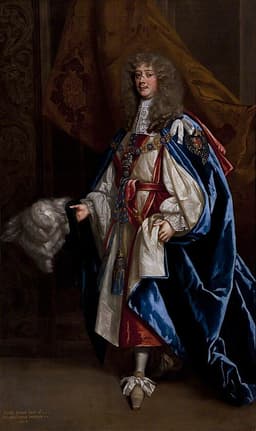
Henry Bennet
Politician · Modern
54.7Total
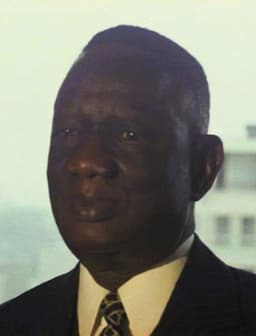
Siaka Stevens
Politician · Modern
49.5Total
Basic Information
Born
1618
1905
Died
1685
1988
Era
Modern
Modern
Nationality
England
Sierra Leone
Occupation
Politician
Politician
Civilization
Western
Other
Score Comparison
Military (10%)
50.0
50.0
Political (20%)
68.0
46.6
Influence (20%)
51.8
51.8
Legacy (20%)
45.0
43.3
Leadership (15%)
74.0
65.0
Strategy (15%)
42.0
39.5
TOTAL
54.7
49.5
Henry Bennet — Complete Timeline
1668 AD
Member of the CABAL MinistryPolitical Action◆ Major
Arlington became a leading member of the CABAL, the informal council of five ministers under Charles II. His initials formed the 'A' in the acronym, and he was instrumental in shaping foreign policy, particularly the pro-French alignment.
CABALCharles IIGovernment
Impact: national
1670 AD
Negotiated the Treaty of DoverPolitical Action◆ Major
As Secretary of State, Henry Bennet, Earl of Arlington, was a key negotiator of the secret Treaty of Dover between England and France. The treaty allied England with France against the Dutch Republic and included a secret clause for Charles II to convert to Catholicism.
Treaty of DoverAnglo-French allianceSecret diplomacy
Impact: regionaldestructive
1674 AD
Impeached and removed from officePolitical Action◆ Major
Following the Third Anglo-Dutch War, Parliament impeached Arlington for his role in the war and the Treaty of Dover. He was forced to resign as Secretary of State, though he later served as Lord Chamberlain until his death.
ImpeachmentAnglo-Dutch WarResignation
Impact: nationaltragic
Siaka Stevens — Complete Timeline
1967 AD
Became Prime Minister of Sierra LeonePolitical Action◆ Major
Siaka Stevens was appointed Prime Minister after his All People's Congress party won the 1967 general election. However, he was overthrown in a military coup within hours of taking office, forcing him into exile in Guinea.
ElectionCoupExile
Impact: national
1968 AD
Returned to Power and Became PresidentPolitical Action◆ Major
After a counter-coup, Stevens returned from exile and assumed the presidency. He consolidated power by declaring a one-party state in 1978, banning opposition parties, and centralizing control over the government and economy.
One-Party StateAuthoritarianismPresidency
Impact: nationaldestructive
1971 AD
Survived Multiple Coup AttemptsPolitical Action
Stevens faced several coup attempts, including a 1971 plot led by Brigadier John Bangura. He responded by purging the military, executing plotters, and relying on a paramilitary force and loyal army units to maintain his rule.
Coup AttemptRepressionMilitary
Impact: nationaldestructive
1980 AD
Implemented Economic DeclineReform◆ Major
Under Stevens' rule, Sierra Leone's economy deteriorated due to corruption, mismanagement, and declining diamond revenues. He nationalized industries and expanded the public sector, but living standards fell, and the country became heavily indebted.
Economic DeclineCorruptionMismanagement
Impact: nationaldestructive
1985 AD
Retired from PresidencyPolitical Action◆ Major
Stevens voluntarily stepped down as president, handing power to his chosen successor, Joseph Momoh. His retirement was rare in African politics at the time, but he left behind a weakened state and a legacy of authoritarian rule.
RetirementSuccessionLegacy
Impact: national
Expert Analysis
Origins
Henry Bennet, 1st Earl of Arlington (1618–1685), was born into a Royalist family in England. Educated at Westminster School and Christ Church, Oxford, he served as a royalist during the English Civil War, fleeing into exile after Charles I's execution. His early career included diplomatic missions in Madrid and Rome, shaping his skills in secret negotiations.
Siaka Stevens (1905–1988) was born in Moyamba, Sierra Leone, to a poor family. He attended the Albert Academy in Freetown and later trained as a railway policeman. His early political involvement came through trade unionism, leading the Mine Workers' Union. He founded the All People's Congress (APC) in 1960, advocating for independence from British rule.
Rise to Power
Bennet's rise began after the Restoration of Charles II in 1660. Appointed as Secretary of State for the Southern Department in 1662, he gained influence through his loyalty and diplomatic acumen. By 1667, he became a leading member of the CABAL ministry (Clifford, Ashley, Buckingham, Arlington, Lauderdale). His pivotal moment came in 1670 when he negotiated the secret Treaty of Dover with France, promising English alliance in exchange for French subsidies. This treaty was a turning point, but it later exposed him to parliamentary backlash.
Stevens rose through union activism. He was elected to the Legislative Council in 1951, but his APC lost the 1962 elections. After independence in 1961, Stevens led protests against the ruling Sierra Leone People's Party (SLPP). In 1967, the APC won the general election, and Stevens became Prime Minister. However, he was overthrown in a military coup within hours. After a counter-coup in 1968, he returned to power and became President in 1971 after declaring a republic. He consolidated power by banning opposition parties and establishing a one-party state in 1978.
Leadership & Governance
Bennet's leadership as Secretary of State was marked by secrecy and manipulation. He controlled foreign policy and intelligence, using patronage to maintain influence. His governance score of 74.0 reflects his ability to navigate court politics, but his reliance on French support weakened England's position. He opposed the Test Act of 1673, which barred Catholics from office, showing his alignment with Catholic-leaning policies. His strategy score of 42.0 indicates poor long-term planning, as the Treaty of Dover led to the disastrous Third Anglo-Dutch War.
Stevens ruled Sierra Leone with an iron fist. He centralized power, purged rivals, and used diamond revenues to buy loyalty. His political score of 46.6 reflects his authoritarian consolidation. He nationalized industries and created a one-party constitution, but corruption and mismanagement led to economic collapse. GDP per capita fell dramatically, and infrastructure decayed. His leadership score of 65.0 shows his ability to maintain power, but his strategy score of 39.5 highlights his failure to develop the country.
Triumph & Tragedy
Bennet's greatest triumph was negotiating the Treaty of Dover, which secured French subsidies and a secret alliance. This strengthened Charles II's finances temporarily. His tragedy was the impeachment and removal from office in 1674 after the Third Anglo-Dutch War ended in English defeat. Parliament forced his resignation, and he died in obscurity. His legacy score of 45.0 reflects his limited lasting impact.
Stevens' triumph was staying in power for 18 years and voluntarily retiring in 1985, a rarity in African politics. He survived multiple coup attempts, including a 1971 plot led by Brigadier John Bangura, whom he executed. His tragedy was the economic devastation: Sierra Leone became one of the world's poorest countries. Corruption was rampant, and diamond smuggling funded his regime. His legacy score of 43.3 reflects the negative long-term consequences.
Character & Destiny
Bennet was a cautious, secretive diplomat. His character, shaped by exile, made him adept at intrigue but prone to overreaching. He lacked military acumen (military score 50.0) and his reliance on France backfired. His destiny was tied to Charles II's fortunes; when the king distanced himself, Bennet fell.
Stevens was a charismatic but ruthless leader. He used populist rhetoric to gain support but crushed dissent. His personality combined charm with paranoia, leading to purges. His military score of 50.0 reflects his avoidance of direct military engagement, instead using loyalists to suppress coups. His destiny was to be a classic African strongman, leaving a broken state.
Legacy
Bennet's legacy is mixed. The Treaty of Dover is remembered as a secret deal that undermined English sovereignty. The CABAL ministry gave its name to the word 'cabal', meaning a secret political group. His political influence score of 51.8 shows his impact on 17th-century politics, but his long-term legacy is minimal.
Stevens' legacy is one of decline. He established a one-party state that persisted until 1991. His corruption and mismanagement contributed to Sierra Leone's civil war in the 1990s. His influence score of 51.8 is similar to Bennet's, but his impact on Sierra Leone was deeply negative. He is remembered as a figure who squandered post-independence potential.
Conclusion
Henry Bennet had a more significant impact on European diplomacy and the evolution of English governance, scoring a total of 54.7 compared to Stevens' 49.5. While Bennet's actions were flawed, they influenced the balance of power in Europe and the development of parliamentary scrutiny. Stevens, despite his longevity, left Sierra Leone worse off. Bennet's political maneuvering, though ultimately unsuccessful, had broader historical consequences. Therefore, Henry Bennet is the more impactful figure.
Rankings
🥇
Henry BennetLeader
Mil: 50.0Pol: 68.0Inf: 51.8
54.7
🥈
Siaka Stevens
Mil: 50.0Pol: 46.6Inf: 51.8
49.5
+5.2 behind
How This Comparison Works
Algorithm
Each figure is scored on 6 dimensions (0—100 scale) based on structured historical data: Military (10%), Political (20%), Influence (20%), Legacy (20%), Leadership (15%), Strategy (15%). The weighted total produces the final ranking.
Data Sources
Scores are computed from structured sub-indicators in the database. Scale factors adjust for era (Ancient ×0.85, Modern ×1.0) and civilization size (Eastern ×1.05, Other ×0.80) to account for differences in population and military scale.
Maximum 3 Figures
Comparisons are limited to 2—3 figures to ensure readability and statistical meaningfulness.
Error Margins
±5 points per dimension — Sub-scores are derived from historical records with inherent uncertainty. Two figures within 5 points on a dimension should be considered roughly equivalent in that area.
Total Score Accuracy
±3 points overall — The weighted combination of 6 dimensions produces a total score with approximately ±3 points of uncertainty. Differences of less than 3 points are not statistically significant— the figures are effectively tied.
Known Limitations
- Historical records are incomplete and uneven across civilizations
- Figures from oral-tradition societies may be underrepresented
- Occupation labels can misclassify multi-role figures
- Scores measure capability and impact, not moral character
- Quantitative scoring is a comparison tool, not absolute truth
Capability Radar
Military (10%) — Battles & Warfare
Battles
29
22
Win Rate
31
27
Expansion
34
27
Political (20%) — Governance & Reform
Reform
40
40
Diplomacy
70
45
Economy
30
30
Influence (20%) — Cultural & Global Reach
Cultural
20
30
Global
30
20
Legacy (20%) — Historical Impact
Historical
40
35
Longevity
30
25
Leadership (15%) — Power & Stability
Tenure
65
60
Stability
20
20
Strategy (15%) — Tactics & Innovation
Strategy
36
33
Tactics
42
36
Reform
43
35
Similar Comparisons
Comments & Discussion
No comments yet. Be the first to share your thoughts!