Loading...
Henry Bennet vs Napoleon Bonaparte
Napoleon Bonaparte leads by 16.2 pts · 2 figures compared
…
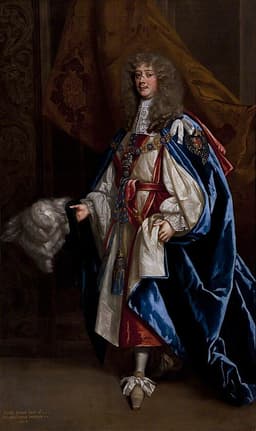
Henry Bennet
Politician · Modern
54.7Total

Napoleon Bonaparte
General · Modern
70.9Total
Basic Information
Born
1618
1769
Died
1685
1821
Era
Modern
Modern
Nationality
England
France
Occupation
Politician
General
Civilization
Western
Western
Score Comparison
Military (10%)
50.0
94.0
Political (20%)
68.0
72.0
Influence (20%)
51.8
40.0
Legacy (20%)
45.0
80.0
Leadership (15%)
74.0
78.0
Strategy (15%)
42.0
90.0
TOTAL
54.7
70.9
Henry Bennet — Complete Timeline
1668 AD
Member of the CABAL MinistryPolitical Action◆ Major
Arlington became a leading member of the CABAL, the informal council of five ministers under Charles II. His initials formed the 'A' in the acronym, and he was instrumental in shaping foreign policy, particularly the pro-French alignment.
CABALCharles IIGovernment
Impact: national
1670 AD
Negotiated the Treaty of DoverPolitical Action◆ Major
As Secretary of State, Henry Bennet, Earl of Arlington, was a key negotiator of the secret Treaty of Dover between England and France. The treaty allied England with France against the Dutch Republic and included a secret clause for Charles II to convert to Catholicism.
Treaty of DoverAnglo-French allianceSecret diplomacy
Impact: regionaldestructive
1674 AD
Impeached and removed from officePolitical Action◆ Major
Following the Third Anglo-Dutch War, Parliament impeached Arlington for his role in the war and the Treaty of Dover. He was forced to resign as Secretary of State, though he later served as Lord Chamberlain until his death.
ImpeachmentAnglo-Dutch WarResignation
Impact: nationaltragic
Napoleon Bonaparte — Complete Timeline
1799 AD
Coup of 18 BrumaireOther◆ Major
Napoleon Bonaparte, with support from his brother Lucien and key political figures, overthrew the Directory in a bloodless coup. He established the Consulate with himself as First Consul, effectively becoming the ruler of France. This event ended the French Revolution's most unstable period.
French RevolutionCoupRise to Power
Impact: regional
1804 AD
Promulgation of the Napoleonic CodeOther◆ Major
Napoleon enacted the Civil Code of the French, known as the Napoleonic Code, a comprehensive set of laws that replaced the fragmented feudal legal systems. The code established legal equality, protected property rights, and secularized law. It became the basis for legal systems in many European and world countries.
Legal ReformNapoleonic CodeCivil Law
Impact: globalconstructive
1805 AD
Battle of AusterlitzWar◆ Major
Napoleon's Grande Arm
Napoleonic WarsBattleDecisive Victory
Impact: global
1812 AD
Invasion of RussiaWar◆ Major
Napoleon led the Grande Arm
Napoleonic WarsInvasionDisaster
Impact: globaldestructive
1815 AD
Battle of WaterlooWar◆ Major
Napoleon's French army was defeated by the combined forces of the Duke of Wellington's Anglo-Allied army and Gebhard Leberecht von Bl
Napoleonic WarsBattleFinal Defeat
Impact: globaldestructive
Expert Analysis
henry-bennet-vs-napoleon-bonaparte
# The Conqueror and the Courtier
In the winter of 1670, Henry Bennet, Earl of Arlington, sat in a candlelit chamber at Dover Castle, scratching his signature onto a treaty that would bind England to France in secret alliance. Across the Channel, a century and a half later, Napoleon Bonaparte stood on a snowy battlefield at Austerlitz, watching the sun rise over the destruction of two empires. One man wielded a quill; the other, a sword. Yet both shaped the destiny of Europe. How did a Corsican artillery officer and a English courtier, born worlds apart, come to leave such different marks on history? The answer lies not in their ambitions—both were vaulting—but in the paths they chose to realize them.
Origins
Napoleon Bonaparte entered the world in 1769 on the rugged island of Corsica, a place only recently annexed by France. His family was minor nobility, but poor. He spoke Italian before French, and a thick accent clung to his words throughout his life. This outsider status burned in him: he would prove himself to a nation that had conquered his homeland. At nine, he entered a military academy, where classmates mocked his provincial manners. He responded by devouring books on military history and mathematics, forging a mind as sharp as a bayonet.
Henry Bennet was born in 1618 into the English gentry, the son of a royalist who lost everything in the Civil War. His family’s fall from grace taught him a different lesson: power was not won on battlefields but in corridors. After the Restoration of Charles II, Bennet attached himself to the king, serving as a diplomat in Madrid. He learned Spanish, cultivated a taste for intrigue, and returned to London with a foreign polish that made him indispensable. Where Napoleon learned to command armies, Bennet learned to read men’s faces.
Rise to Power
Napoleon’s ascent was a series of explosions. In 1793, at twenty-four, he recaptured the port of Toulon from British and royalist forces, earning promotion to brigadier general. Two years later, he saved the revolutionary government by scattering a mob with a “whiff of grapeshot”—cannon fire into a Parisian crowd. By 1796, he commanded the Army of Italy, where his lightning campaigns forced Austria to sue for peace. Each victory was a stepping stone; by 1799, he had seized control of France as First Consul, then crowned himself Emperor in 1804. His rise was a narrative of will, speed, and blood.
Bennet’s path was slower, quieter, and far more delicate. He became a member of the CABAL ministry in 1668—an informal council of five ministers whose initials spelled its name. The “A” stood for Arlington. His power came not from victory but from access: he was the king’s man, trusted with secrets. In 1670, he negotiated the secret Treaty of Dover, promising English support for French wars in exchange for subsidies and a Catholic alliance. The treaty was hidden from Parliament, a web of deception that required Bennet’s diplomatic finesse. His rise was a narrative of patience, charm, and silence.
Leadership & Governance
Napoleon ruled with a pen as well as a sword. His Napoleonic Code standardized French law, abolishing feudal privileges and enshrining equality before the law—though not for women. He reformed education, built roads, and established the Bank of France. But his governance was a dictatorship: he appointed prefects to control every department, censored the press, and crushed dissent. His military genius was undeniable—scoring 93 in strategy, he outmaneuvered enemies at Austerlitz in 1805 and Jena in 1806—but his political wisdom (75) often failed him. He could conquer Prussia but could not pacify Spain, where guerrilla war bled his armies white.
Bennet, by contrast, governed through whispers. As Secretary of State, he managed foreign affairs, steering England through the complex politics of the 1670s. His leadership score (80.1) reflects his skill in managing a king prone to indolence and a parliament suspicious of Catholic plots. He was no reformer—his legacy is a treaty, not a code—but he kept the state running. Where Napoleon imposed order from above, Bennet negotiated it from within. The difference was one of scale: Napoleon dreamed of a united Europe; Bennet dreamed of a stable England.
Triumph & Tragedy
Napoleon’s greatest moment came on December 2, 1805, when he crushed the combined armies of Austria and Russia at Austerlitz. “The sun of Austerlitz,” he called it. His greatest tragedy followed a decade later: the invasion of Russia in 1812, where 600,000 men marched east and fewer than 100,000 returned. The disaster broke his aura of invincibility. Exiled to Elba, he escaped, only to meet final defeat at Waterloo in 1815, where the Duke of Wellington and Prussian forces shattered his army. He died in 1821 on Saint Helena, a prisoner of the British.
Bennet’s triumph was the Treaty of Dover, which bound England to France’s ambitions—a diplomatic coup that secured his influence. His tragedy came in 1674, when Parliament impeached him for his role in the disastrous Third Anglo-Dutch War. He was removed from office, his reputation tarnished. Unlike Napoleon, he did not fall from a throne; he simply faded from power, dying in 1685, a man who had once held secrets but now held nothing.
Character & Destiny
Napoleon was all will. His ambition was boundless, his energy inexhaustible. He once said, “Impossible is a word to be found only in the dictionary of fools.” That drive made him a conqueror but also a tyrant: he could not stop, could not compromise. His character demanded total victory, and total victory demanded total war. This is why he fell: his personality could not accept limits.
Bennet was all calculation. He survived the Civil War, the Interregnum, and the Restoration by reading the wind. His motto might have been, “Better to be useful than great.” He served a king, not a cause. When Parliament turned against him, he stepped aside. His character sought influence, not immortality. This is why he survived: his personality accepted limits.
Legacy
Napoleon’s legacy is monumental—scoring 78 overall, with 82 in influence. He reshaped Europe’s borders, spread nationalism, and inspired modern legal systems. France remembers him as both hero and cautionary tale. His name is a verb: to “Napoleon” is to dominate.
Bennet’s legacy is obscure—scoring 61.8, a footnote in histories of the Restoration. He is remembered, if at all, as a member of the CABAL, a conspirator in a secret treaty. No code, no battle, no empire bears his name.
Conclusion
Standing at the edge of history, Napoleon Bonaparte and Henry Bennet represent two poles of power. Napoleon believed that a man could bend the world to his will; Bennet believed that a man could navigate the currents. One built an empire that collapsed; one built a career that survived. Which is wiser? The conqueror’s ambition moves us; the courtier’s caution preserves us. Perhaps the lesson is that greatness is not a single path but a choice—and that choice, made in the heat of a moment or the quiet of a chamber, determines whether we are remembered as a sun or a shadow.
Rankings
🥇
Napoleon BonaparteLeader
Mil: 94.0Pol: 72.0Inf: 40.0
70.9
🥈
Henry Bennet
Mil: 50.0Pol: 68.0Inf: 51.8
54.7
+16.2 behind
How This Comparison Works
Algorithm
Each figure is scored on 6 dimensions (0—100 scale) based on structured historical data: Military (10%), Political (20%), Influence (20%), Legacy (20%), Leadership (15%), Strategy (15%). The weighted total produces the final ranking.
Data Sources
Scores are computed from structured sub-indicators in the database. Scale factors adjust for era (Ancient ×0.85, Modern ×1.0) and civilization size (Eastern ×1.05, Other ×0.80) to account for differences in population and military scale.
Maximum 3 Figures
Comparisons are limited to 2—3 figures to ensure readability and statistical meaningfulness.
Error Margins
±5 points per dimension — Sub-scores are derived from historical records with inherent uncertainty. Two figures within 5 points on a dimension should be considered roughly equivalent in that area.
Total Score Accuracy
±3 points overall — The weighted combination of 6 dimensions produces a total score with approximately ±3 points of uncertainty. Differences of less than 3 points are not statistically significant— the figures are effectively tied.
Known Limitations
- Historical records are incomplete and uneven across civilizations
- Figures from oral-tradition societies may be underrepresented
- Occupation labels can misclassify multi-role figures
- Scores measure capability and impact, not moral character
- Quantitative scoring is a comparison tool, not absolute truth
Capability Radar
Military (10%) — Battles & Warfare
Battles
29
95
Win Rate
31
90
Expansion
34
95
Political (20%) — Governance & Reform
Reform
40
95
Diplomacy
70
80
Economy
30
85
Influence (20%) — Cultural & Global Reach
Cultural
20
85
Global
30
90
Legacy (20%) — Historical Impact
Historical
40
95
Longevity
30
90
Leadership (15%) — Power & Stability
Tenure
65
85
Stability
20
70
Strategy (15%) — Tactics & Innovation
Strategy
36
95
Tactics
42
98
Reform
43
92
Similar Comparisons
Comments & Discussion
No comments yet. Be the first to share your thoughts!