Loading...
Henry II of Castile vs Vasili III
Vasili III leads by 12.7 pts · 2 figures compared
…
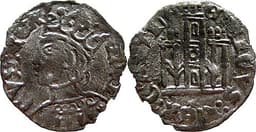
Henry II of Castile
Emperor · Medieval
47.3Total

Vasili III
Emperor · Medieval
60.0Total
Basic Information
Born
1334
1479
Died
1379
1533
Era
Medieval
Medieval
Nationality
Castile
Russia
Occupation
Emperor
Emperor
Civilization
Western
Western
Score Comparison
Military (10%)
25.0
52.5
Political (20%)
40.8
68.0
Influence (20%)
51.8
59.0
Legacy (20%)
45.8
52.0
Leadership (15%)
55.3
72.0
Strategy (15%)
60.0
60.0
TOTAL
47.3
60.0
Henry II of Castile — Complete Timeline
1369 AD
Battle of MontielWar◆ Major
Henry of Trastamara defeated the forces of Peter I at the Battle of Montiel. After the battle, Henry captured and killed Peter, ending the First Castilian Civil War and securing his claim to the throne.
BattleCivil WarCastile
Impact: nationaldestructive
Coronation as King of CastilePolitical Action◆ Major
Henry of Trastamara was crowned King of Castile after killing his half-brother Peter I. His coronation established the Trastamara dynasty, which would rule Castile and later Aragon for the next century.
CoronationTrastamaraCastile
Impact: national
Alliance with FrancePolitical Action◆ Major
Henry II formed a lasting alliance with France, supporting French interests in the Hundred Years' War against England. This alliance provided Castile with French military support and strengthened the Franco-Castilian axis.
AllianceFranceCastile
Impact: regionalconstructive
1370 AD
Reforms to the NobilityReform
Henry II redistributed lands and titles to his supporters, creating a new nobility loyal to the Trastamara dynasty. These reforms strengthened royal authority but also entrenched the power of the new noble class.
ReformNobilityCastile
Impact: nationalconstructive
Vasili III — Complete Timeline
1510 AD
Annexation of PskovWar◆ Major
Vasili III annexed the Pskov Republic, abolishing its veche and deporting leading families to central Russia. This completed the absorption of the last independent Russian city-state into Moscow.
PskovAnnexationMoscow
Impact: regional
1514 AD
Annexation of SmolenskWar◆ Major
Vasili III captured Smolensk from the Grand Duchy of Lithuania after a long siege. The city remained under Russian control despite a failed Lithuanian counterattack later that year.
SmolenskLithuaniaSiege
Impact: regional
1521 AD
Annexation of RyazanWar◆ Major
Vasili III annexed the Grand Principality of Ryazan, the last semi-independent Russian principality. The Ryazan prince Ivan Ivanovich was forced to flee to Lithuania, ending Ryazan's autonomy.
RyazanAnnexationUnification
Impact: regional
1526 AD
Divorce and Remarriage to Elena GlinskayaPolitical Action
Vasili III divorced his barren wife Solomonia Saburova and married Elena Glinskaya. This marriage produced Ivan IV, but the divorce caused controversy with the Orthodox Church and some clergy.
MarriageSuccessionChurch
Impact: national
Expert Analysis
Origins
Henry II of Castile was born in 1334 as an illegitimate son of King Alfonso XI of Castile and Eleanor de Guzmán. His illegitimacy placed him in a precarious position, but his father granted him the title Count of Trastamara. Henry grew up amidst the Castilian court's intrigues, where his half-brother Peter I, the legitimate heir, became king in 1350. Henry's early life was shaped by rivalry with Peter, leading to exile in France.
Vasili III was born in 1479 in Moscow, the son of Ivan III and Sophia Paleologue. He was the heir to a rapidly expanding Grand Duchy of Moscow. His upbringing was steeped in Byzantine and Russian court traditions, and he was educated in statecraft and Orthodox theology. Vasili's early years saw his father consolidate power, annexing Novgorod and Tver, setting the stage for Vasili's own policies.
Rise to Power
Henry II rose to power through rebellion and civil war. In 1354, he led a revolt against Peter I, but was defeated and fled to France. With French support, he invaded Castile in 1366 and was crowned king. However, Peter I, aided by the English, regained the throne. The decisive moment came at the Battle of Montiel in 1369, where Henry defeated Peter and killed him personally. This established the Trastamara dynasty. Henry's political score of 40.8 reflects his reliance on foreign alliances and violence.
Vasili III inherited the throne peacefully in 1505 from his father Ivan III. He continued the policy of gathering Russian lands. His first major success was the annexation of Pskov in 1510, abolishing its veche and deporting elites. In 1514, he captured Smolensk from Lithuania after a long siege, a key strategic victory. The annexation of Ryazan in 1521 completed the unification of the Russian principalities. Vasili's political score of 68.0 indicates effective consolidation.
Leadership & Governance
Henry II governed by rewarding his supporters. He redistributed lands and titles to his noble allies, creating a new aristocracy loyal to him. This strengthened royal authority in the short term but entrenched a powerful nobility that later challenged the crown. Henry allied with France in the Hundred Years' War, providing Castilian naval support. His leadership score of 55.3 reflects his ability to maintain power through patronage and military alliance, but his governance was reactive and faction-based.
Vasili III ruled as an autocrat, continuing his father's centralization. He limited the power of the boyars, promoted service gentry, and standardized law. He maintained a standing army and expanded the state bureaucracy. His leadership score of 72.0 indicates effective administration and stability. Vasili's governance was systematic, suppressing local liberties to integrate new territories. His divorce and remarriage to Elena Glinskaya caused controversy but secured the succession with Ivan IV.
Triumph & Tragedy
Henry's greatest triumph was founding the Trastamara dynasty, which ruled Castile and later Spain for centuries. His alliance with France enhanced Castile's international standing. However, his greatest failure was the instability of his reign. The civil war devastated the kingdom, and his reliance on noble factions weakened central authority. His military score of 25.0 reflects limited strategic ability beyond personal combat.
Vasili's triumph was the unification of Russia under Moscow's rule, ending centuries of fragmentation. The annexation of Smolensk secured the western border. His tragedy was the controversial divorce, which alienated the church and some nobles. Additionally, his son Ivan IV became a tyrant. Vasili's military score of 52.5 indicates competent, if not brilliant, generalship.
Character & Destiny
Henry II was ruthless and pragmatic, willing to kill his half-brother to secure power. He was a skilled diplomat, securing French support, but his character was shaped by illegitimacy and a constant need to legitimize his rule. This led to short-term thinking. His destiny was to be a usurper whose dynasty endured despite his flaws.
Vasili III was methodical and determined, continuing his father's policies without deviation. He was cautious, avoiding risky wars, and focused on internal consolidation. His character was autocratic but not cruel. His destiny was to complete the work of Ivan III, setting the stage for the Russian Empire. His legacy is overshadowed by his son, but he was a key builder.
Legacy
Henry II's legacy is mixed. He founded a dynasty that produced the Catholic Monarchs, but his reign established a pattern of noble privilege that plagued Castile. His alliance with France influenced European politics. He is remembered as a successful usurper who killed his brother. His legacy score of 45.8 reflects limited long-term contributions.
Vasili III's legacy is more positive. He completed Moscow's unification of Russian lands, an essential step toward the Russian state. His administrative reforms strengthened autocracy. He is remembered as a consolidator, though often overshadowed by Ivan III and Ivan IV. His legacy score of 52.0 indicates a solid, if unspectacular, impact.
Conclusion
Vasili III had a greater impact on history. His total score of 60.0 compared to Henry II's 47.3 reflects his superior political and leadership abilities. While Henry founded a dynasty, Vasili's unification of Russia created a cohesive state that endured for centuries. Henry's reign was marked by civil war and instability, whereas Vasili's was stable and expansionist. Vasili's systematic governance and strategic annexations laid the foundation for Russian autocracy. Therefore, Vasili III is the more significant historical figure.
Rankings
🥇
Vasili IIILeader
Mil: 52.5Pol: 68.0Inf: 59.0
60.0
🥈
Henry II of Castile
Mil: 25.0Pol: 40.8Inf: 51.8
47.3
+12.7 behind
How This Comparison Works
Algorithm
Each figure is scored on 6 dimensions (0—100 scale) based on structured historical data: Military (10%), Political (20%), Influence (20%), Legacy (20%), Leadership (15%), Strategy (15%). The weighted total produces the final ranking.
Data Sources
Scores are computed from structured sub-indicators in the database. Scale factors adjust for era (Ancient ×0.85, Modern ×1.0) and civilization size (Eastern ×1.05, Other ×0.80) to account for differences in population and military scale.
Maximum 3 Figures
Comparisons are limited to 2—3 figures to ensure readability and statistical meaningfulness.
Error Margins
±5 points per dimension — Sub-scores are derived from historical records with inherent uncertainty. Two figures within 5 points on a dimension should be considered roughly equivalent in that area.
Total Score Accuracy
±3 points overall — The weighted combination of 6 dimensions produces a total score with approximately ±3 points of uncertainty. Differences of less than 3 points are not statistically significant— the figures are effectively tied.
Known Limitations
- Historical records are incomplete and uneven across civilizations
- Figures from oral-tradition societies may be underrepresented
- Occupation labels can misclassify multi-role figures
- Scores measure capability and impact, not moral character
- Quantitative scoring is a comparison tool, not absolute truth
Capability Radar
Military (10%) — Battles & Warfare
Battles
45
45
Win Rate
40
55
Expansion
30
65
Political (20%) — Governance & Reform
Reform
30
60
Diplomacy
55
55
Economy
25
50
Influence (20%) — Cultural & Global Reach
Cultural
30
45
Global
20
40
Legacy (20%) — Historical Impact
Historical
40
60
Longevity
35
50
Leadership (15%) — Power & Stability
Tenure
50
70
Stability
20
55
Strategy (15%) — Tactics & Innovation
Strategy
40
60
Tactics
35
40
Reform
20
35
Similar Comparisons
Comments & Discussion
No comments yet. Be the first to share your thoughts!