Loading...
Henry II of Castile vs Napoleon Bonaparte
Napoleon Bonaparte leads by 23.6 pts · 2 figures compared
…
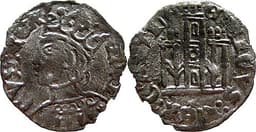
Henry II of Castile
Emperor · Medieval
47.3Total

Napoleon Bonaparte
General · Modern
70.9Total
Basic Information
Born
1334
1769
Died
1379
1821
Era
Medieval
Modern
Nationality
Castile
France
Occupation
Emperor
General
Civilization
Western
Western
Score Comparison
Military (10%)
25.0
94.0
Political (20%)
40.8
72.0
Influence (20%)
51.8
40.0
Legacy (20%)
45.8
80.0
Leadership (15%)
55.3
78.0
Strategy (15%)
60.0
90.0
TOTAL
47.3
70.9
Henry II of Castile — Complete Timeline
1369 AD
Battle of MontielWar◆ Major
Henry of Trastamara defeated the forces of Peter I at the Battle of Montiel. After the battle, Henry captured and killed Peter, ending the First Castilian Civil War and securing his claim to the throne.
BattleCivil WarCastile
Impact: nationaldestructive
Coronation as King of CastilePolitical Action◆ Major
Henry of Trastamara was crowned King of Castile after killing his half-brother Peter I. His coronation established the Trastamara dynasty, which would rule Castile and later Aragon for the next century.
CoronationTrastamaraCastile
Impact: national
Alliance with FrancePolitical Action◆ Major
Henry II formed a lasting alliance with France, supporting French interests in the Hundred Years' War against England. This alliance provided Castile with French military support and strengthened the Franco-Castilian axis.
AllianceFranceCastile
Impact: regionalconstructive
1370 AD
Reforms to the NobilityReform
Henry II redistributed lands and titles to his supporters, creating a new nobility loyal to the Trastamara dynasty. These reforms strengthened royal authority but also entrenched the power of the new noble class.
ReformNobilityCastile
Impact: nationalconstructive
Napoleon Bonaparte — Complete Timeline
1799 AD
Coup of 18 BrumaireOther◆ Major
Napoleon Bonaparte, with support from his brother Lucien and key political figures, overthrew the Directory in a bloodless coup. He established the Consulate with himself as First Consul, effectively becoming the ruler of France. This event ended the French Revolution's most unstable period.
French RevolutionCoupRise to Power
Impact: regional
1804 AD
Promulgation of the Napoleonic CodeOther◆ Major
Napoleon enacted the Civil Code of the French, known as the Napoleonic Code, a comprehensive set of laws that replaced the fragmented feudal legal systems. The code established legal equality, protected property rights, and secularized law. It became the basis for legal systems in many European and world countries.
Legal ReformNapoleonic CodeCivil Law
Impact: globalconstructive
1805 AD
Battle of AusterlitzWar◆ Major
Napoleon's Grande Arm
Napoleonic WarsBattleDecisive Victory
Impact: global
1812 AD
Invasion of RussiaWar◆ Major
Napoleon led the Grande Arm
Napoleonic WarsInvasionDisaster
Impact: globaldestructive
1815 AD
Battle of WaterlooWar◆ Major
Napoleon's French army was defeated by the combined forces of the Duke of Wellington's Anglo-Allied army and Gebhard Leberecht von Bl
Napoleonic WarsBattleFinal Defeat
Impact: globaldestructive
Expert Analysis
henry-ii-of-castile-vs-napoleon-bonaparte
# The Throne and the Sword: Two Paths to Power
On a June morning in 1815, Napoleon Bonaparte stood on a muddy field near Waterloo, watching his Imperial Guard march into cannon fire. Thirty-one years earlier, in 1384, a different kind of king had died in his bed in Castile—Henry of Trastamara, a man who had clawed his way to a throne through fratricide and survived to found a dynasty. Both men seized power through violence. One reshaped a continent and died in exile; the other built a family line that would rule for generations. What separates a meteor from a foundation stone?
Origins
Napoleon Bonaparte was born in 1769 on Corsica, an island that had just become French. His family was minor nobility, scraping by on modest incomes. The young Napoleon read military history obsessively, devoured the works of Rousseau, and nursed a Corsican resentment against French authority. He was an outsider looking in, hungry and brilliant.
Henry of Trastamara, born in 1334, was an insider by blood but an outsider by circumstance. He was the illegitimate son of King Alfonso XI of Castile, raised in the shadow of his legitimate half-brother, Peter I. In medieval Castile, bastardy was a stain but not a bar—if one had the sword arm and the nerve. Henry grew up among nobles who whispered that Peter was a tyrant, a king who executed his own half-siblings. The whispers became arguments, and the arguments became war.
The difference in their eras shaped everything. Napoleon lived in the dawn of nationalism, when a man could rise on talent and ambition. Henry lived in the twilight of feudalism, when power flowed through bloodlines, oaths, and the favor of the Church. Napoleon’s world was opening; Henry’s was tightening.
Rise to Power
Napoleon’s ascent was a ladder of victories. At twenty-four, he cleared the streets of Paris with a "whiff of grapeshot" during the 1795 royalist uprising. At twenty-seven, he conquered Italy. At thirty, he staged a coup and made himself First Consul. Each step was calculated, each victory exploited. He understood that in revolutionary France, the man who delivered glory would be rewarded.
Henry’s path was bloodier and narrower. For nearly two decades, he fought a civil war against Peter I, supported by France and the Papacy. The turning point came in 1369 at the Battle of Montiel, where Henry’s forces defeated Peter’s army. After the battle, Henry personally killed his half-brother—a moment of raw, medieval finality. He was crowned King of Castile that same year, but his throne rested on a corpse and a fragile alliance.
Napoleon rose through merit and opportunity; Henry rose through patience and ruthlessness. One gambled on speed, the other on endurance.
Leadership & Governance
As emperor, Napoleon was a whirlwind of reform. The Napoleonic Code swept away feudal privileges, established equality before the law, and became the foundation of modern European jurisprudence. He centralized the state, built schools, and created a meritocratic bureaucracy. On the battlefield, he was a genius of maneuver, winning victories at Austerlitz in 1805 and Jena in 1806 that seemed to rewrite the rules of war.
Henry II governed differently. He had no code, no grand vision. Instead, he redistributed lands and titles to his supporters, creating a new nobility loyal to the Trastamara dynasty. He forged a lasting alliance with France in the Hundred Years' War, supporting French kings against England. His reforms were practical, not philosophical: reward loyalty, punish enemies, secure the succession.
Napoleon’s leadership was a performance—dramatic, inspiring, and exhausting. Henry’s was a transaction—cold, careful, and sustainable. One sought to transform society; the other sought to stabilize it.
Triumph & Tragedy
Napoleon’s greatest triumph was Austerlitz in 1805, where he crushed the combined armies of Russia and Austria. His empire stretched from Spain to Poland. His tragedy was the invasion of Russia in 1812—a catastrophic miscalculation that cost half a million men. Exiled to Elba, he returned for a hundred days, only to fall at Waterloo in 1815. He died in 1821 on Saint Helena, a prisoner of the British.
Henry’s triumph was surviving. He held his throne for ten years, fought off English-backed invasions, and passed the crown to his son John I. His tragedy was the manner of his rise—a fratricide that stained his dynasty. The Trastamara kings would rule for a century, but the ghost of Peter I haunted them. Henry died in his bed in 1379, but his legacy was a kingdom that had been won by a sword dipped in a brother’s blood.
Character & Destiny
Napoleon was driven by an insatiable hunger for glory. "Impossible is a word to be found only in the dictionary of fools," he said. He believed he could bend the world to his will. That confidence made him great and destroyed him.
Henry was driven by survival. He had no illusions about glory. He knew that a bastard king lives by the sword and dies by it. His caution, his willingness to compromise, his patience—these were not virtues but necessities. He played a long game and won.
Legacy
Napoleon’s legacy is monumental. The Napoleonic Code shapes legal systems across Europe and the Americas. His military tactics are still studied. His name evokes empire, ambition, and the seduction of power. But his legacy is also one of hubris—a warning about the limits of genius.
Henry’s legacy is quieter but deeper. The Trastamara dynasty he founded would unite Castile and Aragon, setting the stage for the Spain of Ferdinand and Isabella, Columbus, and the New World. He is remembered as a king, not a conqueror—a founder, not a destroyer.
Conclusion
Napoleon and Henry II of Castile both seized power through violence. One burned across Europe like a comet, leaving light and destruction. The other dug into the earth, building a foundation that would outlast him. Their stories remind us that there are two kinds of ambition: the ambition to be remembered, and the ambition to endure. Napoleon wanted to be immortal. Henry just wanted his children to inherit the throne. In the end, Henry’s children built an empire that lasted centuries. Napoleon’s empire lasted a decade. Sometimes, the slow path is the one that goes farthest.
Rankings
🥇
Napoleon BonaparteLeader
Mil: 94.0Pol: 72.0Inf: 40.0
70.9
🥈
Henry II of Castile
Mil: 25.0Pol: 40.8Inf: 51.8
47.3
+23.6 behind
How This Comparison Works
Algorithm
Each figure is scored on 6 dimensions (0—100 scale) based on structured historical data: Military (10%), Political (20%), Influence (20%), Legacy (20%), Leadership (15%), Strategy (15%). The weighted total produces the final ranking.
Data Sources
Scores are computed from structured sub-indicators in the database. Scale factors adjust for era (Ancient ×0.85, Modern ×1.0) and civilization size (Eastern ×1.05, Other ×0.80) to account for differences in population and military scale.
Maximum 3 Figures
Comparisons are limited to 2—3 figures to ensure readability and statistical meaningfulness.
Error Margins
±5 points per dimension — Sub-scores are derived from historical records with inherent uncertainty. Two figures within 5 points on a dimension should be considered roughly equivalent in that area.
Total Score Accuracy
±3 points overall — The weighted combination of 6 dimensions produces a total score with approximately ±3 points of uncertainty. Differences of less than 3 points are not statistically significant— the figures are effectively tied.
Known Limitations
- Historical records are incomplete and uneven across civilizations
- Figures from oral-tradition societies may be underrepresented
- Occupation labels can misclassify multi-role figures
- Scores measure capability and impact, not moral character
- Quantitative scoring is a comparison tool, not absolute truth
Capability Radar
Military (10%) — Battles & Warfare
Battles
45
95
Win Rate
40
90
Expansion
30
95
Political (20%) — Governance & Reform
Reform
30
95
Diplomacy
55
80
Economy
25
85
Influence (20%) — Cultural & Global Reach
Cultural
30
85
Global
20
90
Legacy (20%) — Historical Impact
Historical
40
95
Longevity
35
90
Leadership (15%) — Power & Stability
Tenure
50
85
Stability
20
70
Strategy (15%) — Tactics & Innovation
Strategy
40
95
Tactics
35
98
Reform
20
92
Similar Comparisons
Comments & Discussion
CANNON-FODDER AESTHETE6/17/2026
Napoleon vs a medieval fratricidal bastard? Tier mismatch. Napoleon's rise depended on meritocracy—some farm boy from Corsica could become emperor because the Revolution shattered caste. Henry's path required nothing but blood ties and Papal dispensation. Napoleon's military system mobilized nations; Henry's was private armies and mercenary bands. This comparison flatters Henry far too much. One reshaped western civilization; the other was just a successful thug in a crown.|
弹幕墨客6/17/2026
拿亨利二世跟拿破仑比?哪个村通网的历史博主整的活?拿哥是滑铁卢翻车都能让全欧洲抖三抖的猛人,亨利呢?靠杀兄上位后天天跪教皇舔贵族屁股,一辈子窝在伊比利亚当土皇帝。拿哥有《法典》传世,亨利留下啥?一堆断子绝孙的诅咒。拿哥输在最后一战,亨利赢在运气好没被反杀。这俩放一起就像把歼星舰和牛车比速度——荒谬。|
REVISIONIST WRECKING BALL6/17/2026
The Napoleon fetishists are missing the point. Henry II built something that lasted—his Trastamara line ruled Spain for generations and eventually funded Columbus. Napoleon's empire died with him at fifty-one. Military genius without institutional legacy is just a fireworks display. Henry was a survivor who understood that medieval kingship wasn't about battles but about marriage alliances, Church patronage, and outliving your enemies. Napoleon never learned that game.|
数据掘墓人6/17/2026
硬数据打脸浪漫史观:拿破仑打了60+场战役,赢过50+场,但帝国存活11年。亨利二世正面刚不过自己弟弟,靠雇佣军和法国暗箱操作上位,但王朝延续137年。权力传承稳定性=王朝年数/创始人死亡年份。亨利系数:137/1384≈0.099,拿破仑系数:帝国继承者(波拿巴复辟到拿破仑三世退位)/1815≈0.028。谁更撑得住时间铁律?用脚趾头算都明白。|
CLASSICS SCHOLAR6/17/2026
You're all applying modern metrics to medieval reality. Henry II of Castile operated in a world where legitimacy was theological, not popular. His fratricide was a political necessity in a system where a king (Peter the Cruel) was destabilizing the realm. Napoleon's legitimacy came from plebiscites and battlefield charisma—ephemeral stuff. Henry understood that dynasty requires a network of kin, not just "genius." That's why his grandson married into Portugal and his great-grandson sat on the Ar