Loading...
Henry IV of England vs Olaf II of Norway
Henry IV of England leads by 1.2 pts · 2 figures compared
…
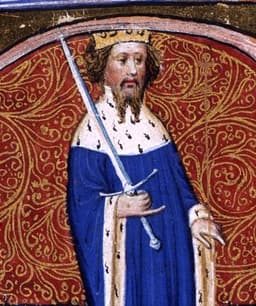
Henry IV of England
Emperor · Medieval
47.7Total
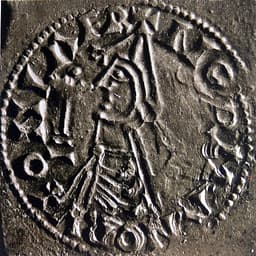
Olaf II of Norway
Emperor · Medieval
46.5Total
Basic Information
Born
1367
995
Died
1413
1030
Era
Medieval
Medieval
Nationality
England
Norway
Occupation
Emperor
Emperor
Civilization
Western
Western
Score Comparison
Military (10%)
55.0
40.0
Political (20%)
35.1
45.1
Influence (20%)
53.3
56.7
Legacy (20%)
45.8
40.0
Leadership (15%)
55.3
48.4
Strategy (15%)
38.3
43.3
TOTAL
47.7
46.5
Henry IV of England — Complete Timeline
1399 AD
Usurpation of the ThronePolitical Action◆ Major
Henry Bolingbroke deposed Richard II and claimed the English throne as Henry IV. This usurpation established the Lancastrian dynasty but created a legitimacy crisis that led to future conflicts.
UsurpationLancasterSuccession
Impact: national
1403 AD
Battle of ShrewsburyWar◆ Major
Henry IV defeated a rebellion led by Henry Percy (Hotspur) at the Battle of Shrewsbury. Hotspur was killed, and the rebellion was crushed, but the king suffered heavy casualties and ongoing challenges.
BattleRebellionPercy
Impact: nationaldestructive
1405 AD
Execution of Archbishop ScropePolitical Action◆ Major
Henry IV ordered the execution of Richard Scrope, Archbishop of York, for leading a rebellion. This act shocked the church and nobility, damaging Henry's reputation and legitimacy.
ExecutionChurchRebellion
Impact: nationaldestructive
Illness and DeclineOther
Henry IV suffered from a debilitating illness, possibly leprosy or epilepsy, which weakened his rule. He became increasingly unable to govern effectively, leading to factionalism and his son's growing influence.
IllnessDecline
Impact: nationaltragic
Olaf II of Norway — Complete Timeline
1015 AD
Became King of NorwayPolitical Action◆ Major
Olaf II became King of Norway after returning from Viking expeditions abroad. He claimed the throne with support from local chieftains and began consolidating power, aiming to unify Norway under a single monarchy and reduce the influence of regional lords.
CoronationNorwayUnification
Impact: regionalconstructive
Introduced Christianity to NorwayCultural◆ Major
Olaf II enforced the Christianization of Norway, using missionaries and laws to replace pagan practices. He built churches, appointed bishops, and suppressed resistance, making Christianity the official religion. This transformation aligned Norway with Christian Europe.
ChristianizationReligionNorway
Impact: regionalconstructive
1030 AD
Defeated at the Battle of StiklestadWar
Olaf II was killed at the Battle of Stiklestad while fighting against a coalition of Norwegian nobles and Danish forces led by Cnut the Great. His defeat was due to betrayal and superior enemy numbers, but his death soon led to his canonization as a saint.
BattleMartyrdomNorway
Impact: regionaltragic
1031 AD
Canonized as Saint OlafCultural◆ Major
Within a year of his death, Olaf II was declared a saint by Bishop Grimkell, with popular veneration spreading rapidly. His canonization was confirmed by the Pope in 1164. Saint Olaf became the patron saint of Norway and a symbol of Norwegian independence.
CanonizationSaintNorway
Impact: regionalconstructive
Expert Analysis
Origins
Henry IV of England was born in 1367 at Bolingbroke Castle, the son of John of Gaunt, Duke of Lancaster, and Blanche of Lancaster. He was educated for knighthood and administration, inheriting the vast Lancastrian estates. His early life was marked by participation in the Lords Appellant, a group that curbed the power of King Richard II. In contrast, Olaf II of Norway was born around 995, the son of King Harald Grenske of Vestfold. Raised in a pagan environment, he participated in Viking raids from a young age, later converting to Christianity during a stay in Normandy. Olaf's formative experiences were shaped by warfare and exposure to Christian kingdoms abroad.
Rise to Power
Henry IV rose to prominence through opposition to Richard II. In 1398, Richard exiled Henry, but after John of Gaunt's death in 1399, Richard seized the Lancastrian inheritance. Henry returned from exile, gathered support, and captured Richard, forcing his abdication. On September 30, 1399, Henry was crowned king, establishing the Lancastrian dynasty. Olaf II's rise was more direct: after years of Viking expeditions, he returned to Norway in 1015, claimed the throne, and defeated Earl Haakon Ericsson at the Battle of Nesjar. By 1016, he controlled most of Norway, but his rule was contested by local chieftains and Danish King Cnut the Great.
Leadership & Governance
Henry IV's leadership was marked by constant rebellion. He faced uprisings from the Percys (Battle of Shrewsbury, 1403), the Welsh under Owain Glyndŵr, and the Archbishop of York (1405). His governance relied on compromise and patronage, but his weak claim to the throne meant he never fully consolidated power. He also executed Archbishop Scrope in 1405, alienating the church. Olaf II's governance was more transformative: he systematically Christianized Norway, building churches and imposing laws against pagan practices. He centralized royal authority, but his methods—including harsh punishment—bred resentment among nobles, leading to his downfall. Olaf's political score of 45.1 reflects his forceful but divisive approach, while Henry's 35.1 indicates his struggles.
Triumph & Tragedy
Henry IV's greatest success was usurping the throne and founding the Lancastrian dynasty, but his reign was plagued by illness and rebellion. His military score of 55.0 is modest, with his victory at Shrewsbury (1403) a key triumph. However, he failed to unify England and died in 1413, leaving a fragile kingdom. Olaf II's triumph was the Christianization of Norway, earning him sainthood; his legacy score of 40.0 is paradoxically low given his religious impact. His tragedy was death at the Battle of Stiklestad in 1030, defeated by a coalition of nobles and Danish forces. His defeat initially seemed a failure, but his martyrdom spurred the spread of Christianity.
Character & Destiny
Henry IV was pragmatic and determined, but his usurpation created a legitimacy crisis. His illness (possibly leprosy or epilepsy) in later years led to ineffective rule. His character—decisive but ruthless—shaped a reign of constant conflict. Olaf II was devout and authoritarian, willing to use violence for religious ends. His destiny as a martyr was sealed by his uncompromising stance against pagan nobles. Historical assessments note Henry's political acumen but also his failure to secure stable succession. Olaf's personality made him a saint but a flawed king; his canonization within a year of death (confirmed by Bishop Grimkell) shows his impact.
Legacy
Henry IV's legacy is mixed: he established the Lancastrian line but weakened the monarchy, paving the way for the Wars of the Roses. His influence score of 53.3 reflects his role in English dynastic history. Olaf II's legacy is far-reaching: he became Norway's patron saint, and his canonization (confirmed later by the Pope) made him a symbol of Norwegian Christianity. His military score of 40.0 is low, but his influence score of 56.7 and legacy score of 40.0 understate his religious impact. Olaf's laws and church organization endured for centuries, while Henry's political structures were soon overturned.
Conclusion
While Henry IV scored higher overall (47.7 vs 46.5), Olaf II's impact is more profound. Henry's usurpation was a political act with limited long-term effects, whereas Olaf's Christianization transformed Norwegian society and identity. Olaf's sainthood created a lasting cultural legacy that Henry's political maneuvering could not match. Therefore, Olaf II of Norway had greater historical impact, despite his lower total score.
Rankings
🥇
Henry IV of EnglandLeader
Mil: 55.0Pol: 35.1Inf: 53.3
47.7
🥈
Olaf II of Norway
Mil: 40.0Pol: 45.1Inf: 56.7
46.5
+1.2 behind
How This Comparison Works
Algorithm
Each figure is scored on 6 dimensions (0—100 scale) based on structured historical data: Military (10%), Political (20%), Influence (20%), Legacy (20%), Leadership (15%), Strategy (15%). The weighted total produces the final ranking.
Data Sources
Scores are computed from structured sub-indicators in the database. Scale factors adjust for era (Ancient ×0.85, Modern ×1.0) and civilization size (Eastern ×1.05, Other ×0.80) to account for differences in population and military scale.
Maximum 3 Figures
Comparisons are limited to 2—3 figures to ensure readability and statistical meaningfulness.
Error Margins
±5 points per dimension — Sub-scores are derived from historical records with inherent uncertainty. Two figures within 5 points on a dimension should be considered roughly equivalent in that area.
Total Score Accuracy
±3 points overall — The weighted combination of 6 dimensions produces a total score with approximately ±3 points of uncertainty. Differences of less than 3 points are not statistically significant— the figures are effectively tied.
Known Limitations
- Historical records are incomplete and uneven across civilizations
- Figures from oral-tradition societies may be underrepresented
- Occupation labels can misclassify multi-role figures
- Scores measure capability and impact, not moral character
- Quantitative scoring is a comparison tool, not absolute truth
Capability Radar
Military (10%) — Battles & Warfare
Battles
35
45
Win Rate
40
50
Expansion
15
40
Political (20%) — Governance & Reform
Reform
30
55
Diplomacy
35
40
Economy
25
30
Influence (20%) — Cultural & Global Reach
Cultural
30
70
Global
20
55
Legacy (20%) — Historical Impact
Historical
45
75
Longevity
30
80
Leadership (15%) — Power & Stability
Tenure
50
35
Stability
20
25
Strategy (15%) — Tactics & Innovation
Strategy
25
35
Tactics
30
40
Reform
10
30
Similar Comparisons
Comments & Discussion
No comments yet. Be the first to share your thoughts!