Loading...
Henry IV of England vs Napoleon Bonaparte
Napoleon Bonaparte leads by 23.2 pts · 2 figures compared
…
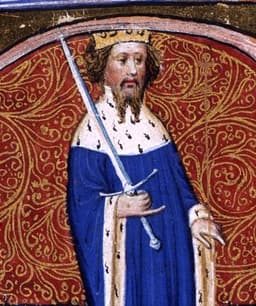
Henry IV of England
Emperor · Medieval
47.7Total

Napoleon Bonaparte
General · Modern
70.9Total
Basic Information
Born
1367
1769
Died
1413
1821
Era
Medieval
Modern
Nationality
England
France
Occupation
Emperor
General
Civilization
Western
Western
Score Comparison
Military (10%)
55.0
94.0
Political (20%)
35.1
72.0
Influence (20%)
53.3
40.0
Legacy (20%)
45.8
80.0
Leadership (15%)
55.3
78.0
Strategy (15%)
38.3
90.0
TOTAL
47.7
70.9
Henry IV of England — Complete Timeline
1399 AD
Usurpation of the ThronePolitical Action◆ Major
Henry Bolingbroke deposed Richard II and claimed the English throne as Henry IV. This usurpation established the Lancastrian dynasty but created a legitimacy crisis that led to future conflicts.
UsurpationLancasterSuccession
Impact: national
1403 AD
Battle of ShrewsburyWar◆ Major
Henry IV defeated a rebellion led by Henry Percy (Hotspur) at the Battle of Shrewsbury. Hotspur was killed, and the rebellion was crushed, but the king suffered heavy casualties and ongoing challenges.
BattleRebellionPercy
Impact: nationaldestructive
1405 AD
Execution of Archbishop ScropePolitical Action◆ Major
Henry IV ordered the execution of Richard Scrope, Archbishop of York, for leading a rebellion. This act shocked the church and nobility, damaging Henry's reputation and legitimacy.
ExecutionChurchRebellion
Impact: nationaldestructive
Illness and DeclineOther
Henry IV suffered from a debilitating illness, possibly leprosy or epilepsy, which weakened his rule. He became increasingly unable to govern effectively, leading to factionalism and his son's growing influence.
IllnessDecline
Impact: nationaltragic
Napoleon Bonaparte — Complete Timeline
1799 AD
Coup of 18 BrumaireOther◆ Major
Napoleon Bonaparte, with support from his brother Lucien and key political figures, overthrew the Directory in a bloodless coup. He established the Consulate with himself as First Consul, effectively becoming the ruler of France. This event ended the French Revolution's most unstable period.
French RevolutionCoupRise to Power
Impact: regional
1804 AD
Promulgation of the Napoleonic CodeOther◆ Major
Napoleon enacted the Civil Code of the French, known as the Napoleonic Code, a comprehensive set of laws that replaced the fragmented feudal legal systems. The code established legal equality, protected property rights, and secularized law. It became the basis for legal systems in many European and world countries.
Legal ReformNapoleonic CodeCivil Law
Impact: globalconstructive
1805 AD
Battle of AusterlitzWar◆ Major
Napoleon's Grande Arm
Napoleonic WarsBattleDecisive Victory
Impact: global
1812 AD
Invasion of RussiaWar◆ Major
Napoleon led the Grande Arm
Napoleonic WarsInvasionDisaster
Impact: globaldestructive
1815 AD
Battle of WaterlooWar◆ Major
Napoleon's French army was defeated by the combined forces of the Duke of Wellington's Anglo-Allied army and Gebhard Leberecht von Bl
Napoleonic WarsBattleFinal Defeat
Impact: globaldestructive
Expert Analysis
henry-iv-of-england-vs-napoleon-bonaparte
# The Crown and the Eagle: Why Henry IV Failed Where Napoleon Succeeded
On a February morning in 1815, Napoleon Bonaparte stepped ashore in southern France, a prisoner of his own ambition just months before. Within weeks, he would reclaim an empire. Four centuries earlier, in the summer of 1399, Henry Bolingbroke landed at Ravenspur, a disinherited exile. He too would seize a throne. Yet one man’s name echoes through the ages as a byword for genius, while the other is remembered, if at all, as a sickly usurper who spent his reign fighting shadows. What made the difference between triumph and tragedy? The answer lies not in luck, but in the marrow of the men themselves.
Origins
Napoleon Bonaparte was born in 1769 on Corsica, an island that had become French only the year before. His family was minor nobility, but his world was one of revolution and reinvention. France’s old order was crumbling, and a boy who spoke Italian as his first language could, through sheer ability, rise to command armies. The era demanded audacity, and Napoleon was its perfect child.
Henry IV of England, born in 1367, emerged from a different world entirely. He was a Plantagenet prince, grandson of Edward III, bred for the rigid hierarchies of medieval kingship. His father, John of Gaunt, was the wealthiest man in England. Henry’s world was one of inherited rights, sacred oaths, and a church that could damn a king. He was trained to inherit power, not to seize it in a time of chaos.
Napoleon’s France was a canvas wiped clean; Henry’s England was a tapestry already woven. One could paint; the other could only tear.
Rise to Power
Napoleon’s ascent was a masterpiece of speed and calculation. At twenty-four, he drove the British from Toulon. At twenty-six, he crushed a royalist uprising in Paris with a “whiff of grapeshot.” At twenty-seven, he conquered Italy. Each victory was a stepping stone, each campaign a demonstration of a mind that saw war as a chessboard of possibilities. By 1804, he crowned himself emperor, having earned his throne through a decade of relentless brilliance.
Henry’s path was darker. In 1399, he returned from exile not to claim a crown, but to reclaim his inheritance. Richard II had seized the Lancastrian estates after John of Gaunt’s death, a provocation that drove Henry to rebellion. He moved with speed, capturing Richard without a major battle. But his rise was not a triumph of genius; it was a coup of opportunity. He forced Richard to abdicate, then had himself crowned, but the legitimacy he lacked would haunt him forever.
Napoleon seized power by proving he deserved it. Henry seized power by proving he could take it. The difference was everything.
Leadership & Governance
As ruler, Napoleon transformed Europe. The Napoleonic Code, enacted in 1804, swept away feudal privileges and established legal equality. He reformed education, centralized the state, and built infrastructure that lasted generations. His military genius—scoring a 93 in strategy—was matched by a political mind that knew when to make peace and when to reward loyalty. He created a meritocracy where talent mattered more than birth.
Henry IV ruled in a different key. His military score of 35 reflects a reign of constant, grinding rebellion. At the Battle of Shrewsbury in 1403, he defeated Henry “Hotspur” Percy, but the victory was bloody and personal—Hotspur had been his ally. In 1405, he executed Archbishop Scrope for treason, a decision that shocked Christendom and alienated the church. His political score of 48.4 tells the story: he was a king who could not escape the shadow of his own usurpation.
Napoleon governed through vision; Henry governed through survival.
Triumph & Tragedy
Napoleon’s greatest moment was Austerlitz in 1805, where he destroyed a Russo-Austrian army and cemented his mastery of Europe. His tragedy was the invasion of Russia in 1812, a catastrophic miscalculation that cost half a million men. Yet even in defeat, his return in 1815—the Hundred Days—showed a charisma that could still rally a nation. Waterloo was his end, but it was a warrior’s end.
Henry’s tragedy was slower. His triumph was simply holding the throne for fourteen years. But his body betrayed him: a wasting illness, possibly leprosy or epilepsy, consumed him from 1405 onward. He grew weak, paranoid, and increasingly unable to rule. His greatest failure was not a lost battle but a lost legacy—he spent his reign extinguishing fires, never building a kingdom that could outlast him.
Character & Destiny
Napoleon was a creature of will. “Impossible is a word to be found only in the dictionary of fools,” he said. His confidence bordered on arrogance, but it was backed by a mind that could calculate odds faster than his enemies. He believed he could shape history, and for a time, he was right.
Henry IV was a man haunted by what he had done. He had broken the sacred bond between king and subject, and he knew it. His illness may have been divine punishment in his own eyes. He ruled with a heavy conscience, never able to trust or be trusted fully. His decisions were defensive, not offensive; reactive, not creative.
Napoleon died on Saint Helena, exiled but unbowed. Henry died in the Jerusalem Chamber of Westminster Abbey, a pilgrim’s room, as if seeking absolution to the last.
Legacy
Napoleon’s legacy is immense. His legal reforms shape modern Europe. His military tactics are still studied. His name is synonymous with ambition, genius, and the power of the individual to change the world. His scores in influence (82) and legacy (78) reflect a man who transcended his era.
Henry IV is a footnote in English history, remembered mostly as the king who killed Hotspur and executed an archbishop. His legacy score of 60.7 is modest because his reign was a prelude—to the Hundred Years’ War, to the Wars of the Roses, to the son who would become Henry V and win Agincourt. He was a bridge, not a destination.
Conclusion
Why did Napoleon succeed where Henry failed? Because Napoleon arrived at a moment when the old world was dying, and he had the vision to build a new one. Henry arrived at a moment when the old world was wounded, and he could only try to hold it together. One was a creator; the other was a caretaker. One believed in the future; the other was trapped by the past. In the end, history remembers not those who seize power, but those who know what to do with it once they have it.
Rankings
🥇
Napoleon BonaparteLeader
Mil: 94.0Pol: 72.0Inf: 40.0
70.9
🥈
Henry IV of England
Mil: 55.0Pol: 35.1Inf: 53.3
47.7
+23.2 behind
How This Comparison Works
Algorithm
Each figure is scored on 6 dimensions (0—100 scale) based on structured historical data: Military (10%), Political (20%), Influence (20%), Legacy (20%), Leadership (15%), Strategy (15%). The weighted total produces the final ranking.
Data Sources
Scores are computed from structured sub-indicators in the database. Scale factors adjust for era (Ancient ×0.85, Modern ×1.0) and civilization size (Eastern ×1.05, Other ×0.80) to account for differences in population and military scale.
Maximum 3 Figures
Comparisons are limited to 2—3 figures to ensure readability and statistical meaningfulness.
Error Margins
±5 points per dimension — Sub-scores are derived from historical records with inherent uncertainty. Two figures within 5 points on a dimension should be considered roughly equivalent in that area.
Total Score Accuracy
±3 points overall — The weighted combination of 6 dimensions produces a total score with approximately ±3 points of uncertainty. Differences of less than 3 points are not statistically significant— the figures are effectively tied.
Known Limitations
- Historical records are incomplete and uneven across civilizations
- Figures from oral-tradition societies may be underrepresented
- Occupation labels can misclassify multi-role figures
- Scores measure capability and impact, not moral character
- Quantitative scoring is a comparison tool, not absolute truth
Capability Radar
Military (10%) — Battles & Warfare
Battles
35
95
Win Rate
40
90
Expansion
15
95
Political (20%) — Governance & Reform
Reform
30
95
Diplomacy
35
80
Economy
25
85
Influence (20%) — Cultural & Global Reach
Cultural
30
85
Global
20
90
Legacy (20%) — Historical Impact
Historical
45
95
Longevity
30
90
Leadership (15%) — Power & Stability
Tenure
50
85
Stability
20
70
Strategy (15%) — Tactics & Innovation
Strategy
25
95
Tactics
30
98
Reform
10
92
Similar Comparisons
Comments & Discussion
HENRY THE OVERLOOKED6/17/2026
Let's stop pretending Napoleon was some genius. Henry IV faced a fractured England with no treasury, rebellion in Wales, Scotland on the border, and a deposed king still alive—and held the throne for 14 years. Napoleon had the entire machinery of revolutionary France behind him. Put Henry on a battlefield with the Grande Armée, and he'd outmaneuver Bonaparte tactically, as he did at Shrewsbury. The only difference? Napoleon had better PR.
战略学者拿破仑6/17/2026
拿破仑的成功本质上是机遇的胜利,而非能力的彰显。1399年的亨利四世面对的是固化等级社会——篡位即叛国,谋杀国王是亵渎神恩。而1815年的拿破仑登陆法国时,民众已习惯革命、国王可死、秩序可碎。亨利在铁笼中搏斗,拿破仑在地板上滑行。时势造英雄,而非英雄造时势。
CLASSICS & CROWNS6/17/2026
The comparison misses the fundamental difference in legitimacy frameworks. Henry IV's coronation was an ecclesiastical sacrament—he had to manipulate chroniclers and manufacture genealogical claims to justify deposition. Napoleon crowned *himself* in 1804, staring down Pope Pius VII. One man needed God's permission; the other told God to watch. That's not just politics—it's a philosophical chasm between medieval christendom and modern secular ambition.
黄袍染血录6/17/2026
所谓拿破仑比亨利四世"成功",是后世胜利者书写的迷思。亨利四世在法语中被称为"Henry of Lancaster"而非"Henry IV of England"——他的王朝合法性从未被法国承认。而拿破仑建立的是横跨欧洲的帝国体系,把兄弟封为那不勒斯王,妹妹当上托斯卡纳大公。亨利至死只为稳固英格兰一岛,拿破仑却重塑了大陆政治版图。格局差距,宛如萤火比月。