Loading...
Henry IV of France vs Mai Idris Alooma
Henry IV of France leads by 0.7 pts · 2 figures compared
…
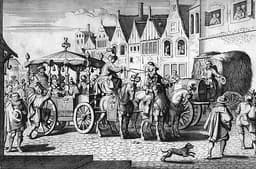
Henry IV of France
Emperor · Modern
63.7Total

Mai Idris Alooma
Emperor · Modern
63.0Total
Basic Information
Born
1553
1564
Died
1610
1596
Era
Modern
Modern
Nationality
France
Bornu Empire
Occupation
Emperor
Emperor
Civilization
Western
Other
Score Comparison
Military (10%)
70.0
67.5
Political (20%)
75.0
70.0
Influence (20%)
56.7
60.0
Legacy (20%)
55.0
50.0
Leadership (15%)
80.0
78.0
Strategy (15%)
55.0
65.4
TOTAL
63.7
63.0
Henry IV of France — Complete Timeline
1590 AD
Battle of IvryWar◆ Major
Henry IV led his forces to a decisive victory over the Catholic League at Ivry. This battle solidified his military reputation and paved the way for his eventual capture of Paris and the throne.
BattleCatholic LeagueWars of Religion
Impact: national
1593 AD
Conversion to CatholicismPolitical Action◆ Major
Henry IV converted from Protestantism to Catholicism, reportedly stating 'Paris is worth a mass.' This act secured his acceptance by the Catholic majority and enabled his coronation, ending the religious civil wars.
ConversionPolitical PragmatismCatholicism
Impact: national
1598 AD
Edict of NantesReform
Henry IV issued the Edict of Nantes, granting substantial religious tolerance to French Protestants (Huguenots). It allowed them freedom of worship in specified areas and access to public office, ending the French Wars of Religion.
Religious ToleranceHuguenotsWars of Religion
Impact: nationalprogressive
Sully's Economic ReformsReform◆ Major
Henry IV, with his minister Sully, implemented economic reforms including tax reduction, infrastructure projects (roads, canals), and agricultural improvements. These measures stabilized the French economy after decades of war.
Economic ReformInfrastructureSully
Impact: nationalconstructive
1610 AD
Assassination by François RavaillacPolitical Action◆ Major
Henry IV was stabbed to death in Paris by Catholic fanatic Fran
AssassinationRegencyReligious Conflict
Impact: nationaltragic
Mai Idris Alooma — Complete Timeline
1580 AD
Introduction of Firearms to BornuInvention
Mai Idris Alooma acquired firearms, including muskets and cannons, from the Ottoman Empire. He equipped his army with these weapons, giving Bornu a significant military advantage over its neighbors and transforming the empire's military capabilities.
Military TechnologyFirearmsOttoman Influence
Impact: regionalprogressive
1585 AD
Military Campaigns Against the SaoWar◆ Major
Mai Idris Alooma led a series of successful military campaigns against the Sao people, a rival civilization in the Lake Chad region. Using his new firearms, he defeated the Sao and expanded Bornu's territory and influence.
WarExpansionSao
Impact: regional
1590 AD
Pilgrimage to MeccaCultural◆ Major
Mai Idris Alooma performed the Hajj pilgrimage to Mecca, demonstrating his Islamic piety and strengthening Bornu's ties with the wider Muslim world. This event enhanced his prestige and legitimized his rule in the eyes of Islamic scholars.
PilgrimageIslamDiplomacy
Impact: regionalconstructive
1596 AD
Death of Mai Idris AloomaOther◆ Major
Mai Idris Alooma died after a reign of approximately 32 years. His death marked the end of the golden age of the Bornu Empire, as his successors were unable to maintain the military and administrative systems he had established.
DeathEnd of Golden Age
Impact: regionaltragic
Expert Analysis
Origins
Henry IV of France was born on December 13, 1553, in Pau, Kingdom of Navarre, to Antoine de Bourbon and Jeanne d'Albret. As a member of the Bourbon dynasty, he was raised as a Protestant and became the nominal leader of the Huguenot faction during the French Wars of Religion. His mother ensured he received a robust education in politics and warfare, preparing him for eventual rule.
Mai Idris Alooma was born around 1538 in the Bornu Empire (present-day northeastern Nigeria). He was the son of Mai Ali Gaji, a ruler who had restored Bornu's independence. Idris was raised in the royal court of Ngazargamu, where he received Islamic education and military training. His early exposure to trade routes connecting Bornu with the Ottoman Empire and North Africa shaped his later policies.
Rise to Power
Henry IV ascended to the French throne in 1589 after the assassination of Henry III, but his claim was contested by the Catholic League. His conversion to Catholicism in 1593, famously stating "Paris is worth a mass," secured his acceptance by the Catholic majority. The Battle of Ivry on March 14, 1590, where he defeated the Catholic League forces under Charles de Mayenne, was a key military victory. He finally entered Paris in 1594, and the Edict of Nantes in 1598 ended the religious wars, granting Huguenots substantial rights.
Mai Idris Alooma became mai of Bornu around 1571, inheriting a stable but militarily outdated kingdom. His rise was marked by diplomatic overtures to the Ottoman Empire, from whom he acquired firearms—muskets and cannons—and military advisors. This technological leap gave him a decisive advantage over rivals. His first major campaigns targeted the Sao people, whose fortified cities fell to his gunpowder weapons. By 1580, he had consolidated control over the Lake Chad region.
Leadership & Governance
Henry IV's leadership style was pragmatic and conciliatory. He prioritized national unity over religious orthodoxy, exemplified by the Edict of Nantes. With his minister Sully, he implemented economic reforms: reducing the taille (land tax), building roads and canals, and promoting agriculture. He also established the first French colonial ventures in Canada. His governance scored 75.0 in political acumen, reflecting his ability to balance factions.
Mai Idris Alooma was a military innovator and administrative centralizer. He organized a standing army equipped with firearms, creating a corps of musketeers and artillery units. He also reformed the tax system, replacing traditional levies with a more efficient tribute system tied to trade. His leadership score of 78.0 reflects his effectiveness in mobilizing resources. He strengthened Bornu's Islamic identity by building mosques and schools, and his pilgrimage to Mecca in 1583 enhanced his legitimacy.
Triumph & Tragedy
Henry IV's greatest triumph was the Edict of Nantes, which ended decades of civil war and established a precedent for religious tolerance in Europe. His economic policies revived France's prosperity. However, his assassination on May 14, 1610, by Catholic fanatic François Ravaillac was a tragedy that plunged France into regency under Marie de' Medici, leading to renewed instability. His failure to fully integrate Huguenots into the state left tensions unresolved.
Mai Idris Alooma's triumphs include the subjugation of the Sao and the expansion of Bornu's borders to their greatest extent. His introduction of firearms made Bornu a regional superpower. However, his death around 1603 left the empire dependent on continued Ottoman support; successors could not maintain the military advantage, and Bornu declined. The reliance on slave raids for revenue also sowed long-term instability.
Character & Destiny
Henry IV was known for his charm, pragmatism, and strategic patience. He converted to Catholicism not out of conviction but political necessity, showing a willingness to compromise. His decision to issue the Edict of Nantes reflected a long-term vision of national unity. However, his leniency toward former enemies earned him both loyalty and resentment, culminating in his assassination. Historians note his ability to forgive opponents, but this also made him vulnerable.
Mai Idris Alooma was a devout Muslim and an ambitious military modernizer. His character combined religious piety with ruthless pragmatism; he did not hesitate to use force against non-Muslims. His pilgrimage to Mecca demonstrated his faith, but his military campaigns were driven by expansionist goals. His reliance on firearms created a technological dependency that his successors could not sustain, leading to the empire's decline.
Legacy
Henry IV's legacy is profound: the Edict of Nantes influenced later concepts of religious tolerance and state secularism. His economic policies laid groundwork for French absolutism under Louis XIII and XIV. He is remembered as "Henry the Great" and the founder of the Bourbon dynasty's golden age. However, the revocation of the Edict by Louis XIV in 1685 shows the fragility of his achievements.
Mai Idris Alooma is celebrated as the greatest ruler of the Bornu Empire, remembered for introducing firearms and expanding the state. His reign is considered the empire's golden age. However, his legacy is limited to the Sahel region; his innovations did not spread beyond Bornu. The empire collapsed in the 19th century, and his impact is less recognized globally.
Conclusion
Henry IV of France had a greater impact than Mai Idris Alooma. His score of 63.7 total slightly edges Alooma's 63.0, but more importantly, his political and leadership scores (75.0 and 80.0) surpass Alooma's (70.0 and 78.0). The Edict of Nantes influenced European history by establishing a model for religious coexistence, while Alooma's military innovations, though effective, did not transform global warfare. Henry IV's legacy endures in modern concepts of tolerance and state-building, making his influence more lasting and widespread.
Rankings
🥇
Henry IV of FranceLeader
Mil: 70.0Pol: 75.0Inf: 56.7
63.7
🥈
Mai Idris Alooma
Mil: 67.5Pol: 70.0Inf: 60.0
63.0
+0.7 behind
How This Comparison Works
Algorithm
Each figure is scored on 6 dimensions (0—100 scale) based on structured historical data: Military (10%), Political (20%), Influence (20%), Legacy (20%), Leadership (15%), Strategy (15%). The weighted total produces the final ranking.
Data Sources
Scores are computed from structured sub-indicators in the database. Scale factors adjust for era (Ancient ×0.85, Modern ×1.0) and civilization size (Eastern ×1.05, Other ×0.80) to account for differences in population and military scale.
Maximum 3 Figures
Comparisons are limited to 2—3 figures to ensure readability and statistical meaningfulness.
Error Margins
±5 points per dimension — Sub-scores are derived from historical records with inherent uncertainty. Two figures within 5 points on a dimension should be considered roughly equivalent in that area.
Total Score Accuracy
±3 points overall — The weighted combination of 6 dimensions produces a total score with approximately ±3 points of uncertainty. Differences of less than 3 points are not statistically significant— the figures are effectively tied.
Known Limitations
- Historical records are incomplete and uneven across civilizations
- Figures from oral-tradition societies may be underrepresented
- Occupation labels can misclassify multi-role figures
- Scores measure capability and impact, not moral character
- Quantitative scoring is a comparison tool, not absolute truth
Capability Radar
Military (10%) — Battles & Warfare
Battles
65
65
Win Rate
70
70
Expansion
50
65
Political (20%) — Governance & Reform
Reform
85
80
Diplomacy
80
70
Economy
75
65
Influence (20%) — Cultural & Global Reach
Cultural
65
55
Global
60
45
Legacy (20%) — Historical Impact
Historical
75
60
Longevity
70
50
Leadership (15%) — Power & Stability
Tenure
70
75
Stability
65
70
Strategy (15%) — Tactics & Innovation
Strategy
75
70
Tactics
60
75
Reform
55
80
Similar Comparisons
Comments & Discussion
No comments yet. Be the first to share your thoughts!