Loading...
Christian IX of Denmark vs Henry IV of France
Henry IV of France leads by 5.9 pts · 2 figures compared
…
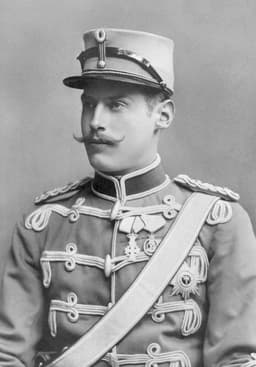
Christian IX of Denmark
Emperor · Modern
57.8Total
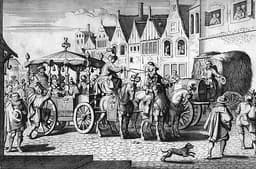
Henry IV of France
Emperor · Modern
63.7Total
Basic Information
Born
1818
1553
Died
1906
1610
Era
Modern
Modern
Nationality
Denmark
France
Occupation
Emperor
Emperor
Civilization
Western
Western
Score Comparison
Military (10%)
22.0
70.0
Political (20%)
68.0
75.0
Influence (20%)
61.0
56.7
Legacy (20%)
54.0
55.0
Leadership (15%)
72.0
80.0
Strategy (15%)
58.2
55.0
TOTAL
57.8
63.7
Christian IX of Denmark — Complete Timeline
1863 AD
Accession to the thronePolitical Action◆ Major
Christian IX became King of Denmark on November 15, 1863, after the death of King Frederick VII. His accession occurred during a period of political crisis over the Schleswig-Holstein question.
AccessionSuccession
Impact: national
Marriage alliances of his childrenPolitical Action◆ Major
Christian IX's children married into European royal families: Alexandra married Edward VII of the UK, Dagmar married Tsar Alexander III of Russia, and George became King of Greece. This earned him the nickname 'Father-in-law of Europe'.
Marriage AlliancesRoyal DiplomacyDynastic Strategy
Impact: globalconstructive
1864 AD
Second Schleswig WarWar◆ Major
Denmark under Christian IX fought the Second Schleswig War against Prussia and Austria. The war ended in Danish defeat, leading to the loss of Schleswig, Holstein, and Lauenburg, permanently reducing Danish territory.
WarDefeatTerritorial Loss
Impact: regionaltragic
1866 AD
Signing of the Danish Constitution of 1866Reform
Christian IX signed a revised constitution in 1866 that reorganized the Danish parliament (Rigsdag) and strengthened the powers of the monarchy and the upper house. This followed the political upheaval after the 1864 war.
ConstitutionPolitical Reform
Impact: national
1901 AD
Establishment of the Danish monarchy as a constitutional monarchyReform◆ Major
In 1901, Christian IX accepted the principle of parliamentary rule by appointing a government based on the majority in the Folketing (lower house). This effectively established constitutional monarchy in Denmark, limiting royal power.
Constitutional ReformParliamentary System
Impact: nationalconstructive
Henry IV of France — Complete Timeline
1590 AD
Battle of IvryWar◆ Major
Henry IV led his forces to a decisive victory over the Catholic League at Ivry. This battle solidified his military reputation and paved the way for his eventual capture of Paris and the throne.
BattleCatholic LeagueWars of Religion
Impact: national
1593 AD
Conversion to CatholicismPolitical Action◆ Major
Henry IV converted from Protestantism to Catholicism, reportedly stating 'Paris is worth a mass.' This act secured his acceptance by the Catholic majority and enabled his coronation, ending the religious civil wars.
ConversionPolitical PragmatismCatholicism
Impact: national
1598 AD
Edict of NantesReform
Henry IV issued the Edict of Nantes, granting substantial religious tolerance to French Protestants (Huguenots). It allowed them freedom of worship in specified areas and access to public office, ending the French Wars of Religion.
Religious ToleranceHuguenotsWars of Religion
Impact: nationalprogressive
Sully's Economic ReformsReform◆ Major
Henry IV, with his minister Sully, implemented economic reforms including tax reduction, infrastructure projects (roads, canals), and agricultural improvements. These measures stabilized the French economy after decades of war.
Economic ReformInfrastructureSully
Impact: nationalconstructive
1610 AD
Assassination by François RavaillacPolitical Action◆ Major
Henry IV was stabbed to death in Paris by Catholic fanatic Fran
AssassinationRegencyReligious Conflict
Impact: nationaltragic
Expert Analysis
Origins
Christian IX was born on April 8, 1818, in Gottorp, Duchy of Schleswig, to Prince Friedrich Wilhelm of Schleswig-Holstein-Sonderburg-Beck and Princess Louise Caroline of Hesse-Kassel. His family was a minor princely line with no expectation of ruling Denmark. He grew up in relative obscurity, receiving a military education but lacking the polish of major royal courts. In 1842, he married Princess Louise of Hesse-Kassel, a niece of King Christian VIII, which later positioned him as a candidate for the Danish throne.
Henry IV was born on December 13, 1553, in Pau, Kingdom of Navarre, to Antoine de Bourbon, Duke of Vendôme, and Jeanne d'Albret, Queen of Navarre. He was raised as a Protestant (Huguenot) by his mother, who instilled in him a strong faith and administrative skills. His education emphasized military training and statecraft, preparing him for the turbulent Wars of Religion. His father's death in 1562 made him a key figure in the Huguenot cause, and he inherited the throne of Navarre in 1572.
Rise to Power
Christian IX's rise was accidental. In 1852, the London Protocol recognized him as heir to the Danish throne after the extinction of the main line, due to his wife's royal lineage. He became king on November 15, 1863, upon Frederick VII's death. His accession immediately triggered the Second Schleswig War (1864) against Prussia and Austria, as he signed the November Constitution that incorporated Schleswig into Denmark, violating international agreements. Denmark lost the war and ceded Schleswig, Holstein, and Lauenburg, a disaster that shaped his reign.
Henry IV's rise was through military and political maneuvering. After the St. Bartholomew's Day Massacre (1572), he converted to Catholicism to save his life but later reverted to Protestantism. He became the leader of the Huguenot forces, winning the Battle of Coutras (1587). In 1589, he inherited the French throne upon Henry III's assassination, but the Catholic League opposed him. He defeated the League at the Battle of Ivry (1590) and besieged Paris. To secure the crown, he converted to Catholicism in 1593 ("Paris is worth a mass"), and was crowned in 1594. He pacified the realm through the Edict of Nantes (1598) and the Treaty of Vervins (1598) with Spain.
Leadership & Governance
Christian IX governed as a constitutional monarch, though initially he resisted parliamentary sovereignty. He accepted the principle of parliamentary rule in 1901 (the "Systemskifte"), appointing a cabinet from the majority in the Folketing. This established Danish democracy, as he scored 72.0 in Leadership. However, his political score of 68.0 reflects his passive role: he did not initiate reforms but acquiesced. His foreign policy was disastrous, leading to territorial loss, but domestic stability improved over time.
Henry IV was an active, hands-on ruler with a Leadership score of 80.0. He reconstructed France after decades of civil war, focusing on economic recovery under his minister Sully. He reduced taxes, built roads and canals (e.g., Canal de Briare), and promoted agriculture and commerce. His Edict of Nantes granted Huguenots significant rights, ending religious conflict. He centralized royal authority while respecting local privileges, achieving a Political score of 75.0. His military score of 70.0 reflects his battlefield successes.
Triumph & Tragedy
Christian IX's greatest triumph was his family's marriage alliances: his daughter Alexandra married Edward VII of the UK, Dagmar married Tsar Alexander III of Russia, and his son became King George I of Greece. This earned him the nickname "Father-in-law of Europe" and boosted Denmark's influence (Influence score 61.0). His tragedy was the loss of Schleswig-Holstein in 1864, which diminished Denmark's territory and prestige. He also failed to modernize the army or avoid war.
Henry IV's triumph was ending the Wars of Religion and restoring unity. The Edict of Nantes allowed coexistence, and his economic reforms revived France. His tragedy was his assassination on May 14, 1610, by François Ravaillac, a Catholic fanatic. This plunged France into a regency and renewed instability, though his legacy endured. His Legacy score of 55.0 reflects his lasting impact.
Character & Destiny
Christian IX was cautious, diplomatic, and family-oriented. He prioritized his children's marriages over aggressive statecraft. His character led to a peaceful domestic reign but a weak foreign policy. He accepted constitutional limits, which shaped Denmark's democratic path.
Henry IV was pragmatic, charismatic, and decisive. His conversion and willingness to compromise showed realism. His military courage and political acumen united France. His assassination cut short his reforms but cemented his image as a good king.
Legacy
Christian IX's legacy is the Danish constitutional monarchy and his vast royal progeny. His descendants sit on the thrones of Denmark, Norway, UK, Spain, Greece, and others. He scored 54.0 in Legacy, with influence through bloodlines rather than policy. The 1901 parliamentary system remains the foundation of Danish governance.
Henry IV's legacy is the Bourbon dynasty, the Edict of Nantes, and economic recovery. He restored France as a European power. The Edict of Nantes lasted until 1685, and his reforms laid groundwork for absolutism. He scored 55.0 in Legacy, slightly higher.
Conclusion
Henry IV of France had a greater impact than Christian IX of Denmark. His total score of 63.7 surpasses Christian IX's 57.8. Henry IV actively shaped his nation's destiny—unifying France, ending religious wars, and rebuilding the economy. Christian IX, while influential through family ties, presided over a humiliating defeat and only reluctantly accepted democracy. Henry IV's Leadership (80.0 vs 72.0) and Political (75.0 vs 68.0) scores reflect his decisive role. Christian IX's Influence (61.0) is notable but came through others' actions. Thus, Henry IV is the more consequential figure.
Rankings
🥇
Henry IV of FranceLeader
Mil: 70.0Pol: 75.0Inf: 56.7
63.7
🥈
Christian IX of Denmark
Mil: 22.0Pol: 68.0Inf: 61.0
57.8
+5.9 behind
How This Comparison Works
Algorithm
Each figure is scored on 6 dimensions (0—100 scale) based on structured historical data: Military (10%), Political (20%), Influence (20%), Legacy (20%), Leadership (15%), Strategy (15%). The weighted total produces the final ranking.
Data Sources
Scores are computed from structured sub-indicators in the database. Scale factors adjust for era (Ancient ×0.85, Modern ×1.0) and civilization size (Eastern ×1.05, Other ×0.80) to account for differences in population and military scale.
Maximum 3 Figures
Comparisons are limited to 2—3 figures to ensure readability and statistical meaningfulness.
Error Margins
±5 points per dimension — Sub-scores are derived from historical records with inherent uncertainty. Two figures within 5 points on a dimension should be considered roughly equivalent in that area.
Total Score Accuracy
±3 points overall — The weighted combination of 6 dimensions produces a total score with approximately ±3 points of uncertainty. Differences of less than 3 points are not statistically significant— the figures are effectively tied.
Known Limitations
- Historical records are incomplete and uneven across civilizations
- Figures from oral-tradition societies may be underrepresented
- Occupation labels can misclassify multi-role figures
- Scores measure capability and impact, not moral character
- Quantitative scoring is a comparison tool, not absolute truth
Capability Radar
Military (10%) — Battles & Warfare
Battles
35
65
Win Rate
41
70
Expansion
40
50
Political (20%) — Governance & Reform
Reform
30
85
Diplomacy
75
80
Economy
40
75
Influence (20%) — Cultural & Global Reach
Cultural
40
65
Global
55
60
Legacy (20%) — Historical Impact
Historical
60
75
Longevity
55
70
Leadership (15%) — Power & Stability
Tenure
60
70
Stability
65
65
Strategy (15%) — Tactics & Innovation
Strategy
43
75
Tactics
47
60
Reform
53
55
Similar Comparisons
Comments & Discussion
No comments yet. Be the first to share your thoughts!