Loading...
This comparison has not been analyzed yet.
One-time AI generation (~1 minute). Scores and timeline are already available below.
Heo Jeong vs Samia Suluhu
Samia Suluhu leads by 13.7 pts · 2 figures compared
…

Heo Jeong
Politician · Modern
38.7Total
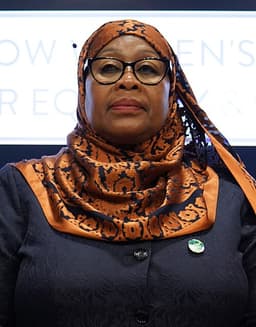
Samia Suluhu
Politician · Modern
52.4Total
Basic Information
Born
1896
1960
Died
1988
—
Era
Modern
Modern
Nationality
Korea
Tanzania
Occupation
Politician
Politician
Civilization
Eastern
Other
Score Comparison
Military (10%)
16.2
50.0
Political (20%)
35.1
45.0
Influence (20%)
48.6
55.0
Legacy (20%)
40.0
52.0
Leadership (15%)
45.0
66.0
Strategy (15%)
28.9
39.7
TOTAL
38.7
52.4
Heo Jeong — Complete Timeline
1951 AD
Service as Prime Minister under Syngman RheePolitical Action◆ Major
Heo Jeong served as Prime Minister of South Korea from 1951 to 1952 during the Korean War. He managed wartime administration and reconstruction efforts, though his tenure was marked by political instability.
Korean WarGovernmentAdministration
Impact: national
1953 AD
Role in the Korean War Armistice NegotiationsPolitical Action◆ Major
Heo Jeong participated in the armistice negotiations that ended the Korean War, serving as a senior advisor to the South Korean government. He advocated for South Korean interests during the talks.
Korean WarArmisticeDiplomacy
Impact: national
1960 AD
Appointment as Acting President after April RevolutionPolitical Action◆ Major
Following the April Revolution that ousted President Syngman Rhee, Heo Jeong served as acting president of South Korea from April to August 1960. He oversaw the transition to the Second Republic and the drafting of a new constitution.
April RevolutionGovernment TransitionConstitution
Impact: national
Resignation from Acting PresidencyPolitical Action
Heo Jeong resigned as acting president after the election of Yun Bo-seon as president and Chang Myon as prime minister. He stepped down peacefully, allowing the new government to take office.
Government TransitionResignationDemocracy
Impact: national
Samia Suluhu — Complete Timeline
2021 AD
Became First Female President of TanzaniaPolitical Action◆ Major
Suluhu was sworn in as President of Tanzania following the death of President John Magufuli. She became the first female president in Tanzania's history and the first female head of state in East Africa.
PresidencyGender EqualityFirst
Impact: regionalprogressive
Reversed Magufuli's COVID-19 DenialismPolitical Action◆ Major
Suluhu reversed her predecessor's policy of denying COVID-19 and rejecting vaccines. She formed a national COVID-19 task force, encouraged mask-wearing, and accepted vaccine donations, aligning Tanzania with global health protocols.
COVID-19Public HealthPolicy Change
Impact: nationalconstructive
Initiated Political Reconciliation EffortsPolitical Action◆ Major
Suluhu reached out to opposition leaders and invited them for dialogue, signaling a shift from Magufuli's authoritarian approach. She lifted bans on some opposition newspapers and allowed political rallies, easing political tensions.
ReconciliationDemocracyPolitical Freedom
Impact: nationalprogressive
Appointed First Female Chief JusticePolitical Action
Suluhu appointed Justice Ibrahim Juma as Chief Justice, but more notably, she appointed several women to high-ranking positions, including the first female Attorney General and the first female head of the civil service.
AppointmentsGender EqualityJudiciary
Impact: nationalprogressive
This comparison has not been analyzed yet.
One-time AI generation (~1 minute). Scores and timeline are already available below.
Rankings
🥇
Samia SuluhuLeader
Mil: 50.0Pol: 45.0Inf: 55.0
52.4
🥈
Heo Jeong
Mil: 16.2Pol: 35.1Inf: 48.6
38.7
+13.7 behind
How This Comparison Works
Algorithm
Each figure is scored on 6 dimensions (0—100 scale) based on structured historical data: Military (10%), Political (20%), Influence (20%), Legacy (20%), Leadership (15%), Strategy (15%). The weighted total produces the final ranking.
Data Sources
Scores are computed from structured sub-indicators in the database. Scale factors adjust for era (Ancient ×0.85, Modern ×1.0) and civilization size (Eastern ×1.05, Other ×0.80) to account for differences in population and military scale.
Maximum 3 Figures
Comparisons are limited to 2—3 figures to ensure readability and statistical meaningfulness.
Error Margins
±5 points per dimension — Sub-scores are derived from historical records with inherent uncertainty. Two figures within 5 points on a dimension should be considered roughly equivalent in that area.
Total Score Accuracy
±3 points overall — The weighted combination of 6 dimensions produces a total score with approximately ±3 points of uncertainty. Differences of less than 3 points are not statistically significant— the figures are effectively tied.
Known Limitations
- Historical records are incomplete and uneven across civilizations
- Figures from oral-tradition societies may be underrepresented
- Occupation labels can misclassify multi-role figures
- Scores measure capability and impact, not moral character
- Quantitative scoring is a comparison tool, not absolute truth
Capability Radar
Military (10%) — Battles & Warfare
Battles
15
24
Win Rate
16
25
Expansion
18
30
Political (20%) — Governance & Reform
Reform
30
60
Diplomacy
25
65
Economy
20
55
Influence (20%) — Cultural & Global Reach
Cultural
10
50
Global
10
55
Legacy (20%) — Historical Impact
Historical
20
55
Longevity
10
45
Leadership (15%) — Power & Stability
Tenure
20
55
Stability
15
60
Strategy (15%) — Tactics & Innovation
Strategy
25
33
Tactics
27
36
Reform
32
35
Similar Comparisons
Comments & Discussion
No comments yet. Be the first to share your thoughts!