Loading...
Heraclius II of Georgia vs King Faisal of Saudi Arabia
King Faisal of Saudi Arabia leads by 0.1 pts · 2 figures compared
…
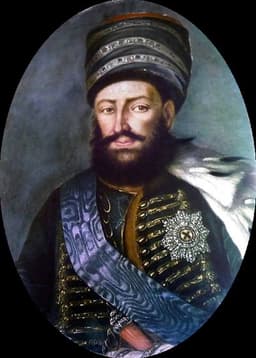
Heraclius II of Georgia
Emperor · Modern
58.5Total

King Faisal of Saudi Arabia
Emperor · Modern
58.6Total
Basic Information
Born
1720
1906
Died
1798
1975
Era
Modern
Modern
Nationality
Georgia
Saudi Arabia
Occupation
Emperor
Emperor
Civilization
Western
Middle Eastern
Score Comparison
Military (10%)
47.5
14.9
Political (20%)
60.0
70.3
Influence (20%)
60.0
72.0
Legacy (20%)
52.0
54.0
Leadership (15%)
72.0
80.0
Strategy (15%)
60.0
30.3
TOTAL
58.5
58.6
Heraclius II of Georgia — Complete Timeline
1762 AD
Reforms in Kartli-KakhetiReform◆ Major
Heraclius II centralized administration, modernized the army, and promoted agriculture and trade. These reforms strengthened his kingdom but could not prevent eventual Russian annexation.
ReformGeorgiaAdministration
Impact: nationalconstructive
1783 AD
Treaty of GeorgievskPolitical Action
Heraclius II signed a treaty with the Russian Empire, placing the Kingdom of Kartli-Kakheti under Russian protection while retaining internal autonomy. This aimed to defend against Persian and Ottoman threats.
TreatyRussiaGeorgia
Impact: regional
1795 AD
Battle of KrtsanisiWar◆ Major
Heraclius II's forces were defeated by the Persian army under Agha Mohammad Khan Qajar at Krtsanisi. The battle resulted in the sack of Tbilisi and massive destruction, weakening Georgia.
BattlePersiaGeorgia
Impact: nationaltragic
King Faisal of Saudi Arabia — Complete Timeline
1960 AD
Modernization of Saudi educationReform◆ Major
King Faisal expanded education for both boys and girls, building schools and universities. He also sent students abroad for higher education, modernizing the Saudi workforce while maintaining conservative Islamic values.
EducationModernizationSaudi Arabia
Impact: nationalconstructive
1962 AD
Abolition of slavery in Saudi ArabiaReform◆ Major
King Faisal issued a decree abolishing slavery in Saudi Arabia. The move was part of his modernization efforts and was influenced by international pressure, though enforcement was gradual and faced resistance from traditional elites.
Human RightsReformSlavery
Impact: nationalconstructive
1973 AD
1973 oil embargoPolitical Action
King Faisal led OPEC's oil embargo against the US and other allies of Israel during the Yom Kippur War. The embargo caused a global energy crisis, quadrupling oil prices and demonstrating the political power of oil-producing nations.
OilOPECArab-Israeli Conflict
Impact: global
1975 AD
Assassination of King FaisalPolitical Action◆ Major
King Faisal was assassinated by his nephew, Prince Faisal bin Musaid, at a royal audience. The assassin was later executed. Faisal's death shocked the world and led to the succession of his brother, King Khalid.
AssassinationRoyal FamilySuccession
Impact: regionaltragic
Expert Analysis
Origins
Heraclius II was born in 1720 in Telavi, Georgia, into the Bagrationi dynasty, one of the oldest Christian royal houses. His father, Teimuraz II, was king of Kakheti, and Heraclius grew up amid constant warfare between the Ottoman and Persian empires. He was educated in military tactics and governance, and early on participated in campaigns against Persian incursions. His formative experiences were shaped by Georgia's fragmented feudal state and the need for a unifying leader.
King Faisal bin Abdulaziz Al Saud was born in 1906 in Riyadh, then a small desert town under the control of his father, Abdulaziz Ibn Saud, who founded modern Saudi Arabia. Faisal grew up in the royal court, learning diplomacy and statecraft. He accompanied his father on military campaigns to unify the Arabian Peninsula and was appointed as viceroy of Hejaz in 1926 at age 20. His early exposure to international relations came from leading Saudi delegations abroad, including to the United Nations in 1945.
Rise to Power
Heraclius II became king of Kakheti in 1744 alongside his father, and after Teimuraz's death in 1762, he inherited the throne of Kartli, uniting eastern Georgia. His key turning point was the Treaty of Georgievsk in 1783, where he placed his kingdom under Russian protection to counter Persian threats. This agreement secured Russian military support but also ceded foreign policy control. Heraclius's allies were the Russian Empire, while his opponents included the Persian Qajar dynasty and local rebellious nobles.
Faisal's rise was more complex. He served as foreign minister and prime minister under his father and later his brother King Saud. In 1964, amid a power struggle with Saud over financial mismanagement and political paralysis, the royal family and religious establishment deposed Saud and appointed Faisal as king. His ascension marked a shift toward centralized governance and modernization. Faisal's allies included the conservative ulema and technocrats; his opponents were the free-spending princes and socialist movements in the Arab world.
Leadership & Governance
Heraclius II implemented reforms to centralize administration, modernize the army, and boost agriculture and trade. He established a standing army, introduced new crops, and promoted mining. However, his reforms were constrained by limited resources and the persistent threat of invasion. For instance, he attempted to create a unified Georgian state but failed to overcome feudal fragmentation. His governance was a mix of autocracy and reliance on noble support.
King Faisal's governance was transformative. He abolished slavery in 1962, expanded education for both genders, and built modern infrastructure. His 1973 oil embargo demonstrated strategic use of oil as a political weapon, quadrupling oil prices and shifting global economic power. Faisal's leadership style was pragmatic and religiously grounded; he consulted the ulema but pursued modernization. His scores reflect this: Leadership 80.0, Political 70.3, Strategy 30.3. The low strategy score may be due to the embargo's long-term consequences, such as reduced Western dependence on OPEC oil.
Triumph & Tragedy
Heraclius II's greatest success was uniting eastern Georgia and securing Russian protection, which preserved Georgian autonomy for a time. His greatest failure was the Battle of Krtsanisi in 1795, where his outnumbered forces were crushed by the Persian army, leading to the sack of Tbilisi and the death of thousands. The treaty with Russia ultimately failed to prevent annexation: after his death in 1798, Russia abolished the kingdom in 1801.
Faisal's triumph was the oil embargo, which elevated Saudi Arabia's global influence and funded rapid modernization. He also successfully modernized education and infrastructure. His tragedy was his assassination in 1975 by his nephew, Prince Faisal bin Musaid, a mentally unstable relative. The assassination shocked the nation and highlighted internal family tensions. Faisal's death ended his reform momentum, though his policies largely continued.
Character & Destiny
Heraclius II was determined and reform-minded, but his reliance on Russia proved his undoing. He underestimated Persian resolve and overestimated Russian commitment. His character—pious, strategic, but ultimately a product of a feudal system—shaped a destiny of short-lived independence. Historians note his military tactical skills (Military 47.5) but recognize his limited ability to overcome geopolitical realities.
Faisal was austere, disciplined, and visionary. He combined religious conservatism with modernizing zeal, a balance that stabilized Saudi Arabia during turbulent times. His assassination was a tragic consequence of a family feud and mental illness. His character—decisive but cautious—allowed him to navigate the Cold War, but his low Strategy score (30.3) suggests his actions sometimes had unintended consequences, like the oil embargo's long-term effect of spurring alternative energy.
Legacy
Heraclius II is remembered as the last great Georgian king. His efforts to modernize and unite Georgia laid groundwork for later national identity. The Treaty of Georgievsk remains a symbol of Georgian-Russian relations. His legacy score is 52.0, reflecting his regional importance but limited global impact.
Faisal's legacy is vast. He transformed Saudi Arabia from a poor desert kingdom into a wealthy oil state with modern institutions. The abolition of slavery and expansion of education had lasting social effects. The 1973 oil embargo reshaped global economics and politics, making OPEC a powerful cartel. His legacy score is 54.0, slightly higher than Heraclius's, and his influence score (72.0) far exceeds Heraclius's (60.0).
Conclusion
While both leaders modernized their realms under severe constraints, King Faisal had greater global impact. Heraclius II scored 58.5 total, Faisal 58.6, a margin of 0.1. But Faisal's influence on world history—the oil embargo, modernization of a key US ally, abolition of slavery—outweighs Heraclius's regional achievements. Heraclius's failure to secure lasting independence and his kingdom's annexation diminish his legacy. Faisal's reforms survived and his oil strategy changed global power dynamics. Thus, King Faisal emerges as the more consequential figure.
Rankings
🥇
King Faisal of Saudi ArabiaLeader
Mil: 14.9Pol: 70.3Inf: 72.0
58.6
🥈
Heraclius II of Georgia
Mil: 47.5Pol: 60.0Inf: 60.0
58.5
+0.1 behind
How This Comparison Works
Algorithm
Each figure is scored on 6 dimensions (0—100 scale) based on structured historical data: Military (10%), Political (20%), Influence (20%), Legacy (20%), Leadership (15%), Strategy (15%). The weighted total produces the final ranking.
Data Sources
Scores are computed from structured sub-indicators in the database. Scale factors adjust for era (Ancient ×0.85, Modern ×1.0) and civilization size (Eastern ×1.05, Other ×0.80) to account for differences in population and military scale.
Maximum 3 Figures
Comparisons are limited to 2—3 figures to ensure readability and statistical meaningfulness.
Error Margins
±5 points per dimension — Sub-scores are derived from historical records with inherent uncertainty. Two figures within 5 points on a dimension should be considered roughly equivalent in that area.
Total Score Accuracy
±3 points overall — The weighted combination of 6 dimensions produces a total score with approximately ±3 points of uncertainty. Differences of less than 3 points are not statistically significant— the figures are effectively tied.
Known Limitations
- Historical records are incomplete and uneven across civilizations
- Figures from oral-tradition societies may be underrepresented
- Occupation labels can misclassify multi-role figures
- Scores measure capability and impact, not moral character
- Quantitative scoring is a comparison tool, not absolute truth
Capability Radar
Military (10%) — Battles & Warfare
Battles
55
10
Win Rate
60
10
Expansion
40
10
Political (20%) — Governance & Reform
Reform
60
75
Diplomacy
70
85
Economy
50
80
Influence (20%) — Cultural & Global Reach
Cultural
55
60
Global
35
75
Legacy (20%) — Historical Impact
Historical
60
70
Longevity
50
55
Leadership (15%) — Power & Stability
Tenure
65
70
Stability
45
65
Strategy (15%) — Tactics & Innovation
Strategy
55
15
Tactics
50
10
Reform
45
30
Similar Comparisons
Comments & Discussion
No comments yet. Be the first to share your thoughts!