Loading...
Heraclius II of Georgia vs Napoleon Bonaparte
Napoleon Bonaparte leads by 12.4 pts · 2 figures compared
…
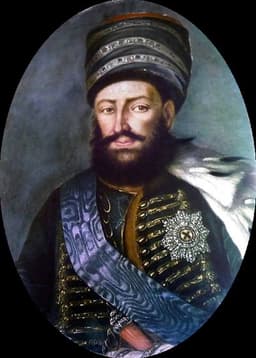
Heraclius II of Georgia
Emperor · Modern
58.5Total

Napoleon Bonaparte
General · Modern
70.9Total
Basic Information
Born
1720
1769
Died
1798
1821
Era
Modern
Modern
Nationality
Georgia
France
Occupation
Emperor
General
Civilization
Western
Western
Score Comparison
Military (10%)
47.5
94.0
Political (20%)
60.0
72.0
Influence (20%)
60.0
40.0
Legacy (20%)
52.0
80.0
Leadership (15%)
72.0
78.0
Strategy (15%)
60.0
90.0
TOTAL
58.5
70.9
Heraclius II of Georgia — Complete Timeline
1762 AD
Reforms in Kartli-KakhetiReform◆ Major
Heraclius II centralized administration, modernized the army, and promoted agriculture and trade. These reforms strengthened his kingdom but could not prevent eventual Russian annexation.
ReformGeorgiaAdministration
Impact: nationalconstructive
1783 AD
Treaty of GeorgievskPolitical Action
Heraclius II signed a treaty with the Russian Empire, placing the Kingdom of Kartli-Kakheti under Russian protection while retaining internal autonomy. This aimed to defend against Persian and Ottoman threats.
TreatyRussiaGeorgia
Impact: regional
1795 AD
Battle of KrtsanisiWar◆ Major
Heraclius II's forces were defeated by the Persian army under Agha Mohammad Khan Qajar at Krtsanisi. The battle resulted in the sack of Tbilisi and massive destruction, weakening Georgia.
BattlePersiaGeorgia
Impact: nationaltragic
Napoleon Bonaparte — Complete Timeline
1799 AD
Coup of 18 BrumaireOther◆ Major
Napoleon Bonaparte, with support from his brother Lucien and key political figures, overthrew the Directory in a bloodless coup. He established the Consulate with himself as First Consul, effectively becoming the ruler of France. This event ended the French Revolution's most unstable period.
French RevolutionCoupRise to Power
Impact: regional
1804 AD
Promulgation of the Napoleonic CodeOther◆ Major
Napoleon enacted the Civil Code of the French, known as the Napoleonic Code, a comprehensive set of laws that replaced the fragmented feudal legal systems. The code established legal equality, protected property rights, and secularized law. It became the basis for legal systems in many European and world countries.
Legal ReformNapoleonic CodeCivil Law
Impact: globalconstructive
1805 AD
Battle of AusterlitzWar◆ Major
Napoleon's Grande Arm
Napoleonic WarsBattleDecisive Victory
Impact: global
1812 AD
Invasion of RussiaWar◆ Major
Napoleon led the Grande Arm
Napoleonic WarsInvasionDisaster
Impact: globaldestructive
1815 AD
Battle of WaterlooWar◆ Major
Napoleon's French army was defeated by the combined forces of the Duke of Wellington's Anglo-Allied army and Gebhard Leberecht von Bl
Napoleonic WarsBattleFinal Defeat
Impact: globaldestructive
Expert Analysis
heraclius-ii-of-georgia-vs-napoleon-bonaparte
# The Emperor and the King: Two Paths Through the Storm of History
On a crisp morning in June 1815, Napoleon Bonaparte stood on a muddy ridge near Waterloo, watching the red-coated ranks of the Duke of Wellington's army form across the valley. Twenty years earlier, almost to the day, another monarch had faced his own fatal battlefield. In September 1795, the elderly King Heraclius II of Georgia, then seventy-five years old, had ridden out with his outnumbered army to meet the Persian forces of Agha Mohammad Khan Qajar on the plain of Krtsanisi. Both men would lose everything on those fields. But while Napoleon's defeat would echo through every history book in the Western world, Heraclius's tragedy would be remembered only by a small nation clinging to the edge of the Caucasus. Why did one man reshape an entire continent while the other could not even preserve his own kingdom? The answer lies not merely in their talents, but in the worlds that shaped them.
Origins
Napoleon was born in 1769 on the island of Corsica, a Mediterranean backwater that had only recently become French. His family belonged to the minor nobility, poor enough to feel every slight but proud enough to dream of greatness. He was a foreigner in his own country, speaking French with an Italian accent that aristocrats mocked. This outsider's hunger would drive him relentlessly.
Heraclius II, born in 1720, inherited a very different burden. He was a Bagrationi, the ancient royal dynasty of Georgia that traced its lineage back to King David of Israel. But by the time of his birth, Georgia had been shattered for centuries—divided between Ottoman and Persian empires, its kingdoms reduced to vassal states. Heraclius grew up not dreaming of conquest, but of survival. His father, Teimuraz II, spent years as a hostage in Persian courts. The young prince learned early that a small kingdom's only weapon was patience.
Rise to Power
Napoleon's ascent was a masterpiece of opportunism. The French Revolution had destroyed the old order, and in the chaos, talent mattered more than birth. At twenty-four, he cleared the streets of Paris with a "whiff of grapeshot" during the royalist uprising of 1795. At twenty-six, he led a ragged army across the Alps into Italy and defeated the Austrians in a campaign that still dazzles military historians. Every step was a gamble, and every gamble paid off.
Heraclius came to power more conventionally, but no less dramatically. He co-ruled with his father from 1744, then became sole king of Kartli-Kakheti in 1762. His path was not one of conquering new lands but of restoring what had been lost. In 1762, he began a series of reforms—centralizing the administration, modernizing the army with European-style training, and encouraging agriculture and trade. These were the quiet works of a man who understood that his kingdom had no margin for error. While Napoleon gambled everything on victory, Heraclius gambled everything on survival.
Leadership & Governance
Napoleon ruled through sheer force of will. He was a military genius whose strategic vision—scoring 93 out of 100 in modern assessments—allowed him to move armies like pieces on a chessboard. He understood that in war, speed and concentration could defeat numbers. But he also understood that victory required more than battles. The Napoleonic Code, his legal reform, swept away feudal privileges and established principles of meritocracy that influenced legal systems across Europe. He built roads, standardized education, and created a centralized state that could mobilize the resources of an entire continent.
Heraclius governed with a different wisdom—the wisdom of the cornered. His military score of 62.7 reflects the reality that he could never match Napoleon's battlefield brilliance. But his political score of 71.5 reveals a king who understood that diplomacy was his only real weapon. He played Persia against the Ottoman Empire, negotiated with Russia, and tried to build alliances among the fractured Caucasian kingdoms. His reforms in Kartli-Kakheti were not about glory but about creating a state strong enough to survive the next invasion.
The critical difference lay in their understanding of power. Napoleon believed power came from within—from the strength of his armies and the brilliance of his plans. Heraclius understood that for a small nation, power came from without—from the alliances one could make and the enemies one could avoid.
Triumph & Tragedy
Napoleon's greatest moment came in 1805 at Austerlitz, where he destroyed the combined armies of Austria and Russia in a single day. The sun rose over the battlefield, and by evening, he had redrawn the map of Europe. But his tragedy was that he could not stop. He invaded Russia in 1812, lost his Grand Army in the snow, and was exiled to Elba. He returned, raised another army, and lost again at Waterloo in 1815. He died in exile on Saint Helena in 1821, a prisoner of the British, his empire reduced to memory.
Heraclius's greatest triumph was the Treaty of Georgievsk in 1783, which placed his kingdom under Russian protection while preserving Georgian sovereignty. For a moment, it seemed he had found the shield his people needed. But the tragedy came twelve years later. When Persia invaded in 1795, Russia sent no help. At the Battle of Krtsanisi, Heraclius, then seventy-five, led his outnumbered army against the Persian forces. They were slaughtered. The king was captured and forced to watch as Persian soldiers sacked his capital, Tbilisi. He died three years later in 1798, his kingdom broken.
Character & Destiny
Napoleon was driven by an insatiable ambition. "I am not a man," he once said, "I am a thing—a thing that must be used to its full potential." He could not stop because he could not imagine stopping. His personality—brilliant, arrogant, impatient—shaped every decision. He trusted his own genius above all else, and that trust ultimately destroyed him.
Heraclius was driven by a different force: duty. He was a king of a dying kingdom, and he knew it. His decisions were cautious because he understood the stakes. When he signed the Treaty of Georgievsk, he was not seeking glory; he was seeking a future for his people. When he rode into battle at Krtsanisi, he was not seeking victory; he was seeking an honorable death. His personality—patient, pragmatic, fatalistic—allowed him to preserve his kingdom for decades, but it could not save it from the forces arrayed against it.
Legacy
Napoleon's legacy is written across Europe. The Napoleonic Code, the modern army staff system, the very idea of a meritocratic state—these are his monuments. He is remembered as a genius who conquered and a tyrant who fell. His scores—Military 94, Influence 82, Legacy 78—reflect a man who changed the world, for better and for worse.
Heraclius's legacy is smaller but no less profound. He is remembered in Georgia as the last great king, the one who fought to preserve a nation that would not become independent again until 1991. His scores—Military 62.7, Influence 72.5, Legacy 68.8—reflect a man who could not change the world but who refused to let the world erase his people.
Conclusion
Standing at the end of their lives, both men might have asked the same question: Was it worth it? Napoleon died alone on a remote island, his empire in ruins, his name cursed across Europe. Heraclius died in a broken kingdom, his capital sacked, his people enslaved. But history judges them differently. Napoleon's story is one of ambition that exceeded its limits; Heraclius's is one of duty that exceeded its resources. One man tried to conquer the world and failed; the other tried to save his world and failed. Yet in that failure, Heraclius achieved something Napoleon never could: he gave his people a story of resistance that would outlast every empire. Sometimes, the greatest victory is not in winning—but in refusing to surrender.
Rankings
🥇
Napoleon BonaparteLeader
Mil: 94.0Pol: 72.0Inf: 40.0
70.9
🥈
Heraclius II of Georgia
Mil: 47.5Pol: 60.0Inf: 60.0
58.5
+12.4 behind
How This Comparison Works
Algorithm
Each figure is scored on 6 dimensions (0—100 scale) based on structured historical data: Military (10%), Political (20%), Influence (20%), Legacy (20%), Leadership (15%), Strategy (15%). The weighted total produces the final ranking.
Data Sources
Scores are computed from structured sub-indicators in the database. Scale factors adjust for era (Ancient ×0.85, Modern ×1.0) and civilization size (Eastern ×1.05, Other ×0.80) to account for differences in population and military scale.
Maximum 3 Figures
Comparisons are limited to 2—3 figures to ensure readability and statistical meaningfulness.
Error Margins
±5 points per dimension — Sub-scores are derived from historical records with inherent uncertainty. Two figures within 5 points on a dimension should be considered roughly equivalent in that area.
Total Score Accuracy
±3 points overall — The weighted combination of 6 dimensions produces a total score with approximately ±3 points of uncertainty. Differences of less than 3 points are not statistically significant— the figures are effectively tied.
Known Limitations
- Historical records are incomplete and uneven across civilizations
- Figures from oral-tradition societies may be underrepresented
- Occupation labels can misclassify multi-role figures
- Scores measure capability and impact, not moral character
- Quantitative scoring is a comparison tool, not absolute truth
Capability Radar
Military (10%) — Battles & Warfare
Battles
55
95
Win Rate
60
90
Expansion
40
95
Political (20%) — Governance & Reform
Reform
60
95
Diplomacy
70
80
Economy
50
85
Influence (20%) — Cultural & Global Reach
Cultural
55
85
Global
35
90
Legacy (20%) — Historical Impact
Historical
60
95
Longevity
50
90
Leadership (15%) — Power & Stability
Tenure
65
85
Stability
45
70
Strategy (15%) — Tactics & Innovation
Strategy
55
95
Tactics
50
98
Reform
45
92
Similar Comparisons
Comments & Discussion
BattlefieldBard6/17/2026
"Calling Heraclius 'Georgia's Napoleon' insults both men. One won 60 battles and reorganized Europe; the other lost his kingdom in a single afternoon at Krtsanisi. That's not tragedy—that's incompetence dressed up in folklore. If you're fighting Persia with 3,000 men against 35,000, you're not a strategic genius; you're a desperate gambler who got caught."
黑匣子数据员6/17/2026
“比较谁更强?用数据说话:拿破仑统治过7200万欧洲人,赫拉克略二世最多只有80万格鲁吉亚人。这不是量级差异,这是次元壁。拿破仑输了滑铁卢还能回国写作,赫拉克略输了Krtsanisi,整个国家都被波斯吞了。光看结果就该闭嘴。”
Legionnaire's Ghost6/17/2026
"Napoleon made generals out of sergeants and kings out of grocers. Heraclius relied on mountaineers who'd never seen artillery. One built the Grande Armée; the other just merged three tiny kingdoms into one slightly less tiny kingdom. Let's stop pretending survival is the same as conquest."
古典学人6/17/2026
“赫拉克略是最后一个扛起东正教盾牌的国王,拿破仑则是启蒙运动的叛徒。前者为了信仰战死家国,后者为了皇冠出卖革命。若论悲剧深度,赫拉克略是埃斯库罗斯式的毁灭——整个民族被抹去记忆。拿破仑?最多是莎士比亚式的傲慢自省。”
翻案刀客6/17/2026
“西方史观的双标经典:拿破仑屠遍欧洲叫‘军事天才’,赫拉克略抗波斯叫‘地方军阀’。仔细查查,拿破仑烧了莫斯科,赫拉克略保卫了第比利斯。前者流芳百世是因为赢了媒体战,后者被遗忘是因为连个像样的传记作家都没有。历史从来是胜者写的宣传册。”