Loading...
Heraclius vs Queen Seondeok of Silla
Heraclius leads by 6.8 pts · 2 figures compared
…
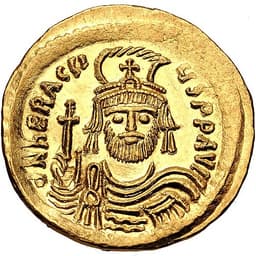
Heraclius
Emperor · Ancient
61.0Total

Queen Seondeok of Silla
Emperor · Ancient
54.2Total
Basic Information
Born
-575
-606
Died
—
—
Era
Ancient
Ancient
Nationality
Byzantine Empire
Korea
Occupation
Emperor
Emperor
Civilization
Western
Eastern
Score Comparison
Military (10%)
78.5
25.9
Political (20%)
45.0
68.0
Influence (20%)
58.3
56.4
Legacy (20%)
52.0
50.0
Leadership (15%)
72.0
74.0
Strategy (15%)
80.6
36.8
TOTAL
61.0
54.2
Heraclius — Complete Timeline
610 AD
Overthrow of PhocasPolitical Action◆ Major
Heraclius led a revolt from Carthage against the usurper Emperor Phocas. He sailed to Constantinople, where supporters opened the gates. Phocas was captured and executed, and Heraclius was crowned emperor, ending a period of civil strife and military decline.
CoupPhocasByzantine Empire
Impact: nationalconstructive
622 AD
Byzantine-Sassanid War: Final CampaignWar
Heraclius personally led a multi-year campaign against the Sassanid Persian Empire, which had occupied much of Byzantine territory. He defeated Persian forces at the Battle of Nineveh in 627 and recovered the True Cross, restoring Byzantine prestige and ending the war.
Byzantine-Sassanid WarNinevehTrue Cross
Impact: globalconstructive
636 AD
Loss of the Levant to Muslim ConquestWar
Heraclius's forces were decisively defeated by the Rashidun Caliphate at the Battle of Yarmouk. This loss led to the permanent loss of Syria, Palestine, and Egypt to Muslim rule, drastically reducing Byzantine territory and marking the beginning of the Arab-Byzantine wars.
Muslim ConquestYarmoukTerritorial Loss
Impact: globaltragic
Queen Seondeok of Silla — Complete Timeline
632 AD
First female ruler of SillaPolitical Action
Seondeok ascended the throne as the first reigning queen of Silla, following her father King Jinpyeong's death without a male heir. Her accession challenged traditional gender norms and established a precedent for female leadership in Korean history.
GenderLeadershipSilla
Impact: nationalprogressive
634 AD
Construction of CheomseongdaeInvention◆ Major
Queen Seondeok ordered the construction of Cheomseongdae, an astronomical observatory in Gyeongju. The stone structure was used for observing stars and predicting celestial events, reflecting Silla's advanced scientific knowledge and the queen's interest in astronomy.
AstronomyObservatorySilla
Impact: regionalconstructive
Diplomatic alliance with Tang ChinaPolitical Action◆ Major
Seondeok sent envoys to the Tang court, establishing a formal alliance. This diplomatic move secured Chinese support against Silla's rivals, Baekje and Goguryeo, and laid the groundwork for the later Silla-Tang alliance that unified Korea.
DiplomacyTang ChinaSilla
Impact: regionalconstructive
635 AD
Promotion of Buddhist cultureCultural
Seondeok sponsored the construction of several Buddhist temples, including Bunhwangsa and Yeongmyosa. She also supported the creation of Buddhist art and scriptures, contributing to the flourishing of Buddhist culture in Silla during her reign.
BuddhismPatronageSilla
Impact: nationalconstructive
647 AD
Suppression of the Bidam rebellionWar◆ Major
Seondeok faced a rebellion led by General Bidam, who opposed female rule. The queen's forces, led by General Kim Yushin, crushed the revolt. This victory solidified her authority and demonstrated the effectiveness of the Hwarang military system.
RebellionCivil WarSilla
Impact: nationaldestructive
Expert Analysis
Origins
Heraclius was born around 575 AD into an Armenian family in Cappadocia. His father, also named Heraclius, was the Exarch of Africa, a key Byzantine province. The younger Heraclius grew up in the military and administrative milieu of Carthage, far from the intrigues of Constantinople. He was well-educated in military tactics and diplomacy, but his early life was overshadowed by the chaotic reign of Emperor Phocas, who had usurped the throne in 602.
Queen Seondeok was born in 606 AD as Princess Deokman of Silla, a kingdom on the Korean peninsula. She was the daughter of King Jinpyeong, who ruled Silla for 54 years. With no male heir, Jinpyeong groomed Deokman for leadership, providing her with an education in politics, history, and Confucian classics. Silla was one of the Three Kingdoms of Korea, constantly at war with Baekje and Goguryeo. Seondeok's early life was shaped by the need for strong diplomacy and internal stability.
Rise to Power
Heraclius rose to power by overthrowing the unpopular Emperor Phocas. In 608, Heraclius the Elder and his son rebelled, and by 609, they controlled Egypt and the grain supply to Constantinople. In 610, Heraclius sailed to the capital, where supporters opened the gates. Phocas was captured and executed. Heraclius was crowned emperor on October 5, 610, at age 35. His accession came at a dire time: the Sassanid Persians had conquered much of the eastern provinces, and the Avars threatened the Balkans.
Seondeok ascended the throne in 632 AD upon her father's death. As the first female ruler of Silla, she faced opposition from nobles who preferred a male king. However, her father had appointed her as his successor, and she had demonstrated capability in administrative roles. Her accession was a turning point, challenging traditional gender roles in Korean society. She immediately consolidated power by appointing loyal officials and seeking support from the Buddhist clergy, who were influential in Silla.
Leadership & Governance
Heraclius governed as a military emperor, personally leading campaigns. He reorganized the Byzantine army, creating a system of themes (military districts) that would endure for centuries. He also reformed the church by promoting the doctrine of Monothelitism to reconcile with Monophysites, but this failed. His governance was reactive, focused on survival rather than long-term planning. He neglected the provinces after the Persian war, leaving them vulnerable to the Muslim conquests.
Seondeok ruled as a wise and diplomatic queen. She promoted Buddhism, building the Bunhwangsa and Yeongmyosa temples, and sponsored the construction of Cheomseongdae, an astronomical observatory completed in 634. This structure, still standing, reflects her interest in science and calendar-making. She also formed a crucial alliance with Tang China (643), sending envoys to secure military support against Baekje and Goguryeo. Her political score of 68.0 reflects her adept navigation of internal factions and external threats, contrasted with Heraclius's political score of 45.0.
Triumph & Tragedy
Heraclius's greatest triumph was his final campaign against the Sassanid Empire (622-628). He led a multi-year offensive, culminating in the siege of Dastagird and the recovery of the True Cross. He defeated the Persians decisively, restoring Byzantine prestige. However, his tragedy was the loss of the Levant to the Muslim conquests. At the Battle of Yarmouk (636), his forces were routed by the Rashidun Caliphate, leading to the permanent loss of Syria, Palestine, and Egypt. This reduced the Byzantine Empire to a minor power.
Seondeok's triumph was her successful suppression of the Bidam rebellion (647), which challenged her female rule. Led by General Bidam, the revolt was crushed by her loyal general Kim Yushin. This victory solidified her authority. Her tragedy was her early death in 647, before she could fully realize her vision of a unified Korea. She died without a direct heir, leading to a succession crisis. However, her policies of Tang alliance and Buddhist patronage laid the groundwork for Silla's later unification of the peninsula.
Character & Destiny
Heraclius was energetic and bold, but also impulsive and prone to overreach. His personal leadership in the Persian war was exceptional, but his strategic miscalculation after the victory—failing to secure the southern provinces—proved fatal. He was also indecisive regarding religious matters, which weakened internal unity. Historians note his shift from a successful general to a despondent ruler after Yarmouk. His character, while resilient, could not adapt to the new threat of Islam.
Seondeok was intelligent and pragmatic, known for her foresight. She famously predicted events through dreams and omens, which were recorded in the Samguk Sagi. Her decisions, such as building Cheomseongdae and allying with Tang, were calculated and long-term. She was also compassionate, promoting welfare for the poor. Her character earned her the loyalty of officials like Kim Yushin. However, her gender remained a source of contention, and she relied heavily on the military to enforce her rule.
Legacy
Heraclius's legacy is mixed. He saved the Byzantine Empire from the Persians, but his losses to the Arabs permanently diminished it. His military reforms influenced later Byzantine strategy, and his recovery of the True Cross became a symbol of Christian triumph. However, his religious policies failed, and his reign saw the beginning of the end for the Eastern Roman Empire. His legacy score of 52.0 reflects this ambivalence.
Seondeok's legacy is more positive. She is remembered as a wise and capable ruler who advanced science and diplomacy. Cheomseongdae remains a national treasure and a symbol of Korean scientific achievement. Her alliance with Tang China set the stage for Silla's unification of Korea in 668. She also paved the way for later female rulers in Korea, though few followed. Her legacy score of 50.0 is comparable, but her long-term impact on Korean identity is significant.
Conclusion
Heraclius scored 61.0 overall, while Seondeok scored 54.2, a gap of 6.8 points. However, impact is not solely measured by scores. Heraclius faced existential threats and his actions determined the survival of the Byzantine Empire for centuries. Yet his failures in the Levant were catastrophic. Seondeok, though ruling a smaller kingdom, successfully navigated complex diplomacy and internal politics, leaving a tangible monument and a trajectory toward unification. Her impact on Korean history is more enduring and positive. While Heraclius's military achievements were greater (78.5 vs 25.9), Seondeok's political and leadership scores (68.0 and 74.0) surpass his (45.0 and 72.0). In terms of net positive contribution to civilization, Queen Seondeok of Silla had a greater impact relative to her resources and context.
Rankings
🥇
HeracliusLeader
Mil: 78.5Pol: 45.0Inf: 58.3
61.0
🥈
Queen Seondeok of Silla
Mil: 25.9Pol: 68.0Inf: 56.4
54.2
+6.8 behind
How This Comparison Works
Algorithm
Each figure is scored on 6 dimensions (0—100 scale) based on structured historical data: Military (10%), Political (20%), Influence (20%), Legacy (20%), Leadership (15%), Strategy (15%). The weighted total produces the final ranking.
Data Sources
Scores are computed from structured sub-indicators in the database. Scale factors adjust for era (Ancient ×0.85, Modern ×1.0) and civilization size (Eastern ×1.05, Other ×0.80) to account for differences in population and military scale.
Maximum 3 Figures
Comparisons are limited to 2—3 figures to ensure readability and statistical meaningfulness.
Error Margins
±5 points per dimension — Sub-scores are derived from historical records with inherent uncertainty. Two figures within 5 points on a dimension should be considered roughly equivalent in that area.
Total Score Accuracy
±3 points overall — The weighted combination of 6 dimensions produces a total score with approximately ±3 points of uncertainty. Differences of less than 3 points are not statistically significant— the figures are effectively tied.
Known Limitations
- Historical records are incomplete and uneven across civilizations
- Figures from oral-tradition societies may be underrepresented
- Occupation labels can misclassify multi-role figures
- Scores measure capability and impact, not moral character
- Quantitative scoring is a comparison tool, not absolute truth
Capability Radar
Military (10%) — Battles & Warfare
Battles
85
10
Win Rate
80
10
Expansion
70
10
Political (20%) — Governance & Reform
Reform
70
50
Diplomacy
65
60
Economy
60
50
Influence (20%) — Cultural & Global Reach
Cultural
65
60
Global
75
40
Legacy (20%) — Historical Impact
Historical
80
60
Longevity
70
60
Leadership (15%) — Power & Stability
Tenure
75
60
Stability
55
50
Strategy (15%) — Tactics & Innovation
Strategy
90
10
Tactics
85
10
Reform
75
10
Similar Comparisons
Comments & Discussion
No comments yet. Be the first to share your thoughts!