Loading...
Queen Seondeok of Silla vs Septimius Severus
Septimius Severus leads by 13.6 pts · 2 figures compared
…

Queen Seondeok of Silla
Emperor · Ancient
54.2Total
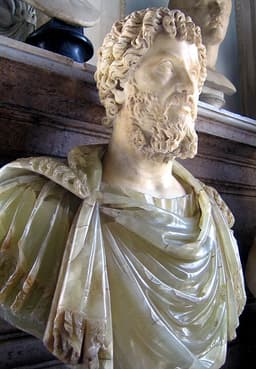
Septimius Severus
Emperor · Ancient
67.8Total
Basic Information
Born
-606
145
Died
—
211
Era
Ancient
Ancient
Nationality
Korea
Roman Empire
Occupation
Emperor
Emperor
Civilization
Eastern
Western
Score Comparison
Military (10%)
25.9
85.0
Political (20%)
68.0
70.0
Influence (20%)
56.4
68.0
Legacy (20%)
50.0
55.0
Leadership (15%)
74.0
72.0
Strategy (15%)
36.8
72.0
TOTAL
54.2
67.8
Queen Seondeok of Silla — Complete Timeline
632 AD
First female ruler of SillaPolitical Action
Seondeok ascended the throne as the first reigning queen of Silla, following her father King Jinpyeong's death without a male heir. Her accession challenged traditional gender norms and established a precedent for female leadership in Korean history.
GenderLeadershipSilla
Impact: nationalprogressive
634 AD
Construction of CheomseongdaeInvention◆ Major
Queen Seondeok ordered the construction of Cheomseongdae, an astronomical observatory in Gyeongju. The stone structure was used for observing stars and predicting celestial events, reflecting Silla's advanced scientific knowledge and the queen's interest in astronomy.
AstronomyObservatorySilla
Impact: regionalconstructive
Diplomatic alliance with Tang ChinaPolitical Action◆ Major
Seondeok sent envoys to the Tang court, establishing a formal alliance. This diplomatic move secured Chinese support against Silla's rivals, Baekje and Goguryeo, and laid the groundwork for the later Silla-Tang alliance that unified Korea.
DiplomacyTang ChinaSilla
Impact: regionalconstructive
635 AD
Promotion of Buddhist cultureCultural
Seondeok sponsored the construction of several Buddhist temples, including Bunhwangsa and Yeongmyosa. She also supported the creation of Buddhist art and scriptures, contributing to the flourishing of Buddhist culture in Silla during her reign.
BuddhismPatronageSilla
Impact: nationalconstructive
647 AD
Suppression of the Bidam rebellionWar◆ Major
Seondeok faced a rebellion led by General Bidam, who opposed female rule. The queen's forces, led by General Kim Yushin, crushed the revolt. This victory solidified her authority and demonstrated the effectiveness of the Hwarang military system.
RebellionCivil WarSilla
Impact: nationaldestructive
Septimius Severus — Complete Timeline
193 AD
Reforms of the Praetorian GuardReform◆ Major
Septimius Severus disbanded the existing Praetorian Guard, which had assassinated his predecessor Pertinax, and replaced it with loyal soldiers from his own Danubian legions. This reform militarized the guard and increased imperial control.
Praetorian GuardReformMilitary
Impact: nationalconstructive
Foundation of the Severan DynastyPolitical Action
Septimius Severus, proclaimed emperor by his troops in Pannonia, marched on Rome and secured recognition from the Senate. He defeated rivals Didius Julianus, Pescennius Niger, and Clodius Albinus, establishing the Severan dynasty that ruled until 235.
DynastyCivil WarAccession
Impact: global
196 AD
Siege of ByzantiumWar
Septimius Severus besieged and captured Byzantium after a three-year siege, as the city had supported his rival Pescennius Niger. Severus destroyed the city's walls and reduced its status, but later rebuilt it, foreshadowing its future importance.
SiegeByzantiumCivil War
Impact: regionaldestructive
197 AD
Battle of LugdunumWar
Septimius Severus defeated his rival Clodius Albinus at Lugdunum (modern Lyon) in a massive battle. This victory secured Severus's control over the entire Roman Empire and eliminated the last major challenger to his rule.
Civil WarBattleVictory
Impact: global
208 AD
Campaigns in Britain and Construction of Hadrian's WallWar◆ Major
Septimius Severus led a major campaign into Caledonia (Scotland) to subdue rebellious tribes. He repaired and strengthened Hadrian's Wall, and died at York in 211. The campaign achieved limited success and was costly in lives.
BritainCampaignFrontier
Impact: regional
Expert Analysis
Origins
Queen Seondeok of Silla (r. 632-647) was born around 606 as Princess Deokman, the daughter of King Jinpyeong of Silla. Her mother was Queen Maya. As the king had no male heir, Seondeok was well-educated and designated as successor, a rare occurrence in East Asian history.
Septimius Severus (r. 193-211) was born in 145 in Leptis Magna (modern Libya) to a wealthy equestrian family of Roman and Punic descent. He studied rhetoric and law in Rome, entering the senatorial career under Marcus Aurelius. His African origin was unusual for a future emperor.
Rise to Power
Seondeok became queen in 632 upon her father's death, after a succession struggle where her claim was challenged by aristocrats who preferred a male relative. She consolidated power by relying on loyal officials like General Kim Yushin and establishing diplomatic ties with Tang China. Her reign saw the suppression of the Bidam rebellion in 647, led by a general who opposed female rule; the revolt was crushed, securing her throne.
Severus rose through military commands, becoming governor of Pannonia Superior in 191. After Emperor Pertinax was murdered in 193, Severus was proclaimed emperor by his troops and marched on Rome. He defeated rivals Didius Julianus, Pescennius Niger, and Clodius Albinus, culminating in the Battle of Lugdunum in 197. He secured control by executing opponents and rewarding his legions.
Leadership & Governance
Seondeok ruled as a symbolic and administrative leader, focusing on culture and diplomacy. She promoted Buddhism, sponsoring temples like Bunhwangsa and Yeongmyosa, and built Cheomseongdae, an astronomical observatory for calendrical and agricultural planning. Her political score of 68.0 reflects her ability to maintain stability despite gender barriers. She delegated military affairs to generals, scoring only 25.9 in military.
Severus was a military autocrat. He reformed the Praetorian Guard, replacing it with loyal soldiers from the Danube legions, and increased the army's size and pay. He strengthened border defenses, notably in Britain, where he repaired Hadrian's Wall and campaigned in Caledonia. His political score of 70.0 and military score of 85.0 indicate his focus on martial strength. He centralized power, reducing the Senate's influence.
Triumph & Tragedy
Seondeok's triumphs include establishing female rule in Silla, building Cheomseongdae (a symbol of scientific achievement), and forging an alliance with Tang China that later helped unify the Korean Peninsula. Her tragedy was the Bidam rebellion, which exposed ongoing opposition to her gender, though she suppressed it. She died without an heir, leading to succession issues.
Severus's triumphs include founding the Severan dynasty, defeating all rivals, and expanding Rome's eastern provinces (Mesopotamia). His tragedy was the costly and ultimately futile campaign in Caledonia, where he died in 211 at York. His dynasty collapsed after his sons Caracalla and Geta, tainted by civil war.
Character & Destiny
Seondeok was pragmatic and culturally astute, using Buddhism and science to legitimize her rule. Her character was shaped by the need to navigate patriarchal norms, leading to a cautious yet effective governance style. She scored 74.0 in leadership, reflecting her ability to inspire loyalty.
Severus was ruthless and ambitious, famously advising his sons: "Be harmonious, enrich the soldiers, and scorn all other men." His military mindset defined his reign, but his harshness sowed resentment. His leadership score of 72.0 and strategy score of 72.0 highlight his tactical acumen but lack of long-term political stability.
Legacy
Seondeok's legacy endures in Korean history as a pioneering female ruler. Cheomseongdae remains a UNESCO World Heritage site. Her diplomatic alliance with Tang laid groundwork for Silla's unification of Korea in 668. She is remembered as a wise and cultured queen, with a legacy score of 50.0.
Severus's legacy is mixed: he strengthened the Roman military and frontier defenses but set a precedent for military emperors that weakened the Senate. His dynasty ended in chaos, and his reforms contributed to the later Crisis of the Third Century. His legacy score is 55.0, slightly higher than Seondeok's.
Conclusion
Septimius Severus had a greater overall impact on world history due to his military and political reforms that reshaped the Roman Empire for centuries. His total score of 67.8 exceeds Seondeok's 54.2 by 13.6 points. While Seondeok's achievements in culture and diplomacy were significant for Korea, Severus's influence spanned a vast empire and altered the course of Roman history. In a direct comparison, Severus's military and strategic dominance (85.0 vs 25.9, 72.0 vs 36.8) gives him the edge in impact.
Rankings
🥇
Septimius SeverusLeader
Mil: 85.0Pol: 70.0Inf: 68.0
67.8
🥈
Queen Seondeok of Silla
Mil: 25.9Pol: 68.0Inf: 56.4
54.2
+13.6 behind
How This Comparison Works
Algorithm
Each figure is scored on 6 dimensions (0—100 scale) based on structured historical data: Military (10%), Political (20%), Influence (20%), Legacy (20%), Leadership (15%), Strategy (15%). The weighted total produces the final ranking.
Data Sources
Scores are computed from structured sub-indicators in the database. Scale factors adjust for era (Ancient ×0.85, Modern ×1.0) and civilization size (Eastern ×1.05, Other ×0.80) to account for differences in population and military scale.
Maximum 3 Figures
Comparisons are limited to 2—3 figures to ensure readability and statistical meaningfulness.
Error Margins
±5 points per dimension — Sub-scores are derived from historical records with inherent uncertainty. Two figures within 5 points on a dimension should be considered roughly equivalent in that area.
Total Score Accuracy
±3 points overall — The weighted combination of 6 dimensions produces a total score with approximately ±3 points of uncertainty. Differences of less than 3 points are not statistically significant— the figures are effectively tied.
Known Limitations
- Historical records are incomplete and uneven across civilizations
- Figures from oral-tradition societies may be underrepresented
- Occupation labels can misclassify multi-role figures
- Scores measure capability and impact, not moral character
- Quantitative scoring is a comparison tool, not absolute truth
Capability Radar
Military (10%) — Battles & Warfare
Battles
10
85
Win Rate
10
80
Expansion
10
80
Political (20%) — Governance & Reform
Reform
50
85
Diplomacy
60
70
Economy
50
75
Influence (20%) — Cultural & Global Reach
Cultural
60
60
Global
40
65
Legacy (20%) — Historical Impact
Historical
60
70
Longevity
60
60
Leadership (15%) — Power & Stability
Tenure
60
80
Stability
50
65
Strategy (15%) — Tactics & Innovation
Strategy
10
85
Tactics
10
75
Reform
10
90
Similar Comparisons
Comments & Discussion
No comments yet. Be the first to share your thoughts!