Loading...
Herbert Asquith vs Julius Caesar
Julius Caesar leads by 33.4 pts · 2 figures compared
…
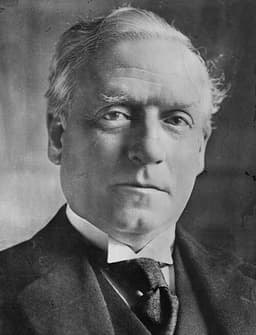
Herbert Asquith
Politician · Modern
49.4Total

Julius Caesar
General · Ancient
82.8Total
Basic Information
Born
1852
-100
Died
1928
-44
Era
Modern
Ancient
Nationality
United Kingdom
Roman Republic
Occupation
Politician
General
Civilization
Western
Western
Score Comparison
Military (10%)
10.0
88.0
Political (20%)
45.0
78.0
Influence (20%)
57.2
85.0
Legacy (20%)
50.0
82.0
Leadership (15%)
72.0
80.0
Strategy (15%)
41.0
85.0
TOTAL
49.4
82.8
Herbert Asquith — Complete Timeline
1908 AD
Became Prime Minister of the United KingdomPolitical Action◆ Major
Herbert Asquith became Prime Minister after the resignation of Henry Campbell-Bannerman. He led the Liberal government, overseeing major social reforms including the introduction of old-age pensions and national insurance.
Prime MinisterLiberal PartySocial reform
Impact: nationalconstructive
1911 AD
Passed the Parliament Act 1911Political Action◆ Major
Asquith's government passed the Parliament Act, which removed the House of Lords' power to veto money bills and limited its ability to delay other legislation. The act was a major constitutional reform, following the Lords' rejection of the People's Budget.
Parliament ActConstitutional reformHouse of Lords
Impact: nationalconstructive
1914 AD
Led Britain into World War IWar
Asquith led the United Kingdom into World War I after Germany invaded Belgium. His government managed the war effort, including the introduction of conscription and the Defence of the Realm Act. The war dominated his premiership.
World War IWarGovernment
Impact: globaltragic
1915 AD
Formed a coalition governmentPolitical Action◆ Major
Asquith formed a coalition government with the Conservatives and Labour to manage the war effort. The coalition was marked by internal tensions over military strategy, particularly the Gallipoli campaign and conscription.
CoalitionWorld War IGovernment
Impact: national
1916 AD
Resigned as Prime MinisterPolitical Action◆ Major
Asquith resigned as Prime Minister after a political crisis over the conduct of the war. He was replaced by David Lloyd George, who formed a new coalition. Asquith's resignation marked the end of his wartime leadership.
ResignationWorld War IGovernment
Impact: nationaltragic
Julius Caesar — Complete Timeline
58 BC
Gallic WarsWar◆ Major
Caesar, as proconsul of Gaul, launched a series of campaigns that conquered all of Gaul (modern France, Belgium, and parts of Switzerland). He fought numerous battles, including against the Helvetii, the Belgae, and the Gallic chieftain Vercingetorix. The wars brought immense wealth and a loyal army to Caesar.
Gallic WarsConquestRoman Expansion
Impact: regional
49 BC
Crossing the RubiconPolitical Action◆ Major
Caesar led Legio XIII across the Rubicon River into Italy, defying the Roman Senate's order to disband his army. This act triggered a civil war against Pompey and the Optimates, ultimately leading to Caesar's dictatorship and the end of the Roman Republic.
Roman Civil WarEnd of RepublicPower Struggle
Impact: global
48 BC
Battle of PharsalusWar◆ Major
Caesar's outnumbered army defeated the larger forces of Pompey the Great at Pharsalus in Greece. Caesar's tactical use of a reserve line to counter Pompey's cavalry charge proved decisive. Pompey fled to Egypt, where he was assassinated, leaving Caesar as the undisputed master of the Roman world.
Roman Civil WarBattleDecisive Victory
Impact: regional
44 BC
Appointment as Dictator for LifePolitical Action◆ Major
The Roman Senate appointed Caesar dictator perpetuo (dictator for life), granting him unprecedented personal power. This move concentrated military, legislative, and judicial authority in one person, effectively ending the Roman Republic's traditional system of checks and balances and alarming many senators.
DictatorshipEnd of RepublicPower Consolidation
Impact: regionaldestructive
Assassination on the Ides of MarchPolitical Action◆ Major
A group of Roman senators, led by Marcus Junius Brutus and Gaius Cassius Longinus, stabbed Caesar to death at a meeting of the Senate in the Theatre of Pompey. The assassination was intended to restore the Republic, but instead triggered another civil war that led to the rise of the Roman Empire.
AssassinationRoman PoliticsEnd of Republic
Impact: globaldestructive
Expert Analysis
herbert-asquith-vs-julius-caesar
### The Rubicon and the Cabinet Room
In January 49 BCE, a Roman general paused at a small river in northern Italy. Crossing the Rubicon with his legions meant civil war, the destruction of a republic, and personal oblivion or immortality. He crossed. In December 1916, a British Prime Minister sat in a quiet room at 10 Downing Street. The war he had entered with such moral certainty was bogged down in mud and blood. His own party had turned against him. He did not fight; he resigned, and slipped into the historical shadows. One man changed the world in a single, dramatic act; the other was changed by a world he could not control. Why did Julius Caesar, the general who became a dictator, achieve an undying legacy, while Herbert Asquith, the Prime Minister who led his nation into the Great War, became a footnote? The answer lies not in their ambition, but in the nature of the eras that forged them, and the very different tools they had to shape history.
### Origins: The Sword and the Statute
Julius Caesar was born into the chaos of the late Roman Republic, a world where power was won by military glory and political cunning. His family, the Julii, was patrician but not wealthy. From his youth, Caesar understood that the old rules of aristocratic competition were breaking down. The Republic was a machine of war, and a man’s worth was measured by the provinces he conquered and the armies he commanded. He learned to read the crowd, to borrow money he could never repay, and to take risks that would have destroyed a lesser man. His world was one of action, where a single victory could rewrite the future.
Herbert Asquith was born in 1852 in Morley, Yorkshire, into a middle-class Nonconformist family. His world was one of law, debate, and gradual reform. The Victorian era prized stability, progress, and the slow extension of liberty. Asquith rose through the ranks of the Liberal Party by mastering the arts of the courtroom and the House of Commons. He was a brilliant orator, but his power came from the ballot box, not the sword. His world was governed by rules, coalitions, and the patience of the electorate. He did not cross rivers; he passed bills.
### Rise to Power: The Province and the Premiership
Caesar’s path was forged in the crucible of the Gallic Wars (58–50 BCE), a nine-year campaign that made him the richest and most feared man in Rome. He did not wait for opportunity; he created it. He invaded Britain, crossed the Rhine, and massacred entire tribes—all while writing his own commentaries to shape public opinion back home. When the Senate ordered him to disband his army, he refused. The crossing of the Rubicon was not an act of desperation; it was a calculated gamble by a man who knew that in the Republic, political power was a direct consequence of military force. He was 50 years old.
Asquith’s rise was a study in constitutional patience. He became Prime Minister in 1908, succeeding the ailing Henry Campbell-Bannerman. He was 56. His great achievement was the Parliament Act of 1911, which broke the veto power of the House of Lords—a masterful piece of political engineering that shifted the balance of power toward the elected Commons. But his power was always contingent. He could not command; he could only persuade. When the First World War broke out in 1914, he did not cross a river; he read a speech. He led Britain into war because the cabinet, the Parliament, and the public will demanded it. He was a servant of the system, not its master.
### Leadership & Governance: The Dictator and the Chairman
Caesar’s leadership was absolute and personal. He led his legions from the front, sharing their rations and their risks. His military genius was matched by his political ruthlessness. As dictator, he reformed the calendar, granted citizenship to provincials, and launched massive public works. He centralized power because he believed the Republic was too corrupt and inefficient to survive. His style was to act, to decide, and to impose. He was a general who governed.
Asquith’s leadership was a study in committee management. He chaired a cabinet of brilliant, fractious men—David Lloyd George, Winston Churchill, Lord Kitchener. He did not command the war; he tried to coordinate it. His greatest failure was his inability to adapt. The static, industrial slaughter of the Western Front demanded a new kind of leadership, but Asquith remained the Edwardian gentleman, waiting for events to unfold. He passed the Parliament Act in 1911, but he could not pass a military strategy. He was a chairman who tried to lead a war.
### Triumph & Tragedy: Conquest and Catastrophe
Caesar’s greatest triumph was the conquest of Gaul, a feat that doubled the size of Rome’s territory and made him a legend. His tragedy was the Ides of March—assassinated in 44 BCE by men he had pardoned, in a Senate chamber he had tried to reform. He died at the height of his power, and his death plunged Rome into another civil war. Yet his tragedy was also his triumph: his adopted heir, Octavian, would become Augustus, the first emperor. Caesar’s assassination did not end his legacy; it began it.
Asquith’s greatest moment was leading Britain into war in 1914 with a united nation behind him. His tragedy was the slow, grinding collapse of his government. The shell scandal of 1915, the failure of the Dardanelles campaign, and the Easter Rising in Ireland all eroded his authority. He was forced into a coalition, then pushed out. He resigned in 1916, a broken man, replaced by the very man who had schemed against him, David Lloyd George. He lived another twelve years, watching from the sidelines as the world he knew died. His tragedy was that he outlived his own relevance.
### Character & Destiny: The Gambler and the Gentleman
Caesar was a gambler who believed in his own star. He was arrogant, charismatic, and utterly unsentimental. He forgave his enemies, not out of kindness, but because he knew that mercy was a political weapon. His character drove him to take risks that no rational man would take. “The die is cast,” he said at the Rubicon, but he had loaded the dice long before.
Asquith was a man of principle and intellect, but he was also a man of his class and time. He believed in reason, in gradual progress, in the decency of the British constitution. He was not a gambler; he was a lawyer. His character made him a great peacetime Prime Minister but a disastrous war leader. He could not act decisively because he believed that decisions should emerge from consensus. In a world of total war, consensus was a luxury no one could afford.
### Legacy: The Empire and the Footnote
Caesar’s legacy is the Roman Empire. His name became a title—*Kaiser*, *Tsar*—and his reforms shaped Western law, government, and culture for two millennia. He is remembered as a genius, a tyrant, and a martyr. His story is taught in every school, his words quoted in every parliament.
Asquith’s legacy is more ambiguous. The Parliament Act of 1911 stands as a landmark of democratic reform, but his war leadership is remembered as a failure. He is a footnote in the history of the First World War, overshadowed by Lloyd George and Clemenceau. His name does not echo down the centuries. He is studied by historians, but he does not haunt the popular imagination.
### Conclusion: The River and the Statute
The difference between Caesar and Asquith is the difference between a man who creates his own river and a man who tries to swim against the current. Caesar lived in an age when a single will could reshape the world. Asquith lived in an age of institutions, parties, and public opinion. One crossed the Rubicon; the other was swept away by the Somme. Both were men of extraordinary ability, but their fates were written not just by their character, but by the nature of the times they inhabited. Caesar’s Rome was a sword; Asquith’s Britain was a statute. And in the end, swords leave deeper marks.
Rankings
🥇
Julius CaesarLeader
Mil: 88.0Pol: 78.0Inf: 85.0
82.8
🥈
Herbert Asquith
Mil: 10.0Pol: 45.0Inf: 57.2
49.4
+33.4 behind
How This Comparison Works
Algorithm
Each figure is scored on 6 dimensions (0—100 scale) based on structured historical data: Military (10%), Political (20%), Influence (20%), Legacy (20%), Leadership (15%), Strategy (15%). The weighted total produces the final ranking.
Data Sources
Scores are computed from structured sub-indicators in the database. Scale factors adjust for era (Ancient ×0.85, Modern ×1.0) and civilization size (Eastern ×1.05, Other ×0.80) to account for differences in population and military scale.
Maximum 3 Figures
Comparisons are limited to 2—3 figures to ensure readability and statistical meaningfulness.
Error Margins
±5 points per dimension — Sub-scores are derived from historical records with inherent uncertainty. Two figures within 5 points on a dimension should be considered roughly equivalent in that area.
Total Score Accuracy
±3 points overall — The weighted combination of 6 dimensions produces a total score with approximately ±3 points of uncertainty. Differences of less than 3 points are not statistically significant— the figures are effectively tied.
Known Limitations
- Historical records are incomplete and uneven across civilizations
- Figures from oral-tradition societies may be underrepresented
- Occupation labels can misclassify multi-role figures
- Scores measure capability and impact, not moral character
- Quantitative scoring is a comparison tool, not absolute truth
Capability Radar
Military (10%) — Battles & Warfare
Battles
0
95
Win Rate
0
92
Expansion
0
97
Political (20%) — Governance & Reform
Reform
65
90
Diplomacy
55
85
Economy
60
82
Influence (20%) — Cultural & Global Reach
Cultural
30
88
Global
55
94
Legacy (20%) — Historical Impact
Historical
60
95
Longevity
40
96
Leadership (15%) — Power & Stability
Tenure
70
75
Stability
40
60
Strategy (15%) — Tactics & Innovation
Strategy
10
94
Tactics
0
96
Reform
20
88
Similar Comparisons
Comments & Discussion
CRASSUS-CRUSHER6/17/2026
Caesar's crossing of the Rubicon is basically ancient Rome's version of a hostile takeover—he leveraged a single legion's loyalty against a paralyzed Senate. Asquith, by contrast, couldn't even rally his own Liberal Party. Here's the real kicker: Caesar faced proscription lists and a decade of civil war; Asquith faced a polite vote of no confidence. One commanded veterans who'd march through Gaul for him; the other relied on Asquith's Oxford debating buddies. No contest—Caesar both took and held
统计狂徒6/17/2026
拿两个差了两个千年、权力基础完全不同的人比较根本是伪命题。Caesar是军阀,军队就是他的选民;Asquith是议会制首相,权力来自下院席位而非军团。1916年Asquith下台时自由党已分裂,军需部被保守党控制,他连"no confidence vote"都躲不过——但1916年12月他要真有军团会怎样?他能学Caesar让坦克开进特拉法加广场?历史这种跨时代对比最无聊,工具不同而已,别装深刻。