Loading...
Herod Antipas vs Onjo of Baekje
Onjo of Baekje leads by 6.1 pts · 2 figures compared
…

Herod Antipas
Emperor · Ancient
41.1Total
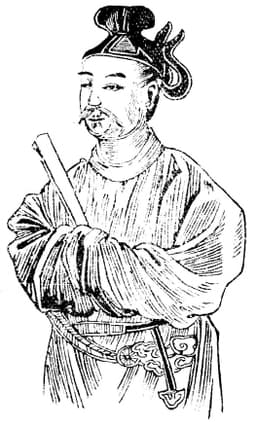
Onjo of Baekje
Emperor · Ancient
47.2Total
Basic Information
Born
-20
-18
Died
39
28
Era
Ancient
Ancient
Nationality
Judea
Korea
Occupation
Emperor
Emperor
Civilization
Middle Eastern
Eastern
Score Comparison
Military (10%)
10.2
45.0
Political (20%)
32.2
36.5
Influence (20%)
50.2
52.5
Legacy (20%)
41.7
45.8
Leadership (15%)
51.9
58.8
Strategy (15%)
45.0
38.6
TOTAL
41.1
47.2
Herod Antipas — Complete Timeline
4 BC
Appointed Tetrarch of Galilee and PereaPolitical Action◆ Major
Following the death of Herod the Great, Herod Antipas was appointed by Roman Emperor Augustus as tetrarch of Galilee and Perea. This division of Herod's kingdom established Antipas as a client ruler under Roman authority, governing these territories until 39 AD.
Herodian DynastyRoman Client KingTerritorial Division
Impact: regional
29 AD
Married Herodias and Imprisoned John the BaptistPolitical Action◆ Major
Herod Antipas married Herodias, his brother Philip's former wife, while she was still married. John the Baptist publicly condemned this marriage as unlawful. Antipas imprisoned John and later had him executed, an event recorded in the Gospels and by Josephus.
John the BaptistMarriage ScandalReligious Conflict
Impact: regionaldestructive
Execution of John the BaptistPolitical Action◆ Major
At a banquet, Herodias's daughter Salome requested the head of John the Baptist on a platter. Herod Antipas, bound by an oath made before his guests, ordered John's execution by beheading in the fortress of Machaerus. This act is recorded in the Gospels and by Josephus.
John the BaptistExecutionHerodias
Impact: regionaltragic
30 AD
Trial of Jesus before Herod AntipasPolitical Action◆ Major
During Jesus's trial, Pontius Pilate sent Jesus to Herod Antipas, who was in Jerusalem for Passover. Antipas questioned Jesus but received no answer. He and his soldiers mocked Jesus, then returned him to Pilate without issuing a verdict. This event is recorded in the Gospel of Luke.
Trial of JesusPontius PilatePassion Narrative
Impact: regional
36 AD
Defeated by Aretas IV of NabateaWar◆ Major
Herod Antipas suffered a military defeat against King Aretas IV of Nabatea. The conflict arose from Antipas's divorce of Aretas's daughter to marry Herodias. The defeat was interpreted by some as divine punishment for the execution of John the Baptist, as reported by Josephus.
Nabatean WarAretas IVMilitary Defeat
Impact: regionaldestructive
39 AD
Exiled to Gaul by CaligulaPolitical Action◆ Major
Herod Antipas was accused by his nephew Agrippa I of plotting rebellion against Rome. Emperor Caligula believed the accusation and exiled Antipas to Lugdunum Convenarum in Gaul (modern Saint-Bertrand-de-Comminges, France). Herodias accompanied him into exile. His tetrarchy was given to Agrippa I.
ExileCaligulaAgrippa IEnd of Rule
Impact: regionaltragic
Onjo of Baekje — Complete Timeline
18 BC
Founded the Baekje KingdomPolitical Action
Onjo, son of Goguryeo founder Jumong, established the Baekje kingdom at Wiryeseong (modern Seoul). He organized the state's early administration and military, laying the foundation for one of Korea's Three Kingdoms.
BaekjeFoundingThree Kingdoms
Impact: regionalconstructive
10 BC
Consolidated Baekje's TerritoryWar◆ Major
Onjo expanded Baekje's territory by subjugating local tribes in the Han River basin. He established defensive fortifications and secured the kingdom's borders against rival states.
Territorial ExpansionBaekjeWar
Impact: regionalconstructive
5 BC
Established the Baekje Legal CodeReform
Onjo introduced a legal code for Baekje, defining laws on property, crime, and governance. This code helped centralize authority and maintain order in the growing kingdom.
Legal CodeBaekjeGovernance
constructive
Expert Analysis
Origins
Herod Antipas (born 20 BC) was a son of Herod the Great and Malthace, a Samaritan. He was educated in Rome alongside his brothers, steeped in Herodian politics and Roman patronage. In 4 BC, after Herod the Great's death, Augustus divided the kingdom among his sons, appointing Antipas tetrarch of Galilee and Perea. His upbringing was one of privilege and intrigue, with a father known for paranoia and building projects.
Onjo of Baekje (born 36 BC) was the second son of Jumong, founder of Goguryeo. According to the Samguk Sagi, he fled Goguryeo with his mother and brother due to succession conflicts. He migrated south to the Han River basin, where he established the Baekje kingdom in 18 BC at Wiryeseong (modern Seoul). His early life was marked by exile and the need to build from scratch, surrounded by local tribes and rival states.
Rise to Power
Herod Antipas's rise was secured by his father's will and Augustus's confirmation. He ruled Galilee and Perea from 4 BC to AD 39, a stable reign initially. He founded the city of Tiberias in AD 18, named after Emperor Tiberius, to bolster his legitimacy. His power rested on Roman support, and he maintained peace through diplomacy rather than military force.
Onjo's rise was more active. After fleeing Goguryeo, he gathered followers and negotiated with the Mahan confederacy, eventually founding Baekje at Wiryeseong. He consolidated power by subjugating local tribes (e.g., the Malgal) and establishing a legal code. His military scored 45.0, reflecting his success in expanding Baekje's territory in the Han River basin through campaigns against rival chiefdoms.
Leadership & Governance
Herod Antipas ruled as a Roman client tetrarch, focusing on building projects (Tiberias, Sepphoris) and maintaining order. He was cautious, avoiding direct confrontation with Rome. His political score of 32.2 reflects his limited autonomy; he navigated between Roman demands and Jewish sensibilities. His marriage to Herodias, his brother's wife, sparked conflict with John the Baptist, whom he imprisoned and later executed (AD 29). This act showed his vulnerability to court intrigue and oaths.
Onjo's leadership scored 58.8, higher due to his foundational role. He established Baekje's administrative structure, legal code, and defensive forts. He centralized authority, integrating conquered tribes into the state. His strategy scored 38.6, lower than his military, as expansion was gradual. He focused on building a stable kingdom rather than aggressive conquest, creating a base for future growth.
Triumph & Tragedy
Herod Antipas's triumph was his long reign (43 years), building Tiberias and avoiding major rebellions. He also participated in the trial of Jesus (AD 30), when Pilate sent Jesus to him, but Antipas found no fault and returned him. His tragedy came from his ambition: he sought the title of king from Caligula in AD 39, but his nephew Agrippa I denounced him, leading to his exile to Gaul by Caligula. His wife Herodias accompanied him; he died in exile.
Onjo's triumph was founding Baekje, which lasted 678 years (18 BC to AD 660). He successfully established a kingdom that became a major power in Korea. His tragedy was not personal but strategic: he failed to fully unify the Mahan confederacy, leaving Baekje vulnerable to later conflicts with Goguryeo and Silla. His military score of 45.0 indicates moderate success in expansion but not dominance.
Character & Destiny
Herod Antipas was pragmatic and indecisive. He respected John the Baptist as a prophet but executed him due to a rash oath and pressure from Herodias. He was curious about Jesus but failed to act. His character led to his downfall: his desire for higher status (the title of king) overreached, and he was outmaneuvered by Agrippa I. Historians assess him as a capable administrator but weak-willed, scoring 51.9 in leadership but only 32.2 in politics.
Onjo was determined and adaptive. He turned exile into opportunity, building a kingdom from scratch. He was a lawgiver and organizer, with a leadership score of 58.8 reflecting his ability to inspire loyalty. His destiny was to be the founder of a long-lasting dynasty, but his cautious expansion limited immediate impact. He died around AD 28, after 46 years of rule.
Legacy
Herod Antipas's legacy is heavily tied to the New Testament. He is remembered as the ruler who executed John the Baptist and questioned Jesus. His building projects, like Tiberias, endured. His influence score of 50.2 reflects this religious significance, but his political legacy was minor; his kingdom was absorbed after his exile. He scored 41.7 in legacy, lower than Onjo.
Onjo's legacy is foundational. Baekje became a major Korean kingdom, known for its culture and trade with Japan and China. His legal code influenced later dynasties. He is revered as a founding figure, with a legacy score of 45.8. His influence score of 52.5 reflects his role in Korean history.
Conclusion
Onjo of Baekje had greater impact than Herod Antipas. With a total score of 47.2 vs. 41.1, Onjo outperformed in military (45.0 vs. 10.2), leadership (58.8 vs. 51.9), and legacy (45.8 vs. 41.7). Herod Antipas's influence is inflated by his biblical role, but his actual governance was limited and ended in exile. Onjo founded a kingdom that lasted six centuries, shaping Korean civilization. While Antipas is more famous in the West, Onjo's tangible, long-term impact on state-building is greater. The score gap of 6.1 points reflects this: Onjo's leadership and military achievements created a lasting entity, whereas Antipas's reign was a footnote in Roman history.
Rankings
🥇
Onjo of BaekjeLeader
Mil: 45.0Pol: 36.5Inf: 52.5
47.2
🥈
Herod Antipas
Mil: 10.2Pol: 32.2Inf: 50.2
41.1
+6.1 behind
How This Comparison Works
Algorithm
Each figure is scored on 6 dimensions (0—100 scale) based on structured historical data: Military (10%), Political (20%), Influence (20%), Legacy (20%), Leadership (15%), Strategy (15%). The weighted total produces the final ranking.
Data Sources
Scores are computed from structured sub-indicators in the database. Scale factors adjust for era (Ancient ×0.85, Modern ×1.0) and civilization size (Eastern ×1.05, Other ×0.80) to account for differences in population and military scale.
Maximum 3 Figures
Comparisons are limited to 2—3 figures to ensure readability and statistical meaningfulness.
Error Margins
±5 points per dimension — Sub-scores are derived from historical records with inherent uncertainty. Two figures within 5 points on a dimension should be considered roughly equivalent in that area.
Total Score Accuracy
±3 points overall — The weighted combination of 6 dimensions produces a total score with approximately ±3 points of uncertainty. Differences of less than 3 points are not statistically significant— the figures are effectively tied.
Known Limitations
- Historical records are incomplete and uneven across civilizations
- Figures from oral-tradition societies may be underrepresented
- Occupation labels can misclassify multi-role figures
- Scores measure capability and impact, not moral character
- Quantitative scoring is a comparison tool, not absolute truth
Capability Radar
Military (10%) — Battles & Warfare
Battles
5
20
Win Rate
5
25
Expansion
5
30
Political (20%) — Governance & Reform
Reform
20
35
Diplomacy
30
30
Economy
30
30
Influence (20%) — Cultural & Global Reach
Cultural
30
35
Global
30
20
Legacy (20%) — Historical Impact
Historical
40
40
Longevity
30
45
Leadership (15%) — Power & Stability
Tenure
40
40
Stability
25
35
Strategy (15%) — Tactics & Innovation
Strategy
5
25
Tactics
5
20
Reform
5
15
Similar Comparisons
Comments & Discussion
No comments yet. Be the first to share your thoughts!