Loading...
Liu Bei vs Onjo of Baekje
Liu Bei leads by 12.3 pts · 2 figures compared
…
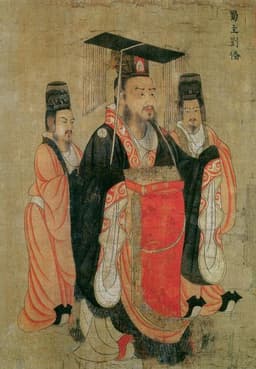
Liu Bei
Emperor · Ancient
59.5Total
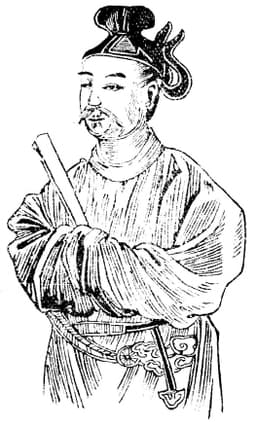
Onjo of Baekje
Emperor · Ancient
47.2Total
Basic Information
Born
161
-18
Died
223
28
Era
Ancient
Ancient
Nationality
China
Korea
Occupation
Emperor
Emperor
Civilization
Eastern
Eastern
Score Comparison
Military (10%)
65.0
45.0
Political (20%)
68.0
36.5
Influence (20%)
55.0
52.5
Legacy (20%)
72.0
45.8
Leadership (15%)
40.0
58.8
Strategy (15%)
50.0
38.6
TOTAL
59.5
47.2
Liu Bei — Complete Timeline
208 AD
Battle of Red CliffsWar
Liu Bei and Sun Quan's combined forces defeated Cao Cao's navy at the Battle of Red Cliffs on the Yangtze River. The victory prevented Cao Cao from conquering the south and allowed Liu Bei to establish a base in Jing Province.
BattleRed CliffsAlliance
Impact: regional
Formation of the Alliance with Sun QuanPolitical Action◆ Major
Liu Bei, advised by Zhuge Liang, formed a strategic alliance with Sun Quan of Wu against the northern warlord Cao Cao. This alliance was crucial for the upcoming Battle of Red Cliffs and established the basis for the Three Kingdoms division.
AllianceSun QuanCao Cao
Impact: regionalconstructive
214 AD
Conquest of Yi ProvinceWar◆ Major
Liu Bei, with the help of Zhuge Liang and other advisors, conquered Yi Province (modern Sichuan) from its ruler Liu Zhang. This provided a wealthy and defensible base for his kingdom, fulfilling a key part of the Longzhong Plan.
ConquestYi ProvinceShu Han
Impact: regional
221 AD
Proclamation of the Shu Han DynastyPolitical Action
After Cao Pi usurped the Han throne, Liu Bei declared himself emperor of Shu Han in Chengdu, claiming to continue the Han dynasty. This formalized the Three Kingdoms period, with Shu, Wei, and Wu as rival states.
DynastyShu HanThree Kingdoms
Impact: national
222 AD
Battle of YilingWar◆ Major
Liu Bei launched a campaign against Sun Quan to avenge the death of his sworn brother Guan Yu. His forces were defeated by Wu general Lu Xun at the Battle of Yiling, resulting in heavy losses and Liu Bei's retreat to Baidi Cheng.
BattleDefeatWu
Impact: regionaltragic
Onjo of Baekje — Complete Timeline
18 BC
Founded the Baekje KingdomPolitical Action
Onjo, son of Goguryeo founder Jumong, established the Baekje kingdom at Wiryeseong (modern Seoul). He organized the state's early administration and military, laying the foundation for one of Korea's Three Kingdoms.
BaekjeFoundingThree Kingdoms
Impact: regionalconstructive
10 BC
Consolidated Baekje's TerritoryWar◆ Major
Onjo expanded Baekje's territory by subjugating local tribes in the Han River basin. He established defensive fortifications and secured the kingdom's borders against rival states.
Territorial ExpansionBaekjeWar
Impact: regionalconstructive
5 BC
Established the Baekje Legal CodeReform
Onjo introduced a legal code for Baekje, defining laws on property, crime, and governance. This code helped centralize authority and maintain order in the growing kingdom.
Legal CodeBaekjeGovernance
constructive
Expert Analysis
Origins
Liu Bei (161–223) was born in Zhuo Commandery (modern Hebei) during the declining Eastern Han dynasty. He claimed descent from Emperor Jing of Han, though his family had fallen into poverty. His father died early, and Liu Bei supported himself by weaving mats and selling sandals. At age 15, he studied under Lu Zhi, a scholar-official, where he met Gongsun Zan, a future warlord. Liu Bei's early life instilled a deep reverence for the Han dynasty and a desire to restore its glory.
Onjo, founder of Baekje, was born around the 1st century BCE. According to the Samguk Sagi, he was the second son of Jumong (Dongmyeong), the founder of Goguryeo. His mother was So Seo-no, who later married Jumong. When Jumong established Goguryeo, his legitimate son Yuri became heir, prompting Onjo and his brother Biryu to move south. Onjo led his followers to the Han River basin, where he founded Wiryeseong (near modern Seoul) in 18 BCE. His early experiences as a migrant leader shaped his pragmatic governance.
Rise to Power
Liu Bei's rise was gradual and marked by instability. In 184, he joined the campaign against the Yellow Turban Rebellion, gaining minor official posts. He later allied with various warlords, including Gongsun Zan, Tao Qian, and Cao Cao. In 194, Tao Qian ceded Xu Province to Liu Bei, but he lost it to Lü Bu in 196. After a period of wandering, Liu Bei met Zhuge Liang in 207, who outlined the Longzhong Plan—a strategy to take Jing and Yi provinces as bases. In 208, the Battle of Red Cliffs secured Jing Province, and in 214, Liu Bei conquered Yi Province from Liu Zhang. He declared himself King of Hanzhong in 219, and after Cao Pi usurped the Han throne in 220, Liu Bei proclaimed himself emperor of Shu Han in 221.
Onjo's rise was more straightforward. After leaving Goguryeo, he and Biryu settled in different areas. Biryu chose a coastal location, while Onjo selected Wiryeseong. When Biryu's settlement failed due to poor resources, his people joined Onjo, strengthening Baekje. Onjo consolidated power by subjugating local tribes like the Mahan confederacy. He established a centralized government with a legal code, secured trade routes, and built fortifications. By the time of his death in 28 CE (according to Samguk Sagi), Baekje was a stable kingdom controlling the Han River basin.
Leadership & Governance
Liu Bei's leadership style emphasized benevolence (ren) and personal loyalty. He treated his subordinates as equals, famously sharing meals and sleeping in the same quarters. His governance relied on Zhuge Liang's administrative expertise, which focused on meritocracy, legal clarity, and agricultural development. However, Liu Bei's emotional decisions sometimes overruled strategic advice—most notably his 221 campaign against Wu to avenge Guan Yu, which ended in disaster at the Battle of Yiling. His governance score of 68.0 reflects his ability to attract talent, but his leadership score of 40.0 indicates flaws in strategic judgment.
Onjo ruled as a founder-king, establishing Baekje's early institutions. He introduced a legal code to regulate property and crime, which helped centralize authority. He also organized a military system based on regional garrisons and built defensive walls. Onjo's leadership score of 58.8 suggests a more consistent but less ambitious approach. He focused on survival and consolidation rather than expansion. Unlike Liu Bei, Onjo did not face large-scale external threats during his reign, allowing him to build a stable foundation.
Triumph & Tragedy
Liu Bei's greatest triumph was founding Shu Han, fulfilling his ambition to restore the Han dynasty. His alliance with Sun Quan at Red Cliffs (208) and conquest of Yi Province (214) were pivotal. However, his greatest tragedy was the Battle of Yiling (222), where his impulsive revenge led to a crushing defeat by Lu Xun. The campaign cost tens of thousands of lives and crippled Shu's military capability. Additionally, his failure to secure Jing Province before Guan Yu's death weakened his strategic position. His military score of 65.0 reflects moderate success, but his strategy score of 50.0 indicates flawed planning.
Onjo's triumphs include founding Baekje and expanding its territory. He successfully integrated various tribes into a cohesive state. His tragedy was the initial split with his brother Biryu, which could have been avoided. Also, Baekje remained a minor power compared to Goguryeo, and Onjo's legal code did not prevent later internal strife. His military score of 45.0 and strategy score of 38.6 reflect limited expansion and defensive posture.
Character & Destiny
Liu Bei was known for his charisma and moral rhetoric. He wept for his followers and prioritized loyalty over cold ambition. This character attracted Zhuge Liang, Guan Yu, and Zhang Fei, but also led to emotional decisions like the Yiling campaign. Historians note that his destiny was shaped by his inability to balance benevolence with pragmatism. His influence score of 55.0 reflects his symbolic role, but his political score of 68.0 shows effective alliance-building.
Onjo was a pragmatic founder, focused on stability rather than glory. His decision to move south and establish a new kingdom showed adaptability. He did not display Liu Bei's charisma but achieved steady consolidation. His total score of 47.2 indicates a competent but unremarkable leader.
Legacy
Liu Bei's legacy endures through the Romance of the Three Kingdoms, where he is idealized as a righteous ruler. Shu Han's existence legitimized the Han spirit, influencing Chinese political culture. His use of Zhuge Liang's strategies remains studied. His legacy score of 72.0 reflects his cultural impact.
Onjo's legacy is less known globally but foundational in Korean history. Baekje became a major cultural center, spreading Buddhism and Chinese characters to Japan. Onjo is remembered as a founding figure, but his individual contributions are overshadowed by later Baekje kings. His legacy score of 45.8 reflects limited long-term influence.
Conclusion
Liu Bei had a greater impact than Onjo. His total score of 59.5 versus Onjo's 47.2 reflects broader historical significance. Liu Bei's role in the Three Kingdoms period shaped Chinese history and culture, while Onjo's Baekje was one of several Korean kingdoms. Liu Bei's narrative of perseverance and righteousness continues to inspire, whereas Onjo's story is confined to early Korean state formation. Although both were founders, Liu Bei's influence on a civilization scale surpasses Onjo's regional legacy.
Rankings
🥇
Liu BeiLeader
Mil: 65.0Pol: 68.0Inf: 55.0
59.5
🥈
Onjo of Baekje
Mil: 45.0Pol: 36.5Inf: 52.5
47.2
+12.3 behind
How This Comparison Works
Algorithm
Each figure is scored on 6 dimensions (0—100 scale) based on structured historical data: Military (10%), Political (20%), Influence (20%), Legacy (20%), Leadership (15%), Strategy (15%). The weighted total produces the final ranking.
Data Sources
Scores are computed from structured sub-indicators in the database. Scale factors adjust for era (Ancient ×0.85, Modern ×1.0) and civilization size (Eastern ×1.05, Other ×0.80) to account for differences in population and military scale.
Maximum 3 Figures
Comparisons are limited to 2—3 figures to ensure readability and statistical meaningfulness.
Error Margins
±5 points per dimension — Sub-scores are derived from historical records with inherent uncertainty. Two figures within 5 points on a dimension should be considered roughly equivalent in that area.
Total Score Accuracy
±3 points overall — The weighted combination of 6 dimensions produces a total score with approximately ±3 points of uncertainty. Differences of less than 3 points are not statistically significant— the figures are effectively tied.
Known Limitations
- Historical records are incomplete and uneven across civilizations
- Figures from oral-tradition societies may be underrepresented
- Occupation labels can misclassify multi-role figures
- Scores measure capability and impact, not moral character
- Quantitative scoring is a comparison tool, not absolute truth
Capability Radar
Military (10%) — Battles & Warfare
Battles
65
20
Win Rate
55
25
Expansion
65
30
Political (20%) — Governance & Reform
Reform
45
35
Diplomacy
75
30
Economy
50
30
Influence (20%) — Cultural & Global Reach
Cultural
80
35
Global
70
20
Legacy (20%) — Historical Impact
Historical
85
40
Longevity
85
45
Leadership (15%) — Power & Stability
Tenure
60
40
Stability
55
35
Strategy (15%) — Tactics & Innovation
Strategy
70
25
Tactics
60
20
Reform
40
15
Similar Comparisons
Comments & Discussion
No comments yet. Be the first to share your thoughts!