Loading...
Hezekiah of Judah vs Wang Mang
Hezekiah of Judah leads by 10.0 pts · 2 figures compared
…
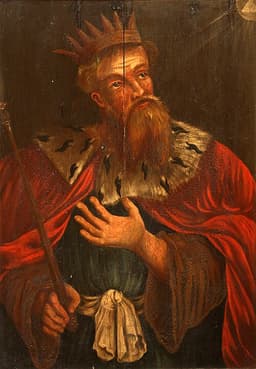
Hezekiah of Judah
Emperor · Ancient
54.8Total

Wang Mang
Emperor · Ancient
44.8Total
Basic Information
Born
-715
-45
Died
-686
23
Era
Ancient
Ancient
Nationality
Judah
China
Occupation
Emperor
Emperor
Civilization
Middle Eastern
Eastern
Score Comparison
Military (10%)
20.0
21.2
Political (20%)
62.7
62.7
Influence (20%)
55.7
50.2
Legacy (20%)
49.2
45.8
Leadership (15%)
74.0
38.1
Strategy (15%)
60.7
35.7
TOTAL
54.8
44.8
Hezekiah of Judah — Complete Timeline
715 BC
Religious reforms and centralization of worshipReform◆ Major
Hezekiah removed high places, smashed sacred stones, and cut down Asherah poles. He centralized worship at the Temple in Jerusalem, destroying local shrines throughout Judah. This reform aimed to eliminate idolatry and enforce exclusive worship of Yahweh.
Religious ReformCentralizationIdolatry
Impact: nationalconstructive
705 BC
Hezekiah's rebellion against AssyriaPolitical Action◆ Major
After the death of Assyrian king Sargon II, Hezekiah stopped paying tribute to Assyria and formed an anti-Assyrian alliance with Egypt and other states. This rebellion provoked Sennacherib's invasion and the siege of Jerusalem.
RebellionAllianceAssyria
Impact: regional
701 BC
Siege of Jerusalem by SennacheribWar
Assyrian king Sennacherib besieged Jerusalem after Hezekiah rebelled. Hezekiah paid heavy tribute but the city was not captured. According to biblical accounts, an angel struck down 185,000 Assyrian soldiers, forcing Sennacherib to withdraw. The event preserved Judah's independence.
Assyrian SiegeDivine InterventionSurvival
Impact: regional
Construction of the Siloam TunnelOther◆ Major
Hezekiah ordered the excavation of a 533-meter tunnel through solid rock to bring water from the Gihon Spring into Jerusalem, securing the city's water supply during the Assyrian siege. The tunnel is a major engineering achievement of the ancient Near East.
EngineeringWater SupplySiege Preparation
constructive
Hezekiah's illness and recoveryOther
Hezekiah fell critically ill with a boil. The prophet Isaiah told him he would die, but Hezekiah prayed fervently. God granted him 15 additional years of life and performed a sign by making the shadow on the sundial go backward ten steps.
MiracleHealingProphecy
Impact: national
Wang Mang — Complete Timeline
7 AD
Wang Mang's Currency ReformsReform◆ Major
Wang Mang introduced a series of complex and frequently changing currency systems, including new coinages and the demonetization of older coins. These reforms caused severe economic disruption, inflation, and widespread hardship.
Currency ReformEconomic CrisisInflation
Impact: nationaldestructive
9 AD
Wang Mang's Land Reform (Wangtian System)Reform◆ Major
Wang Mang nationalized all land, declaring it 'king's land' (wangtian), and abolished private land ownership. He redistributed land to peasant families in an attempt to reduce inequality and stabilize the economy.
Land ReformEconomic PolicySocial Reform
Impact: nationalprogressive
Abolition of SlaveryReform◆ Major
Wang Mang issued an edict abolishing slavery, declaring that all slaves were to be freed and their sale prohibited. This radical measure was met with resistance from the elite and was poorly enforced, contributing to social instability.
Slavery AbolitionSocial ReformHuman Rights
Impact: nationalprogressive
Wang Mang's Coup and Establishment of the Xin DynastyPolitical Action
Wang Mang, a Han dynasty regent, forced the child emperor Liu Ying to abdicate and proclaimed himself emperor, founding the Xin dynasty. This ended the Western Han dynasty and began a period of radical reform.
CoupDynastic ChangeUsurpation
Impact: national
18 AD
Outbreak of the Chimei RebellionWar
Widespread peasant revolts, most notably the Red Eyebrows (Chimei), erupted across China in response to Wang Mang's failed reforms, famine, and conscription. These rebellions rapidly grew into a massive insurgency that destabilized the Xin dynasty.
Peasant RevoltCivil WarRebellion
Impact: nationaldestructive
23 AD
Battle of KunyangWar
A Han loyalist army led by Liu Xiu (later Emperor Guangwu) decisively defeated a much larger Xin dynasty force at Kunyang. This victory broke the back of Wang Mang's military power and paved the way for the restoration of the Han dynasty.
BattleHan RestorationDecisive Victory
Impact: national
Death of Wang Mang in the Fall of Chang'anOther◆ Major
As rebel forces stormed the capital Chang'an, Wang Mang was killed in a melee in the Weiyang Palace. His head was taken and displayed, and the Xin dynasty was extinguished, ending his 14-year reign.
DeathDynasty FallCapital Sacked
Impact: nationaltragic
Expert Analysis
Origins
Hezekiah of Judah (c. 715–686 BCE) was born into the Davidic line in Jerusalem. His father, King Ahaz, was a weak ruler who submitted to Assyrian vassalage. Hezekiah received a religious education, likely from priests, and was deeply influenced by the prophet Isaiah. He ascended the throne at age 25, determined to reverse his father's policies.
Wang Mang (45 BCE–23 CE) was born into a prominent Han dynasty clan. His aunt was Empress Wang Zhengjun, and his uncles held high office. Wang Mang was known for his filial piety and frugality, contrasting with the corruption of other nobles. He studied Confucian classics and built a reputation as a moral exemplar, which fueled his political rise.
Rise to Power
Hezekiah's rise was hereditary, but he quickly asserted independence. In 705 BCE, after the death of Assyrian king Sargon II, Hezekiah stopped tribute payments and formed an anti-Assyrian alliance with Egypt and other states. He also initiated religious reforms, centralizing worship in Jerusalem and destroying local shrines. This consolidated his authority and won support from the priestly class.
Wang Mang's rise was a masterclass in political maneuvering. He served as regent for two child emperors, Liu Ying and Liu Kan. In 9 CE, he forced Liu Ying to abdicate and proclaimed himself emperor, founding the Xin dynasty. His claim was based on the Mandate of Heaven and the theory of cosmic cycles, but his usurpation alienated many Han loyalists.
Leadership & Governance
Hezekiah governed as a theocratic monarch, prioritizing religious purity and national security. He enforced the destruction of high places and Asherah poles, centralizing worship at the Temple. His Siloam Tunnel, a 533-meter water conduit, secured Jerusalem's water supply during siege. He also strengthened fortifications and reorganized the army. His leadership score of 74.0 reflects his decisive, faith-based governance.
Wang Mang was a radical reformer who sought to restore an idealized Zhou dynasty system. He nationalized land, redistributed it to peasants, and abolished slavery. He also reformed currency, set price controls, and established state monopolies on salt, iron, and liquor. However, his reforms were poorly implemented, causing economic chaos and widespread famine. His leadership score of 38.1 reflects his rigidity and lack of practical governance.
Triumph & Tragedy
Hezekiah's greatest triumph was surviving the Assyrian siege of Jerusalem in 701 BCE. Despite paying heavy tribute, his city remained intact, and his religious reforms endured. His tragedy was his later illness and pride; he showed Babylonian envoys his treasures, which Isaiah condemned, predicting Babylonian conquest.
Wang Mang's triumph was his initial rise and the abolition of slavery, a radical step for its time. His tragedy was the collapse of his dynasty. The Chimei Rebellion and Battle of Kunyang (23 CE) destroyed his army. He was killed in the fall of Chang'an, his head displayed as a warning. His reforms were reversed by the restored Han dynasty.
Character & Destiny
Hezekiah was pious, decisive, and pragmatic. He trusted in divine intervention but also took practical measures like the tunnel. His character led to a successful reign, though his later pride foreshadowed Judah's decline. Historical assessments in the Bible (2 Kings 18-20) portray him as a righteous king.
Wang Mang was idealistic, scholarly, and inflexible. He believed in the power of Confucian principles but failed to adapt to reality. His character led to his downfall; his reforms alienated all classes. Historians view him as a well-intentioned but disastrous ruler, scoring 44.8 overall.
Legacy
Hezekiah's legacy is religious centralization and the survival of Jerusalem. The Siloam Tunnel remains a marvel of ancient engineering. His reforms influenced later Jewish tradition, and he is remembered as one of Judah's greatest kings. His influence score is 55.7.
Wang Mang's legacy is cautionary. He is remembered as a usurper whose radical reforms caused chaos. The Xin dynasty is often treated as a brief interlude. However, his abolition of slavery and land reforms were ahead of their time. His legacy score is 45.8.
Conclusion
Hezekiah had greater impact than Wang Mang. His score of 54.8 exceeds Wang's 44.8 by 10 points. Hezekiah's leadership (74.0 vs 38.1) and strategy (60.7 vs 35.7) were superior. He successfully defended his kingdom and preserved his religious reforms, while Wang Mang's reforms collapsed and his dynasty was erased. Hezekiah's legacy endured for millennia, whereas Wang Mang is a historical footnote. The righteous king outshines the radical reformer.
Rankings
🥇
Hezekiah of JudahLeader
Mil: 20.0Pol: 62.7Inf: 55.7
54.8
🥈
Wang Mang
Mil: 21.2Pol: 62.7Inf: 50.2
44.8
+10.0 behind
How This Comparison Works
Algorithm
Each figure is scored on 6 dimensions (0—100 scale) based on structured historical data: Military (10%), Political (20%), Influence (20%), Legacy (20%), Leadership (15%), Strategy (15%). The weighted total produces the final ranking.
Data Sources
Scores are computed from structured sub-indicators in the database. Scale factors adjust for era (Ancient ×0.85, Modern ×1.0) and civilization size (Eastern ×1.05, Other ×0.80) to account for differences in population and military scale.
Maximum 3 Figures
Comparisons are limited to 2—3 figures to ensure readability and statistical meaningfulness.
Error Margins
±5 points per dimension — Sub-scores are derived from historical records with inherent uncertainty. Two figures within 5 points on a dimension should be considered roughly equivalent in that area.
Total Score Accuracy
±3 points overall — The weighted combination of 6 dimensions produces a total score with approximately ±3 points of uncertainty. Differences of less than 3 points are not statistically significant— the figures are effectively tied.
Known Limitations
- Historical records are incomplete and uneven across civilizations
- Figures from oral-tradition societies may be underrepresented
- Occupation labels can misclassify multi-role figures
- Scores measure capability and impact, not moral character
- Quantitative scoring is a comparison tool, not absolute truth
Capability Radar
Military (10%) — Battles & Warfare
Battles
45
10
Win Rate
50
5
Expansion
20
5
Political (20%) — Governance & Reform
Reform
70
85
Diplomacy
60
40
Economy
55
60
Influence (20%) — Cultural & Global Reach
Cultural
55
40
Global
40
20
Legacy (20%) — Historical Impact
Historical
60
55
Longevity
55
30
Leadership (15%) — Power & Stability
Tenure
55
30
Stability
50
15
Strategy (15%) — Tactics & Innovation
Strategy
65
15
Tactics
60
10
Reform
55
20
Similar Comparisons
Comments & Discussion
No comments yet. Be the first to share your thoughts!