Loading...
Hezekiah of Judah vs Napoleon Bonaparte
Napoleon Bonaparte leads by 16.1 pts · 2 figures compared
…
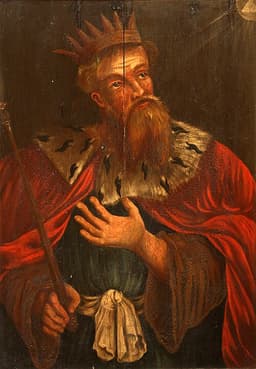
Hezekiah of Judah
Emperor · Ancient
54.8Total

Napoleon Bonaparte
General · Modern
70.9Total
Basic Information
Born
-715
1769
Died
-686
1821
Era
Ancient
Modern
Nationality
Judah
France
Occupation
Emperor
General
Civilization
Middle Eastern
Western
Score Comparison
Military (10%)
20.0
94.0
Political (20%)
62.7
72.0
Influence (20%)
55.7
40.0
Legacy (20%)
49.2
80.0
Leadership (15%)
74.0
78.0
Strategy (15%)
60.7
90.0
TOTAL
54.8
70.9
Hezekiah of Judah — Complete Timeline
715 BC
Religious reforms and centralization of worshipReform◆ Major
Hezekiah removed high places, smashed sacred stones, and cut down Asherah poles. He centralized worship at the Temple in Jerusalem, destroying local shrines throughout Judah. This reform aimed to eliminate idolatry and enforce exclusive worship of Yahweh.
Religious ReformCentralizationIdolatry
Impact: nationalconstructive
705 BC
Hezekiah's rebellion against AssyriaPolitical Action◆ Major
After the death of Assyrian king Sargon II, Hezekiah stopped paying tribute to Assyria and formed an anti-Assyrian alliance with Egypt and other states. This rebellion provoked Sennacherib's invasion and the siege of Jerusalem.
RebellionAllianceAssyria
Impact: regional
701 BC
Siege of Jerusalem by SennacheribWar
Assyrian king Sennacherib besieged Jerusalem after Hezekiah rebelled. Hezekiah paid heavy tribute but the city was not captured. According to biblical accounts, an angel struck down 185,000 Assyrian soldiers, forcing Sennacherib to withdraw. The event preserved Judah's independence.
Assyrian SiegeDivine InterventionSurvival
Impact: regional
Construction of the Siloam TunnelOther◆ Major
Hezekiah ordered the excavation of a 533-meter tunnel through solid rock to bring water from the Gihon Spring into Jerusalem, securing the city's water supply during the Assyrian siege. The tunnel is a major engineering achievement of the ancient Near East.
EngineeringWater SupplySiege Preparation
constructive
Hezekiah's illness and recoveryOther
Hezekiah fell critically ill with a boil. The prophet Isaiah told him he would die, but Hezekiah prayed fervently. God granted him 15 additional years of life and performed a sign by making the shadow on the sundial go backward ten steps.
MiracleHealingProphecy
Impact: national
Napoleon Bonaparte — Complete Timeline
1799 AD
Coup of 18 BrumaireOther◆ Major
Napoleon Bonaparte, with support from his brother Lucien and key political figures, overthrew the Directory in a bloodless coup. He established the Consulate with himself as First Consul, effectively becoming the ruler of France. This event ended the French Revolution's most unstable period.
French RevolutionCoupRise to Power
Impact: regional
1804 AD
Promulgation of the Napoleonic CodeOther◆ Major
Napoleon enacted the Civil Code of the French, known as the Napoleonic Code, a comprehensive set of laws that replaced the fragmented feudal legal systems. The code established legal equality, protected property rights, and secularized law. It became the basis for legal systems in many European and world countries.
Legal ReformNapoleonic CodeCivil Law
Impact: globalconstructive
1805 AD
Battle of AusterlitzWar◆ Major
Napoleon's Grande Arm
Napoleonic WarsBattleDecisive Victory
Impact: global
1812 AD
Invasion of RussiaWar◆ Major
Napoleon led the Grande Arm
Napoleonic WarsInvasionDisaster
Impact: globaldestructive
1815 AD
Battle of WaterlooWar◆ Major
Napoleon's French army was defeated by the combined forces of the Duke of Wellington's Anglo-Allied army and Gebhard Leberecht von Bl
Napoleonic WarsBattleFinal Defeat
Impact: globaldestructive
Expert Analysis
hezekiah-of-judah-vs-napoleon-bonaparte
# The Emperor and the King: Two Visions of Power in a World on Fire
In the summer of 701 BC, the Assyrian army stood before the walls of Jerusalem, the most formidable military machine the ancient world had ever known. King Hezekiah of Judah, a small-state ruler with little more than faith and a water tunnel to his name, faced annihilation. Two and a half millennia later, in June 1815, Napoleon Bonaparte watched his Imperial Guard crumble at Waterloo, the culmination of a career that had redrawn the map of Europe. Both men stood at the precipice of total defeat. One would see his kingdom saved by what he believed was divine intervention. The other would be exiled to a remote Atlantic island, his empire dissolved. What separated these two leaders—one a conqueror of continents, the other a reformer of a tiny kingdom—was not merely scale, but the very nature of their ambition and the worlds they inhabited.
Origins
Napoleon Bonaparte was born in 1769 on the island of Corsica, a Mediterranean backwater recently annexed by France. His family was minor nobility, poor and resentful of French rule. He spoke Italian before French, and his early life was shaped by the struggle of a provincial outsider clawing his way into the mainland’s elite military academies. The French Revolution erupted when he was twenty, shattering the old order and creating a vacuum where talent, not birth, could propel a man to the top. Napoleon was a child of chaos, and he learned to ride the storm.
Hezekiah of Judah, born around 715 BC, inherited a throne in a world of iron empires. His kingdom was a hill-country buffer state wedged between Assyria to the east and Egypt to the west. His father, King Ahaz, had been a vassal who even sacrificed his own son to pagan gods. Hezekiah grew up watching his nation humiliated, its religion corrupted, its treasury looted for tribute. Where Napoleon saw opportunity in upheaval, Hezekiah saw a mandate to purify and preserve. His world was not one of expansion but of survival.
Rise to Power
Napoleon’s ascent was meteoric. In 1793, at age twenty-four, he drove the British out of Toulon with a brilliant artillery plan. By 1796, he commanded the Army of Italy and, in a series of lightning campaigns, crushed the Austrians and carved out a personal reputation that eclipsed the French government itself. He was not elected nor born to power—he seized it through victory. The coup of 18 Brumaire in 1799 made him First Consul; by 1804, he crowned himself Emperor in Notre Dame, taking the crown from the Pope’s hands and placing it on his own head.
Hezekiah’s rise was quieter but no less decisive. He became king of Judah around 715 BC, likely in his early twenties. His first major act was not a war but a purge. In 715 BC, he removed the high places, smashed the sacred stones, and cut down the Asherah poles that dotted the countryside. He centralized worship at the Temple in Jerusalem, defying centuries of local tradition. This was a political masterstroke: by making the Temple the sole center of religious life, he unified his kingdom under his own authority, with God as his ultimate sanction. His power came not from conquest but from covenant.
Leadership & Governance
Napoleon governed through genius and charisma. He was a military commander of staggering ability—his 94.0 military score reflects campaigns like Austerlitz in 1805, where he destroyed a larger Russo-Austrian army with a feigned retreat that became a trap. He reformed French law with the Napoleonic Code, establishing principles of equality before the law and secular administration that endure today. But his political wisdom (75.0) was undermined by arrogance. He created a nobility of his own, placed his brothers on European thrones, and treated conquered peoples as subjects, not partners. He governed through fear and glory, and both proved finite.
Hezekiah’s leadership was defensive and spiritual. His military score of 33.9 reflects that he commanded no great armies. Instead, he prepared for war by digging—literally. In 701 BC, he ordered the excavation of the Siloam Tunnel, a 533-meter channel carved through solid rock to bring water from the Gihon Spring into Jerusalem. It was an act of strategic foresight that would save his city during siege. His political score of 53.7 reflects a ruler who balanced rebellion with realism. When Sennacherib’s army arrived, Hezekiah first tried to buy peace with tribute stripped from the Temple, then trusted in prayer. The Bible records that an angel struck down 185,000 Assyrian soldiers; historians debate the cause—perhaps disease, perhaps a broken Assyrian supply line. But the result was the same: Jerusalem survived.
Triumph & Tragedy
Napoleon’s greatest triumph was his early empire. By 1810, he controlled most of Europe from Spain to Poland. His greatest tragedy was the invasion of Russia in 1812. He marched 600,000 men east; fewer than 100,000 returned. The disaster broke his aura of invincibility. He was exiled to Elba in 1814, escaped in 1815, and rallied France for one last campaign—only to be crushed at Waterloo by the Duke of Wellington and Prussian forces. He died in 1821 on Saint Helena, a prisoner, still dictating his version of history.
Hezekiah’s triumph was survival itself. The siege of Jerusalem in 701 BC, against the might of Assyria, was a miracle by any measure. His tragedy was more personal. In 701 BC, he fell critically ill with a boil. The prophet Isaiah told him he would die. Hezekiah prayed fervently, and God granted him fifteen more years. But those years brought complacency. He showed Babylonian envoys all the treasures of his palace—a fatal act of pride that Isaiah warned would one day lead to Babylon carrying everything away. Hezekiah’s response was chilling: “The word of the Lord you have spoken is good. For there will be peace and security in my lifetime.”
Character & Destiny
Napoleon was driven by an insatiable need to prove himself. He once said, “A throne is only a bench covered with velvet.” He saw power as a game of will, and he played to win until he overreached. His personality—brilliant, impatient, contemptuous of limits—created his destiny. He could not stop because he believed stopping meant fading into nothing.
Hezekiah was driven by a different force: righteousness. He believed that fidelity to God would protect his people. His personality—pious, pragmatic, but ultimately shortsighted—shaped his decisions. He trusted in divine protection, and he received it. But he also trusted in his own lifetime, and that trust blinded him to the future. He saved Jerusalem but doomed it to eventual conquest.
Legacy
Napoleon’s legacy is written across Europe: the Napoleonic Code, modern warfare, the metric system, the very idea of the nation-state. His influence score of 82.0 reflects a man who changed how the world thinks about law, power, and ambition. He is remembered as both a liberator and a tyrant, a genius and a cautionary tale.
Hezekiah’s legacy is quieter but deeper. His religious reforms shaped Judaism and, through it, Christianity and Islam. The Siloam Tunnel still carries water to Jerusalem. He is remembered as one of Judah’s few righteous kings, a man who chose faith over force. His legacy score of 65.6 reflects a ruler of a small kingdom, yet his story has been read by billions.
Conclusion
Napoleon conquered an empire and lost it. Hezekiah saved a kingdom and preserved it. One trusted in his own genius; the other trusted in God. Their differences are not merely a matter of scale—they are a matter of soul. Napoleon’s world was one of constant motion, where power was seized and held by force. Hezekiah’s world was one of covenant, where power was granted and sustained by faith. Both men faced the same fundamental question: What do you do when you have everything to lose? Napoleon fought, and lost everything. Hezekiah prayed, and kept everything—for a time. In the end, perhaps the deepest lesson is not about who was greater, but about what each believed was worth saving. For Napoleon, it was glory. For Hezekiah, it was a people. And the people, in the end, outlasted the empire.
Rankings
🥇
Napoleon BonaparteLeader
Mil: 94.0Pol: 72.0Inf: 40.0
70.9
🥈
Hezekiah of Judah
Mil: 20.0Pol: 62.7Inf: 55.7
54.8
+16.1 behind
How This Comparison Works
Algorithm
Each figure is scored on 6 dimensions (0—100 scale) based on structured historical data: Military (10%), Political (20%), Influence (20%), Legacy (20%), Leadership (15%), Strategy (15%). The weighted total produces the final ranking.
Data Sources
Scores are computed from structured sub-indicators in the database. Scale factors adjust for era (Ancient ×0.85, Modern ×1.0) and civilization size (Eastern ×1.05, Other ×0.80) to account for differences in population and military scale.
Maximum 3 Figures
Comparisons are limited to 2—3 figures to ensure readability and statistical meaningfulness.
Error Margins
±5 points per dimension — Sub-scores are derived from historical records with inherent uncertainty. Two figures within 5 points on a dimension should be considered roughly equivalent in that area.
Total Score Accuracy
±3 points overall — The weighted combination of 6 dimensions produces a total score with approximately ±3 points of uncertainty. Differences of less than 3 points are not statistically significant— the figures are effectively tied.
Known Limitations
- Historical records are incomplete and uneven across civilizations
- Figures from oral-tradition societies may be underrepresented
- Occupation labels can misclassify multi-role figures
- Scores measure capability and impact, not moral character
- Quantitative scoring is a comparison tool, not absolute truth
Capability Radar
Military (10%) — Battles & Warfare
Battles
45
95
Win Rate
50
90
Expansion
20
95
Political (20%) — Governance & Reform
Reform
70
95
Diplomacy
60
80
Economy
55
85
Influence (20%) — Cultural & Global Reach
Cultural
55
85
Global
40
90
Legacy (20%) — Historical Impact
Historical
60
95
Longevity
55
90
Leadership (15%) — Power & Stability
Tenure
55
85
Stability
50
70
Strategy (15%) — Tactics & Innovation
Strategy
65
95
Tactics
60
98
Reform
55
92
Similar Comparisons
Comments & Discussion
Tunnel Visionary6/17/2026
Let's be real, comparing a minor Iron Age theocrat to a continental revolutionary is like comparing a sandcastle to a fortress. Hezekiah's only "strategy" was hiding behind a wall and praying. He didn't invent anything—his famous tunnel was just a creek in a pipe. Meanwhile, Napoleon rewrote the book on artillery tactics and centralized administration. One saved a village; the other shook an entire hemisphere. The scale isn't just different; it's a different universe of ambition and impact.
纪律铁粉6/17/2026
我受不了这个现代西方中心主义的比较了。拿破仑打了败仗就被流放,这很惨。但希西家打败亚述人后才活了15年,他的改革(废除邱坛、统一崇拜)直接塑造了犹太教的根基。拿破仑呢?他把自己当皇帝,最后留下的是通货膨胀和寡妇。一个是改变人类信仰的宗教创始人级别的领袖,一个是沉迷于帽子和军装的自我中心者。不,我对这个"信仰vs征服"的对比完全不同意。
Data-Riddled Scribe6/17/2026
Funny how the summary romanticizes "divine intervention" for Hezekiah. Let's look at the numbers: Sennacherib's annals claim he trapped Hezekiah "like a bird in a cage" and took 200,150 prisoners, yet Hezekiah paid 300 talents of silver and 30 of gold as tribute. That's not a miracle—that's a negotiated surrender painted as victory by Biblical editors. Napoleon actually fought to the last men at Waterloo before losing 26,000 soldiers. One man bought off his enemy; the other bled for his ambition
凯撒的中东表弟6/17/2026
我得为一个改革者的尊严说句话。拿破仑拿欧洲当棋盘,但希西家是在生死线上改革一个被包围的小国。他废除了地方偶像崇拜,加强了中央集权,甚至在面对亚述帝国的围城时还能发动公共工程——西罗亚池不是运河,但在这个规模下,它就像拿破仑修建的枫丹白露一样重要。他选择信仰而不是投降,这需要另一种勇气。给我一个愿意为信念对抗帝国的小王,而不是一个只为自己修凯旋门的皇帝。
The Last Emperor's Shadow6/17/2026
Both were trapped by their own success. Napoleon built a system that required constant war to sustain—his Continental System failed because he couldn't enforce it without perpetual conquest. Hezekiah's religious reforms created a temple-centric state that would eventually be destroyed by Babylon when the successors lost his cunning. But here's the crux: Napoleon's fall threatened only his ego and his marshals. Hezekiah's fall threatened an entire people's identity. One man's collapse was a footn