Loading...
This comparison has not been analyzed yet.
One-time AI generation (~1 minute). Scores and timeline are already available below.
Hibatullah Akhundzada vs Madho Singh II of Jaipur
Madho Singh II of Jaipur leads by 5.4 pts · 2 figures compared
…
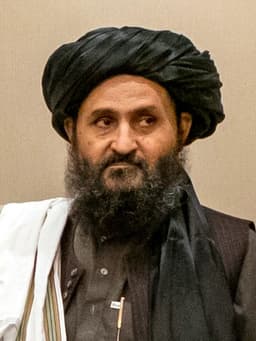
Hibatullah Akhundzada
Emperor · Modern
38.7Total

Madho Singh II of Jaipur
Emperor · Modern
44.1Total
Basic Information
Born
1961
1862
Died
—
1922
Era
Modern
Modern
Nationality
Afghanistan
India
Occupation
Emperor
Emperor
Civilization
Middle Eastern
Indian
Score Comparison
Military (10%)
21.2
12.3
Political (20%)
27.9
43.7
Influence (20%)
52.5
51.8
Legacy (20%)
40.8
40.8
Leadership (15%)
40.0
66.0
Strategy (15%)
30.3
32.4
TOTAL
38.7
44.1
Hibatullah Akhundzada — Complete Timeline
2016 AD
Appointed Supreme Leader of the TalibanPolitical Action
Hibatullah Akhundzada was appointed Supreme Leader of the Taliban in 2016 after the death of Akhtar Mansour. He assumed leadership of the insurgency, guiding the Taliban's military and political strategy during the war against the Afghan government and coalition forces.
AfghanistanTalibanLeadership
Impact: global
2021 AD
Led Taliban to Military Victory in 2021War
Under Hibatullah Akhundzada's leadership, the Taliban launched a major offensive in 2021, capturing Kabul on August 15. This resulted in the collapse of the Afghan government and the Taliban's return to power, ending the 20-year war.
AfghanistanWarTaliban Victory
Impact: global
Imposed Restrictions on Women's RightsPolitical Action◆ Major
Under Hibatullah Akhundzada's leadership, the Taliban imposed severe restrictions on women's rights, including banning girls from secondary education and women from most employment. These policies drew widespread international condemnation.
AfghanistanWomen's RightsHuman Rights
Impact: nationaldestructive
2022 AD
Issued Decree Banning Opium Poppy CultivationReform◆ Major
Hibatullah Akhundzada issued a decree banning the cultivation of opium poppies in Afghanistan. The ban aimed to reduce drug production, but it devastated the rural economy, as poppy farming was a major source of income for many farmers.
AfghanistanDrug PolicyEconomy
Impact: national
Madho Singh II of Jaipur — Complete Timeline
1900 AD
Construction of the Jaipur City Palace extensionsCultural◆ Major
Madho Singh II commissioned extensive additions to the City Palace in Jaipur, including the Chandra Mahal and Mubarak Mahal. These structures blended Rajput and Mughal architectural styles, reinforcing the palace's role as a ceremonial and administrative center.
ArchitecturePatronageRoyal Residence
Impact: regionalconstructive
1905 AD
Pilgrimage to Vrindavan and MathuraCultural
Madho Singh II undertook a major pilgrimage to the Hindu holy sites of Vrindavan and Mathura, accompanied by a large retinue. The journey involved extensive donations to temples and charities, reinforcing his reputation as a devout Hindu ruler.
ReligionPilgrimageHinduism
Impact: regional
1910 AD
Construction of the Madho Vilas PalaceCultural
Madho Singh II built the Madho Vilas Palace in Jaipur as a summer retreat. The palace featured extensive gardens and water features, reflecting his interest in traditional Rajput architecture and royal leisure.
ArchitectureRoyal ResidenceLeisure
constructive
1915 AD
Donation to the Jagdish TempleCultural
Madho Singh II made substantial donations to the Jagdish Temple in Udaipur, including gold and silver ornaments. This act of religious patronage strengthened ties between the Jaipur and Udaipur royal families and demonstrated his piety.
ReligionPatronageTemple
constructive
This comparison has not been analyzed yet.
One-time AI generation (~1 minute). Scores and timeline are already available below.
Rankings
🥇
Madho Singh II of JaipurLeader
Mil: 12.3Pol: 43.7Inf: 51.8
44.1
🥈
Hibatullah Akhundzada
Mil: 21.2Pol: 27.9Inf: 52.5
38.7
+5.4 behind
How This Comparison Works
Algorithm
Each figure is scored on 6 dimensions (0—100 scale) based on structured historical data: Military (10%), Political (20%), Influence (20%), Legacy (20%), Leadership (15%), Strategy (15%). The weighted total produces the final ranking.
Data Sources
Scores are computed from structured sub-indicators in the database. Scale factors adjust for era (Ancient ×0.85, Modern ×1.0) and civilization size (Eastern ×1.05, Other ×0.80) to account for differences in population and military scale.
Maximum 3 Figures
Comparisons are limited to 2—3 figures to ensure readability and statistical meaningfulness.
Error Margins
±5 points per dimension — Sub-scores are derived from historical records with inherent uncertainty. Two figures within 5 points on a dimension should be considered roughly equivalent in that area.
Total Score Accuracy
±3 points overall — The weighted combination of 6 dimensions produces a total score with approximately ±3 points of uncertainty. Differences of less than 3 points are not statistically significant— the figures are effectively tied.
Known Limitations
- Historical records are incomplete and uneven across civilizations
- Figures from oral-tradition societies may be underrepresented
- Occupation labels can misclassify multi-role figures
- Scores measure capability and impact, not moral character
- Quantitative scoring is a comparison tool, not absolute truth
Capability Radar
Military (10%) — Battles & Warfare
Battles
10
9
Win Rate
15
9
Expansion
15
14
Political (20%) — Governance & Reform
Reform
10
30
Diplomacy
30
40
Economy
10
35
Influence (20%) — Cultural & Global Reach
Cultural
20
40
Global
35
10
Legacy (20%) — Historical Impact
Historical
30
30
Longevity
25
25
Leadership (15%) — Power & Stability
Tenure
55
55
Stability
40
60
Strategy (15%) — Tactics & Innovation
Strategy
25
18
Tactics
20
18
Reform
10
21
Similar Comparisons
Comments & Discussion
No comments yet. Be the first to share your thoughts!