Loading...
Hirohito vs Julius Caesar
Julius Caesar leads by 24.8 pts · 2 figures compared
…
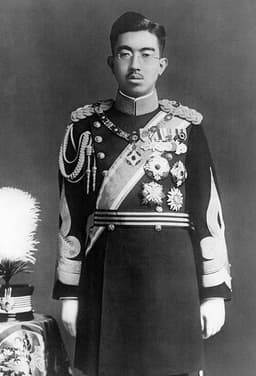
Hirohito
Emperor · Modern
58.0Total

Julius Caesar
General · Ancient
82.8Total
Basic Information
Born
1901
-100
Died
1989
-44
Era
Modern
Ancient
Nationality
Japan
Roman Republic
Occupation
Emperor
General
Civilization
Eastern
Western
Score Comparison
Military (10%)
51.1
88.0
Political (20%)
60.0
78.0
Influence (20%)
55.0
85.0
Legacy (20%)
55.0
82.0
Leadership (15%)
72.0
80.0
Strategy (15%)
55.9
85.0
TOTAL
58.0
82.8
Hirohito — Complete Timeline
1926 AD
Accession to the ThronePolitical Action◆ Major
Hirohito became Emperor of Japan upon the death of his father, Emperor Taisho. His reign was designated the Showa era. As emperor, he held a symbolic and constitutional role, but his actual political power was limited by the Meiji Constitution.
Japanese MonarchyShowa EraSuccession
Impact: national
1931 AD
Japanese Invasion of ManchuriaWar◆ Major
The Japanese Kwantung Army invaded Manchuria without explicit approval from the civilian government. Hirohito's role in the invasion is debated, but he was informed and did not oppose it. The invasion led to the establishment of the puppet state of Manchukuo and increased militarism in Japan.
World War IIJapanese ExpansionManchuria
Impact: regionaldestructive
1945 AD
Decision to Surrender in World War IIPolitical Action
After the atomic bombings of Hiroshima and Nagasaki and the Soviet invasion of Manchuria, Hirohito intervened in a deadlocked cabinet to accept the Potsdam Declaration. He made a radio broadcast announcing Japan's surrender, the first time the Japanese people heard his voice. This ended World War II.
World War IISurrenderAtomic Bomb
Impact: global
1946 AD
Renunciation of DivinityCultural◆ Major
Under pressure from the Allied occupation, Hirohito issued the Humanity Declaration, in which he denied the traditional claim that the Japanese emperor was a living god. This was a key step in the transformation of Japan into a constitutional monarchy with a symbolic emperor.
Post-War JapanConstitutional MonarchyOccupation
Impact: nationalconstructive
1947 AD
Post-War Reign and Symbolic RolePolitical Action◆ Major
Under the new Japanese Constitution, Hirohito became a symbol of the state with no political power. He focused on ceremonial duties and public appearances, helping to stabilize Japan during its post-war reconstruction. He reigned until his death in 1989, overseeing Japan's economic recovery.
Post-War JapanConstitutional MonarchyReconstruction
Impact: nationalconstructive
Julius Caesar — Complete Timeline
58 BC
Gallic WarsWar◆ Major
Caesar, as proconsul of Gaul, launched a series of campaigns that conquered all of Gaul (modern France, Belgium, and parts of Switzerland). He fought numerous battles, including against the Helvetii, the Belgae, and the Gallic chieftain Vercingetorix. The wars brought immense wealth and a loyal army to Caesar.
Gallic WarsConquestRoman Expansion
Impact: regional
49 BC
Crossing the RubiconPolitical Action◆ Major
Caesar led Legio XIII across the Rubicon River into Italy, defying the Roman Senate's order to disband his army. This act triggered a civil war against Pompey and the Optimates, ultimately leading to Caesar's dictatorship and the end of the Roman Republic.
Roman Civil WarEnd of RepublicPower Struggle
Impact: global
48 BC
Battle of PharsalusWar◆ Major
Caesar's outnumbered army defeated the larger forces of Pompey the Great at Pharsalus in Greece. Caesar's tactical use of a reserve line to counter Pompey's cavalry charge proved decisive. Pompey fled to Egypt, where he was assassinated, leaving Caesar as the undisputed master of the Roman world.
Roman Civil WarBattleDecisive Victory
Impact: regional
44 BC
Appointment as Dictator for LifePolitical Action◆ Major
The Roman Senate appointed Caesar dictator perpetuo (dictator for life), granting him unprecedented personal power. This move concentrated military, legislative, and judicial authority in one person, effectively ending the Roman Republic's traditional system of checks and balances and alarming many senators.
DictatorshipEnd of RepublicPower Consolidation
Impact: regionaldestructive
Assassination on the Ides of MarchPolitical Action◆ Major
A group of Roman senators, led by Marcus Junius Brutus and Gaius Cassius Longinus, stabbed Caesar to death at a meeting of the Senate in the Theatre of Pompey. The assassination was intended to restore the Republic, but instead triggered another civil war that led to the rise of the Roman Empire.
AssassinationRoman PoliticsEnd of Republic
Impact: globaldestructive
Expert Analysis
hirohito-vs-julius-caesar
### The General and the God-Emperor
On the Ides of March, 44 BCE, a blood-soaked Julius Caesar crumpled at the feet of Pompey’s statue, stabbed by senators who feared his ambition. On August 15, 1945, a trembling Emperor Hirohito recorded a voice that had never been heard by his people, telling a shattered nation to “endure the unendurable.” One man seized the world with a sword; the other surrendered it with a radio broadcast. Both stood at the crossroads of their civilizations, yet their paths could not have been more different. Why did Caesar, the consummate general, die at the peak of his power, while Hirohito, the passive sovereign, lived to see his empire reborn? The answer lies not in their eras alone, but in the very nature of their roles—and the choices those roles forced upon them.
### Origins
Caesar was born into the twilight of the Roman Republic, a world of senatorial intrigue and civil wars. His patrician family was ancient but impoverished, and his youth was marked by a desperate hunger for status. He fled the dictator Sulla’s proscriptions, served as a priest of Jupiter, and learned early that survival meant mastering both the sword and the forum. The Republic of his time was a brutal arena where personal ambition could rewrite history.
Hirohito, by contrast, was born in 1901 into the chrysanthemum throne of Japan, a divine line that had ruled for 2,600 years. He was raised in isolation, tutored in biology and imperial ritual, shielded from the gritty realities of politics. The Meiji Restoration had transformed Japan into a modern power, but the emperor remained a sacred icon, not a ruler. Where Caesar clawed his way up, Hirohito was handed a crown. One was forged in the chaos of ambition; the other, in the hush of divinity.
### Rise to Power
Caesar’s ascent was a masterpiece of calculated risk. He borrowed fortunes to buy popularity, formed the First Triumvirate with Pompey and Crassus, and then launched the Gallic Wars (58–50 BCE). His *Commentaries* turned a brutal conquest into a personal epic. The crossing of the Rubicon in 49 BCE was a gamble that shattered the Republic—a general leading his army against the Senate. His rise was a relentless, outward explosion of will.
Hirohito’s rise was a whisper. He ascended the throne in 1926, a shy, bespectacled young man in a world that expected him to be a living god. The Showa era began with economic depression and militarist fervor. He did not seize power; power seeped around him. When the Kwantung Army invaded Manchuria in 1931, he reportedly opposed the action but did nothing to stop it. His rise was not a conquest but a slow surrender to forces he could not—or would not—control.
### Leadership & Governance
Caesar governed as a revolutionary reformer. As dictator, he overhauled the calendar, granted citizenship to Gauls, and initiated public works that bled the treasury into the people. His military genius—88.0 on the scale—was matched by a political wisdom that saw the Republic’s flaws and tried to patch them with autocracy. But he ruled as a king in all but name, and that was his undoing. His reforms were brilliant, but they were imposed from above, and they alienated the old guard.
Hirohito’s governance was a paradox. He was the supreme commander of the Japanese military, yet his role in wartime decisions remains murky. He approved the attack on Pearl Harbor, but he did not design it. His political score of 81.8 reflects not his skill but his symbolic weight. He was a figurehead who could, on rare occasions, tip the scales—most famously in 1945, when he broke a deadlock in the Supreme War Council to accept surrender. After the war, he renounced his divinity in 1946 and became a constitutional monarch, a symbol of continuity in a nation reduced to ash. Caesar conquered; Hirohito endured.
### Triumph & Tragedy
Caesar’s greatest triumph was Gaul—a decade of campaigns that added a vast province to Rome and made him the richest man in the Republic. His tragedy was the Ides of March. He had everything, but he could not imagine a world where his enemies would kill him in the Senate chamber. His death plunged Rome into another civil war, proving that even genius cannot outrun the hatred it sows.
Hirohito’s triumph was the surrender itself. By intervening in 1945, he saved Japan from a bloody invasion and a potential partition. His tragedy was the war itself—the millions of dead, the firebombed cities, the atomic horrors. He lived to see his country rebuilt into an economic giant, but he never spoke publicly about his wartime role. His silence was his cross.
### Character & Destiny
Caesar was a man of insatiable ego and relentless action. He forgave his enemies, slept with their wives, and believed his luck would never run out. His character drove him to take risks that no cautious man would take—and it cost him his life. He was the architect of his own destiny, and he built it too high.
Hirohito was a man of restraint and ambiguity. A marine biologist who studied jellyfish, he was temperamentally unsuited to the violence he oversaw. His character was passive, reactive, shaped by a system that demanded he be both a god and a puppet. His destiny was not to shape history but to be shaped by it—until the final moment when he chose to speak.
### Legacy
Caesar’s legacy is the Roman Empire. His name became a title—*Kaiser*, *Tsar*—and his reforms outlived the Republic he destroyed. He is remembered as a genius, a tyrant, and a martyr, his story told in plays and textbooks for two millennia. His score of 82.0 in legacy reflects a man who changed the course of the West.
Hirohito’s legacy is more contested. To some, he was a tragic figure trapped by militarists; to others, a complicit monarch who escaped accountability. His post-war reign as a peaceful symbol gave Japan a moral foundation for its recovery. His legacy score of 73.0 is lower, but it is a legacy of survival, not conquest—a quiet endurance that allowed a nation to rise from its own ashes.
### Conclusion
Caesar and Hirohito stand on opposite ends of the spectrum of power. One was a force of nature who bent the world to his will and was broken by the resistance. The other was a vessel of tradition who let the world bend him—until the moment when bending was the only way to survive. Their stories remind us that leadership is not just about strength or vision, but about the cage in which a leader is born. Caesar shattered his cage and died. Hirohito learned to live inside his, and in doing so, helped his people build a new one. In the end, the general’s tragedy was his triumph, and the emperor’s triumph was his tragedy.
Rankings
🥇
Julius CaesarLeader
Mil: 88.0Pol: 78.0Inf: 85.0
82.8
🥈
Hirohito
Mil: 51.1Pol: 60.0Inf: 55.0
58.0
+24.8 behind
How This Comparison Works
Algorithm
Each figure is scored on 6 dimensions (0—100 scale) based on structured historical data: Military (10%), Political (20%), Influence (20%), Legacy (20%), Leadership (15%), Strategy (15%). The weighted total produces the final ranking.
Data Sources
Scores are computed from structured sub-indicators in the database. Scale factors adjust for era (Ancient ×0.85, Modern ×1.0) and civilization size (Eastern ×1.05, Other ×0.80) to account for differences in population and military scale.
Maximum 3 Figures
Comparisons are limited to 2—3 figures to ensure readability and statistical meaningfulness.
Error Margins
±5 points per dimension — Sub-scores are derived from historical records with inherent uncertainty. Two figures within 5 points on a dimension should be considered roughly equivalent in that area.
Total Score Accuracy
±3 points overall — The weighted combination of 6 dimensions produces a total score with approximately ±3 points of uncertainty. Differences of less than 3 points are not statistically significant— the figures are effectively tied.
Known Limitations
- Historical records are incomplete and uneven across civilizations
- Figures from oral-tradition societies may be underrepresented
- Occupation labels can misclassify multi-role figures
- Scores measure capability and impact, not moral character
- Quantitative scoring is a comparison tool, not absolute truth
Capability Radar
Military (10%) — Battles & Warfare
Battles
51
95
Win Rate
56
92
Expansion
55
97
Political (20%) — Governance & Reform
Reform
70
90
Diplomacy
60
85
Economy
50
82
Influence (20%) — Cultural & Global Reach
Cultural
55
88
Global
65
94
Legacy (20%) — Historical Impact
Historical
75
95
Longevity
70
96
Leadership (15%) — Power & Stability
Tenure
85
75
Stability
40
60
Strategy (15%) — Tactics & Innovation
Strategy
62
94
Tactics
65
96
Reform
64
88
Similar Comparisons
Comments & Discussion
No comments yet. Be the first to share your thoughts!