Loading...
Analysis will be generated on first visit.
Scores and timeline are available below. The page will refresh automatically when ready.
Hojo Tokimune vs Julius Caesar
Julius Caesar leads by 18.9 pts · 2 figures compared
…

Hojo Tokimune
Politician · Medieval
64.4Total
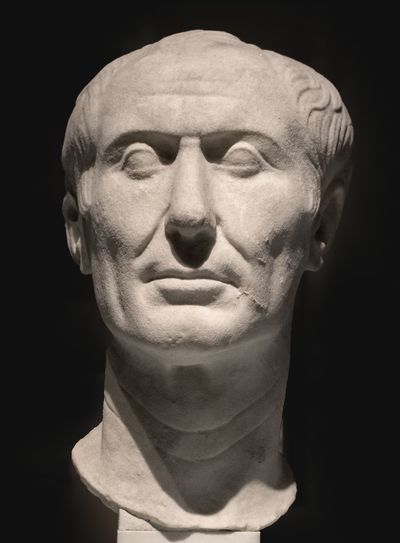
Julius Caesar
General · Ancient
83.3Total
Basic Information
Born
1251
-100
Died
1284
-44
Era
Medieval
Ancient
Nationality
Japan
Roman Republic
Occupation
Politician
General
Civilization
Eastern
Western
Score Comparison
Military (10%)
46.8
88.0
Political (20%)
60.5
78.0
Influence (20%)
70.5
85.0
Legacy (20%)
70.1
82.0
Leadership (15%)
72.0
82.0
Strategy (15%)
58.1
88.0
TOTAL
64.4
83.3
Rankings
🥇
Julius CaesarLeader
Mil: 88.0Pol: 78.0Inf: 85.0
83.3
🥈
Hojo Tokimune
Mil: 46.8Pol: 60.5Inf: 70.5
64.4
+18.9 behind
How This Comparison Works
Algorithm
Each figure is scored on 6 dimensions (0—100 scale) based on structured historical data: Military (10%), Political (20%), Influence (20%), Legacy (20%), Leadership (15%), Strategy (15%). The weighted total produces the final ranking.
Data Sources
Scores are computed from structured sub-indicators in the database. Scale factors adjust for era (Ancient ×0.85, Modern ×1.0) and civilization size (Eastern ×1.05, Other ×0.80) to account for differences in population and military scale.
Maximum 3 Figures
Comparisons are limited to 2—3 figures to ensure readability and statistical meaningfulness.
Error Margins
±5 points per dimension — Sub-scores are derived from historical records with inherent uncertainty. Two figures within 5 points on a dimension should be considered roughly equivalent in that area.
Total Score Accuracy
±3 points overall — The weighted combination of 6 dimensions produces a total score with approximately ±3 points of uncertainty. Differences of less than 3 points are not statistically significant— the figures are effectively tied.
Known Limitations
- Historical records are incomplete and uneven across civilizations
- Figures from oral-tradition societies may be underrepresented
- Occupation labels can misclassify multi-role figures
- Scores measure capability and impact, not moral character
- Quantitative scoring is a comparison tool, not absolute truth
Capability Radar
Military (10%) — Battles & Warfare
Battles
55
95
Win Rate
60
92
Expansion
30
97
Political (20%) — Governance & Reform
Reform
55
90
Diplomacy
70
85
Economy
50
82
Influence (20%) — Cultural & Global Reach
Cultural
60
88
Global
55
94
Legacy (20%) — Historical Impact
Historical
70
95
Longevity
65
96
Leadership (15%) — Power & Stability
Tenure
60
75
Stability
65
60
Strategy (15%) — Tactics & Innovation
Strategy
70
94
Tactics
65
96
Reform
50
88
Analysis will be generated on first visit.
Scores and timeline are available below. The page will refresh automatically when ready.
Hojo Tokimune — Complete Timeline
1271 AD
Execution of Mongol EnvoysPolitical Action◆ Major
Hojo Tokimune ordered the execution of Mongol envoys sent by Kublai Khan demanding Japan's submission. This decisive act signaled Japan's refusal to become a vassal state and directly precipitated the Mongol invasions. It demonstrated Tokimune's resolve and defiance.
DiplomacyDefianceMongol Empire
Impact: national
1274 AD
First Mongol Invasion of JapanWar◆ Major
A Mongol-led fleet under Kublai Khan invaded Japan, landing at Hakata Bay on Kyushu. Hojo Tokimune, as shikken (regent), organized the defense. A storm dispersed the invasion fleet, forcing the Mongols to withdraw. This event established Tokimune's reputation as a defender of Japan.
Mongol InvasionDefenseKamakura Shogunate
Impact: national
1276 AD
Construction of Defensive Walls at Hakata BayOther◆ Major
Following the first Mongol invasion, Hojo Tokimune ordered the construction of a stone defensive wall along Hakata Bay. This fortification, built over several years, was a key factor in repelling the second Mongol invasion by preventing Mongol cavalry from landing effectively.
FortificationDefenseMilitary Engineering
Impact: regionalconstructive
1281 AD
Second Mongol Invasion of JapanWar◆ Major
A larger Mongol fleet, estimated at over 4,000 ships, attacked Japan. Hojo Tokimune ordered the construction of defensive walls along Hakata Bay. A typhoon, later called kamikaze, destroyed much of the Mongol fleet, ending the invasion. This victory solidified Tokimune's legacy.
Mongol InvasionKamikazeDefense
Impact: national
Similar Comparisons
Comments & Discussion
No comments yet. Be the first to share your thoughts!